
Connacht Tribune 28th August 1926 p7
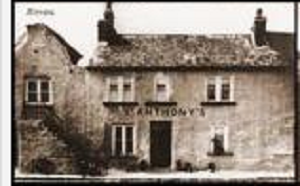
President Cosgrave and Senator Dr Gogarty were in the Kiltartan country on last Friday and subsequently motored to Kinvara, where they lunched at St Anthony’s Hotel. Afterwards they returned to Dublin
Connacht Tribune 28th August 1926 p7
President Cosgrave and Senator Dr Gogarty were in the Kiltartan country on last Friday and subsequently motored to Kinvara, where they lunched at St Anthony’s Hotel. Afterwards they returned to Dublin
Connacht Tribune 15th July, 1911 p.4 (abridged)
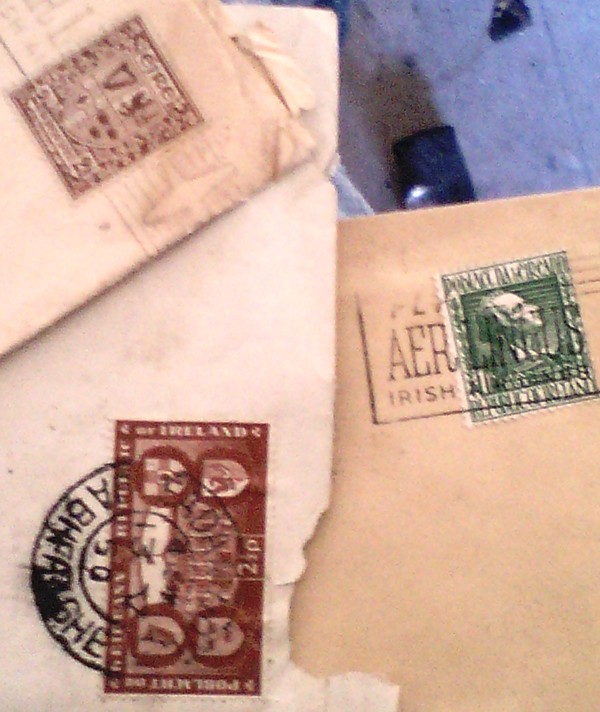
On Friday morning of last week, about 4.30 a.m., the mail car from Kinvara to Ballyvaughan was held up at Curranroo, Co. Clare, by an armed man, who sprang from behind a wall and, pointing a revolver at the driver, shouted, “Hands up,” and took possession of the horse and car.
The first intimation the driver got that anything was wrong was when he espied a wall built across the road a few hundred yards from Curranroo in the Newquay direction on top of a hill near the house of James McNerney. He was in the act of dismounting in order to remove the obstruction when a man, wearing a mask, with a slouch hat on one side of his head and a “speck” cap on the other, who had, evidently concealed himself in a sandpit for some time previously where he had an uninterrupted view of the Kinvara road and of the mail car approaching, sprang out on the road and presented a revolver heavily mounted, and obviously of an American type, and commanded the driver to walk towards Kinvara until the junction at Corker Hill – the boundary of Clare and Galway – was reached. He drove off with the car and horse and made by the new line in the direction of Corofin.
The driver retraced his steps when he saw he was out of danger and reported the matter to the police at Newquay. The police immediately set out on bicycles and some of the letters were found scattered a few miles away at Funshin, and the other three bags were found near Cappamore, Kinvara.
Connacht Tribune 20th January, 1951 p.13
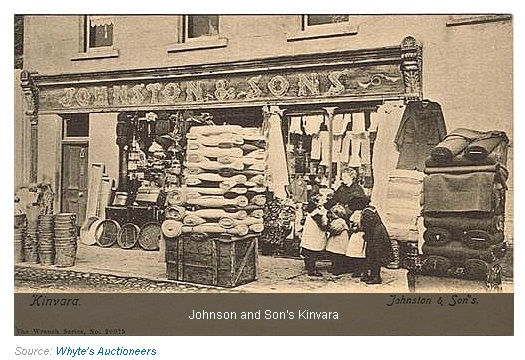
Kinvara Platoon breaks the ice for Gort Battalion by holding a dance at Johnston’s Hall on Sunday, 21st inst. This is the first dance held by any unit of the Battalion since 1915 and the platoon is endeavouring by careful preparation to ensure that it will set a headline for all units. With an excellent floor, a fine band, and the co-operation of all concerned, an excellent night seems assured.
Freeman’s Journal 11th November, 1821
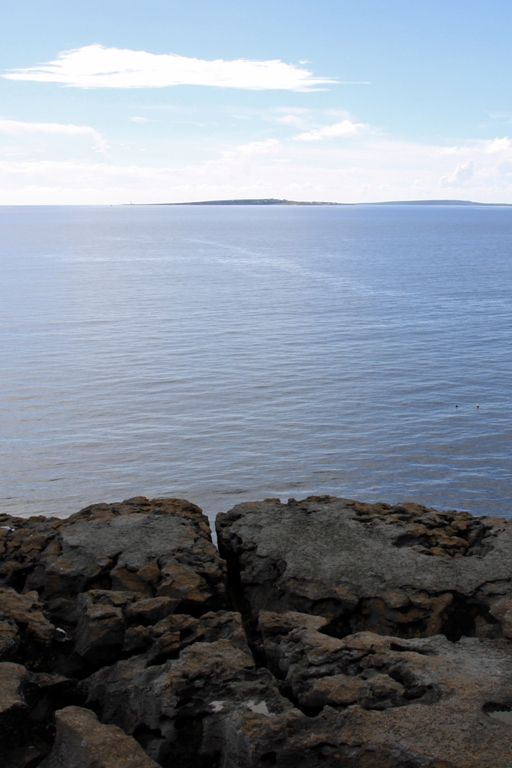
In order to prevent disorderly persons from crossing the River Shannon from Limerick County into the County of Clare there are boats stationed on the river with peace officers on boat, who are directed to search all boats crossing the river, and to apprehend suspected persons in order that they may be examined by the Magistrates, and such persons as wish to come across the river on lawful purposes are directed to have a pass from some Magistrate to save them trouble or interruption.
Connaught Telegraph 12th September, 1914 p. 6
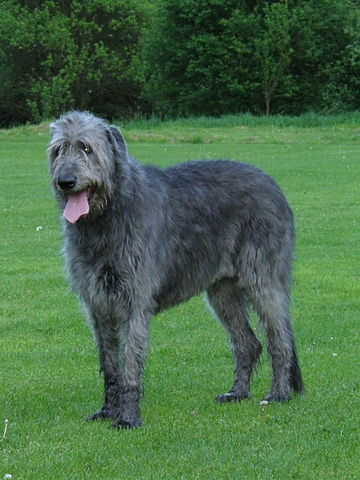
The Irish wolf dogs were formerly placed as the supporters of the arms of the ancient monarchs of Ireland. They were collared with the motto, “Gentle when stroked, fierce when provoked.” It is worthy of note that the Welsh laws of the ninth century made it an illegal act to maim or kill an Irish wolf dog; further, the fine was heavy and larger than most imposed for the wilful wounding or destruction of the ordinary greyhound. The Irish wolf dog was valued among the nations; but he appears to have died out in the eighteenth century. It is supposed that the last wolf was killed at Dingle, Ireland, in 1710.
Rev Edmund Hogan’s History of the Irish wolf dog tells that in the first century of the Christian era the King of Ulster and the King of Connacht each offered the King of Leinster 6,000 cows, a chariot and horses for a famous wolfhound and went to war to decide the issue. Going back over the centuries it is interesting to note that Pliny relates a combat in which the dogs of Epirus bore a part. He describes them as much taller than mastiffs and of greyhound form, detailing an account of their contest with a lion and an elephant. The allusion to the greyhound-like dog, bigger than the mastiff certainly points to the old Irish wolf dog. Strabo B.C. 54 A.D. 24 describes a large and powerful greyhound as having been in use among the Celtic and British nations and as being held in such high estimation by them as to have been imported into Gaul for the purposes of the chase. Selius describes a large and powerful greyhound as having been imported into Ireland by the Belgae, thus identifying the Irish wolf dog with the celebrated Belgic dogs of antiquity, which were taken to Rome.
Tuam Herald 9th April, 1904 p.4
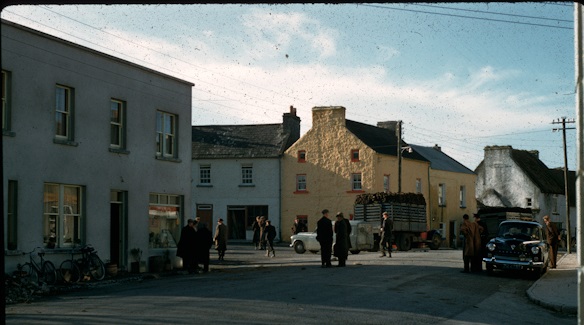
W.H.Stuart, Esq., Estate Commissioner Inspector, visited Kinvara last week for the purpose of conferring the Mr Thomas P. Corless, J.P. Chairman Gort District Council on the evicted tenants question. The Estate Commissioners have, it is said, in contemplation the purchase of large and valuable grazing farms in the district for the purpose of dividing them out amongst the people. The ever vigilant P.P., Father Burke, interviewed the inspector at Corless’ Hotel during his stay and gave him every aid in his good work.
CONNACHT TRIBUNE 29TH MARCH 1924 p.5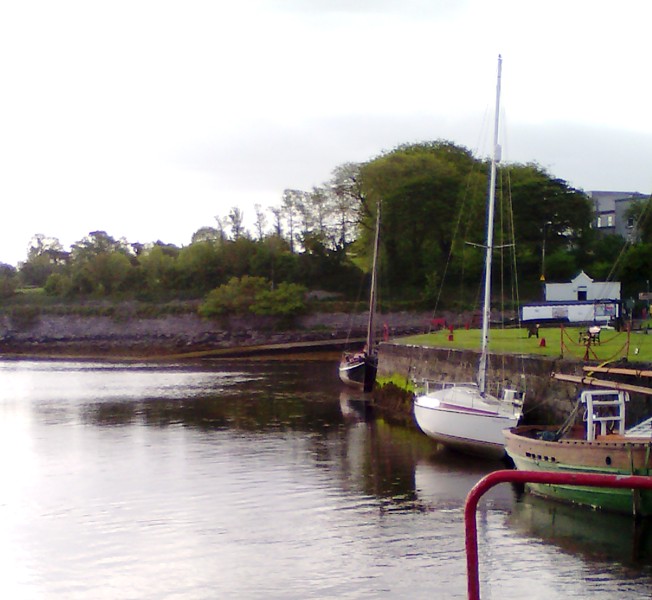
A very interesting concert was held in the convent school, Kinvara, on the nights of the 16th and 17th of March. The concert was organised by the nuns in aid of the church, all the artistes being from the boarders of Seamount House and pupils of the convent national school The first part of the programme consisted of a varied and choice selection of vocal and instrumental music and dancing, interspersed with tableaux, Irish dialogues, and some very pretty pieces acted by the smaller children. The item “An Bhean Deirce,” was particularly well done; also the dancing. The opening chorus was very impressive, the stage being artistically decorated and lighted, and the children and young ladies dressed and grouped with exquisite taste. There were twelve violins in the band, and the performance showed very careful training, and was much appreciated. In addition there was a solo on the ‘cello by Mr C O’Dea and one on violin by Miss M Flatley, who promises to be a perfact master of this instrument.
In the operetta, “The Wishing Cup,” with which the second part of the programme opened, Miss P. Murphy was a magnificent success as Gipsy Queen; Miss C Johnston acted the part of Elsa very dramatically; Miss Boland and Miss Hayes also did their parts exceedingly well, the latter being gifted with a very sweet singing voice. About thirty took part in this operetta, and the movement and the acting of the different performers was so perfect that there was not a dull moment in it from start to finish. They all, gipsies, fairies, maids and will-o-the-wisps, played their parts with marked success. This operetta was followed by a short amusing farce, which was very well staged and brought a most enjoyable entertainment to a close.
The large crowd present both nights appeared highly appreciative of the efforts of all the performers. This concert has been the most successful held in Kinvara for a long time, and reflects great credit on the nuns who were responsible for the organisation of it and the training of the children, which gave a real pleasure to all who were privileged to be present.
Tuam Herald 30th May 1896 p.2(abridged)
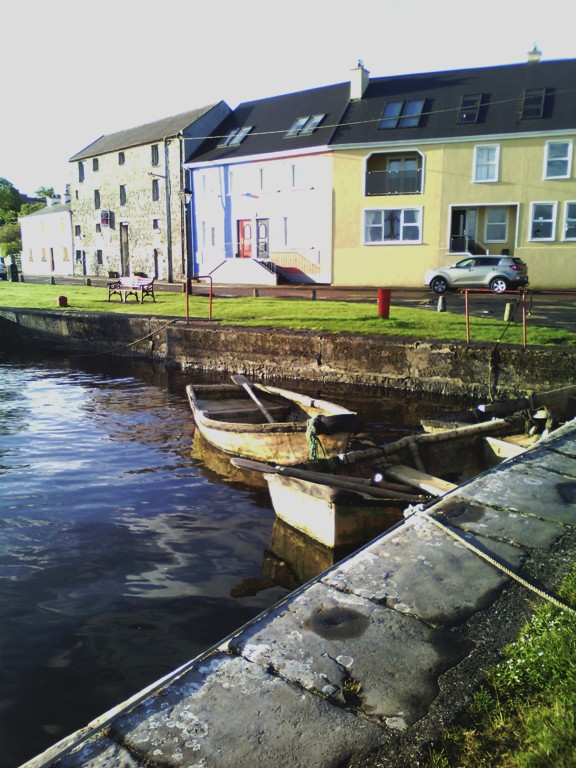
On Friday last while Sergeant Feeney of the Kinvarra station was on patrol duty with a party of his men, he noticed an unusual volume of smoke in the direction of Kinvarra Quay, and at once went in that way. He found that a large boat belonging to a man named McDonagh from Connemara, and which had been moored at the quay was on fire. He and his men immediately jumped on board the boat and on entering the hold found two of the boatmen asleep. Having roused the men the entire party proceeded to extinguish the flames. Were it not for timely arrival of the police, the certainty is that the two men would have been burned to death.
Bloom – Phoenix Park, Dublin. Photos: EO’D
 The Burren and Beyond