Posted in Posts and podcasts

Dr Barry – 1826

The Australian 30th August, 1826 p2 (abridged)
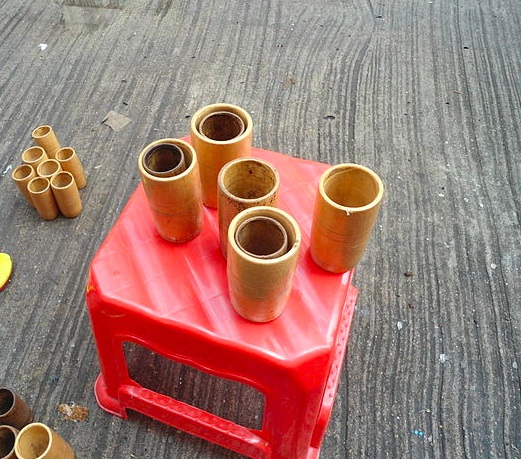
Fire cupping in Haikou  Photo;  Anna Frodesiak  Wikimedia Commons
Fire cupping in Haikou
Photo; Anna Frodesiak
Wikimedia Commons

The Newspapers notice a discovery made by an Irish Physician in Paris, Dr. Barry. His doctrine is that the reflux of blood to the heart is occasioned by the pressure of the atmosphere. Consequently the cupping-glass is the remedy to be applied to a bite by a rapid or poisonous animal. The doctor tried a great many experiments with success and latterly with a viper provided for him by the French government with great difficulty. Cavillers impeach the originality of this momentous discovery by saying that the system of sucking poisonous wounds practised of old was a remedy on the same principle. In the common and unavoidable event of hydrophobia, this is a discovery of the greatest utility and importance. Dr Barry held a high surgical rank in the Portuguese service, and was lately honoured by the sovereign of that kingdom with the order of the Tower and Sword.
Posted in Posts and podcasts

Ennis – 1826

The Monitor (Sydney) 17th November, 1826

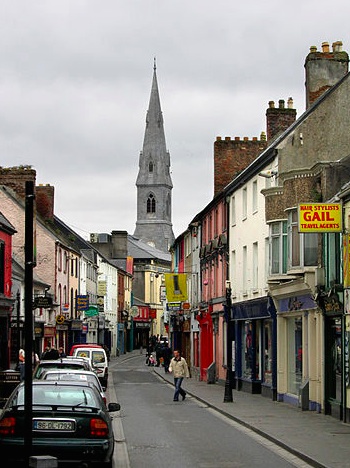
Ennis Wikimedia Commons
Ennis
Wikimedia Commons

CLARE, ENNIS, MARCH 6
On Friday last, a great number of the trades-people went some distance out of town, with a band and colours, in expectation of meeting Counsellor O’Connell, and intending to draw his carriage into town.
Several of them were tastefully dressed, and carried poles with large loaves of bread on them. They marched in procession through the town, and the orderly manner in which they conducted themselves was very commendable.
After waiting a considerable length of time on the way, they returned about seven o’clock in the evening, when they played a few enlivening airs and retired peaceably to.their homes.

Posted in Posts and podcasts

Corofin – 1826

The Monitor (Sydney) 17th November, 1826(abridged)

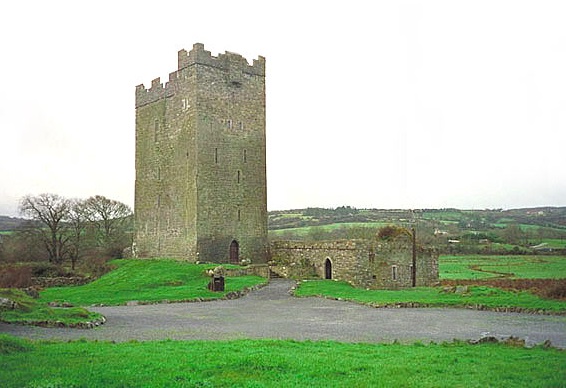
O'Dea castle near Corofin. Wikipedia.org
O’Dea castle near Corofin. Wikipedia.org

Our readers are aware that a Public School has been for a time kept under the patronage of Mr. Synge, of Dysart near the market town of Corofin. It is no less notorious that the School has met with considerable opposition from Mr. Murphy, the Priest of the Parish.

On Thursday night last, a party of diabolical miscreants assembled convenient to the place, and after firing several shots, and calling to the persons who resided in an adjoining house, not to stir out on pain of losing their lives, set fire to the school house.

Satisfied that their demoniac work of darkness was accomplished, they called to the persons in the house to come out and save themselves and their property as well as they could, as the flames were communicating to their dwelling. They then decamped.. We abstain from any further remarks on this subject, until we hear more about it.-Ennis Chronicle.

Posted in Posts and podcasts

The Great Skellig – 1826

DEPLORABLE CIRCUMSTANCE.

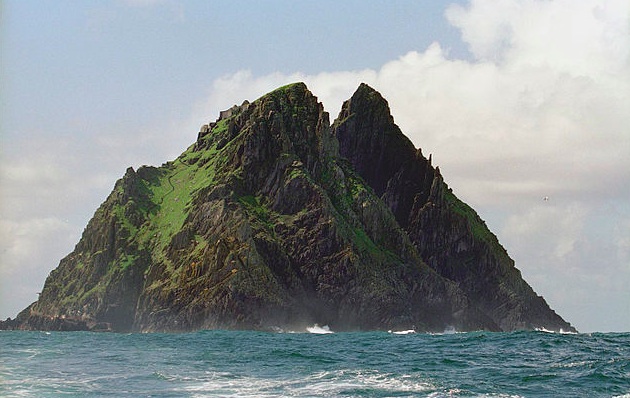
Skellig Michael Photo: Jerzy Strzelecki -Wikimedia Commons
Skellig Michael
Photo: Jerzy Strzelecki -Wikimedia Commons

The Monitor (Sydney) 17th November, 1826 (abridged)

The Great Skellig Rock is situated in the Atlantic, near Valentia Island, and is over 300 feet in height. The Ballast Board are erecting a Light-house there and the Board are exceedingly censurable in not having provided against such a dreadful casualty as our Correspondent describes:-

“There are about forty workmen now on the Skellig Rock nearly a month without victuals or firing, and the weather is so bad that no relief can be given them. The signal of death is constantly flying from the Rock.
Two men escaped about a fortnight ago by jumping off, and were most miraculously saved by the relief boat, though she could not approach the Rock. The account the men give of their fellow sufferers’ privations is melancholy.”
Lim. Eve. Post.

Posted in Posts and podcasts

A profitable experiment – 1826

Koala Wikimedia commons
Koala
Wikimedia commons

https://widgetworld3.wordpress.com/podcasts/

The Sydney Gazette and New South Wales Advertiser 19th July, 1826

(abridged)

In the year 1823, His Majesty’s government was induced to make an experiment, upon a very small scale, of conveying emigrants from Ireland to the British Colonies in North America, which was attended with the greatest success.  The average expense for carrying out the emigrant, locating him, and maintaining him for a year was about £22 per head only.  Small as this sum appears, however, it is obvious that, to act upon an extensive scale, it would require a great sum of money were the strea of emigration to be directed to our shores.

In appearance, then, it would be impolite in His Majesty’s Government to give this country (Australia) such preference.  However, the colonies in North America, from their climate and soil are not calculated to afford a return for labour anything equalling New South Wales.

Nova Scotia might be situated in a favourable part of the temperate zone but its atmosphere, for a great part of the year, is clouded with a thick fog which renders it unhealthy.  For four or five months it is intensely cold while the soil, apart from that which is on the banks of the rivers, is thin and barren.

Australia possesses a climate and soil which cannot be surpassed.

Posted in Posts and podcasts

Breeching the law? 1826

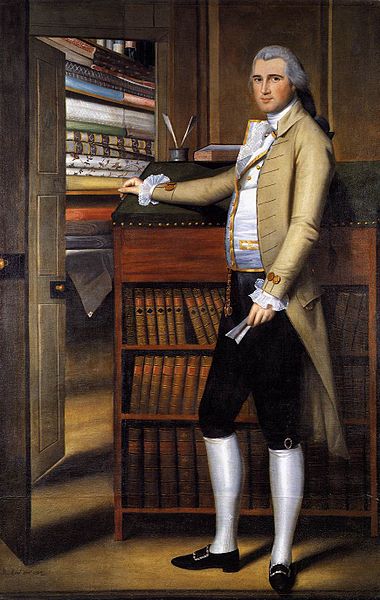
Elija Boardman by Ralph Earl 1789 Wikimedia Commons
Elija Boardman by Ralph Earl 1789
Wikimedia Commons
The Australian 5th January, 1826 p3/4
https://widgetworld3.wordpress.com/podcasts/
(abridged)
Mary Hartigan, a daughter of Erin, was introduced to the magistrates notice last week. The preceding night constables met with Miss Hartigan (who seemed to ‘tower above her sex’) parading the streets dressed not in silks and satins, but in good substantial brogues and corduroy inexpressibles, and what not.
The guardians of ‘peace and harmony’ first gave their account of the matter. Then Miss Hartigan was requested to state her inducement for assuming what, by the ‘common law’ between the male and female parts, did not exactly belong to her. Mary responded she saw no reason, when all the boys and girls were enjoying themselves, that she should remain at home that night. Feeling inclined for a ‘bit of a spree’ she took a fancy to ‘wear the breeches’. She was also ‘proud to keep the ould game alive.’ Her mother and her grandmother and her aunt’s daughter and all the family of the Hartigans did the same before her – and where was the harm of that?

The magistrate did not understand that this was a universal amusement in parts of Ireland during the Christmas holidays. He and lookers on were not convinced of the prevalence of this fashion. Mary was dismissed with a strong recommendation to the care of the ‘female factory’.