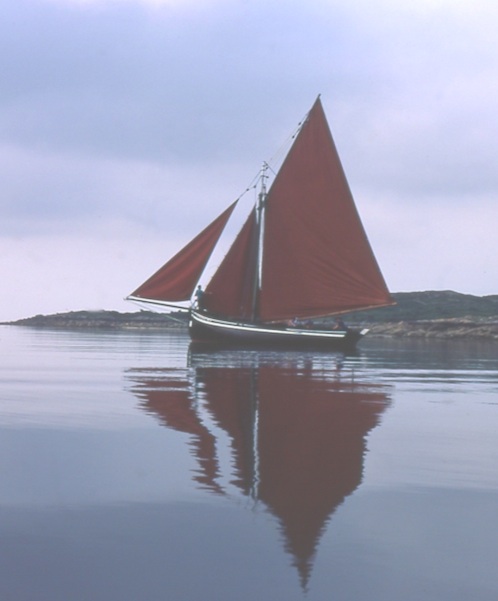
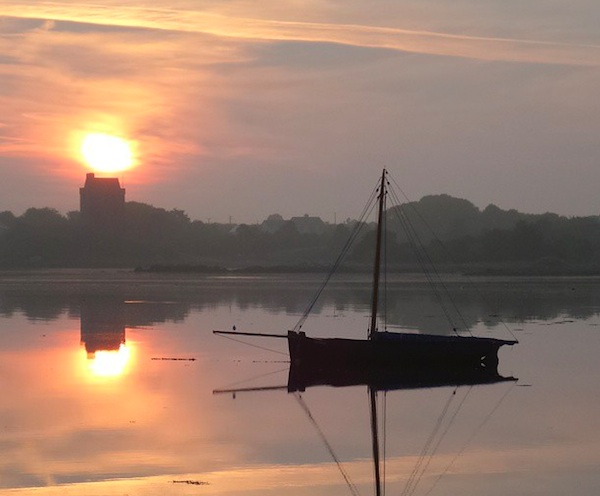
A few days ago a regatta took place at New Quay. Mr O’Connell Esq., M.P. acted as commodore, and he and John Scott, of Cahercon, Esq., both subscribed 10/s towards the amusements. The sailing and rowing matches were excellent.
The chief race for hookers was won by a Connemara boat, in consequence of Flaherty’s boat from the Claddagh having stranded. There was a private match between Mr Scott and Mr J. Hynes with their canoes, which was won by Mr Hynes. Mr O’Connell and Mr Scott remained a week and enjoyed the hospitality of Mr J. Hynes.
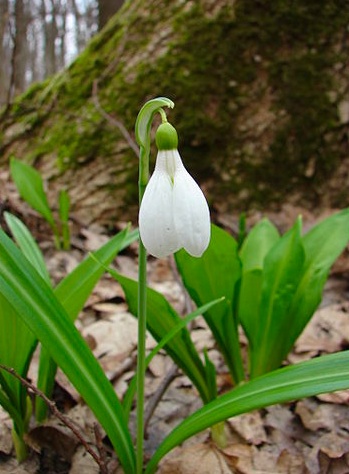
A pretty legend is related in connection with the snowdrop;
Eve was weeping because of the dreariness of the earth after she had been driven from Eden. She longed to see a flower once more, but none grew in the place of her banishment. The snow fell steadily.
Eve called to an angel and told him of her woes. The angel came to her, caught a drifting snowflake, breathed upon it, and gave it to her. It transformed, and the Snowdrop was born.
“Summer comes, Eve” said the angel, and he left. As he did a halo of the little flowers grew from his footprints.
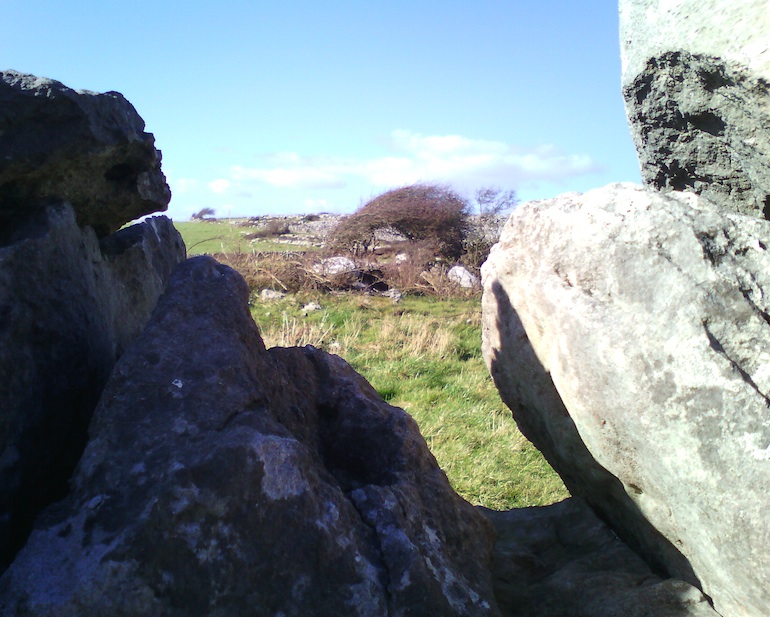
Tuam Herald 11th March, 1899 p4 (abridged)Photo: Kinvara Stone EO’D
A large and representative meeting of the electors of the parish of Kinvarra was held recently at Kinvarra for the selection of a candidate for the office of County Councillor of the Gort Division and of candidates for the District Councillorship of Kinvarra, Doorus, Killinny and Cahermore.
The Revd John Moloney, P.P. Presided and the attendance included the Revd Father Davoren, C.C. And Messrs J.W. Brady Murray, John Flatley, William Flatley, Fergus O’Dea, John O’Dea (Doorus), John Quinn, PLG; Miko Hynes, Ml O’ Donoghoe, Martin Corless, Patrick Curtin, John Quinn (Kinvarra), Thomas Greene, (Loughcurra), F. Green, P. Hynes PLG; M Brennan, Stephen Leech, Thomas Leech, John Morris, John Fahy, PLG; Thomas O’Halloran, John Finucane, Thomas Fahy, Patrick Hynes, (Corrishooa (sic.)); John Burke, Thomas Burke, Thos Kavanagh, J. O’Connor, Michael Howard, John Tierney, Wm. Whelan, A. Staunton, P. Kennedy, Ml. Kennedy, William Connor, John Davenport, T. Doogan, Ml Grady, E. Holland, F. Fox, Wm. Quinn, Michael Mooney, F. Lally, T. Lally and many others.
Among the ladies present were the Misses Hynes, Mrs Cullinan, Mrs Watson, Mrs Johnston, Mrs O’Halloran, the Misses Joyce and Mrs O’Donnell.
(further details in Kinvara in the news-archives on theburrenandbeyond.com)
There was a striking element of humour on Monday in Kinvara when some stock belonging to Mr Corless, of the Sharpe estate, which were seized as a result of a decree for non-payment of rent, was offered for sale.
The house of Mr Gaffney, another tenant was also taken possession of by the bailiffs as a result of a decree.
The reason assigned by Mr Corless and Mr Gaffney for allowing decrees to be obtained against them is that they wished to make a protest against the attitude of the landlord and the agent.
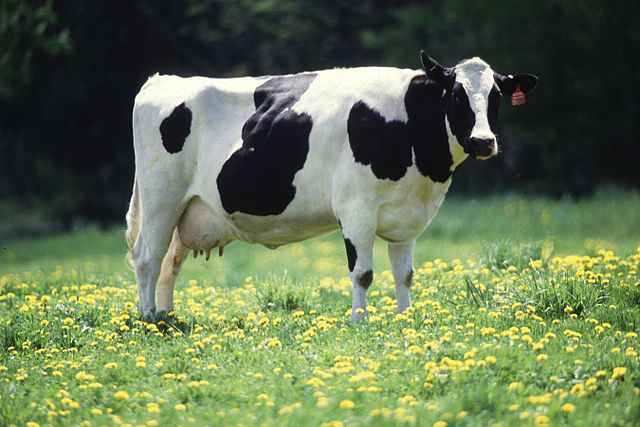
Before the sale the stock were paraded through the streets of Kinvara. A milch cow was decorated with green ribbons and had a card of membership of the Town Tenants’ League attached to her horns and a card underneath bore the militant motto of “No surrender.”
A calf followed bearing another card with the inscription “Mother’s motto is mine.” Then came a little boy dressed in green, seated on a donkey, with the words “No surrender” printed on his coat.
The animals were purchased for £11 14s the amount of the decree, by Mr Colgan, a U.I.L. organiser. The sheriff’s bailiff then proceeded to Mr Gaffney’s premises and auctioned a pianoforte for £12 16s, Mr Colgan again being the purchaser.
Irish Independent 15th June, 1936 p7Eamon de Valera Wikimedia Commons
The Irish Women Workers’ Union has forwarded to Mr de Valera the following communication, signed by Miss L Bennett, Secretary;
My Committee has instructed me to express their grave disappointment that the Government have appointed only one woman to act on the Commission to investigate the subject of a second Chamber. They feel that this lack of adequate representation shows a lack of appreciation of the valuable work now done by many women in public life and in many important sections of the world of work. My Committee recognise that in many respects the functions and talents of women give them special interests and a special point of view in human affairs, and it is this fact which makes it particularly urgent to give women opportunities to help in the moulding and in the direction of the national life.
You have entrusted to this Second Chamber Commission the duty of endeavouring to add to the framework of the State an instrument which could vitally influence its development. For such a task it would surely be valuable to have the viewpoint of the nation’s women strongly represented.
The Constitution of An Saorstat is based on the principle of equal status and responsibility for all citizens. My Committee beg that you will put this principle into practice in the case of the Commission and set a headline for the composition of the Second Chamber by giving women more generous representation than one in 23 members
Patrick French, son of Roebuck, waa a Catholic. He was a very generous donor to the Kinvara church, his gifts including a beautiful chalice.
James, French, brother-in-law of Oliver Martyn, Tullyra, spent much of his iife in France, owing to the delicate health of his children. His daughter Frances, married Bartholomew De Basterot, who thus became heir to the Durus property. The establishment of his claim, however, involved him in a legal suit extending over thiee years. The enormous expense thus entailed so impoverished him that he was forced to sell some of the property.
It was purchased by Robert Gregory, Coole Park, and Mark Lynch, Galway. The latter erected Durus chapel for the convenience of the tenantry. As this occurred in the eighteenth century we may conclude that the penal code was not rigorously enforced in all parts of the country.
Robert Gregory continued the erection of the Kinvara pier and quay which had been begun by James French. To do so it was necessary to demolish the fine old chiefs (sic.) of Kiloveragh which stood opposite Dun Guaire Castle. Though displaying little reverence for the historical monuments of the district, this gentleman showed a commendable enterprise of more material value to inhabitants.
James De Basterot built a new residence at Durus and planted extensively. He was an artist of merit and some of his pictures are still to he seen in Kinvara church. His son, Bartholemew, was a distinguished writer. Though one of the absentee landlords, he manifested a kindly interest in his tenants.
Tiirowen House was purchased about 1650 by Christopher French. The latter was Mayor of Galway during its siege by Ludlow who added considornbly to the Tirowen estates, probably after his betrayal of Galway. Early in the eighteenth century, a daughter of his married the Hon. Mary St. George, hence the Tirown Frenches were afterwards known as the St. Georges.
Tuam Herald August, 31st 1912 p2 (abridged)Dunguaire Photo: c. Norma Scheibe
Mr Jack Yates and Mrs Yates are staying at Coole Park with Lady Gregory. He is a distinguished artist of the new school of Irish art. On Sunday a party from Coole drove to Dungory Castle – the fine old castle owned by Edward Martyn – and lunched there. It is said Mr Yates will paint a large picture of it.
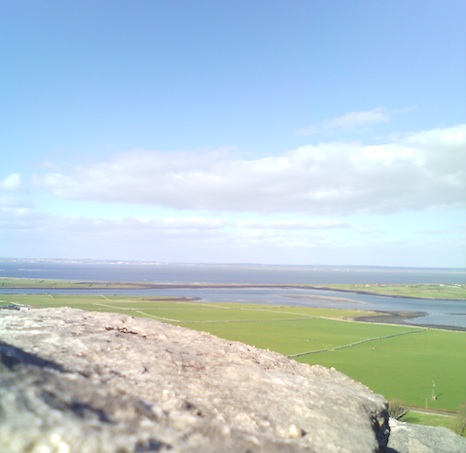
It is one of the finest ruins in Ireland – kept in excellent preservation by Mr Martyn who pays a caretaker, Mr Hanbury, to look after it. The wall which surrounds it is complete. It overlooks an arm of the little Bay of Kinvara, itself an arm of Galway Bay and around and about are countless springs of fresh water bubbling up from the ground and coming by subterranean ways from the lake of Coole, six miles off as the crow flies.
The water of Coole itself comes from the Devil’s Punch Bowl at Gort, outside Lord Gough’s beautiful demesne, where a seething bottomless pool of water may be seen, one of the wonders of nature. it is never empty, always in motion like a vast cauldron stirred by a giant.
Pembrokeshire Herald and General AdvertiserPhoto: Norma Scheibe
3rd October, 1851 (abridged)
The Boards of Guardians of the different Unions persist in their refusal to make rates for the repayment of the Government advances. Among the repudiators whose proceedings are recorded this week, are the Guardians of the Galway and Clare Unions and a meeting has been called of deputies from all the Unions in the province of Munster, with a view to oppose the demand of the Government.