A rumour gained currency in Galway on Wednesday evening that mines had been laid in Galway Bay. It appears that when the ss Karlsburg from Sweden, with timber, steamed into the harbour, 20 police and coastguard officers boarded her and remained throughout the night. Their places were taken by fresh constables yesterday morning. A thorough examination of the vessel, however, found nothing that lent colour to the mine laying story.
In an interview with the mate of the Karlsburg it transpired that the Admiralty early on Wednesday wired to the Customs officials at Galway to detain the vessel on suspicion.
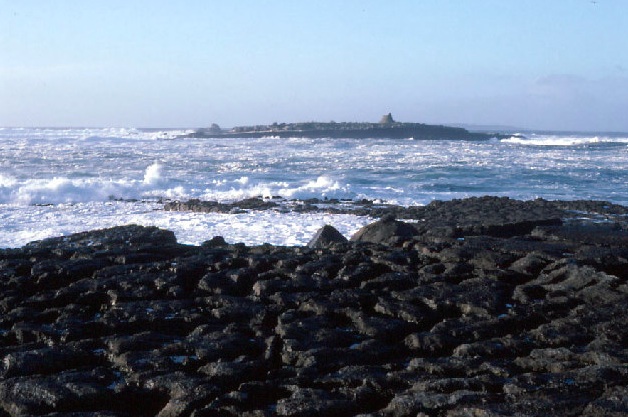
Crab Island, Doolin, County Clare Photo: Dr Charles Nelson Wikimedia Commons
The County Clare police have arrested a man who entered Crabbe (Crab) Island, in a sheltered inlet of Galway Bay, near Doolin, in a collapsible boat, and who declared that he had escaped from an American ship that had been sunk by a German submarine.
It appears that the ship mentioned was not sunk, and the mysterious visitant of this lonely coast, which is well within the bay, being unable to give a satisfactory account of his presence, was conveyed by the naval authorities to Scotland Yard.
He wore the clothes of an ordinary civilian with a frieze coat, and it appears that he got £45 in silver at an Ennistymon bank. He is a man of education and states that he is a native of Munster.
The collapsible boat is not of the ordinary type but has cork stays and can be rolled up into a small parcel.
He was taken to Dublin on the way to London
Everyone in Galway is aware of the immense quantities of herrings that are at present in the bay but the Claddagh men will only go out every second night to capture them.
On Tuesday night Captain Oliver, one of the pilots, went out in his boat. This being a prohibited night, he soon found that he was being chased by two large hookers – watch boats, as they are termed – each filled with men. Seeing that he could not fight them he ran into Oranmore Bay and thus escaped.
On Friday night the “watchmen” succeeded in committing an outrage. Several boats from Kinvara were fishing when three or four Claddagh hookers, with about twelve men in each, bore down and cut away some of the nets. The boats that escaped came into market with immense quantities of herrings.
Very few of the Claddagh boats are marked, according to law, so that identification in such cases is almost impossible.
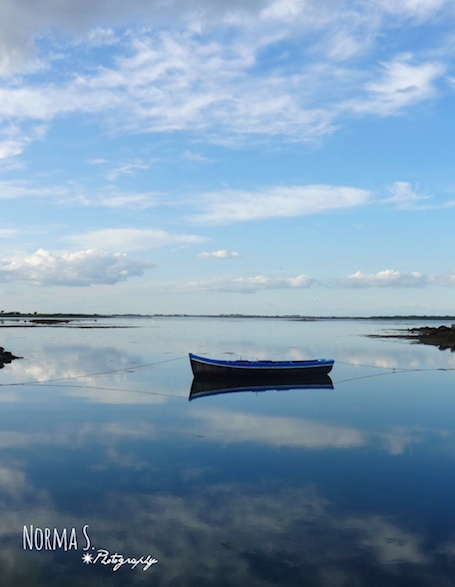
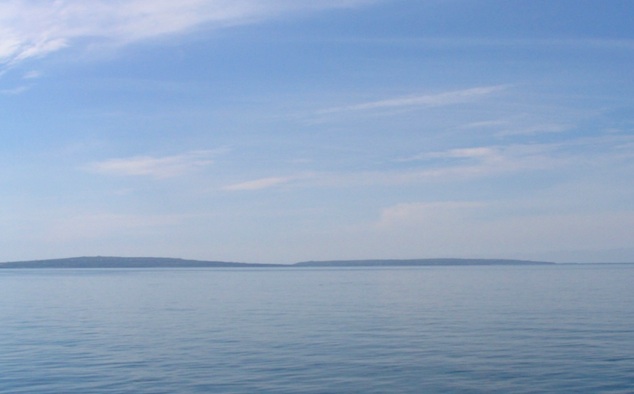
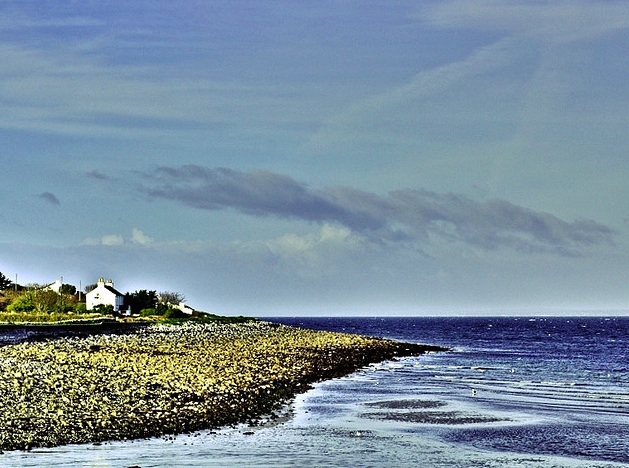
Freemans Journal 19th January, 1924 p8Galway Bay Photo: Norma Scheibe
Lieut Commander O’Donnell, of the Free State Coastal Patrol, a native of the Aran Islands, has initiated a scheme of coastal traffic in Galway Bay and proposes to run a direct service from Galway to Kinvara with the motor boat, St. Nicholas, and later to trade along the Northern coast of the county to Clifden.
==========
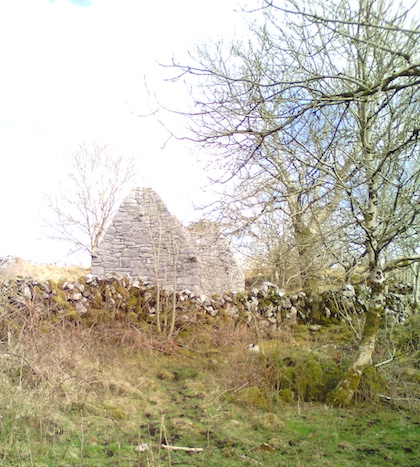
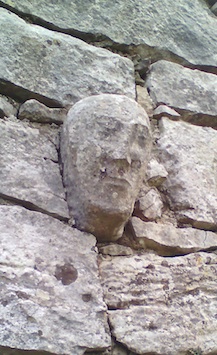
Temple Cronan, the Burren, County Clare Photo: EO’DTemple Cronan Photo: EO’D
Temple Cronan, the Burren, County Clare has been dated to the 12th Century.
The church is Romanesque in style, with carved stone heads (human and animal) on projections around the walls. Small shrines lie to the east and south east of the church and beyond the enclosure traces of several dwellings can be seen. A small track leads from Temple Cronan to a holy well – and to a wonderful walk through the hills. A beautiful site, in a beautiful place – the Burren, County Clare.
Aran Islands, West of Ireland Photo: Fabio Grasso Creative Commons
Fishermen have legends all their own. They say that the reason why the flounder has one side white is that the Blessed Virgin once placed her hand upon it, and that the spot where her lily hand rested has been the colour of the snow ever since.
An eminent tradition is to the effect that it was the haddock in whose mouth St. Peter discovered the tribute money; that the spots upon its body near the gills was caused by the pressure of the Apostle’s fingers.
The pike, like the passion flower, carries upon it the marks of the Crucifixion such as the cross, nails and sword. This, sailors will tell you, is because the pike remained above the water when all the other fish fled to the bottom of the sea in panic when they found that the Saviour was to be put to death.
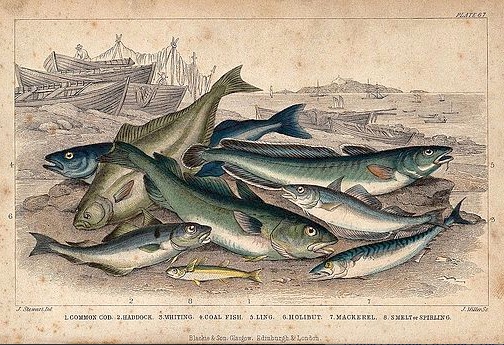
The Blessed Virgin has always been considered the especial patroness of those “going down to the sea in ships.” To her they appealed when in danger of shipwreck and ships sailing past any of her sanctuaries used to salute her by striking their topsails or chewing up the topsail sheets. Most of the ships in the Royal Navy of England were in Catholic days given one of her own sweet names. The fishing fleets of all continental countries have always honour her in a similar manner.Eight different species of fish, including cod, haddock, halibut and mackerel, are lying on a beach. Coloured etching by J. Miller after J. Stewart. Wellcome Images; Creative Commons
While Our Lady as Star of the Sea has ever been the protectress of all sailors, St. Nicholas has in a special sense been the patron of fishing towns. Many caves along the coast of France have been used as chapels in which both the Blessed Virgin and St. Nicholas have had especial honour.
Formerly it was considered a token of great good fortune when mackerel fleets could arrange to start out on May day; and the sailors took delight in decorating May day garlands. When the mackerel nets, with floats attached, were thrown into the water the sailors would sing;
Watch, barrel, watch, mackerel for to catch!
White may they be like a blossom on a tree!
God send thousands, one, two and three!
Some by their heads, some by their tails
God sends thousands, and never fails.
Then the captain would cry “Seas all!” and over the nets would go.
Ships of olden time often bore an image of Our Lady as a figure head. With her leading them they never lacked courage to fare out into the wide waste of waters.
“Catholic Bulletin
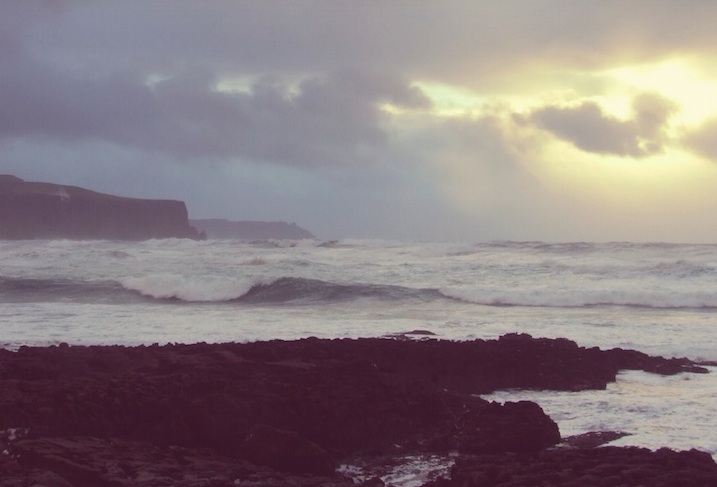
Kildare Observer 22nd January, 1898 p10Cliffs of Moher Photo: Norma Scheibe
Acrostic on County Clare by Mrs Maunsell – Christmas 1897
Can we fitly sing the praises of our native Clare Ocean washed, and verdure coated, hills and lakes and valleys fair, Under trees whose spreading branches ferns flourish, flowers blow; Now we see wild rocky stretches, Shannon ripple, Fergus flow. Time has left his track in ruins, noble halls and castles grand, Yet their stately, silent presence lends a glory to the land.
Cliffs of Moher, proud, majestic, rise unrivalled on the coast Lovely sands, and snowy billows, lost in wonderment we boast; And it cannot pass unnoticed, by all lovers of the sea, Reigning o’er our pleasant homeland, queenly watering place Kilkee Erin’s sons may well be proud and sing her praises long and loud
Over one hundred and fifty signatures, headed by that of the parish priest, have been appended to a petition of protest against the proposed removal of the civic guards’ barracks from New Quay, County Clare. The petition has been forwarded to the Chief Commissioner and is as follows …
read more on In the news at theburrenandbeyond.com
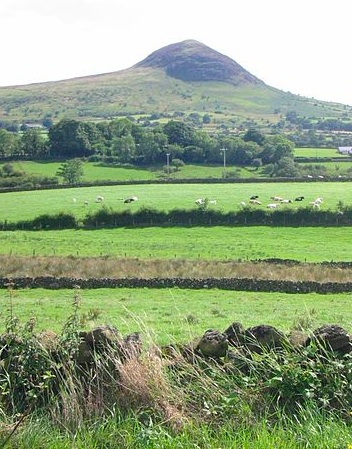
Slemish mountain, County Antrim where, it is told, St Patrick worked as a shepherd while a slave Photo: Man vyi Wikimedia Commons
We wake the echoes by that storied lake Where sainted Patrick in days of old Prisoned the wily serpent, which, ’tis told Still cries unto the saint his bonds to break
Excerpt from A summer night on the Galtees
by T McG