Posted in Posts and podcasts

Resolutions – Galway – 1782

Freemans Journal 20th April, 1782 p3 (abridged)

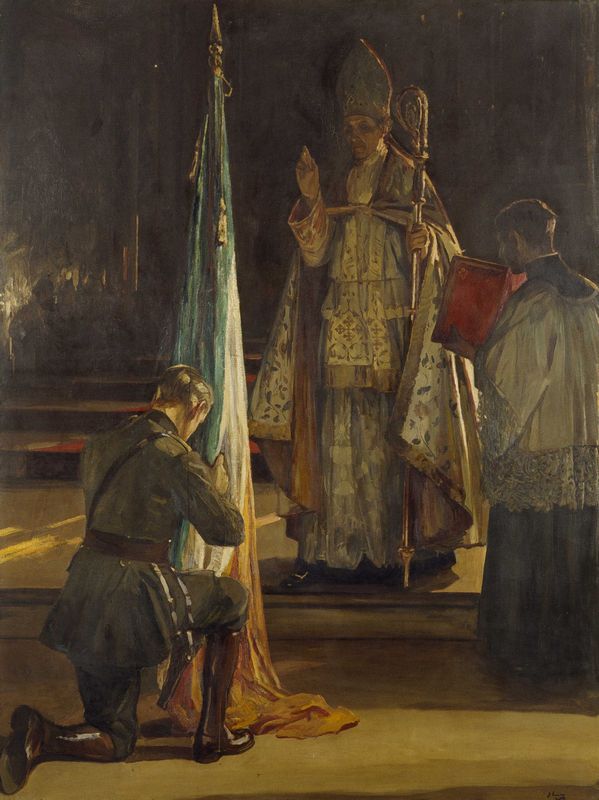
 Blessing of the Colours  John Lavery, 1922. Wikimedia Commons

Blessing of the Colours
John Lavery, 1922.
Wikimedia Commons

At a full meeting of the Grand Jury, Gentlemen, Clergy and Freeholders of the County of Galway assembled pursuant to public notice from the High Sheriff at the County Hall in Galway on the 31st of March, 1782. The following resolutions were unanimously entered into;
Resolved;
That a seat in Parliament was never intended by our constitution as an instrument of emolument to individuals and that the representative who perverts it to such a purpose (particularly at so momentous a period as the present), is guilty of betraying the trust reposed in him by the people for their, not HIS benefit.
Resolved;
That the people who could tamely behold their suffrages made the tool of private avarice or ambition are still more criminal than the venal representative as they become the panders without even the wages of prostitution.
Resolved;
That we do hereby solemnly pledge ourselves to each other and to our country by every tie of honour and religion which can be binding on man, that as our sacred duty which we owe to the community supercedes all ties and obligations to individuals.

It is time for the people to look to themselves and in great national questions to assert their right to control those who owe their political existence to their breath and may be annihilated by their displeasure.

Posted in Posts and podcasts

Burren Flowers – 1862

Freeman’s Journal 29th April, 1862 p.3 (abridged)

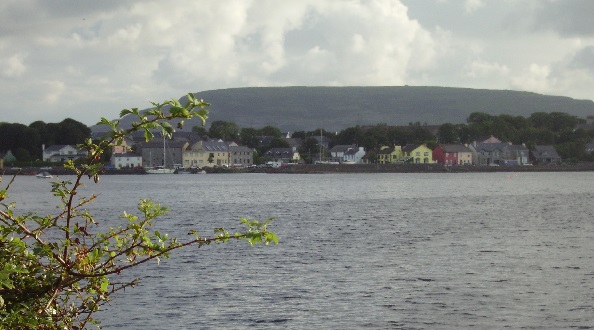
Kinvara, Gateway to the Burren. Photo: BO'Donnell
Kinvara, Gateway to the Burren.
Photo: BO’Donnell

A general meeting of the Royal Irish Academy was held last evening during which Mr F. J. Foot read a paper on the botanical peculiarities of the Burren district, County Clare, illustrated by a botanical map.
He stated that many rare plants grow in great abundance in localities quite different from those usually known as their habitation. He was much struck by this while engaged in a geographical survey in that part of the country. The abnormal position of these plants was alluded to in a very able paper read by Rev. Mr O’Mahony before the meeting of the British Association in Dublin.
Although the barony of Burren was composed chiefly of carboniferous limestone, which sometimes rose in hills 1,000 feet above the level of the sea, the soil nourished plants of a rare and beautiful character. Mr Foot alluded to the peculiarities of the plants, some of which were remarkable for a fresh and beautiful foliage. Handsome drawings of them were exhibited.
A Member inquired whether these plants were scattered over Ireland at large, or whether they were peculiar to the west? There were many such plants as those alluded to by Mr Foot found in Portugal.

Posted in Posts and podcasts

The Irish Empire – 1926

Strabane Chronicle 6th March, 1926 p.4

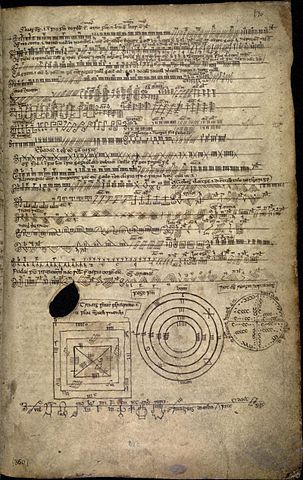
Folio 170r of the Book of Ballymote - (c1390) explaining the Ogham script. Wikimedia Commons
Folio 170r of the Book of Ballymote – (c1390) explaining the Ogham script.
Wikimedia Commons

Evidence that an early Irish Empire flourished in the fifth, sixth and seventh centuries, with teachers and missionaries spreading its learning and culture into Germany, France and Switzerland, has been given in a series of lectures delivered at the School of Irish Studies, 6 West 12th Street, New York City by Mr Benedict Fitzpatrick.

Further details In the News at theburrenandbeyond.com

Posted in Posts and podcasts

Temperance Day – 1907

Freeman’s Journal September 9th 1907  p.12 (abridged)

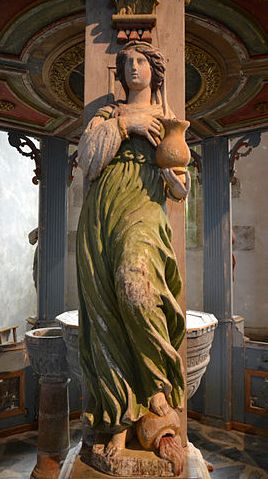
Representation of temperance (painted wood sculpture c1683 at the church of Breton Commana, France). Photo: Lamiot Wikimedia Commons
Representation of temperance (painted wood sculpture c1683 at the church of Breton Commana, France).
Photo: Lamiot
Wikimedia Commons

The splendid demonstration yesterday in Dublin, in the streets and on the platform was conclusive proof of the steady and swift advance of Temperance.  As the Chairman Father Aloysius, said in his opening statement, from every part of Ireland, north, south, east, west, contingents representing the various Temperance Societies in the country took part in the procession and the great public meeting which followed.
Such demonstrations are eminently serviceable to the cause. Success is the best reward of honest labour, and the indefatigable workers in the cause of Temperance found their wages and encouragement in such conclusive proofs of its progress.
Temperance Day may now be regarded as an annual festival. Last year it was held in October, and was a very considerable success. But owing to the lateness of the seasons and the inclemency of the weather it was impossible to expect any large country contingent. For this reason an earlier date has been selected and the overwhelming success of yesterday’s celebration most amply justifies the change.

Posted in Posts and podcasts

The Banshee – 1888

Irish Examiner 15th December, 1888 p5

The Burren and beyond Photo: EO'D
The Burren and beyond
Photo: EO’D

(abridged)
Once I saw a banshee. It was many years ago. During the summer months the twilight is very long and late one afternoon, when the sun had gone down, I happened to walk over to the farm of M.B. Well, as we stood and talked, my friend suddenly said;
“Mike, do you want to see a banshee?”
Of course I did and looked where he pointed. Sure enough, there in the lane, creeping along near the hedge, was a wee bit of a thing, no more than three feet high. It looked like a young girl, only its hair, which was long and yellow, fell down its back clear to the ground, and as it crept along it whimpered and moaned just like a child in pain. My friend looked very grave, saying;
“That’s a family banshee, and I’m afraid some of my relations are going to be sick.”
Pretty soon after a neighbour came riding up and told my friend to make haste as his mother had been taken very ill.
The next day I learned that the poor woman had died before her son reached her.
The banshees are queer things, and they never let anyone come near them. Another man I knew came across one sitting in a corn field, near the fence. When he suddenly appeared it ran out of sight among the corn, but it dropped its comb from its yellow hair and the man picked it up and put it in his pocket. That night the banshee came near the house and whined so piteously that the man dropped the comb out of the window. The banshee then left, and when a search was made the next morning it was found that the comb had disappeared too.

Posted in Posts and podcasts

After hours – 1925

Connacht Tribune 5th December, 1925 p5 (abridged)

One for the road. Photo: EO'D
One for the road.
Photo: EO’D

There is more illegal trading going on in this village than in any other village in Ireland, said Supdt. English, Gort, at Kinvara District Court, when Mr –, a publican in a village between Kinvara and Clarenbridge, was prosecuted for a breach of the licensing code on Sunday. The district justice, after hearing the evidence, imposed a fine of 40s and endorsed the license.

The evidence was that on a recent Sunday the Guards who were on public house duty visited the place and found the front door and the bar opened, and a crowd of people in the yard. There was a man in the kitchen and Mr and Mrs — were in the shop. Mr — was behind the counter with a bottle of stout in one hand and a glass in the other, in the act of filling out the liquor. When the Guards approached the crowd ran away and it was his (superintendent’s) opinion that “scouts” were on the look out.
The Guards, he continued, had the greatest difficulty in supervising this illegal traffic in Sunday drinking and this man was convicted before in January last. Mr — told the Guards that the man in the kitchen was an invited guest and a friend of his. The Guards examined the premises and found traces of porter on the counter and fresh porter in glasses. At the time the Guards visited the place it was 12.25 p.m. – Guard McGuire and the local sergeant corroborated. When they went there they said the door was wide open, and when Mr — saw them entering he endeavoured to close up the bar by pulling down a latticed shutter between the shop and the bar, and when questioned he said the men were all bonafide travellers.
Magistrate (to defendant):
Have you anything to say?
Mr –;
The men were all bonafide.
Magistrate;
You could not have them there before one o’clock, even if they were. You should know the provisions of the new Act as a publican.
Defendant;
I have nothing to do with the yard attached.
Magistrate;
It is attached to and licensed as well as your premises and you are bound to see that nobody is there only those entitled to be there. You are bound to exercise strict supervision over the yard as well as the premises.
Mr –;
People come there and put their carts in my yard while they are at Mass.
Magistrate;
I know nothing about that. It might be a cloak to get drink illegally.
Superintendant;
There is more illegal trading going on here than in any village in Ireland and the Guards cannot exercise supervision owing to the “scouts”.
Magistrate;
I hope that this thing will be put down and that the Guards will keep a watchful eye on the place, and I will impose a fine of 40s and endorse the license and make a D.W.P. order against the man found on the premises.

Posted in Posts and podcasts

Kinvara exports – 1867

Irish Examiner 23rd April, 1867 p1 (abridged)

Patates Photo: Scott Bauer, USDA ARS Wikimedia Commons -
Patates
Photo: Scott Bauer, USDA ARS Wikimedia Commons –

Just arrived the Schooner Westward, with 110 Tons from Kinvarra in the Galway Bay, the shipment of Joyce and Curtin, in the English and Limerick markets, where the quality of those potatoes are known.
They array from 10s to 15s per ton more than others, and go by the name of “Galway Protestants.” Those requiring them for seed should put down a lesser quantity, as they are of a prolific nature, otherwise the crop will be bad. Parties wishing for a good summer potatoe will find it their interest to supply themselves out of present cargo.

Posted in Posts and podcasts

Galway Bay – 1914

Irish Independent 30th October, 1914 p3

Galway Bay EO'D
Galway Bay
EO’D

A rumour gained currency in Galway on Wednesday evening that mines had been laid in Galway Bay. It appears that when the ss Karlsburg from Sweden, with timber, steamed into the harbour, 20 police and coastguard officers boarded her and remained throughout the night. Their places were taken by fresh constables yesterday morning. A thorough examination of the vessel, however, found nothing that lent colour to the mine laying story.
In an interview with the mate of the Karlsburg it transpired that the Admiralty early on Wednesday wired to the Customs officials at Galway to detain the vessel on suspicion.

Posted in Posts and podcasts

Crab Island, Doolin – 1918

Freemans Journal 17th April, 1918 p3 (abridged)

Crab Island, Doolin, County Clare Photo: Dr Charles Nelson Wikimedia Commons
Crab Island, Doolin, County Clare
Photo: Dr Charles Nelson
Wikimedia Commons


The County Clare police have arrested a man who entered Crabbe (Crab) Island, in a sheltered inlet of Galway Bay, near Doolin, in a collapsible boat, and who declared that he had escaped from an American ship that had been sunk by a German submarine.
It appears that the ship mentioned was not sunk, and the mysterious visitant of this lonely coast, which is well within the bay, being unable to give a satisfactory account of his presence, was conveyed by the naval authorities to Scotland Yard.
He wore the clothes of an ordinary civilian with a frieze coat, and it appears that he got £45 in silver at an Ennistymon bank. He is a man of education and states that he is a native of Munster.
The collapsible boat is not of the ordinary type but has cork stays and can be rolled up into a small parcel.
He was taken to Dublin on the way to London