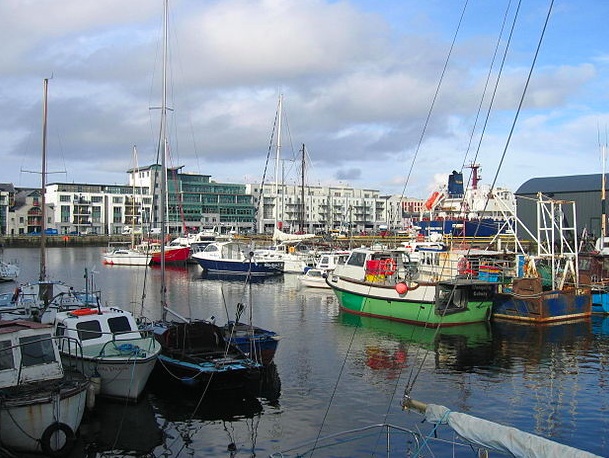
THE CONNAUGHT JOURNAL“Galway Harbour 2007” by Photo: Sulmac Wikimedia Commons
15th October, 1840
NEW GALWAY DOCKS
On Monday last a great concourse of persons assembled upon our new Docks and Quays to witness the first vessel into our new and splendid basin; and had not the circumstances been unexpected the crowd would have been much more numerous. Our new Docks are still in an unfinished state, and will not be perfectly complete before a month or six weeks when it is expected they will be given up by the contractors to the Harbour Commissioners. The first vessel that entered the basin was the Galway Ark, one of the Liners belonging to this Port, and she certainly was brought in in gallant stile by our expert and experienced Pilot, Mr. Patrick O’Halloran. The Galway Lass and the Margaret John subsequently entered the Basin.
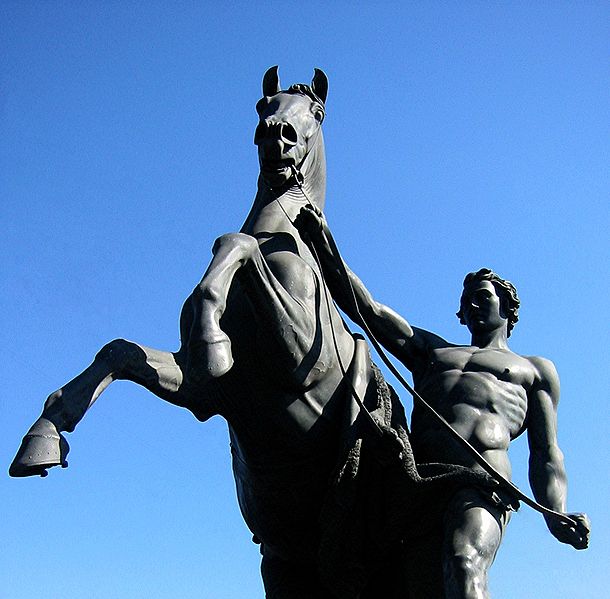
The Horse Tamers sculpture on Anichkov Bridge in Saint Petersburg i by Peter Klodt. (1805-1867) Photo: Walter Smith Creative CommonsEnnis Chronicle Jan 18 1817 (abridged)
Last Tuesday night, between nine and ten o’clock a numerous cavalcade appeared at Cappa, the seat of Richard Gregg, Esq. They may be said to consist of between forty and fifty at the least; two mounted on each horse. A party of ruffians entered the Gate-keeper’s Lodge to search for arms. They were equally mischievous as insolent and injured every article in their way, until they discovered a fouling piece which they took with them. We learn they traversed a very considerable part of the county.
Richard Gregg, Esq., with commendable zeal and manly spirit, pursued the course which he understood the above banditti had taken and having with him two or three resolute men, it is much to be lamented that he had not been able to fall in with them. Had Mr. Gregg been timely advised of the circumstance they would not have escaped, but the trepidation of the gate-keeper prevented him from venturing out, more timely, apprise his master of the outrage and plunder which had been committed by these unpleasant visitors.
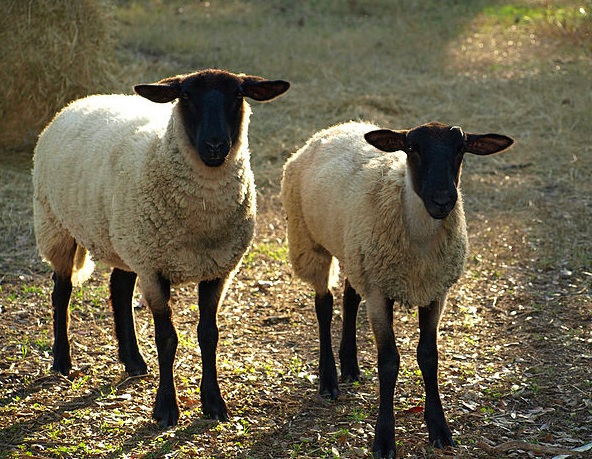
Connaught JournalPhoto; Jacquie Wingate from Recovery, U.S.A. Creative Commons
14th May, 1840 (abridged)
The Fairs of Athenry, Gort, Tuam and Headford have been held during the present and past week, and have been well attended by purchasers. Horned Cattle, especially heifers and milch cows fully maintained the prices had at previous Fairs. Pigs still continue in demand, but a great depression in the price of sheep.
Thanks to the moral influence of the Apostle of Temperance, the Very Rev. T. Mathew, sobriety and good order pervades thro’ all classes of societies. Those Fairs, formerly the scenes of contention and sanguinary outrage, where parties assailed each other with the most brutal and murderous intent, now happily pass off most tranquilly without the least disturbance or breach of the peace. What a great and exemplary Christian Clergyman effected in the habits and dispositions of the Irish people.
Connaught JournalWikimedia Commons
11th August 11, 1823
REPORTS(abridged)
[Extract from Mr. NIMMO’s Report on the Western District.]
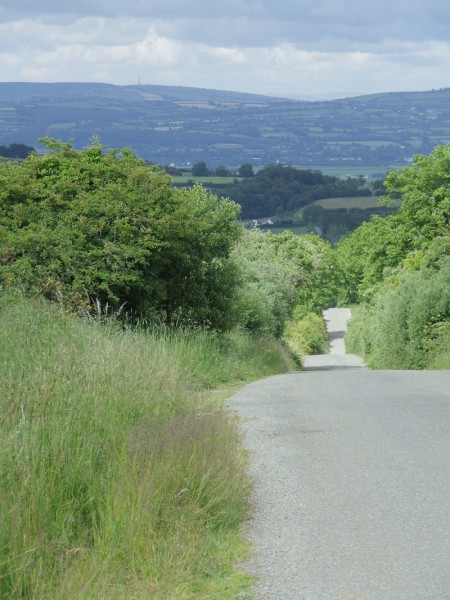
‘The plains of Connaught are in general numerously provided with roads. These seem to have been multiplied in a degree which the country is hardly able to support. A great many of them having got into bad repair. The Counties have confined their expenditure to the leading post roads, and are endeavouring to form those of broken stone.
Materials of the best description are, in general, in abundance – but the original construction of the roads having been exceedingly unskillful, both in direction, level, and the repairs carried on by a class of persons who make a trade of it.
There is no attempt at operating a permanent improvement; the less labour bestowed on the road, the cheaper the work can be done by the perch, and the easier for the persons actually employed, who are not, properly speaking, paid for what they do, but have the amount of the presentment allowed by their landlord, as a set-off against the rent of their holdings. a
“In the county of Galway I found nearly all the money presented at spring assizes had been issued in the way I have above stated. I endeavoured to improve the system, as far as the public was concerned, by giving a few simple directions for making the road of a proper shape, picking out stones, cleaning the drains, breaking the new materials properly, and combining them with the old. I established a system of inspection to see that this was done; and on the other hand, took care that each labourer should be paid his wages in person, leaving him then to settle with the landlord as he might think fit.
“For these reasons, the presentment roads have been mostly executed by the perch, under the original overseers. In a few instances it appeared advisable that an additional sum should be laid out for work not contemplated in the presentment, in order to have the road completed in a proper way. Of this kind, the road from Tuam to Galway may be instanced; being, after the mail coach lines, the most leading road in the province, and which would have been left very imperfect, if the presented portion only had been repaired”.
Connaught Journal 5th June 1823Photo: Jonathunder Creative Commons .
TO THE EDITOR OF THE CONNAUGHT JOURNAL (abridged)
SIR
I beg through the medium of your valuable print to direct the public
attention to the wretched state of those poor creatures that are sent to the Fever Hospital. You are aware that in consequence of the rapid decrease of Typhus in this Town, or, rather (thank God) its total absence at present, the porters employed to convey patients to the Hospital have been dismissed.
Of course, those unfortunate persons that may be yet attacked will not be taken out without paying those porters themselves. They are charged 1s 8d and we know that many of them would expire from want and sickness before they could make up even this trifling sum.
I speak of what has come under my own view. Yesterday a poor woman was taken ill of the Fever; she was ordered to pay the porters. She would not be moved from the bed of sickness but for the humanity of a few individuals who paid for conveying her thither.
The cases at present are few. The Town has seldom been so free from Fever; but even a few, when they have not the means of immediate or timely conveyance, might spread the disorder again amongst us.
During the prevalence of the typhus last year, the porters were paid, I believe, half-a-guinea a week out of the Funds of the Hospital. Now, as Providence has put an end to their weekly employment, they should still be paid, if possible, a reasonable sum out of the same Funds for each person they may carry in. There is a Chair belonging to the Establishment; and I should think 10d for each person conveyed thither by them would be a very ample allowance.
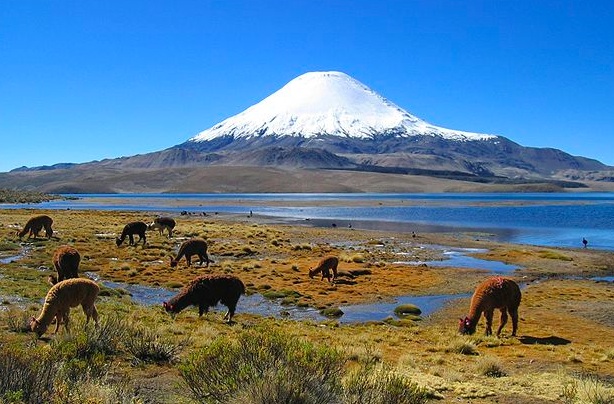
The Omaha Daily Bee; 31st May, 1904 p12. (abridged)Parinacota volcano, Chile Photo: mtchm Creative Commons
After spending more than a year visiting every country on the globe with the exception of China, Michael Lynch, a young blacksmith and a brother to Omaha City Gas Inspector John C. Lynch, met his mother in the little town of Ballyvaughan, Co. Clare, Ireland.
Michael is but 20 years old and had established himself in the blacksmith business in Omaha after learning the trade. The wandering fever, however, seized him a year ago last March and he set out to see the world. His family heard from him only occasionally, once from Chile and next from Scotland.
His own mother, Mrs Lynch was returning to Ireland to visit her mother, a hale and hearty 91 years old. It was just after Mrs Lynch had started homeward from Omaha when John heard from Michael in Scotland. He replied to him immediately and advised him of his mother’s trip to County Clare. The lad succeeded in beating her to Ballyvaughan. The reunion was filled with happy surprise.
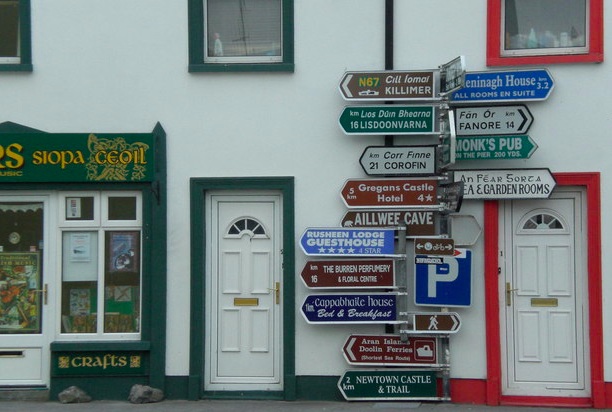
Connaught Journal 14th August, 1823Signpost at Ballyvaughan, Co. Clare. Photo: c. Chris Tomlinson Licensed for reuse under Creative Commons
THE GALWAY AND LIMERICK DAY CARR,
Will start from the Commercial Building’s lane, at 7 o’clock, A.M. on Friday next and every succeeding Monday, Wednesday and Friday having Two Seats each day, from this for Ennis; Two for Gort, and Two for Galway; and also the same day, Two from Ennis to Galway or Gort, and Two from Gort to Galway; and in case of Vacancies, places may be had to Six Mile Bridge, Kilkishen, Tulla, Spancel-Hill, Crusheen and Clarin-Bridge, &c.
The Carr will arrive at the Grey Horse Hotel, Galway, at 7 o’clock each evening; and return at 7 o’Clock next morning, having Two Seats each day for Gort, Two for Ennis, and Two for Limerick; or in case of Vacancies to, or from any of the intermediate Stages, where the Fares and Charge on Parcels may be known.
The Proprietor is preparing Covered Caravans, which will be soon ready to convey Passengers daily to and from the several places mentioned; and he rests his hope of encouragement for the present limited Establishment on the Public Utility of the Undertaking; as the Fare from this to Galway will be little more than half the present expence of travelling from Ennis there, and as the strictest attention will be paid to the safety and comfort of the Passengers.
N.B.- A Carr will leave Stamer’s Hotel, Ennis, at half-past 10 o’Clock every Friday, Monday and Wednesday, with Passengers, for Galway or Gort, and return before 12 from Spancel-Hill with those from Limerick; and also, at one o’clock on Tuesdays, Thursdays, and Saturdays, with Passengers, for Limerick, and return at three o’Clock with those from Galway or Gort.
The Proprietors of the Galway and Ennis Papers will please to publish the above for one post, to be paid for where the Carr stops.
Limerick, August 12, 1823.
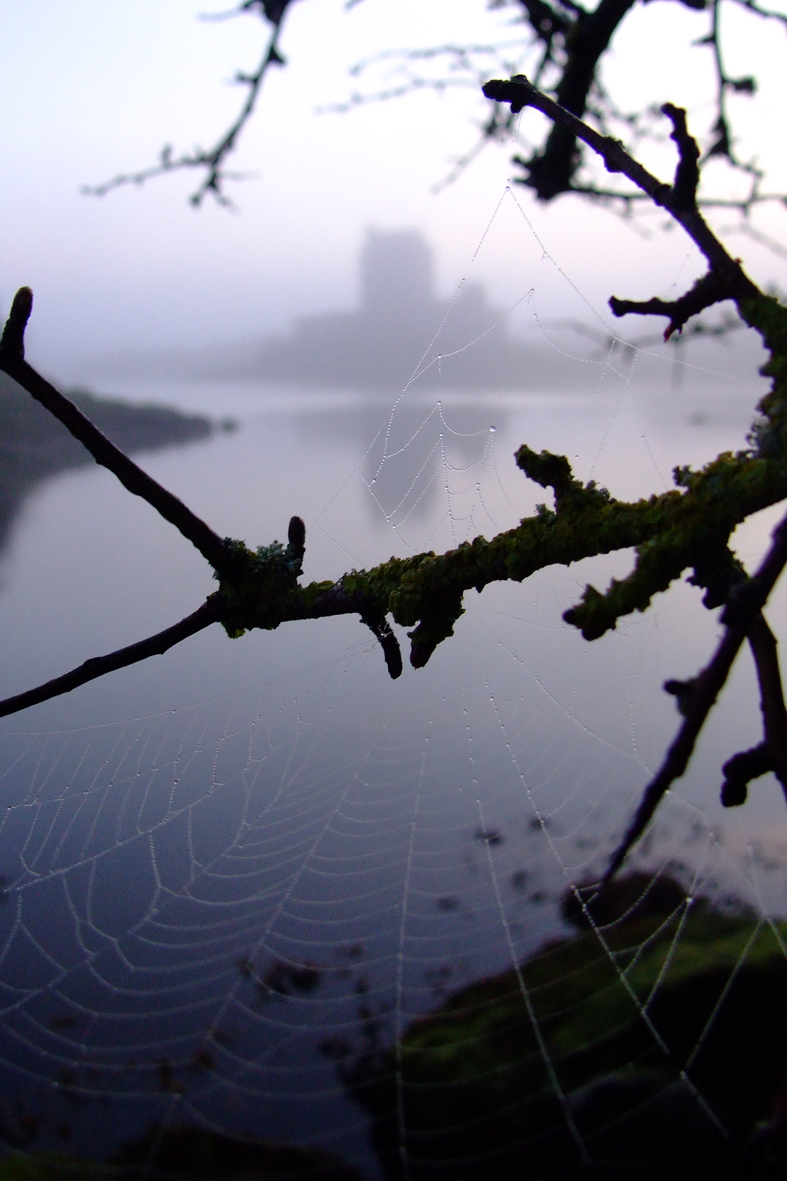
THE CONNAUGHT JOURNALDunguaire Castle, Kinvara, County Galway Photo: Boomur Wikimedia Commons
January 12, 1824 (abridged)
The following is the character of the Irish as described by Campion, in 1571:-
“The people are thus inclined: religious, franke, amourous, irefull, sufferable, of pains infinite, very glorious, many sorcerers, excellent horsemen, delighted with warres, great almsgivers, passing in hospitality. The lewder sorte, both Clarkes and Laymen, are sensual, and loose to leachery above measure. The same being vertuously bred up, or reformed, are such mirrours of holiness and austeritie, that other nations retaine but a showe or shadow of devotion in comparison of them.
As for abstinence and fasting, this is to them a familiar kind of chastisement; in which virtue and divers other, how farre the best excell, so farre in gluttonie and other hateful crimes the vitious they are worse than too badde.
They follow the dead corpes to the grave with howlings and barbarous outcryes, pittyful to appearance, whereof grew (as I suppose) the proverbe ‘to weepe Irish’. The uplandish are lightly abused to believe and avouche idle miracles and revelations vaine and childish, greedy of prayse they be and fearful of dishonour. And to this code they esteeme their poets who write Irish learnedly, and penne their sonnetts heroicall, for the which they are bountifully rewarded. But if they send out libelies in disprayse, thereof the gentleman, especially the meere Irish, stand in great awe.
They love tenderly their foster children, and bequeathe to them a child’s portion, whereby they nourish sure friendships, so beneficiall every way, that commonly five hundred kyne and better are given in reward to winne a nobleman’s child in foster. They are sharpe witted, lovers of learning, capable of any studie whereunto they bend themselves, constant in travaile, adventurous, instructable, kind-hearted, secret in displeasure.”
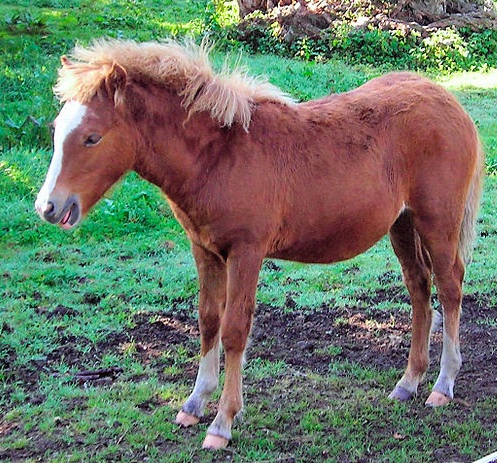
St. Paul daily Globe, 18 December 1886 p4Kerry Bog Pony Photo: Jim Linwood Wikimedia Commons
Dublin Dec 17
Mr Dillon and Mr O’Brien arrived here today. Both are much disturbed and hurt physically. In addition to the troubles which the gentlemen had yesterday at Loughrea when they were arrested for acting as tenants’ trustees, they met with an accident on the road home. The horse drawing the car on which they were riding from Loughrea to Athenry bolted on the way and both were thrown violently to the ground. The gentlemen were badly shaken up and considerably bruised by their fall.
During the progress of the meeting at Loughrea yesterday, at which Messers Dillon, O’Brien, Harris and Sheehy were arrested, Mr Sheehy received a summons to appear and show cause to keep the peace because of a speech he made recently at Kylebeg and which, it was claimed, was calculated to arouse disorder.


 The Burren and Beyond