Posted in Posts and podcasts

Eviction Scenes in County Galway – 1886

The Capricorn, (Rockhampton, QLD) 30th October, 1886 p 10

Most determined resistance is being given to an evicting party which has been at work for some days on the Marquis of Clanricard’s estate, near Woodford, County Galway.
About 1000 police had been drafted into Portumna, whence they go each morning to the scene of the intended evictions. Mr. Brady, R.M., County Inspectors Wilson and O’Brien, and eight district inspectors are in charge of the police.

The first eviction took place on Thursday, when the police went to a place called Kilnawally. They found about 500 people assembled, the crowd having been brought together by the ringing of the chapel bells. Conroy, whose rent is £24, owed with costs, above £100. The farm had been sold to the agent for the landlord at a public sheriff’s sale in Galway some time ago. An enormous crowd had assembled, amongst them being three Roman Catholic clergymen, Rev. Mr. Coen, Rev. Mr. Egan, of Woodford and Rev. Mr. Roach, of Ballinakill.
The Emergency men took three hours to effect an entrance, during which time the party inside and on the roof poured boiling water and lime on them, and threw slates down on them. Even the crowbars, with which the
wall was being broken in, were taken from them and dragged inside the house. The Emergency men drew their revolvers repeatedly, but were dissuaded by the police from using them.

The evicting force subsequently proceeded to Drumin, three miles off, to carry out another eviction, but so stubborn was the resistance that the attempt was abandoned, and the party returned to Portumna. On the following day they found that Monatreeva Bridge, five miles from Portumna, had been broken down during the night, and the remainder of the journey, seven miles, had to be performed on foot.
The house of a man named Patrick Fahy was reached, and a scene ensued similar to that on the previous day at Conroy’s. When County Inspector Willson went up close to the house to inform those inside that unless they desisted he would be obliged to order the police to fire on them, the answer he got was the pouring of a quantity of boiling lime on himself, which destroyed his uniform.
The Riot Act was threatened to be read, but the counsels of the clergy and police prevailed, and the people became less excited. Ultimately, after four hours, possession was taken. Parties of police remained out all night on Friday to prevent further destruction of bridges or obstruction of the road by trees etc. At the house gone to on Saturday the emergency men failed to effect an entrance, and the police entered with fixed bayonets. Those inside resisted, and in the struggle one civilian was stabbed, and one policeman wounded. The police made no arrests.
Home paper Sept 4


Posted in Posts and podcasts

A warmer cell – 1888

Alabama Enquirer And Morgan County News
Date: January 26 1888 p2

Wilfred Blunt has been moved to a warmer cell in the Galway prison, and his overcoat has been returned to him. A band tried to serenade him, but was prevented by the police. Mr. Blunt says that while staying at a country hotel in the south of England last September, he met Mr. Balfour, who made the statement that he intended to imprison six of the physically weakest of the Parnellites, adding: “I shall be sorry for Mr. Dillion, as he has some good about him. He will have six months, and as he had bad health he will die in prison.” In response to an inquiry, Mr. Balfour said: “The history is a ridiculous lie. I do not believe that Mr. Blunt ever made the assertion attributed to him.”

Posted in Posts and podcasts

America – Finavarra – Nenagh – 1914

Irish Examiner 17th July, 1914 p.5 (abridged)card
By the Volunteers of North Tipperary it is persistently rumoured that on Sunday week a cargo of arms, supposed to be from the Tipperary Men’s Association in America, was landed at Finavarra Point, West Galway. In the days following, the arms, it is alleged, were brought by night by easy stages, by the various Volunteer corps in West Galway, through Gort, Woodford and Williamstown, reaching the latter village on Saturday night last. Here the arms were received by a number of volunteers from the Tipperary side of Lough Derg, and in the course of the night were transferred by boat to Terryglass. Next day (Sunday) while the Volunteers of North Tipperary were mobilised at Nenagh, and while the police of the district were on special duty in that town, the arms, it is alleged, were hidden in a bog. The strictest secrecy was observed while the arms were in transit and it was only when they were well under cover that the information leaked out.
In view of the above rumour it is interesting to note that the commander of the Nenagh corps last even when dismissing his men publicly informed them opposite the Literary Institute that they would be in possession of rifles next week.

Posted in Posts and podcasts

An Extraordinary Occurrence – 1824

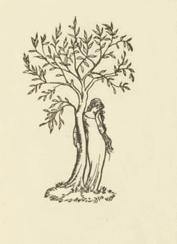
Wood Engraving by Elinor Monsell, on title page of 'Twenty One Poems' by Katherine Tynan, Dun Emer Press 1907 Wikimedia Commons
Wood Engraving by Elinor Monsell, on title page of ‘Twenty One Poems’ by Katherine Tynan, Dun Emer Press 1907
Wikimedia Commons
THE CONNAUGHT JOURNAL 28TH OCTOBER, 1824 (abridged)

EXTRAORDINARY OCCURRENCE
The following singular occurrence which took place a few days since in the neighbourhood of Woodford, has excited a very considerable sensation there: Elizabeth C—, an interesting young woman about nineteen years of age, who lived in the service of _____ Forrest, Esq. a gentleman residing at Woodford, in consequence of getting her feet wet, caught a severe cold, which brought on a fever. She was confined to her bed for several days, when she, to all appearance, died! An undertaker was sent for, and the next day, she was placed in a coffin. The intelligence of her supposed death was transmitted to her mother, an industrious woman, with a large family, who was almost broken-hearted at the melancholy tidings.
From her good conduct while in the service of Mr. Forrest, that gentleman resolved to defray the expenses of the funeral, which, it was arranged, should take place on Sunday last, a week after her supposed death. On that day, her mother, and several other relatives came to pay the last tribute of respect to her memory. Prior to the coffin being screwed down, they went to take a look at the body. One of them observed that she had not undergone the change usual on such occasions, and that her face appeared rather flushed. She suggested the propriety of sending for a surgeon, which was immediately done. He ordered her to be placed in a warm bath, and applied the remedies usually resorted to, to recover persons apparently drowned, and which were happily crowned with success! The young woman was so far recovered in a few hours to be able to speak, and is now in a fair way of recovery. The anxiety with which her friends witnessed the progress of the means resorted to for her restoration, and their joy at its success, may be more easily conceived than described.