
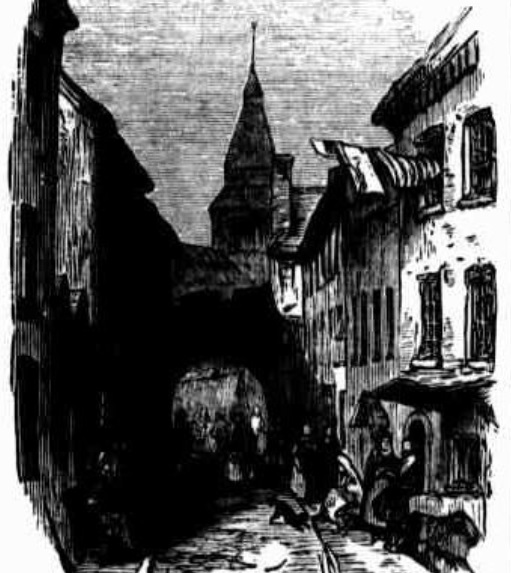
Australian Town and Country Journal 22nd August, 1874
Indiana State Sentinel 19th march, 1846

The government has again learned the necessity to increase the military force in Galway. A troop of the 13th Light Dragoons from Gort, arrived here on Tuesday, under the command of Captain Hamilton, for the purpose of repressing any outbreak among the people which may arise owing to the exportation of corn from this port.
Two companies of the 30th are likewise expected – one from Loughrea, the other from Oughterard – to aid the force in garrison, if necessary. This increase of troops is said to have been caused by the posting of a threatening notice at the Gashouse last week, to the effect that the merchant stores would be broken up by the people, if any further exportation of corn was attempted.
The Sydney Gazette 7th May, 1835 p.4 (abridged)
The harvest promises to be an average one, and all the misgivings that were felt during the course of the summer, as to the prospects of the potato crop, have, we are much gratified in stating, altogether given way. That crop will, perhaps, be more abundant this year than it has for several seasons previously. Public works are progressing in many places. The Shannon navigation, under the superintendence of that active, talented, and highly intelligent gentleman, Mr. Charles Williams, is advancing rapidly to a completion, thus opening the heart of the finest corn country in the world to the markets of England, and introducing the blessings of industry and civilization to what has been considered hitherto among the wildest districts of Ireland. In the west of Ireland, particularly in the counties of Mayo and Galway, an equal activity is shown in laying down roads through the mountainous districts, in building bridges and erecting piers. There can be no just complaint against government for want of aid.
Tuam Herald 7th February, 1914 p.4 (abridged)
The soldiers in Galway have a journal to themselves. “The Ranger” has just been published and contains a large quantity of matter which must prove of great interest to the members of the famous Connaught Rangers. The Editor states that for a long time a consensus of opinion was felt that the magazine should be printed in Ireland, and with this in view the Editor called for quotations from houses in Dublin and Galway, with the result that the contract was entrusted to the Galway Express Co., Ltd., Eyre Square, Galway, and the present number is the first which has ever been printed in Galway.
The Connacht Tribune, 1st July, 1916 (abridged)
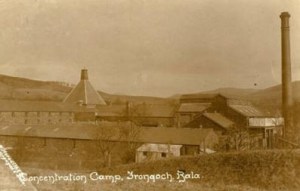
The censor of Frongoch internment camp informs us that Tuesdays and Thursdays are visiting days from 2 to 3 p.m. Prisoners can receive only one visit a month, and applications for permits must be made in writing to the Commandant, allowing sufficient time for reply by post. No admission is granted except on production of the permit. The following have been removed from Stafford to Frongoch;
James Fahy, Doughiska, Galway
Thomas Newell, Castlegar
John Murphy, Athenry
Michael Burke, Doughiska
William Cody, Claregalway
Thomas Silke, Castlegar
Michael Glynn, Lydican
Mr. Joseph O’Flaherty, Loughrea
William Harte, Oranmore
Richard Wilson, Loughrea
Dominic Corbett, Craughwell
Jeremiah Galvin, Slieverue
Christopher Caulfield, Athenry
Martin Walsh, Athenry
Peter McKeown, Athenry
Patrick Kennedy, Athenry
Joseph Cleary, Athenry
Pat Keane, Athenry
Ml Commons, Athenry
Ml Cunniff, Galway
Ml Costello, Galway
Martin Costello, Galway
Pat Costello, Galway
Martin McEvoy, Galway
John Cullinane, Galway
William Higgins, Galway
Michael J. Dunleavy, Galway
Richard Wilson, Galway.
Freeman’s Journal, 10th September, 1828 p.2 (abridged)
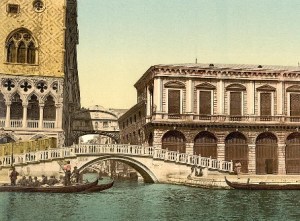
The boats of Lough Corrib, not too well constructed in the first instance, are greatly injured by the yearly practice of dragging them through the town from the lake to the bog at the time of the herring fishery. This extraordinary and most dangerous exertion of these poor people would be rendered unnecessary by a short Canal, which would be of incalculable benefit to the town and county of Galway; but will it be believed that the proprietors of the town fear it would be of too great service to their country neighbours. They neglect this splendid improvement, whilst they have laid out an enormous sum on a bridge so low as to obstruct the water passage, but which has in face of it a most beautiful gaol, with gallows resembling the portcullis of a fortification, and somewhat reminding us of the bridge of sighs at Venice.
Connacht Tribune 17th August, 1912 p.2

A meeting was held on Sunday, Mr. M. Tannian presiding.
Present:
Messrs J.J. Daly
Thos. Higgins
F. Kilcooly
P. Casey
J. Harte
P. Callanan
J. Doyle
P. Lambert.
The following were appointed to attend the Home Rule meeting in Galway;
Messrs P. Lambert; P. Casey; P. Callinan; J. Daly.
The following resolution was proposed by Mr. J. J. Daly, seconded by Mr. J. Harte;
That we condemn the action of any person who will put cattle on any obnoxious land in the parish until all concerned get fair play, as well as the other people of the parish.
The resolution, after a long and heated discussion, was passed, some being of opinion that no one in the parish is violating the rules of the branch, while others thought differently. Next meeting as usual.
Connacht Tribune 21st May, 1927 p.14
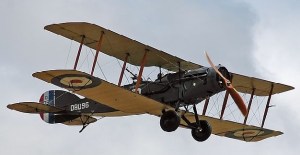
Three Bristol fighter aeroplanes left Dublin at 5.20 p.m. yesterday and flew to Galway, landing at Oranmore aerodrome exactly one hour and ten minutes after their start, having, in addition, encircled Galway Bay and the City. They were in charge of Col. Fitzmaurice and carried a staff photographer. A detachment of men from Renmore guarded the ‘planes last night.
Nenagh Guardian 6th July, 1853 p4
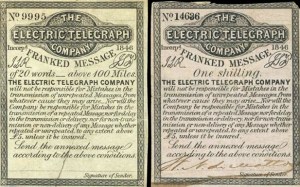
Arrangements are far advanced towards completion for laying down a submarine telegraph between the United Kingdom and America. It is intended to connect the two countries, or rather, the Old and New Worlds by means of Galway and Halifax, those being the two nearest points of communication. The distance is about 1,600 miles. The perfect practicability of the thing has been guaranteed under the hand of nearly all the eminent engineers of the day, and various parties have sent in estimates for the execution of the work. These estimates vary from £800,000 down to £300,000 and it is a remarkable fact that some of the lowest estimates have been sent in by some of the most respectable firms in the country. When this extraordinary project has been carried out, we shall be able in half an hour to send messages from London to New York, and receive messages from the United States in about half an hour. And not, we ought to add, from New York alone, but from the interior of America, the electric telegraph being laid down for upwards of 2,000 miles up the country.
Tuam Herald 22nd November, 1851 p3.
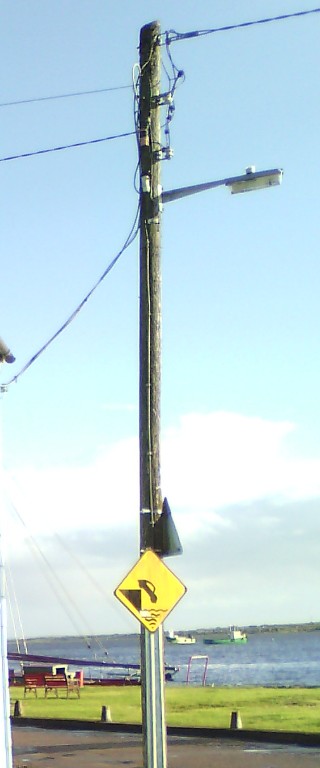
The Electric Telegraph
The Pocket states that the Midland Great Western Railway Company have made arrangements for the immediate erection of the electric telegraph wires between Dublin and Galway. The work will be done without a moment’s delay, and it is hoped that the telegraphic communication will be completed before the arrival of the first trial steamer from America.
 The Burren and Beyond