
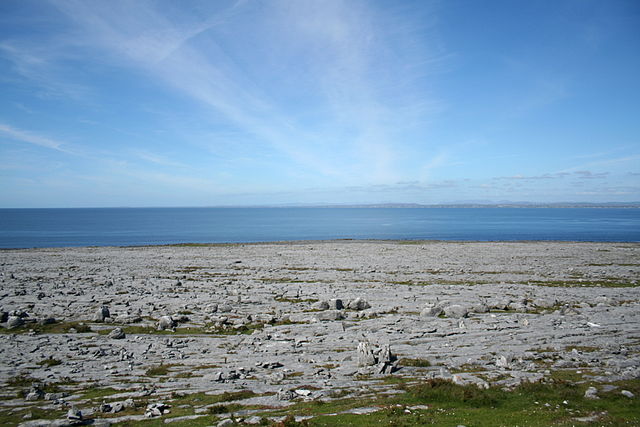
Photo: Ingo Mehling
Wikimedia Commons
RURAL SPORTS – The crowds now at the Burren Spa are beyond any calculation in that country. – The numbers assembled to see the best Irish jig dancers was immense and the contest so equal between two of the fair competitors, that the judges could not decide between them, and therefore directed the silver watch to be given to those very interesting girls, to be disposed of as they pleased. Immediately after the dancing, four horses were started, and there was a most excellent race. – On yesterday a fox was to have been shook at the well, and it was so arranged, that the ladies should witness “his funeral tears;” and on Sunday next there will be another race, and afterwards a hurling match, consisting of twenty-one men at each side – one party dressed in blue jackets and caps, and the other in red.–Limerick Paper.
Category: Posts and podcasts
Posts and Podcasts
Sound advice – 1825

Photo: E Michael Smith
Wikimedia Commons
WHEN TO LEAVE OFF DRINKING –
When you feel particularly desirous to have another glass – leave off, you have had enough.
When you look at a distant object, and appear to see two – leave off, you have had too much.
When you knock over your glass, spill your wine upon the table, or are unable to recollect the words of a song you have been in the habit of singing for the last dozen years – leave the company; you are getting troublesome.
When you nod in the chair, fall over the hearth rug, or lurch on your neighbour’s shoulder, go to bed – you are drunk.
The N67 – 1909

Creative Commons
Last week a young man named Moran, son of a herd in the employment of Mr. M. McDonogh, Galway, was fired at from behind a wall on the public road at Ballinderreen, near Gort. Moran was in company with two other cyclists who were returning from Kinyara. There were, it is stated, about 200 pellets lodged in his left arm and back. He was treated by Dr. Foley, Ardrahan, and his injuries are not considered serious. The police are investigating the affair, but up to the present no clue has been obtained.
The Connacht Tribune – 1909
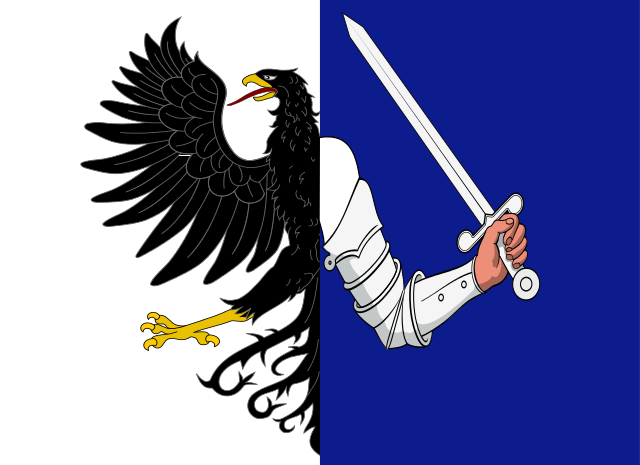
Caomhan27
Wikimedia Commons
The first issue of the “Connacht Tribune,” a new Nationalist weekly newspaper, published in Galway, is a promising initial number of eight pages of eight columns each. Its local news supply is extemely full and diversified, the type good, and the printing very legible. Mr. William O’Malley, M.P. begins in the journal a series of articles entitled “Connemara Land League Reminisecnces.”
Wreck at Roundstone – 1833
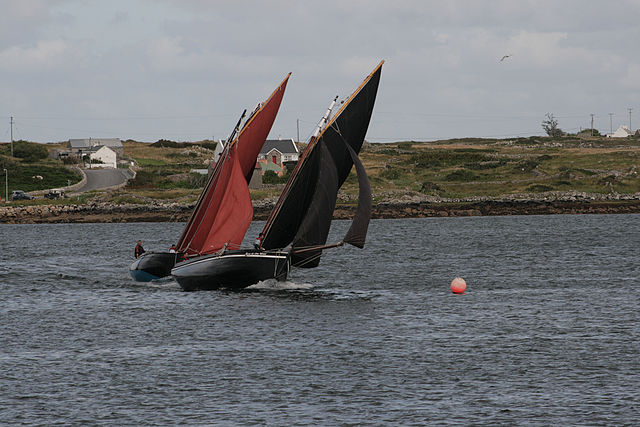
Photo: Julian Matz
Dreadful Wreck of the Oporto Transport.(abridged)
At Clifden, in Galway, in December, a portion of a ship was seen floating near the entrance of Roundstone Bay. By the active exertions of the coast-guard, under the command of Lieutenant Hunter, R. N., it was secured. The following day, the remainder of the wreck was discovered, a few miles distance from the first-named place. Uniforms and several bodies have been washed ashore. A few trunks, with mutilated papers and other articles, found by Captain Busby, R. N, proved her a brig of about 350 tons burden.
The Cruachan – 2013

Canals completed – 1850
South Australian Register 5th March 1850
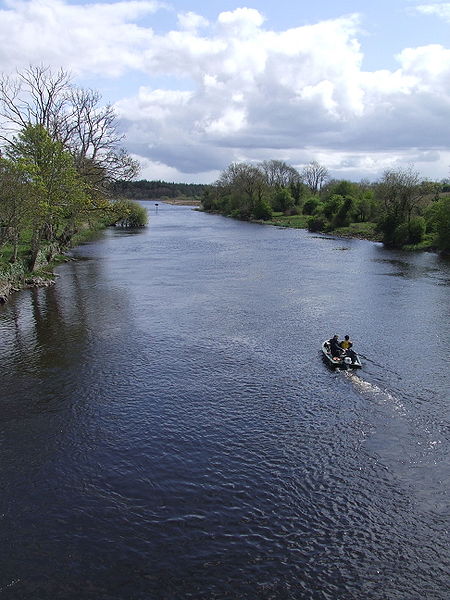
Photo: Laurel Lodged
Wikimedia commons
The father of the Shannon navigation improvements, Charles Wye Williams, Esq., lately enjoyed the highest pleasurable satisfaction in steaming nearly to the Lough Allen source of that noble river, and to the head of one of its great tributaries’ the Boyle Waters, within an English mile of the important town of Boyle.
At Athlone there is a new bridge, capped with masses of Cashel marble, each weighing from 10 to 15 tons; and a lock has been constructed, capable of passing any steamer suited to the navigation of the line. Near Lanesborough a branch canal is being cut to Roscommon. In Lough Forbes a dangerous shoal has been removed, and the works and clearances in Lough Boderg, the Carnadoe waters, and the Jamestown Canal, prove the difficulties, expense, and labour involved in the undertaking.
Near to Battle bridge, a new canal to Lough Allen commences, named after the earl of Clarendon, and the works partake of the same durable and admirable character as on every other portion of the navigation. The facilities of intercourse opened out by these improvements are still to be extended, and in a year or two the water communication between Limerick and Belfast will be complete by means of Lough Neagh, and the Logan and Ulster navigation with Enniskillen by means of Lough Erne.
Sabotage at sea – 1858

Heritage Centre Cove
Wikimedia Commons
IRELAND. (abridged)
(From the Times Correspondent.)
Dublin, Saturday, 22nd June.
The fine steamer Indian Empire, which was to leave Galway on the 18th June, with the first mails from Ireland to the United States, was run hard ashore near St. Margaret’s Rocks by the pilot who had charge of her from Southampton. Fortunately, however, the spot where she struck was not dangerous, and the ship eventually floated off and proceeded to Galway, having sustained but trifling damage. The damage will not impair or otherwise prevent her from sailing on her appointed date.
The authorities in Galway, on learning the particulars of the vessel’s going ashore, caused the pilot to be arrested, and after undergoing a preliminary investigation, he was committed to prison on a charge of having wilfully and knowingly run the Indian Empire on a hidden rock.
The somewhat sinister accident which befell the steamship on her first entrance into Galway Bay has created quite a sensation here, and the result of the trial of the two pilots is looked for with no ordinary anxiety. A Dublin journal (The Express) thus refers to the disaster : ” It remains for a jury to decide whether they were guilty or not of the crime of intending to destroy the steamer. It seems to be the general opinion in Galway that the facts cannot be accounted for except on the presumption of their guilt.”
This, however, should be left to the decision of a jury of their countrymen. If they should be found guilty, the crime is one of the foulest on record. But if they are guilty, others are guilty too. If they did run the steamer on the’ rock intentionally, they were the agents of a diabolical conspiracy, which should be traced out. If the chief criminals can be detected, no punishment would be too severe for them. Suspicion points to Liverpool as the seat of the conspiracy. The motives assigned are commercial jealousy.
Egg shell superstition – 1917
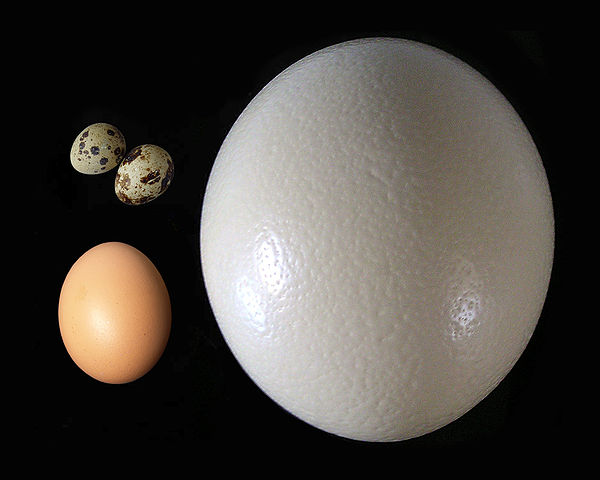
Photo: Rainer Zenz
Wikimedia Commons
(abridged)
Some in the west of Ireland, it is said, will never leave an egg shell open at one end only. They will always thrust a spoon through the lower end. Otherwise some wicked spirit will seize upon the shell and make a boat of it, in which to sail the soul of the careless person to destruction.
Without fear of contradiction – 1826

Latest English News.
[THE REPRESENTATIVE.]
(abridged)
On Thursday night the Earl of Darnley stated that, “without any fear of contradiction, he could assert the condition of the slave in the West Indies to be by no means so bad as the condition of the peasant in the West of Ireland.”
The Earl is intimately connected with Ireland. He is, in.fact, the owner of 30,000 acres of the land on which about 20,000 of the seven millions are fed. He is one of the few Irish proprietors who constantly reside upon their estates, who are indefatigable in promoting the improvement of their own property, while they humanely adopt every means of ameliorating the condition of their tenantry. He is, one of the few landlords who can speak from personal experience, and does not depend for his information upon the reports of agents and factors.
When his Lordship describes the condition of the Irish as infinitely more wretched than the state of the West India slave, his description is applicable, not, we presume, to his own tenantry, but to the tenants of less considerate landowners, who have deserted their estates.
 The Burren and Beyond