Posted in Posts and podcasts

Irish Homes and Irish Hearts p1 – 1868

Freeman’s Journal 28th March, 1868 p11peat
IRISH. HOMES AND IRISH HEARTS.

As the sun disappeared it became extremely cold, and I was very thankful when the car drew up at a large house in the main street at Gort, which, proved to be the Convent of the Sisters of Mercy, There I had such a welcome as one only meets with in Irelaiad, and cold and fatigue were soon forgotten under the genial influence of affectionate hospitality.

Gort is a neat, clean, but wonderfully quiet little town, and the visitor is involuntarily reminded of the author of the ‘Irish Sketch Book,’ who describes Gort as a town which ‘seemed to bore itself considerably, and had nothing to do.’ There is a little stir of life, however, twice a day, on tlie arrival of the mail coach from Galway and Ennis, for at present this old-fashioned mode of conveyance is the only available one between the two towns. A railroad is in course of construction, which is to join the Midland Great Western line at Athenry and which will be a graat boon to the traveller.

Through the town of Gort runs a broad clear river, oh the banks of which stands the convent. It is a large country house, which haa been transformed into a convent, while schools have been built adjoining it. Behind the house are good sized grounds, planted with some of the finest oak trees I ever saw through which the river wends its way. On a rising ground at the end of the grounds is the little quiet cemetery of the nuns.

The schools here struck me as particularly good, the buildings well adapted for the purpose, and the children thouroughly trained and well taught.There are infant schoools for boys and girls, another for elder girls, and a small model school. This latter is an absolute necessity in Gort, and the children of this class could not otherwise obtain any education, there being no other convent of any kind within miles. The chapel is only a large room, fitted up for the purpose, but it is very pretty, and has an air of devotion about it. It was pleasing to see the Sisters, when the labors of the day, were over, assembling in their stalls to say their latin office forestalling thus by prayer and praise the cares and troubles of the coming day.

There is an old fashioned, but clean and comfortable hotel at Gort, almost facing a large plain building which forms the Catholic chapel. A large stone cross stands in the churchyard, and several people were kneeling round it in prayer, when, on the Sunday after my arrival in Gort, I went to the Chapel for nine o’clock Mass. It was like a little bit out of a foreign county suddenly set down before my eyes but on entering within the chapel the scene as contemplated from the gallery was stranger still. The whole floor of the church was given up to the poor, and there are no benches or chairs of any kind. There they stood or knelt, grouped in various attitudes, and in a variety of costumes.

The women in their red petticoats and blue cloaks, when standing together in groups, formed a subject for an artist; here and there were those not rich enough to possess the valued cloak, some of whom had tied bright coloured handkerchiefs over their heads, and others had arranged their poor clothing as best they could. The occasional intrusion of a straw bonnet, or worse, still, a hat, was a painful eyesore to the spectator. There were quite as many men as women, and of all ages, some grey headed fathers with their little ones clinging to them, smart looking youths, and numerous boys.

When the consecration bell sounded the whole mass bent low, many almost prostrate on the ground; it was like an Italian picture, save and except that instead of sculptured marbles or Gothic arches surrounding the multitudes, there rose the plain whitewashed walls of a poor Irish chapel. These whitewashed chapels of Ireland, they jar upon the sight of those accustomed to see all that is noble and beautiful adorning the sanctuary! Yet what shrines they have been of faith and devotion – what witnesses they are to the persevering, unconquerable faith of the Irish!

There were a great many communicants at this Mass, and when it was ended the priest took off his chasuble and advanced to the front of the altar. There was a sudden rush. Up got every body from the floor, and the multitude packed themselves in a compact mass round the altar. The sermon was in Irish; every eye was bent on the preacher, every ear strained to listen, and it was evident, from the gestures of the people, that their whole attention was given to the discourse, and that every point went home.

The eloquent preachers in crowded city churches would often rejoice to have an audience so hanging on their words. I declared afterwards that I understood the sermon very well ; for it was the festival of the Seven Dolours which formed the subject of the discourse; and the gestures of the priest, and the answering emotion of the people plainly told that they were bidden to endure patiently, and to suffer bravely after the example of her whose sorrows no mortal can ever equal.

That Sunday was a cloudless summer’s day, and after the last Mass was over, the kind old parish priest took me to see the great lion of the neighbourhood, Kilmacduagh, some three miles distant. The diocese in which Gort stands rejoices in the poetical names of Kilmacduagh and Kilfenora.
Posted in Posts and podcasts

A Patriot’s Grave – 1850

Freeman’s Journal 5th December, 1850

Photo: EO'D
Photo: EO’D

A PATRIOT’S GRAVE.(abridged)

Mr. William Davis departed this life on the 17th of August, 1843, aged 78 years. He was one of the last survivors of those who were exiled without the formality of a trial, for the Irish Political Movement of 1798. He was an upright and honest man — zealous in the cause of Religion, and a generous benefactor to its Institutions. He ended his days in sentiments of true piety. May he rest in peace, Amen. — Epitaph.

Within this damp, contracted, silent cell,
The relics of a patriot Exile lie;
His faults amid its depths of darkness dwell
His virtues live — they could not with him die.

And when the moon just risen flings her gleam,
As if a smile from Heaven on his tomb,
The burnish’d epitaph, heart-rending theme,
To me’s a history of my country’s doom!

He lov’d his native land — and this was sin
He rose to save that land — and this was crime
He fought — but happened not the prize to win
Hence must he lose the Patriot’s name sublime.

Though ’twas not thine to break the fatal chain
That rankles in old Erin’s wounds so long,
To unfurl her *”Sun-burst” banner once again,
And waken in her glens blest Freedom’s song,

Yet thou didst strive and strain and fling away
Thy youthful vigour in her sacred cause;
If e’er she springs a phœnix from decay,
Thou shalt obtain thy prize, her full applause.

For us poor wanderers from that Isle of Love
Must now suffice a prayer, a tear, a sigh,
Oh, happy! if such worthless offerings prove
Thy memory lives — can never never die?

FOYRAN. Geneva Bower, November 1850. * The “Sun-burst of Battles” was the highly imaginative national standard of the ancient Irish.

Posted in Posts and podcasts

The Piper and the Pooka

The Capricornian 17th May, 1890

Domestic Goose Photo: Noodle snacks  Wikimedia Commons
Domestic Goose
Photo: Noodle snacks
Wikimedia Commons

Folk-tales for Little Folk by Uncle Will (abridged)

Long ago, out of a hill in Leinster there used to emerge, as far as his middle, a plump, sleek, terrible steed, a Pooka, who spoke in human voice to each person about November day, and he was accustomed to give intelligent and proper answers to such as consulted him concerning all that would befall them, until the November of next year. And the people used to leave gifts and presents at the hill until the coming of Patrick and the holy clergy.’

In some places the Pooka came out in the form of the Neck of Scandinavia, or Water-Kelpie of Scotland. About the Martinmas time the Pooka used to appear near the sea or a fresh water lough in the form of a horse. He went tearing about at a great rate. If any one were bold enough to go between him and the water, be could be caught and bridled, and then made a splendid steed. If at any time, however, he came in sight of water, he made for it. Were any one on his back, then it was all the worse for the rider, for the Pooka would plunge in, and tear him to pieces at the bottom.

As a man riding on a Pooka horse could not go far in Ireland without seeing deep water, not many would use them. A boundary rider out west might: have one for some considerable time without seeing as much water as would drown him.

Here is a story about the Pooka, translated literally from the Irish of the Leabhar Sgeulaiyheachta, by Douglas Hyde.

THE PIPER AND THE PUCA.

In the old times there was a half fool living in Dunmore, in the county Galway, and although he was excessively fond of music, he was unable to learn more than one tune, and that was the ‘Black Rogue.’ He used to get a good deal of money from the gentlemen, for they used to get sport out of him.

One night the piper was coming home from a house where there had been a dance, and he half drunk, when he came to a little bridge that was up by his mother’s house he squeezed the pipes on, and began playing the ‘* Black Rogue’ (an rogaire dubh). The Pooka came behind him, and flung him up on his own back. There were long horns on the Pooka, and the piper got a good grip of them, and then he said

‘Destruction on you, you nasty beast, let me home. I have a ten-penny piece in my pocket for my mother, and she wants snuff.’
‘Never mind your mother,’ said the Pooka,
‘But keep your hold. If you fall, you will break your neck and your pipes.’
Then the Pooka said to him,
‘Play up for me the Shan Van Vocht’ (an tsean bhean bhocht).’
‘I don’t know it,’ said the piper.
‘Never mind whether you do or you don’t, said the Pooka.’
‘Play up, and i’ll make you know.’
The piper put wind in his bag, and he played such music as made himself wonder.
‘Upon my word, you’re a fine music master,’ says the piper/
‘But tell me where you’re bringing me.’
‘There’s a great feast in the house of the Banshee, on the top of Croagh Patrick to-night,’ says the Pooka,
‘I’m bringing you there to play music, and, take my word, you’ll get the price of your trouble.’
‘By my word, you’ll save me a journey then,’ says the piper.
‘Father William put a journey to Croagh Patrick on me, because I stole tbe white gander from him last Martinmass.’

The Pooka rushed him across hills and bogs and rough places, till he brought him to the top of Croagh Patrick. Then the Pooka struck three blows with his foot, and a great door opened, and they passed in together, into a fine room. The piper saw a golden table in the middle of the room, and hundreds of old women (cailleacha) sitting round about it. The old women rose up, and. said,
‘A hundred thousand welcomes to you, you Pooka of November (na Samhna). Who is this you have with you ?’’
‘The best piper in Ireland,’ says the Pooka.
One of the old women struck a blow on the ground, and a door opened in the side of the wall, and what should the piper see coming out but the white gander which he had stolen from Father William.
‘Myself and my mother ate every taste of that gander, only one wing, and I gave that to Moy-rua. It was she told the priest I stole his gander.’ The gander cleaned the table, and carried it away, and the Pooka said,

‘Play up music for these ladies.’ The piper flayed up, and the old women began dancing, and they were dancing till they wore tired. Then the Pooka said to pay the piper, and every old woman drew out a gold piece, and gave it to him.
‘By the tooth of Patrick,’ said he,
‘I’m as rich as the son of a lord.
‘Come with me,’ says the Pooka,
‘And I’ll bring you home.’

They went out. then, and just as he was going to ride on the Pooka, the gander came up to him, and gave him a new set of pipes. The Pooka was not long until he brought him to Dunmore, and he threw the piper off at the little bridge, and then be told him to go home, and says to him,
‘You have two things now that you have never had before, you have sense and music (ciall agus ceol).’

The piper went home and knocked at his mother’s door, saying,
‘Let me in, I’m as rich as a lord, and I’m the best piper in Ireland.’
‘You’re drunk,’ said the mother.
‘No, indeed,’ said the piper,
‘I haven’t drunk a drop.’
The mother let him in and he gave her the the gold pieces.
‘Wait now,’ says he,
’Til you hear the music i’ll play.’
He buckled on the new pipes, but instead of music, there came a sound as if all the geese and ganders in Ireland were screeching together. He wakened the neighbours, and they were all mocking him until he put on the old pipes, and then he played melodious music for them. After that he told them all he had gone through that night.

The next morning when his mother went to look at the gold pieces, there was nothing there but the leaves of a plant. The piper went to the priest, and told him his story, but the priest would not believe a word from him, until he put the new pipes on him, and then the screeching of the geese and ganders began.
‘Leave my sight, you thief’ says the priest. But nothing would do the piper till he would put the pipes on him to show the priest that his story was true. He buckled on the old pipes, and he played melodious music, and from that day till the day of his death, there was never a piper in the county Galway as good as he.

Posted in Posts and podcasts

Stormy weather – 1841

Colonial Times 19th October, 1841 p4(abridged)

'Danny' 2009 Photo: mistagregory Wikimedia Commons
‘Danny’ 2009
Photo: mistagregory
Wikimedia Commons

The effects of the thunderstorm on Thursday week were severely felt in Ireland. At Limerick, a woman was killed by lightning while sitting at the fire with her husband. Three persons lost their lives in Galway. Houses and cattle were injured at Marlborough; five cows and a horse belonging to one man were killed.

A person living at Tallaght gives the following account of the tremendous phenomena witnessed there :

“A convulsion took place about three o’clock this morning at Old Bawn, Tallaght; the earth trembled as if it was only held by suspension; the houses rocked most frightfully, as if inclined to bury the inmates; when on a sudden the heavens opened to the eye as one mass of living fire. Immediately after the elements grumbled and sent forth their awful noise, which was loud and terrific. The lightning, or some other uncontrollable power, tore up a part of the road, small at top and opened as it sunk to the form of a balloon, well worth seeing.”

Posted in Posts and podcasts

Famine – 1831

The Sydney Monitor 8th October, 1831 p4 (abridged)

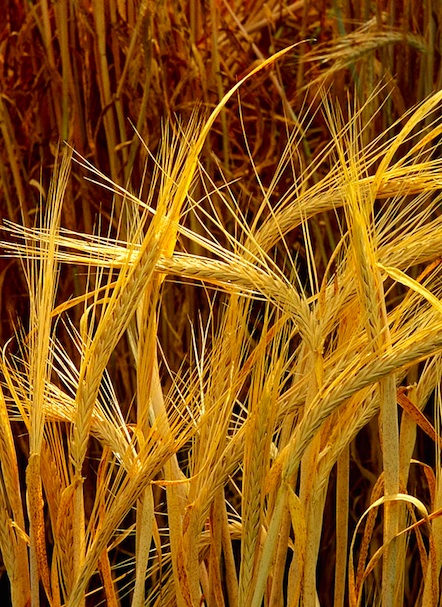
Hordeum-barley Wikimedia Commons
Hordeum-barley
Wikimedia Commons

I had just closed this article when a friend sent me, at my request, an account of the import of foods from Ireland up to the 1st day of June. It is imperfect because it only gives an account of the imports in London and Liverpool, leaving out Bristol, Glasgow and several other places. It is imperfect in that it does not include bacon and live animals, nor poultry nor eggs.

However, such as it is – here is the account of the imports of the first months of this year of famine in Ireland;

98, 555 Quarters of Wheat

311,848 Quarters of Oats

10,098 “ “ Barley

540 “ Rye

1,556 ” Beans

941 “ Peas

5,880 “ Malt

69,510 Loads of Meal

45,398 Sacks of Flour

12,605 Tierces of Beef

1,408 Barrels of Beef

20,088 Tierces of Pork

13,427 Barrels of Pork

149,639 Firkins of Butter

It is in Galway that the actual starvation is raging most, where the poor creatures cannot get a handful of meal to boil up with the nettles and seaweed! They cannot get a handful of the meal of oats to prevent their souls from leaving their bodies and it is certified that in one small parish eight persons died within a short period from starvation only.

Yesterday – six hundred and eight tons of oats – that is to say – one million, three hundred and thirty four thousands pounds weight of oats arrived in London only – from Galway.

The oats came in five vessels, the Union, the John Guisa, the Charlotte, the lively and the Victory.

W. Cobbett

Posted in Posts and podcasts

Herring tithe – 1835

The Sydney Gazette and New South Wales Advertiser 8th October, 1835

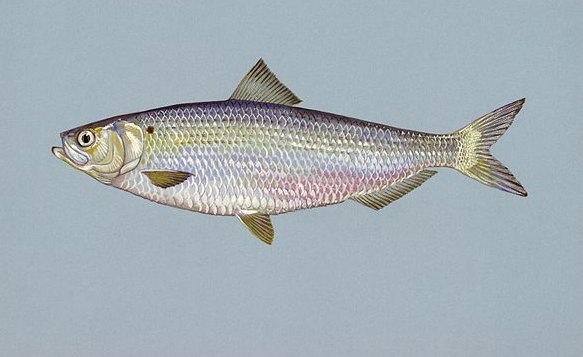
Blueback herring fish  Photo:  Duane Raver, U.S. Fish and Wildlife Service
Blueback herring fish
Photo: Duane Raver, U.S. Fish and Wildlife Service

Herrings – 1835
One of the most remarkable objections to the continuance of the tithe system was stated the other night in the House of Commons;

A clergyman, having obtained a post on the coast of Ireland, decided to take a tithe of the fish. His plan was short-lived. Not a single herring has ever since visited that part of the shore.

**a tithe was a tax of one tenth of annual produce or earnings. .

Posted in Posts and podcasts

A Curious Fact – 1853

FREEMAN’S JOURNAL 3RD MARCH 1853 (abridged)

Photo; BO'D
Photo; BO’D

It is a curious historical fact that the Irish troops, who principally contributed to save the town of Louvain, in 1635, from the tremendous assault of the great French army under Marshals Chatillon and De Breze, were in that bloody contest marshalled and commanded in Irish. A Latin writer of the seventeenth century, who was conversant with most of the European tongues, tells us that the Irish language
“surpasseth in gravity the Spanish, in elegance the Italian, in colloquial charms the French;
it equals, if it does not surpass the German itself in inspiring terror.”

Posted in Posts and podcasts

Bridget – 1900

New York Tribune 15th June, 1900 p9

c EO'D
c EO’D

Bridget Coughrey from Clifden County Galway landed here yesterday with only a shilling in her pocket and for a time she had the immigration officials puzzled.

She was so comely and so earnest in her endeavours to explain that there was universal sympathy for her. But she could not speak a word of English and Gaelic was not understood in the Barge Office. Finally one of the officials sent for Peter Groden. Peter relapsed into Gaelic the minute he saw Bridget. They talked it over and she told him she was the eldest of five children. Her family was struggling for a living at home in County Galway and she had come over here to earn money to send home to pay the rent of the farm, which amounts to $80 a year. Bridget said that she was on her way to see Patrick Coughrey her uncle who lives in Pittsburg. He would advance the money necessary for her transportation if he was informed of her predicament. Peter told the officials what she had said and they sent word to her uncle at once.

Posted in Posts and podcasts

Departures – 1883

The Sun, 11th March 1883 p1

Full Sail c. EO'D
Full Sail
c. EO’D

Four hundred and fifty girls leave Galway this week for Boston under a year’s engagement to New Hampshire cotton mill owners, who pay their expenses out. Several hundreds more wanted to go. There was an exciting scene on thursday at Limerick depot over the departure of 250 of them.

Posted in Posts and podcasts

Priorities – 1823

Connaught Journal

Court Gavel  Photo: Jonathunder  Wikimedia Commons
Court Gavel
Photo: Jonathunder
Wikimedia Commons

April 3rd,1823

CASTLEBAR ASSIZES (abridged)

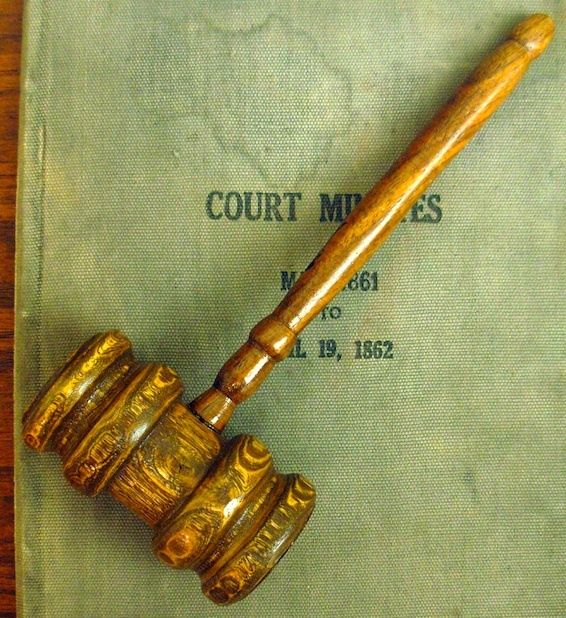
William S., manslaughter, to be imprisoned 12 months.

Thomas C., for stealing a mare, to be hanged on the 12th May.

Andrew B., for stealing a cow, recommended by the Grand Jury to be
transported for seven years.

William F., for similar offence, same sentence.

Neal M’M, for having in his possession a forged Note, purporting to be
of the Bank of Ireland, for 1l 10s, to be imprisoned for 14 years.

Pat L., for stealing two sheep, to be transported for seven years.

John G. for stealing a sheep, the same sentence.

Mathew K., for stealing a lamb, the same sentence.