Posted in Posts and podcasts

Departures – 1883

The Sun, 11th March 1883 p1

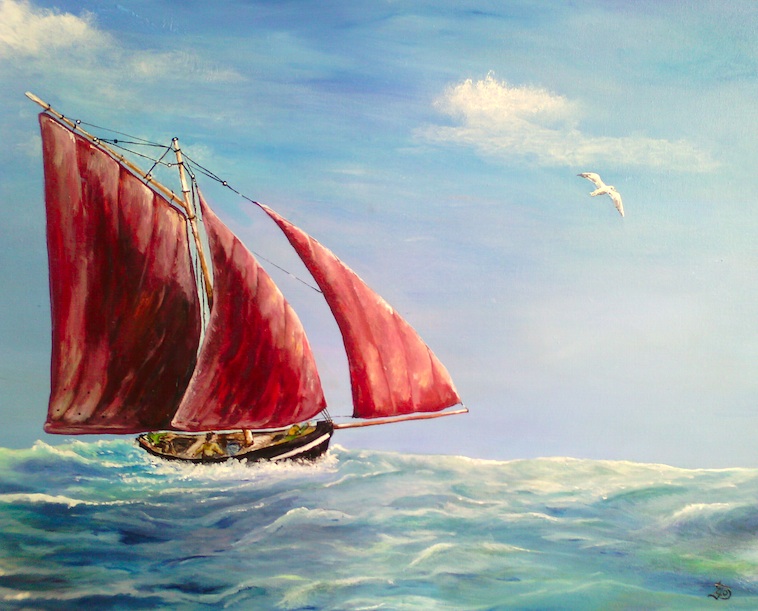
Full Sail c. EO'D
Full Sail
c. EO’D

Four hundred and fifty girls leave Galway this week for Boston under a year’s engagement to New Hampshire cotton mill owners, who pay their expenses out. Several hundreds more wanted to go. There was an exciting scene on thursday at Limerick depot over the departure of 250 of them.

Posted in Posts and podcasts

Priorities – 1823

Connaught Journal

Court Gavel  Photo: Jonathunder  Wikimedia Commons
Court Gavel
Photo: Jonathunder
Wikimedia Commons

April 3rd,1823

CASTLEBAR ASSIZES (abridged)

William S., manslaughter, to be imprisoned 12 months.

Thomas C., for stealing a mare, to be hanged on the 12th May.

Andrew B., for stealing a cow, recommended by the Grand Jury to be
transported for seven years.

William F., for similar offence, same sentence.

Neal M’M, for having in his possession a forged Note, purporting to be
of the Bank of Ireland, for 1l 10s, to be imprisoned for 14 years.

Pat L., for stealing two sheep, to be transported for seven years.

John G. for stealing a sheep, the same sentence.

Mathew K., for stealing a lamb, the same sentence.

Posted in Posts and podcasts

An interesting find – 1788

The Times, London

Guinea  Wikimedia Commons
Guinea
Wikimedia Commons

17th July, 1788
(abridged)

A short time ago some labourers were clearing the race ground of Loughmore, near Limerick. They found a small brass box, containing a piece of parchment five inches square, on which is written the admission of a fellow or scholar at Mungret University. Mungret University was at an early age famous. At the top is a picture of St. Patrick. It is signed Gulielmus Nophine, with the date A.D. 485. It was purchased for a guinea and sent as a present to a member of the Irish Academy.

Posted in Posts and podcasts

Sell or return – 1766

April 24, 1766

COLLECTIE TROPENMUSEUM Wikimedia Commons
COLLECTIE TROPENMUSEUM
Wikimedia Commons

The Pennsylvania Gazette

Lancaster, April 15, 1766. (abridged)
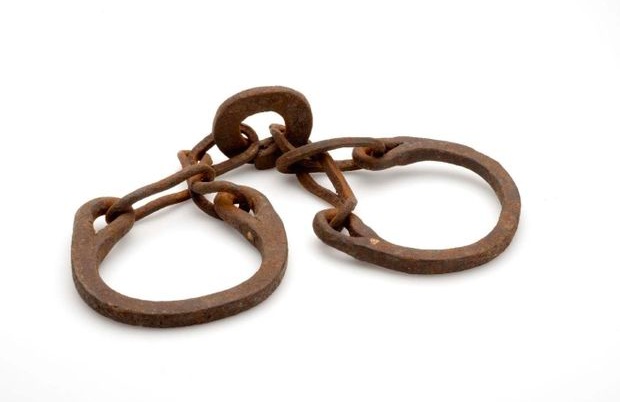
WAS committed to my Custody, on suspicion of being a runaway servant, a Girl, who calls herself Isabel Beard.

She was born in Ireland, and came in the Snow Pitt above two Years ago.  She is about 4 Feet 8 Inches high, had on  a blue Stuff Gown, striped Linsey Petticoat and Bed Gown, old Shoes and Stockings.  She says she belongs to a certain William Grimes, a Jobber, and late of York County, where she says she left him.

Her Master therefore is hereby desired to come, pay her Charges, and take her away, otherwise she will be sold for her Fees, by MATTHIAS BOOGH, Goaler.

———————————————–

October 12, 1769
The Pennsylvania Gazette

New Castle County, October 3, 1769.
WAS committed to the goal of this county, upon suspicion of being runaway servants;

JOHN MONEY, born in Ireland, about 5 feet 6 inches high, black hair, pale complexion, by trade a weaver.  When committed he had on a light coloured homespun cloth coat, linsey waistcoat, and coarse tow trousers.

ELIZABETH MOORE, a native Irish woman, about 30 years of age, fair complexion, brown hair.  When committed, she had on a stampt cotton gown of a purple colour, a linsey petticoat, shoes, and stockings.

Their masters (if any they have) are desired to come, pay their cost, and take them away, in 6 weeks from this date, or they will be sold for the same by THOMAS PUSEY, Goaler.

Posted in Posts and podcasts

Corofin Tobacco – 1788

The Times

Native American Tobaccoo flower and buds Photographer: William Rafti of the William Rafti Institute Wikimedia Commons
Native American Tobaccoo flower and buds
Photographer: William Rafti of the William Rafti Institute
Wikimedia Commons

London, Middlesex, England
23rd August, 1788

Last Saturday, Mr. Charles P. Bolton, surveyor of excise, assisted by Mr. Patrick Thally, guager, discovered in the town of Corrofin, an extensive tobacco manufactory, wherein they seized all the utensils used in that illicit trade; also a large quantity of loose leaf or four tobacco, in process of manufacture, which they lodged in his Majesty’s stores in that town.

Posted in Posts and podcasts

Dublin to Galway – Flax – 1851

Manchester Guardian 31st May 1851 p8

Flax flowers Photo:  D. Gordon E. Robertson Wikimedia Commons
Flax flowers
Photo: D. Gordon E. Robertson
Wikimedia Commons

Mr James Hill Dickson, for many years connected with the flax manufacture in the north of Ireland, has made a proposal to the chairman and directors of the Midland Great Western Railway, which they have favourably entertained – of erecting a mill on a platform, with wheels to run on the railway, to which will be attached a portable steam engine, of six horse power, with which to work the mill.

The mill, engine and workmen can be transported at the shortest notice to any given point along the line of railway from Dublin to Galway and into the country, to any farm or district along the line, at moderate distances, where flax may be grown, thus doing away with cumbrous and expensive fixed establishments hitherto so necessary to the successful cultivation of the flax plant and, in these depressed times, so difficult to erect and establish

Posted in Posts and podcasts

Fowlers – 1851

Manchester Guardian 7th June, 1851 p 5

Inismore, Arran.. Wikimedia Commons
Inismore, Arran..
Wikimedia Commons

Irish Cliff Fowlers (abridged)
I shall here outline the different methods I have witnessed on the coast of Ireland of descending steep rocks for birds or eggs. At the Gobbins, a climber has been going down the rocks occasionally in the season for above thirty years.  He has a monopoly of the aerial exercise in consequence of being the only person in the vicinity supplied with a rope for the purpose. His preparation was the work of a moment; throwing his shoes off, and a noose of the rope over his head so as to embrace his body beneath the arms.  Down he dropped from the summit, with much less concern than a lady steps from her carriage. Two or three men (generally his two brothers) ‘give out’ the rope, of which a coil is left back, some little distance from the summit of the cliff. They keep it tight until the egg-gatherer reaches the ledges containing the nests, when he gives a signal to slack it. The liberty thus afforded him to move to either side prevents the necessity of shifting the rope laterally at the summit of the cliff, where it is kept to the same place all the time.

The method adopted at Arranmore, the largest of the islands of Arran off Galway Bay was different. When Mr R. Ball and I visited that island in July 1834 a rock climber – a tall athletic fellow – came up behind, unheard in his ‘pompootes’ .  He was lowered over the loftiest limestone cliffs of the island, perhaps five hundred feet in height. His manner of descent was free and easy. He sat upon a stick, about a yard in length and two inches in thickness, to the middle of which one end of the rope was fastened, the other being held by men above.

When coming near his prey, he held the rope in one hand, and with the other threw a rope fastened to a rod around the birds. Several gulls so taken were brought up. When over the cliff he leapt as far into the air from the surface of the precipice as he could do without injury to himself from the rebound. He likewise performed various antics, and with the stick as a seat, looked quite comfortable and at his ease.
Thompson’s Natural History of Ireland.

Posted in Posts and podcasts

Halloween – 1902

The Houston Daily Post 26th October, 1902 p34

"Snap-Apple Night" by Daniel Maclise - 1833   Wikimedia Commons
“Snap-Apple Night” by Daniel Maclise – 1833
Wikimedia Commons

Cupid’s Cake

Halloween when goblins walk,
And Cupid laughs and spookies stalk
All pretty maids their sports forsake,
To bake themselves a nice big cake.

Within this cake a circlet lies,
A ring that’s hidden from all eyes.
Secure, deeply implanted there,
It lies concealed with every care.

At midnight hour, when elf bells toll,
The cake is cut and from its whole,
One piece is found to hold the ring;
The glistening, mystic happy thing!

A maiden sees it with bright eyes,
As from the piece she lifts the prize,
And on her dainty little hand
She draws the shining golden band.

Then Cupid, naughty little elf,
Comes forth and joins the play himself;
He topsy turvy turns the scene,
‘Till all make love on Halloween.

Posted in Posts and podcasts

Gort – 1790

Berrow’s Worcester Journal 28th January, 1790 (abridged)

EO'D
EO’D

Friday night a desperate gang of eight or ten fellows, well armed, and with their faces covered, entered the dwelling house of Colonel Blaquiere, near Gort, and after tying the family, plundered the house of what valuable articles they could get at.

They entered at the window of the Colonel’s bed-chamber, who, notwithstanding his being overpowered by numbers, made a most brave resistance, nor did he submit until totally surrounded and covered with wounds, when the inhuman villains tied him, with his head downward, in which pitiable situation he remained bleeding at every pore, until some of the family were enabled to extricate themselves, and go to his assistance; after which the neighbourhood was alarmed, and a spirited pursuit immediately commenced by the gentlemen. The villains to expedite their retreat, took two horses from the Colonel’s stable, but left behind them a blunderbuss, a pistol, an old riding-coat, and two bludgeons.

Posted in Posts and podcasts

Loughrea – 1905

THE TUAM HERALD, TUAM, CO GALWAY

Loughrea Lake Wikimedia Commons
Loughrea Lake
Wikimedia Commons

7th  August, 1909
A gentleman, a resident of Loughrea living in England, thus writes about the changes time has wrought there: – “There was a Pawn Office – a Mont de Piete – established in my day in a house once occupied by Mr Smyth, in Main Street. Behind was a three storey range of wool stores once used by him. The manager of the Pawn Office was Mr John Cowen, but the enterprise came to grief, and Dr Lynch went to live there, but later on it was converted into a police barrack. In those days I speak of, the population was about 8,000. It is not half now. I knew Monahan’s Hotel, built where the new Cathedral now is. It was called ‘The Head Inn’ and is mentioned in Lever’s Novels where many a pleasant evening was held. Loughrea was then the centre of the county society, and its hunt ball the great social event. One of the Monahans was Anthony, but the other, James, became a chief Justice. By the way, Charles Lever was Consul in Trieste, where he died and was succeeded by a great Irishman, Sir Richard Burton, whose grandfather was the Rev Edward Burton, Rector of Tuam. His grave is in Mortlake Cemetery