Posted in Posts and podcasts

The Wild Atlantic Way – 1899

Supplement to the Cork Examiner, 18th November, 1899
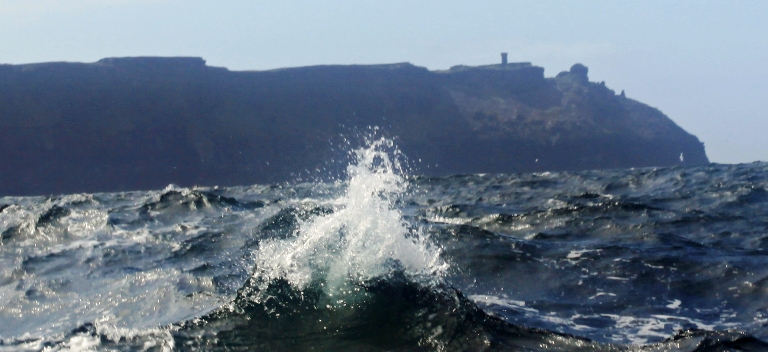
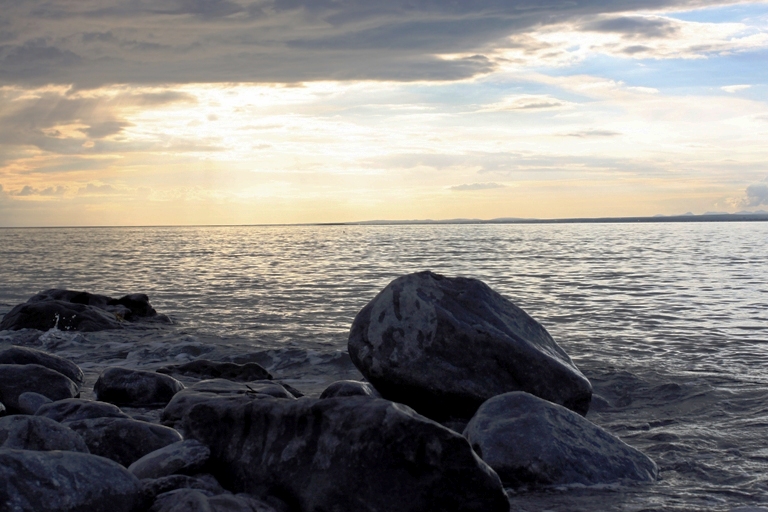
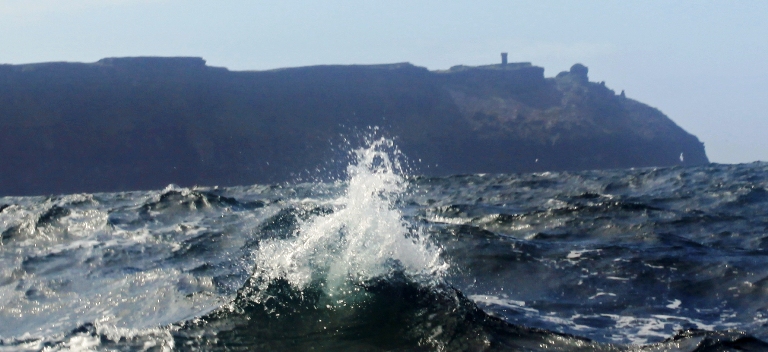
Photo: Norma Scheibe

The finest scenery in Ireland is on the northwest coasts of Connemara, Mayo and Donegal. There are no grander headlands in Europe than these broken, precipitous highland masses towering above the Atlantic.

Galway is the gateway leading into this picturesque region with its invigorating climate. A magnificent sea wall leads to it from Loop Head, at the mouth of the Shannon, with the glorious cliffs of Moher midway.  Galway Bay is the outlet for a chain of lakes with which the highlands of Connemara are riddled.  The coast is mountainous, with a succession of many coloured precipices and countless islands all the way from Clifden to Achill Head, where the Croaghaun cliffs are nearly 2,200 feet above the sea and thence along Mayo to Slieve League and the rock-bound highlands of Donegal. In picturesque colouring, grandeur, primeval wildness and elemental power there are few coasts that bear comparison with the north-western outstretch of Ireland.
Galway town is quaint and beautiful, and its charm of local colour comes from a strain of Spanish blood. For centuries it was a port commanding a large trade with Spain.  Its merchants and sailors were constantly visiting and there were frequent marriages. While it was not Spanish in origin and attracted few settlers from the South, its architecture, gardens, manners and life were coloured by its associations with the more tropical country. The course of modern improvement has not been so rapid as to obliterate these traces of Spanish taste. While the town is not laid out with the regularity of a chess board, there is a central square or garden where the women are on parade on Sunday afternoon, and many of them have olive skins and coal-black eyes and hair. They have the same love of colour which fascinate Spanish women, and are brighter and gayer in dress than the Irish girls of Limerick, Dublin or Cork.
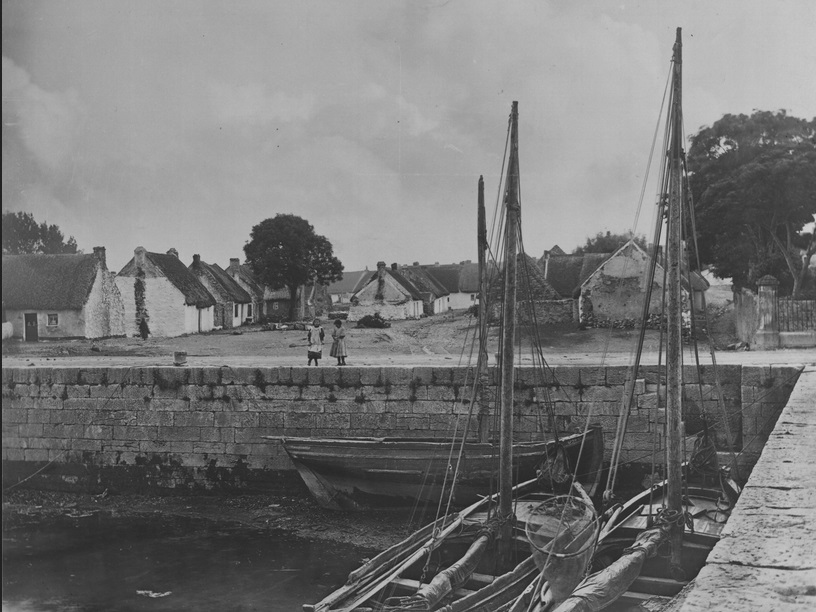
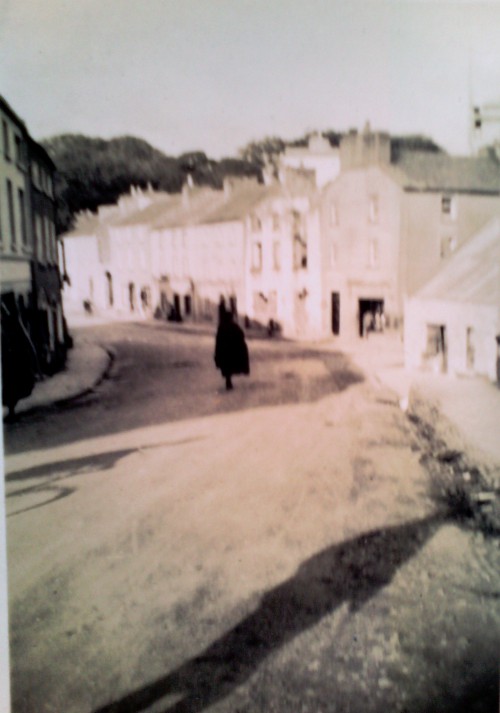
The Claddagh, Galway Photo: Robert John Welch (1859-1936) N.U.I.G. archives Creative Commons
The Claddagh, Galway
Photo: Robert John Welch (1859-1936)
N.U.I.G. archives
Creative Commons

The houses are also painted or kalsomined in pink, blue, yellow and white, so that there is a display of colour even in a quiet street like Prospect Hill – leading into green meadows. Neglected as the old houses with their central courts and wide entries and stairways have been, Galway still contains many of the distinctive features of a Spanish town.
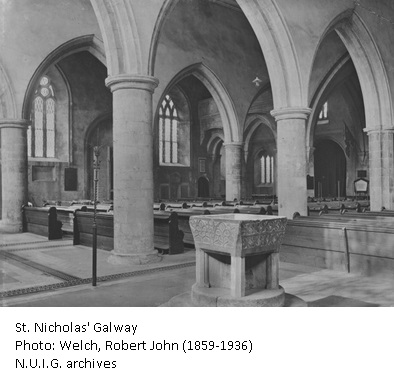
The Lynch mansion even in its present state of dilapidation goes far to support the composite reputation of this Irish Spanish port. This stronghold of a powerful family has degenerated into a chandler’s shop, but the medallions on the side, the decorated doorways and windows, and the grotesque heads near the cornice attest its foreign character; and the Lynch stone on the crumbling wall behind St. Nicholas’s Church perpetuates the grim sense of justice of its most famous tenant. James Lynch Fitzstephen, wine merchant and Mayor, was in Spain about the time America was discovered and invited the son of one of his friends to return with him to Galway for a visit. The guest flirted with the Irish girls, and was finally stabbed one night in the streets by a jealous rival. The murderer was the Mayor’s only son, who confessed his crime in an agony of remorse. The father, encouraged by this violation of hospitality, condemned his guilty son to death, and with his own hand conducted the execution, either from his own castle or opposite the church. The Lynch stone commemorates this act of stern, unbending justice, and with skull and bones rudely sculptured enforces the quaint inscription;
“Remember Deathe Vaniti and al is but Vaniti.”
Although the Castle and the mansions of the Burkes and the Joyces have fallen into ruin, there are Spanish patios, doorways, dripstones and archways, and even Saracenic windows, to be seen in the tangle of crooked streets, if one has the patience to look for them. More obvious than these peculiarities of ancient domestic architecture are the levels of colour and a gaiety of manner and spirits, which remain as unerring signs of Spanish infusion of blood. There are Spanish faces in the back streets, and Spanish voices are heard in the fish markets.  Poverty is as real here as in other Irish towns, but its pathos is less moving because an instinctive effort is made either to hide it or take a cheerful view of it.  There are flowers in doorways and windows; the cottages have touches of bright colours. NICK
The Claddagh offers as interesting a study of the heredity as Spanish-Irish Galway. This is the strange suburb at the entrance to the harbour, where a  tribe of coast fishermen has retained for generations many characteristic traits. These fishing folk disliked strangers, had little to do with Galway, lived by themselves and intermarried, kept out of ordinary courts of law, and allowed a chief, known as the Claddagh King, to settle all their disputes. Their King has been dethroned, and they have relaxed their discipline sufficiently to suffer fishermen not of the tribe to live among them and even to welcome tourists to their thatched cottages. The characteristic dress of the woman, a red gown and blue mantle with a handkerchief wound round their head, is still seen in this fishing colony, and every wife wears the Claddagh ring, with two hands holding a heart.  The huddle of huts is one of the strangest and most fantastic spectacles on the Irish coast.
There was a time when a great commercial revival was predicted for Galway. A transatlantic packet line obtained a small contract and sought to take advantage of the shortest sea course between the United Kingdom and Newfoundland and Halifax; and extensive harbour improvements were planned in order to open the port to ships of the largest draught. The packet line lost two ships and abandoned the route and the breakwater has not been built; Galway, with its herring fleet and salmon fisheries has remained a fishing port.
The salmon fisheries have been improved by the construction of fish walks and ladders and by systematic measures for promoting breeding, and there are salmon leaps to be seen from every one of the picturesque bridges. Electric engineers have looked at the swift river pouring a torrent from Lough Corrib into Galway Bay, and suggested that power could be supplied at low-cost for creating a great manufacturing town. One small power house has been erected, and a few flouring mills are in operation.
With the opening of Connemara and Mayo to tourist travel on a large-scale by the construction of light railways, the establishment of coaching routes and the erection of new hotels, Galway’s fortunes are improving without commerce or manufacture.  Curiosity shops have multiplied, and the Claddagh ring is prominent in every show-case. Wise men are suggesting that the town can be made more attractive to strangers by reproducing some of the bygone effects of domestic architecture and colour; and it is not unlikely that the paint-pots will be emptied upon the walls of the cottages before a new season sets in, and that garrulous guides will be in readiness to conduct tourists to every neglected ruin in ancient Galway. It is certain that full advantage has not been taken of the picturesque resources of this delightful fishing town, but it is also doubtful whether visitors can ever be detained very long on the edge of Connemara where there is a coast of unrivalled grandeur in reserve for them.
“New York Tribune”
Posted in Posts and podcasts

Kinvara 1916

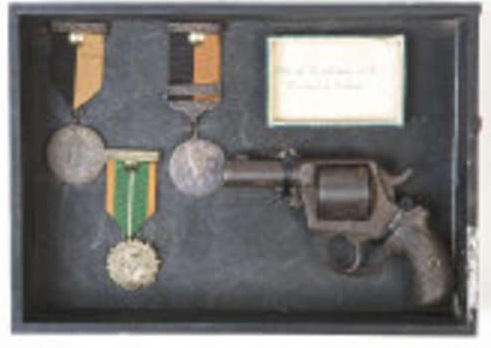
Kinvara 1916 and War of Independence Medals awarded to brother and sister, Joe and Annie Kilkelly, Kinvara, Co. Galway and revolver owned by Joe Kilkelly.   Image:  Adams.ie
Kinvara 1916 and War of Independence
Medals awarded to brother and sister, Joe and Annie Kilkelly, Kinvara, Co. Galway and revolver owned by Joe Kilkelly.
Image: Adams.ie
Posted in Posts and podcasts

Padraic Uas O’Fathaigh – 1916 – Gort and South Galway

Connacht Tribune 27th December, 1968 p3. (abridged)

Liam Mellows Wikimedia Commons
Liam Mellows
Wikimedia Commons

Mr Fahy begins his story of Easter Week by recalling the arrest and imprisonment of Liam Mellows in the Autumn of 1915 and his deportation to Reading in April 1916. At that period the Galway County Board of the Irish or Sinn Fein Volunteers, which governed the force, had Mr George Nichols, Galway as chairman; Joseph Howley, Oranmore, treasurer; and Padraic O’Fathaigh, Lurgan, Gort, secretary, with Larry Lardner, Athenry as Brigade Commander. Meetings were held at Athenry and Mellows had his training camp at Ballycahalan. Mr. O’Fathaigh continues his story;

A convention was held in Limerick, at which plans were made for the Easter Sunday Rising. The delegates from Galway were Commandant Larry Gardner, Rev. Fr. Feeney, C.C.; Tresa Bhreathnach, Eamonn O’Corbain and Padraig O’Fathaigh. Mr. Ledden presided at the meeting, and it was arranged that the expected arms from Germany would be taken to Abbeyfeale and there sorted, some to be kept, and the remainder taken by rail to Gort to arm the Volunteers who would muster there on Easter Monday. Handbills about the Gort Monster Meeting were displayed at the Limerick Hall.
“Con” Fogarty would take the arms to Gort. Commandant Colivet would take charge of the Limerick Brigade of the Irish Volunteers at Limerick city. The Clare Battalion, led by Commandant Michael Brennan, would take any Clare barrack they might surprise, but would make no delay in moving to augment the Limerick Volunteers. The Companies of the Galway Brigade would attack the R.I.C. barracks in their area on Easter Sunday.

EASTER SUNDAY 1916
Commandant Larry Lardner was in command, Commandant Liam Mellows having been deported to England. The wily Commandant Mellows, however, succeeded in evading arrest and turned up at Mrs. Walshe’s house in Killeeneen some days before the intended Rising. Liam Mellows ordered that his escape should be kept a secret known only to the Walshe family, Eamonn Corbett and myself.
Liam’s uniform, enclosed in a parcel addressed to Mrs. Walshe, was expected to come via Athenry and its safe delivery was important. Since 1909 I taught Gaelic every Wednesday and Thursday night in Athenry.  My visit to Athenry on Wednesday elicited no surprise. Eamon Corbett was mixed up in rate collecting and travelled extensively. We got the parcel safely; George Fahy at the Railway Hotel and Berty Powell at the Railway Station would have scented out any danger. We took the parcel with all speed to Killeeneen; I thus missed the Irish class for the first time in seven years.

to be continued on theburrenandbeyond.com

Posted in Posts and podcasts

Kinvara – 1916

Downtown Kinvara
Downtown Kinvara

Connacht Tribune 27th December, 1968 p3.

The first shot in Co. Galway in Easter Week of 1916 was fired in Kinvara. The authority for that statement is Padraic Uas O’Fathaigh of Tullira, Ardrahan, who was one of the officers of the Co. Galway Board of the Volunteers and a central figure in the events of that week.

Mr O’Fathaigh was in Kinvara at the time the first shot was fired and was involved in the incident that led up to it but he does not claim to know for certain to whom the distinction should go – to a Volunteer or to a policeman.

full story to follow on theburrenandbeyond.com

Posted in Posts and podcasts

Crushoa wedge tomb – 1969

Connacht Tribune 10th October, 1969 p.21

Down by the shore Photo: Norma Scheibe
Down by the shore
Photo: Norma Scheibe

Another 4,000 year old tomb has been found in County Galway, as a result of information supplied by Mr William O’Brien, Land Reclamantion Officer, Renmore, Galway. The tomb, situated on the land of Mr J.W. Duane, Crushoa, Kinvara, is a gallery type wedge grave, somewhat smaller than the one recently described found on the land of Mr Des Kerrins at Ballinastague. The chamber dimensions are approximately as follows;
Length – 8 feet;
width 6 feet 6 ins;
Height – 4 feet;
Children of the Fahy family Crushoa, Martha, Sarah and Josephine, were delighted to point out the location of the tomb to the visitors who verified its authenticity, the visitors being, Mr Sean O’Nuallain, Archaeological Officer in the Ordnance Survey’ Mr P.G. Coen, M.P.S.I. Gort; V. Rev Fr. Martin Ryan, P.P. Ruane, a leading member of the Thomond Archaeological Society; Mr E. Rynne, lecturer in Celtic Archaeology, U.C.G. and Mr E. Fox, Galway

Posted in Posts and podcasts

Anti-Conscription meeting, Kinvara – 1918

Connacht Tribune 11th May, 1918 p.2

Wikimedia Commons
Wikimedia Commons

A large and enthusiastic meeting for the purpose of protesting against the conscription menace was held at Kinvara on Sunday week. The meeting was addressed by the Rev. J. W. O”Meehan B.D., C.C. (Chairman); Rev. J. Keeley, C.C; Dr. T.J.Connolly; T.P. Corless; P.J.Flatley; J.Kilkelly and F.J. Johnston.
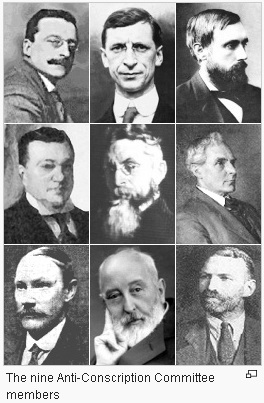
The nine Anti-Conscription Committee members (image on left);
Arthur Griffith, Eamon de Valera, John Dillon, Joe Devlin, William O’Brien, Thomas Johnson, Michael Egan, Timothy Michael Healy, William X. O’Brien.

Posted in Posts and podcasts

Dances at New York – 1931

Connacht Tribune 11th April, 1931 p.22

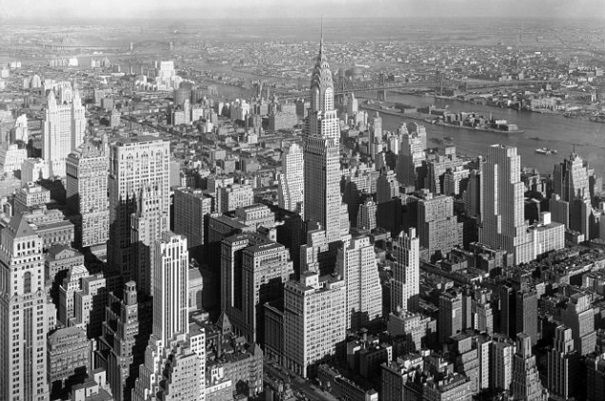
New York City 1932  Photo: Samuel Gottscho Library of Congress Wikimedia Commons
New York City 1932
Photo: Samuel Gottscho
Library of Congress
Wikimedia CommonsDances at New York

The New West of Ireland Ballroom at 884 Columbus Avenue, New York, recently taken over by the two Galway partners, Mike Tierney and Bob Connolly, is enjoying a wonderful patronage. A successful Galway dance was held there on Sunday night which brought patrons hailing from Kinvara, Gort, Loughrea, Tuam and Ballinasloe.

Posted in Posts and podcasts

Kinvara Promenade – 1966

Connacht Tribune 16th April, 1966 p.9

Photo: EO'D
Photo: EO’D

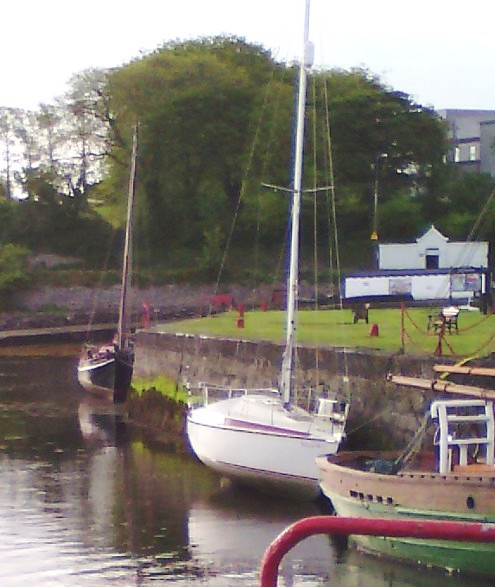
Miss C. Nally, a member of Kinvara’s oldest families, offered to donate some of her property in the harbour area in the interests of the residents who are considering their town as a tourist centre, and the project of constructing a promenade was discussed. All householders were called upon to co-operate in beautifying their premises and the site of a community centre was decided upon.

Posted in Posts and podcasts

S.S. Muenchen and the Dun Aengus – Galway – 1928

Irish Examiner 7th May, 1928 p.5

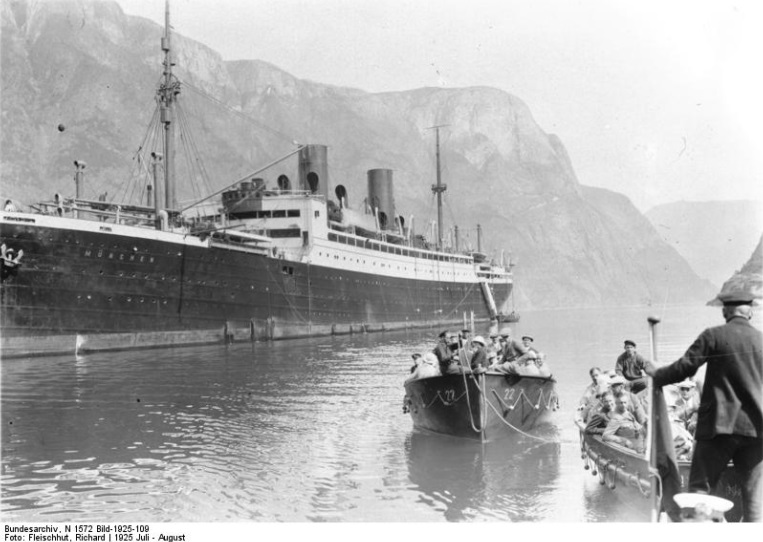
S.S. Muenchen Wikimedia Commons
S.S. Muenchen
Wikimedia Commons

The Lloyd liner Muenchen, which left Bremen for New York in the early hours of Thursday, sailed up Galway Bay shortly before three o’clock yesterday afternoon, and anchored on the roadside not far from the lighthouse. Simultaneously the Galway Bay Steamboat Company’s steamboat, Dun Aengus, which acted as tender, left the Dun Aengus dock, carrying 150 passengers for New York and the States. Of these 100 were third class passengers, from the counties of Galway, Mayo, Roscommon, Clare and Limerick, the remainder being tourist and cabin class passengers, many of whom were returning from holidays in Ireland, or going to America on a visit to relatives.

Pending the erection of the disinfecting station, close by Galway docks, disinfecting facilities were afforded in the Galway Central Hospital, where everything worked smoothly under the supervision of Dr.Michael Davitt, resident physician; Dr Vondelour of Cove, Mr Kennedy, Cove, and the staff recently appointed by the Galway Urban Council.  A fleet of motor cars quickly transferred passengers from the Limerick steamship Co’s Lloyd’s agency offices at the docks to the inspection station.

So great was the interest in the first westbound sailing that has taken place from Galway for a generation, that enormous crowds from all parts of Connacht gathered in the city from early morning. As the tender was leaving the docks the crowd was so great that they broke through the barrier and a small and inadequate police posse. It was only with the active co-operation of the Limerick Steamship Co’s and Galway Harbour officials that they were kept from crowding on to the tender.

The DunAengus put the passengers and a number of visitors aboard the S.S.Muenchen at 3.30, the ship’s band rendering popular Irish airs the while. The Board of Trade Inspectors, immigration authorities, and Customs officials got through their duties with smoothness and celerity, and the liner sailed up the sunlit bay, which was smooth as a sheet of glass, on her westward course shortly before five o’clock. As she passed southwestward along the promenade at Salthill, a great farewell cheer that could be heard out at sea rang up from the crowds that lined the front.

Photo; Norma Scheibe

During the brief period the Muenchen remained in Galway an interesting function took place on the captain’s bridge. Mr Philip O’Gorman, J.C., President of the Galway Chamber of Commerce, accompanied by the Secretary and some members, handed to Captain Wittstein of the Muenchen a letter of greeting from the Galway Chamber of Commerce to the President of the New york Chamber. Captain Wittstein said he would gladly bear the letter personally and convey the good wishes of the citizens of Galway, whose beautiful and sheltered bay would, he felt sure, be more closely linked up with the Port of New York as the years passed by. Last Christmas he entered the bay without a pilot. It was safe and open, and afforded as secure an anchorage for a big liner as there was in the world.