
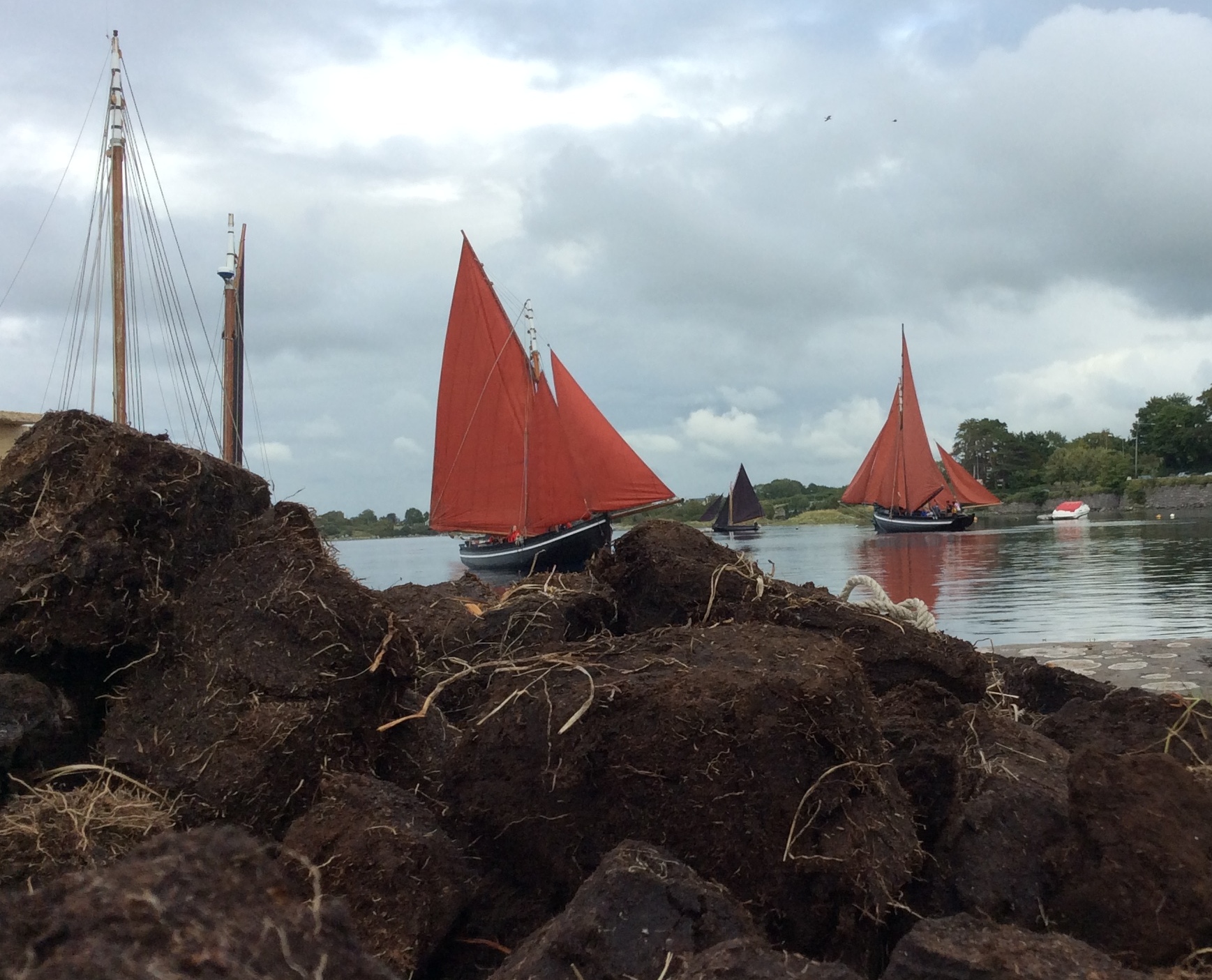
Kinvara – 2015
Posts and Podcasts
Connacht Tribune 3rd March, 1951 p.3
Kinvara was the scene of feverish activity on Sunday when the Ballinderreen Platoon, under Lieut. E. Quinn; Dooras Platoon, under Cpl. M. Fahy, and Kinvara Platoon under Vol. M. Quinn, held a Field Day for the purpose of holding star grading tests. Forty volunteers were tested and although the standard of examination was high, 32 were successful in gaining the coveted “stars”.
Connacht Tribune 27th June, 1959 p.25 (abridged)
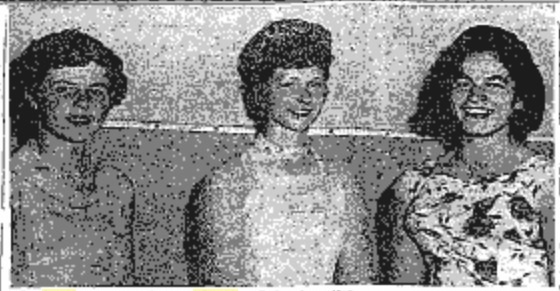
Sunday evening was Carnival Evening in Kinvara, when large crowds, including many visitors, watched the Fancy Dress Parade and the Crowning of the Queen of the Carnival. The town was en fete, decorated with flags and bunting. The Carnival is run jointly by the Kinvara Guild of Muintír na Tíre and the Kinvara Club G.A.A., one of its principal objects being the development of the G.A.A. pitch recently purchased. There were over two hundred competitors in the Fancy Dress Parade.
The Parade Marshall rode in front on horseback, followed by the Tulla Pipers’ Band. There were at least three “Tom Dooleys.” “Mr. de Valera” passed by holding out a pair of boots with the caption, “Who’ll fill Dev’s boots now?”. A boy and girl festooned with authentic exam papers, bore a card calling for the abolition of the Primary Cert; “Padraig O’Conaire” drove by on his ass and card; “Liberace” escorted his “Mum.” There were several editions of the Dalai Lama, Billy the Blacksmith was a “Museum Piece,” a tiny pair with costumes made up of the “Noughts and Crosses,” portrayed the “Referendum on P.R.”.
Others included – “The Queen of the Shear”; “Christy Ring”;”No Council Houses for Kinvara”; a “Sultan”; the “Four Seasons”; the “Latest Fashions”, including Onion Line, Sack Line, Balloon Line and 1960 Line; the “Result of the Bantry Explosion.” The magnificent Puck Goat drawing a tiny car and driver was among the cowboys and other foreign gents in fancy costumes.
At the quayside the Mayor of Kinvara, Mr. Michael Leech, and his aide de camps awaited the State Coach bearing the Royal Party. The “messenger” riding a penny farthing bicycle, arrived to announce to the M.C., Mr Tom Donnellan, the election of the Queen and her imminent arrival.
The election of Miss Kathleen Forde of Ballybuck, Kinvara, was greeted with acclamation. She arrived in her coach, attended by her four ladies in waiting, the Misses Annie Nolan of Crushoa, Concepta Callanan of Caherglissane, Rosemary Silke and Mary Keane of Kinvara .Having welcomed all visitors the Mayor took the crown from the hands of the “Court Equerry,” Kieran Moylan and crowned Kathleen I. The new Queen, in her “Coronation Speech”, promised that all taxes would at once be doubled but would be payable to the Royal Treasury for such worthy projects as the repair of the roads around Kinvara and the extension of the fishing limit to twelve miles.
Freemans Journal 16th May 1847 p.2
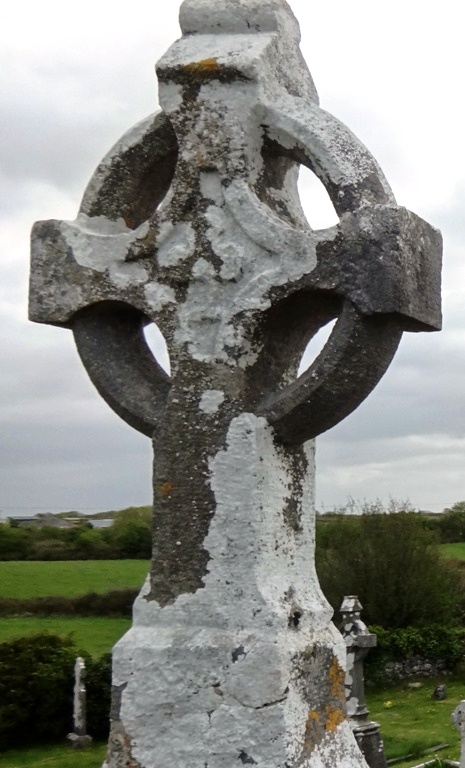
Kinvara, Killina and Duras, Galway – Reverend F. Arthur (abridged)
Deaths by famine, 148, in addition to 98 occasioned by a melancholy subsistence on sea weed, nettles, “Bliskane,” & c. Last year the mortality was 52, so that the increase amounted to within a fraction of 400 per cent. Over 1,100 persons were cast out to perish by the order of reduction. There is the parade of relief under the act, but the committee are fastidiously select. Out of a population of 10,000 “there is not 100 who would not be ranked under the first class paupers.”
The reverend gentleman regrets the absence of a Protestant rector “to assist in the great work of charity,” a regret inspired with the most sublime Christianity. And yet the Mail not long since made merry, with that divine desire which proved how well the Rev. Mr Arthur could share the brotherhood of benevolence with one of a difference creed. We seek to introduce no unworthy bickering into the neutral ground of charity, or to interrupt the “truce of God,” with reflections derogatory to any class embarked in the sacred cause of humanity; but if stones have been cast, the Catholic clergy did not originate or perpetuate the quarrel. They calmly bore the faint ebullitions of the old intolerance – which even the fate of thousands of perishing fellow Christians could not altogether repress.
Butte Independent 6th June, 1914 p.3 (abridged)
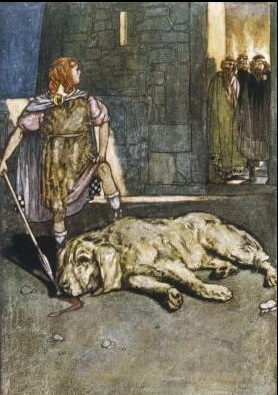
Hurling was played in Ireland from the time of the Celts. It was essentially a military game, designed to keep the warriors in perfect condition and training for battle. No other exercise could equal it in training the eye and the hand. Napoleon, upon witnessing a hurling match among the men of his Irish brigade, remarked that “the race who invented such a game could whip the world.”
In the ancient schools of Ireland, civil and military, the youth had to be instructed in hurling, commencing at a very tender age. Each youth had to have his own hurley and ball, and practice until he learned the fine points of the game. This formed part of the instructions which an Ollamh imparted. In ancient laws the rights and privileges of a hurler were well-defined and protected.
Injury, while engaged in a game seldom happened, for not only would the hurler who injured an opponent suffer disgrace by being considered unskillful, but furthermore he was compelled by law to support the injured man and all others dependent on him while he was incapacitated.
Connacht Tribune 10th February, 1934 p.6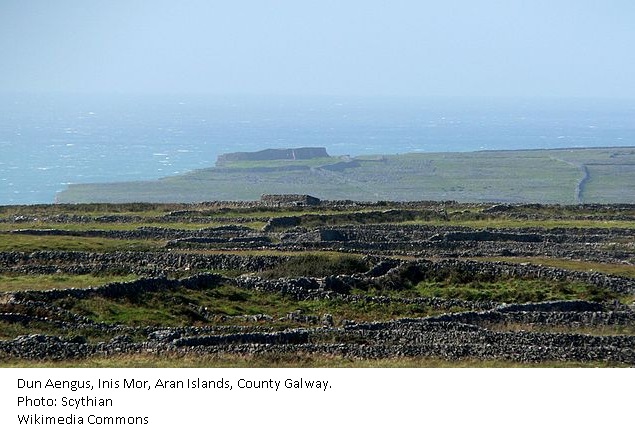
According to legend, Galway Bay was formerly a large lake and known as Lough Lurgan, and at one time the islands formed portion of the mainland, but the lake burst its boundaries, leaving the Aran Islands as the remains of the land that used to separate it from the sea. This statement was made by Rev. Co Senatlebury, S.J. Dublin, during the course of an interesting lecture on “The Saints and Shrines of the Aran Islands.”
Each of the islands is rich in archaeological remains. Practically every kind of ancient structure, from the dolmen to the 17th Century castle, may be studied in Aran. The huge stone fortresses, which are so conspicuous landmarks as one approaches the islands from Galway Bay, testified to the importance of the islands in pagan times. From ecclesiastical remains and from the Annals, the role that Aran played in the history of the early Irish Church may be judged. There are four forts on the largest island, two on the second largest and one on the smallest. The most famous is Dun Aengus, which stands on a promontory at the edge of the sea. It was said it got its name from the dark colour of the stones of which it was built.
Irish Examiner 18th July, 1896 p.10
(abridged)
In the reign of Cormac Mac Art, son of Conn of the Hundred Battles and High King of Ireland, a great gathering of the beauty and valour of the nation assembled at Tara to witness a hurling contest between the Tuatha de Danann and Finn MacCool and his warriors.
When the ball was brought into the middle of the field and struck into the air, so great was the energy and skill of the players that it was not allowed to touch the ground for more than an hour.
Gaillimh Abú!
Connacht Tribune 27th July, 1935 p.27
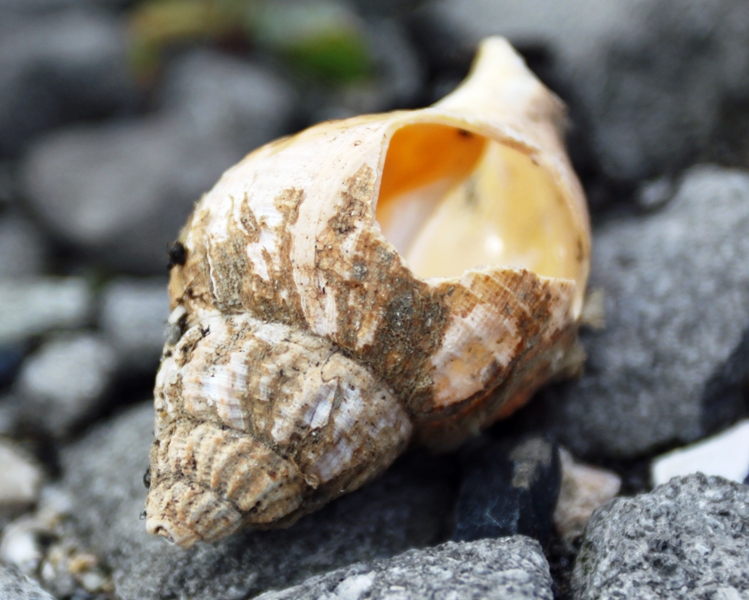
On Sunday next, July 28th what promises to be an ideal day’s sport will be held at Traught Strand. This strand, situated about three miles west of Kinvara, is rapidly growing in popularity as a bathing resort and is one of the best and safest in the West of Ireland. A local committee has now taken up the task of improving this strand, and making it more attractive and satisfactory for the thousands of tourists and visitors who frequent it during the summer months.
Already a line of seats on concrete stands have been set all along the shore just above the high-water mark, as a result of the proceeds of a regatta held last year. The committee hopes to be able to erect a diving board, concrete walks, etc., as a result of this year’s sports and regatta which takes place next Sunday.
Spectators will be treated to an unusual scene, when the little bay will be decked with clinkers, pookawns, galleys and canoes all at anchor and ready for their own races. A large pleasure boat will take visitors on trips around Galway Bay during the evening, and everything points to an enjoyable afternoon.
Connacht Tribune 13th January 1967 p9
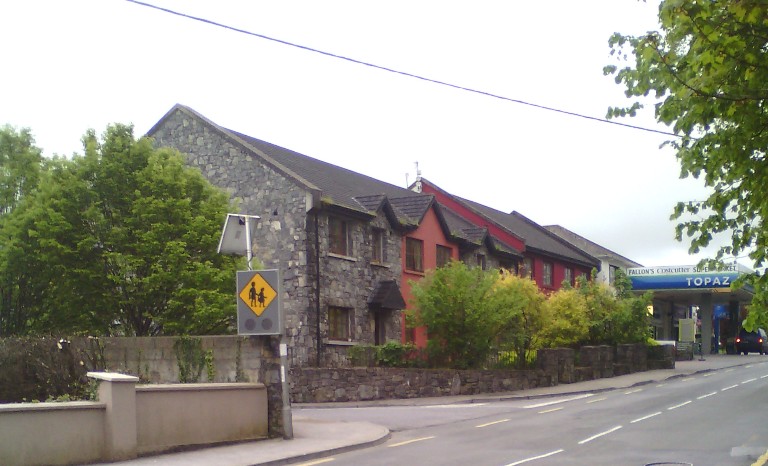
The carnival field in Kinvara situated in a most prominent position in the town is getting a new facade. As part of the scheme to make the road wider and straighter from Kinvara to St Colman’s Church, the old wall and the bend opposite “The Walks” are being demolished and the carnival field will be somewhat narrower. The improvement is being looked on as a further asset to Kinvara when the National Tidy Towns competition and the competition organised by Shannon Development company begin later this year. This field is the property of Mr John Holland, the well known farmer in Kinvara.
Connacht Tribune – 25th February, 1972
Richard Cronnolly was born in Ballinderreen Co Galway in 1828. He joined the Dublin Metropolitan Police and spent his spare time in the Record Office where he studied old documents. Without any assistance, financial or otherwise, he found a publisher willing to give the result of his researches to the world. He was working against time, and died in the moment of success at the age of thirty five.
He left behind him a work that is remarkable. The Long Black Hand, a recitative poem, which tells of the slaying of malicious spirit who made life miserable for the people of Ballinderreen a few hundred years ago.
The Long Black hand may be read on Fadó Fadó at theburrenandbeyond.com

