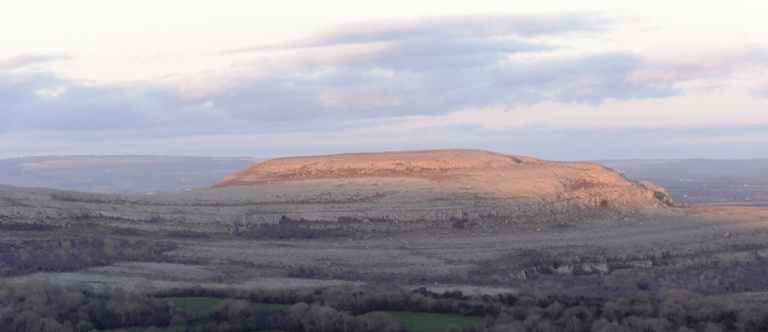
The Burren (county Clare) mountains blazed from one extremity to the other a few nights ago, in consequence of a rumour having reached the people’s ears that Mr. O’Connell M.P. had taken his seat. On the bonfires being discerned by the county of Galway peasantry, they immediately followed the example in almost every village, and along the roads. Nothing can equal the intense interest, the laudable anxiety of every class of persons. Two persons cannot speak together for five minutes without alluding in one way or another to Mr. Connell, the Catholics, Wellington, Anglesey, Peel or the Brunswickers. The latter infatuated miscreants are breaking the peace for spite, and God knows we do not think that if they all broke their necks into the bargain, the country would be anything the worse of the accident.
A thunder-storm of very peculiar character broke over this town yesterday morning about half past ten o’clock. The sky all round the horizon was clear, and there were no clouds anywhere to indicate what was about to take place, when we were startled by a loud peal, almost directly over us. On looking up, a dark gathering was now perceived about the zenith, but the general brightness of the atmosphere, so unlike anything that we had ever before observed during a thunder-storm, reminded us of the phenomenon considered by the ancients as a proof of the existence of Jupiter, when thunder claps were heard in a cloudless sky. The darkness above, however, quickly increased, and clouds – coming no one knew whence, but seeming to grow suddenly out of the disturbed air – began to settle over the town in dense masses interlaced with continual streams of vivid lightning.
A grey veil of rain soon appeared to hang down along the entire of the bay, dimming the brightness of the Burren hills, which were evidently at the time in full sunshine. The thunder roll was now almost incessant, and the display of lightning was, perhaps, the finest we ever witnessed. The immense length of the jagged shafts from the zenith to the horizon, and from the horizon back again to the zenith, crossing the sky several other directions, was among the most striking features of the display. The height of the storm was from four to five miles, and it continued stationary for almost an hour, when it slowly moved towards the north-east, leaving us again in bright sunlight.
But all was not yet over, for about two o’clock the sky began to darken toward the south-west, and the thunder recommenced. At half past two a white stream of lightning, accompanied by an explosion of a most terrific character, with a metallic ring in the sound, seemed to fall in the neighbourhood of the square, and we were soon after informed that the Bank of Ireland had, in fact, been struck by the electric fluid. After this the electric discharges continued with little intermission on every side, and shortly before three o’clock there was a shower of immense hailstones, accompanied by rain of such character as might almost suggest the outpouring of a celestial lake, and the streets became flooded almost instantaneously. This shower, fortunately for the hay and other crops about Galway, continued only for a few minutes, while it probably embraced but a narrow tract of country on its route; and it is to be hoped that but little harm was done anywhere by the storm in proportion to its apparently formidable character.
Distant thunder was heard for the remainder of the day. On inquiry at the bank we were kindly shown over the place by the manager, Mr. McDowell, when we found that the lightning first struck one of the chimneys, displacing several stones at the top and throwing one large one bodily into the yard at a distance of several feet from the house. Descending the chimney it penetrated the ceiling of one of the rooms making a very small hole and scattering the plaster in various directions. It then ran along a bell-wire under the ceiling on which it left several deposits that suggested a metallic character by their various iridescent colors of pink, yellow, blue &c. Reaching another apartment, strange to say, it forsook the wire and entered between the stucco plastering and the wall by rather a large breach, and there all further trace of its course was lost.
Several of the inmates of the house were severely affected by the concussion, either violently shaken or thrown down, and one of the servants was rendered insensible for some moments. One of the gentlemen in the bank office saw the lightning, as it appeared to him, playing among the iron railing outside which may, possibly have acted partially as a conductor, attracting a great portion of the electric fluid, and thus saving a great catastrophe.
Happily we enjoy a comparative immunity from thunder storms in Galway. Anything approaching the phenomenon of yesterday has not occurred with the memory of the oldest inhabitant. Galway Vindicator.
‘Twas when the troops of Guaire
Had Suffered sore defeat,
And he a lowly prisoner,
Was brought to Dhiarmuid’s feet.
Unto him came a Druid,
All at the King’s behest,
To sound the sea of charity
That dwelt in Guaire’s breast.
The Druid knelt beside him,
And thus to Guaire cried,
“A gift, a gift, great Chieftain,
Thy fame spreads far and wide;
For that thy hand is open,
And thou art wont to give
A gift, a gift, great Chieftain,
And long, long may’st thou live.”
“I have no gift,” said Guaire,
“And had I one to give,
Methinks for thee it should not be,
For I can now perceive
That thou are well supported
All at the King’s expense
Then, quick, I pray that thou away;
Good Druid, take thee hence.”
Now, when the Druid left him,
a wretched leper came
Unto the Chief; in tones of grief,
Assistance did he claim.
“For God and His dear Mother’s sake,
Give something unto me,
It is a wretched leper
That claims thy charity.”
When Guaire saw the leper,
And heard his tale of woe,
His soul was moved within him,
His heart felt many a throe.
“Alas, afflicted leper,
That I am poor like thee,
But take this silver bodkin,
For blessed charity.”
PENTAX Image
He plucked the silver bodkin,
While thus to him he spake,
That pinned the vest upon his breast,
And bade the leper take.
His fallaing now all loosely
Around the Chief did flow,
As from his sight, with bosom light,
The leprous man did go.
With doleful look of anguish,
Came back that leper swift
“Good Chief, good Chief, I’m wretched,
They’ve ta’en from me my gift.”
The golden girdle from his waist
The generous Guaire took,
And gave it to the mendicant
With kindly, pitying look.
Then gratefully the leper
Unto the Lord did pray
For Guaire’s weal – nor harm, nor ill,
Might ever near him stay.
He went away rejoicing,
But soon returned again
“Good Chief, good chief, I’m wretched,
Thy gift from me they’ve ta’en.
Now, when that Guaire heard him,
He was afflicted sore,
The tears adown his visage brown
In streams began to pour.
King Dhiarmuid there beheld him
Afflicted thus at heart,
“And weepest thou O’Guaire now,
That thou a pris’ner art?”
“I mourn me not my own hard lot,
King Dhiarmuid,” Guaire said,
‘Tis hard, I wot, but tears may not
For such as me be shed;
But I do weep in anguish deep,
That I have nothing more
To give unto that man of woe,
That leper sad and poor.”
“Oh, Guaire,” then replied the King,
“I clearly now can see,
All free from stain of motive vain
Is thy great charity.
And, for that I esteem thee
No longer as a foe,
I humble pray that from this day
All strife we do forego.”
“‘Twas I that sent the Druid
To ask a gift of thee,
“‘Twas I that bade implore thine aid,
This man of misery,
I know thy wondrous valour,
I seek thy friendship dear,
And in my stead, when I am dead,
Thou shalt be Monarch here.”
T.C.
Long puck Wexford v Limerick Irish Independent 20th November, 1910
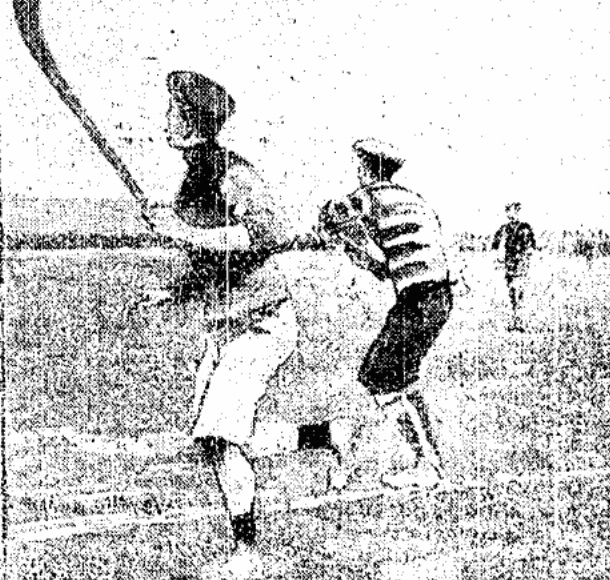
The Co. Clare Board G.A.A., were obliged to play off a tie between Tubber and Killinana on the Galway side on Sunday. Rumour had it that the hurling was to be prohibited, and for that reason an invitation to Gort to meet a selection from Clare was readily accepted, despite other engagements at home. A couple of platoons of military with full war equipment, assisted by several armoured motor cars, sported themselves on the roadside bordering the playing pitch. Shortly after the game started the “Iron Duke” and his other formidably named companions crossed the Clare border and disappeared amongst the hills unnoticed, except for a few derisive cheers as they motored past.
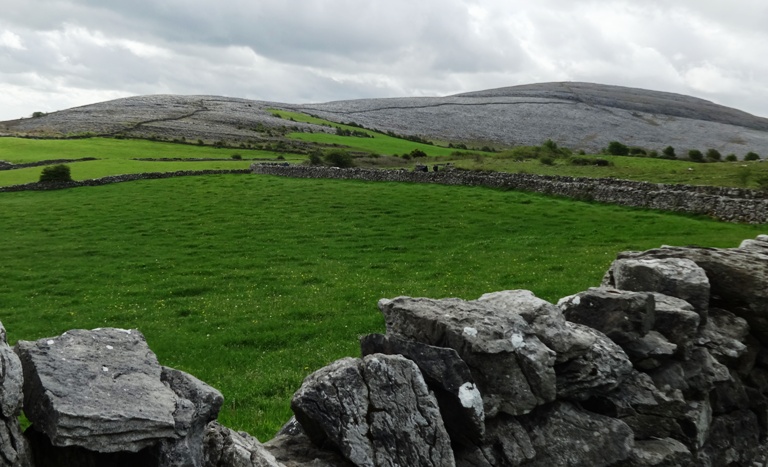
No hint, no touch of grim utility,
Earth’s busy functions sleep abandoned here;
Corn-grower, root-grower, nourisher of grain,
All are forgotten, nakedly austere.
Nought but herself, her inmost core, survives,
Stripped to the elements; enskyed and pure,
Remote, and stern, and coldly sanctified;
And therefore, Burren hills, to me you seem
Shrines meet for that which is, and which is not;
Approach beloved ones! Hasten! All is clear,
No bidding need you – you the unforgot!
The door stands open; only come; ah, come;
Come from your far-off realms, with noiseless tread,
Come as you were, no dearer could you be
The Loved, the Lost, the Sundered and the Dead!
Wide glistening pavements fit for ghostly feet,
Where never thought of mart or street intrude,
Only from ledge to ledge spent rain-drops drip,
And half-heard tinklings stir the solitude.
Imponderable wanderers! Shadowy all!
Ghost after ghost; half-veiled; grey muffled; while
With spirit-looks, visions seen in sleep,
Eyes seem to glimmer, lips austerely smile.
Again at dusk-time, or when moonbeams lie
Far on the sheeted silence, fold on fold;
Then with a swifter sequence, soft as light,
Life’s semblances enwrap this shadowy cold
Like autumn leaves, like high-borne clouds, they come
Strange shapes; and others, others, ah, not strange!
Not strange, God knows, but intimately dear
Untouched by time, defiant of all change.
And therefore, Burren hills, grey Burren hills,
Soul of fierce Clare, wild West of all our West,
No mindless tract of earth or strand thou seem’st,
Such as dull maps and solemn charts attest.
Here mid your solitudes, as mid the crowds,
Alike for me thou shinest, realm apart;
Open to all we pine for, pray for, hope;
Sanctified Home-land of th’ unchanging heart.
On Monday night, in consequence of intelligence received by Col. Bourke, the Castle Connel Rangers, notwithstanding the severity of the weather, made an incursion into the county of Clare mountains, which were covered with snow, took two of the houghers against whom there are informations, and lodged them safely in our gaol on Tuesday last.
Letter from Mr. Briscoe to the editor of the Freeman’s Journal. (abridged)
Town Tenants’ League,
Executive Offices,
4 Upper O’Connell Street, Dublin
14th August, 1910.
Dear Sir,
As your readers may be aware, much disturbance and unrest has prevailed at Kinvara for some time past in consequence of the refusal of the trustees of the Sharpe Estate to reduce the rents in the town to the figure they were under O’Donnellan Blake Forster, and sanctioned by the late Judge Monroe when the estate was in his Court. Some time since decrees were obtained against the tenant, and these have been lodged with the Sheriff for execution. Yesterday Mr. Corless of Kinvara wired me asking to have execution of decrees delayed, and I immediately wired the agents asking them to have this done. This morning I received the following courteous reply to my wire from the agents:
Tuam, 13th August, 1910. Kinvara Estate. Dear Sir, We have received your telegram of this date, and, as requested, we have asked the solicitor for the estate to communicate with the Sheriff and ask him to hold over the execution of the decrees for a few days. We wrote to the tenants before lodging the decrees with the Sheriff, and gave them every opportunity of paying. If the rents and costs to date are now paid, we shall give the Congested Districts Board every facility to enable them to make an offer for the estate. The execution of the decrees can only be stayed to the 20th inst. Yours truly, D.J. Kirwan and Sons.
It was in connection with this estate Mr. Wm. Field, M.P; Mr Wm. Duffy, M.P; and myself recently interviewed the Chief Secretary in London, and I had strong hopes that interview would have laid the foundation of a settlement in the interest of the people of Kinvara. I may add I do not hold the Messrs. Kirwan in any way responsible for harsh proceedings, but evidently the trustees will have their pound of flesh.
Yours faithfully,
Coghlan Briscoe.
Connacht Tribune 31st January, 1925 p.8
The following ships arrived in Galway harbour this week;
ss Mungret, from Liverpool on Monday, to load a cargo of timber for Garston;
ss Turquoise from Ayr, with cargo of coal for Mr. B. Hynes;
Cymrich, auxiliary motor vessel, bound from Dublin to Kinvara with cargo of manure in bags for Mr. O’Dea.
Strange Robbery of Arms
(Central News Telegram) Galway, Monday.
On Saturday evening the Naval Reserve Armoury, just outside this town, was broken into and its contents, consisting of twenty-three Martini-Henri rifles and seventeen cutlasses, were stolen. For many years these arms were stored in the police barracks, but recently they were removed to the armoury. No guard was kept at this place, and the door was fastened by an ordinary padlock, which could be picked with little difficulty. The police have been scouring the countryside since the robbery was discovered, but the thieves have not yet been traced. One of the cutlasses, however, and a ramrod, have been found on a road leading to the shore of the bay. It is conjectured that the robbers crossed in a boat from the County Clare, and made their escape with their booty the same way. Today her Majesty’s cutter Fly conveyed a party of police across the bay to County Clare to join in the search.
Connacht Tribune 6th December, 1958 p.7
Kinvara Dramatic Society, which last year drew the greatest attendances ever seen at any amateur or professional dramatic society in this district, is staging “A Damsel From Dublin” at the Kinvara Hall on December 14th, 15th and 16th and will later produce the same play in Clarenbridge on Sunday, December, 21st. Kieran Moylan takes the principal.

 The Burren and Beyond