Posted in Posts and podcasts

Catherine Mahony – Loughrea – 1843

South Australian Register 13th May, 1843 p2

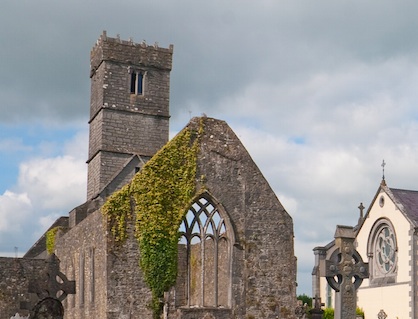
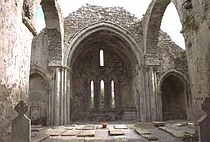
Loughrea Old and New Priory Photo: Andreas F. Borchert  Wikimedia Commons
Loughrea Old and New Priory
Photo: Andreas F. Borchert
Wikimedia Commons

At the petty sessions of Loughrea, Ireland, the master of the Union Workhouse preferred a charge against one of the inmates, named Catherine Mahony, “for having continued to speak when cautioned to be silent.”
The magistrate dismissed the complaint and strongly censured this new mode of burking (hurting?) the paupers.

Posted in Posts and podcasts

The Progress of Temperance – Ballinderreen – 1840

Australasian Chronicle 17th November, 1840

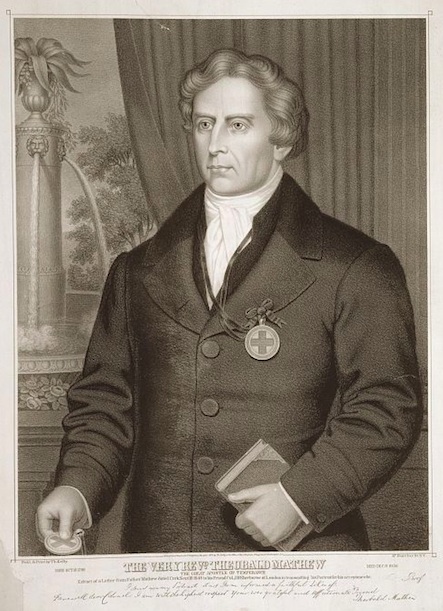
"Theobald Mathew" by Thomas Kelly (fl. 1871-1874)  United States Library of Congress's Prints and Photographs  Wikimedia Commons
“Theobald Mathew” by Thomas Kelly (fl. 1871-1874) United States Library of Congress’s Prints and Photographs
Wikimedia Commons

The Very Rev. Fr. Mathew, being on a visit at Kilcornan, the hospirable mansion of N. Redington, Esq., M P., administered the total abstinence pledge on the 21st and 22nd ult., to upwards of eight hundred postulants.
Many from the neighbouring parishes of Oranmore, Ballinacourty, Ballinderreen, &c., who lost the opportunity of approaching him while in Galway and Loughrea, took advantage of his propitious visit to Kilcornan. The people of this locality have been extremely fortunate.

Posted in Posts and podcasts

Ennis – 1826

The Monitor (Sydney) 17th November, 1826

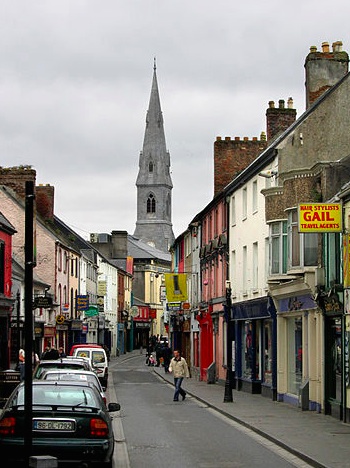
Ennis Wikimedia Commons
Ennis
Wikimedia Commons

CLARE, ENNIS, MARCH 6
On Friday last, a great number of the trades-people went some distance out of town, with a band and colours, in expectation of meeting Counsellor O’Connell, and intending to draw his carriage into town.
Several of them were tastefully dressed, and carried poles with large loaves of bread on them. They marched in procession through the town, and the orderly manner in which they conducted themselves was very commendable.
After waiting a considerable length of time on the way, they returned about seven o’clock in the evening, when they played a few enlivening airs and retired peaceably to.their homes.

Posted in Posts and podcasts

Sold – 1865

The Freeman’s Journal 3rd May, 1865 p 278

Corcomrue Abbey, The Burren Wikimedia.org
Corcomrue Abbey, The Burren
Wikimedia.org

The two remaining unsold lots of the Burren estate in the county Clare were purchased by private sale on Friday by Wm Lane Joynt, Esq, agent to Lord Anally for £11,000. Thus the noble lord has become the owner of all the Burren estates.
The noble lord is also the owner of the Duke of Buckingham’s estate at Ballyvaughan, Mr Burton Bindan’s at Currenrue, on which are the famous oyster beds, Mr John B. Scott’s at New Quay, Sir Hugh Dillon Massy’s Broadford estate and Mr John Westropp’s at Kilkeryne. These represent, as a whole, one of the largest territorial possessions in the hands of any peer or commoner in Clare.

Posted in Posts and podcasts

The Rival – Galway – 1833

The Sydney Herald 22nd April 1833

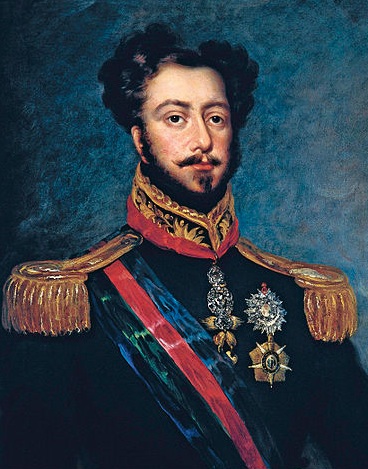
"Anônimo - D. Pedro, Duque de Bragança" by Anon After John Simpson (1782-1847) - Wikimedia Commons -
“Anônimo – D. Pedro, Duque de Bragança” by Anon After John Simpson (1782-1847) – Wikimedia Commons –

We regret to state that by accounts received at Lloyd’s today, the Rival of London, Capt. Wallis from the Clyde to Oporto, carrying troops for the service of Dom Pedro, was totally wrecked near Galway previous to the 4th of December. It is supposed the number on board, with the crew, were about 400 and all drowned. It is much regretted that for the cause of humanity as well as the peace of Europe, some attempts are not made to put an end to the unnatural contest between the notable brothers of the house of Braganza.

Posted in Posts and podcasts

Corofin – 1826

The Monitor (Sydney) 17th November, 1826(abridged)

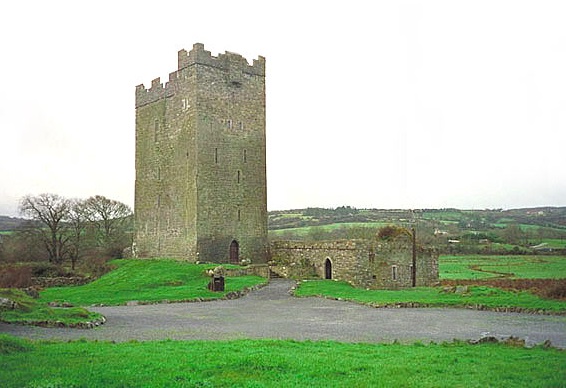
O'Dea castle near Corofin. Wikipedia.org
O’Dea castle near Corofin. Wikipedia.org

Our readers are aware that a Public School has been for a time kept under the patronage of Mr. Synge, of Dysart near the market town of Corofin. It is no less notorious that the School has met with considerable opposition from Mr. Murphy, the Priest of the Parish.

On Thursday night last, a party of diabolical miscreants assembled convenient to the place, and after firing several shots, and calling to the persons who resided in an adjoining house, not to stir out on pain of losing their lives, set fire to the school house.

Satisfied that their demoniac work of darkness was accomplished, they called to the persons in the house to come out and save themselves and their property as well as they could, as the flames were communicating to their dwelling. They then decamped.. We abstain from any further remarks on this subject, until we hear more about it.-Ennis Chronicle.

Posted in Posts and podcasts

Gort – 1912

Freeman’s Journal 2nd May, 1912 p7 (abridged)

"Rosgall"  Wikipedia.org
“Rosgall”
Wikipedia.org

Thomas Higgins, Patrick Hughes, John Daly, Fergus Kilcooley, and Tim Reilly from Kilbeacanty served one month’s imprisonment for playing a band in the private grounds of Mr Baggott’s tenants while Mr Baggott was having a shooting party. On their release from Galway Gaol they returned to Gort where they were met by a large crowd of about 300 people who marched in procession playing the same band. The tenants on the Baggott. estate are demanding a sale through the Congested Districts Board, but Mr. Baggott has so far refused to deal with the matter.

Posted in Posts and podcasts

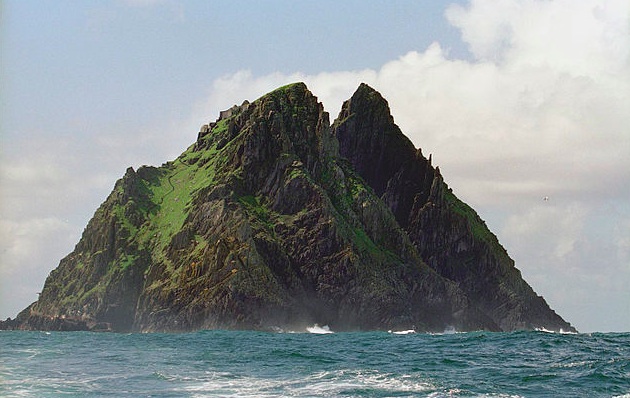
The Great Skellig – 1826

DEPLORABLE CIRCUMSTANCE.

Skellig Michael Photo: Jerzy Strzelecki -Wikimedia Commons
Skellig Michael
Photo: Jerzy Strzelecki -Wikimedia Commons

The Monitor (Sydney) 17th November, 1826 (abridged)

The Great Skellig Rock is situated in the Atlantic, near Valentia Island, and is over 300 feet in height. The Ballast Board are erecting a Light-house there and the Board are exceedingly censurable in not having provided against such a dreadful casualty as our Correspondent describes:-

“There are about forty workmen now on the Skellig Rock nearly a month without victuals or firing, and the weather is so bad that no relief can be given them. The signal of death is constantly flying from the Rock.
Two men escaped about a fortnight ago by jumping off, and were most miraculously saved by the relief boat, though she could not approach the Rock. The account the men give of their fellow sufferers’ privations is melancholy.”
Lim. Eve. Post.

Posted in Posts and podcasts

Gort – 1848

THE POTATO ROT

"Late blight on potato leaf 2" by Howard F. Schwartz, Colorado State University, United States - Wikimedia Commons -
“Late blight on potato leaf 2” by Howard F. Schwartz, Colorado State University, United States – Wikimedia Commons –

THE Argus 26th December 1848 p4

From Gort, in Galway, about July 29, the reports were favourable, but recent returns show that on the 6th August a general failure of the crop was anticipated, the fields were black, but at that time it had not generally destroyed the Potato; on the 10th, however, matters were much worse, and opinions were entertained that it would be desirable to consume what Potatoes were sound, while they remained so, “for the blight was extending.”

Posted in Posts and podcasts

Kinvarra to Penzance – 1893

Schooner rigging: 1) Bowsprit; 2) Jib, followed by fore staysail; 3) (Fore) gaff topsail; 4) Foresail; 5) Main gaff topsail; 6) Mainsail; 7) End of boom Wikimedia.org
Schooner rigging: 1) Bowsprit; 2) Jib, followed by fore staysail; 3) (Fore) gaff topsail; 4) Foresail; 5) Main gaff topsail; 6) Mainsail; 7) End of boom
Wikimedia.org
THE TEESDALE MERCURY 1ST MARCH, 1893 P3

SAD FATALITY AT SEA

The schooner Jeffery, of Jersey. Captain Davey arrived in Penzance Harbour on Sunday afternoon from Kinvarra, Galway Bay and reported having experienced terrific weather on the voyage.

In her voyage from Ireland the Jeffery has been out between four and five weeks, and some anxiety had been felt respecting her safety. On Wednesday last E—- C—-, one of the seamen, was washed overboard. Captain Davey threw a lifebuoy to him and he succeeded in getting inside it. An attempt was then made to get a boat out, but there was such a tremendous sea running that on getting over the side of the ship the bottom of the boat was stove in, thus rendering it useless.

The crew then tried to get the vessel down to the man by wearing round, but they were unable to reach him.