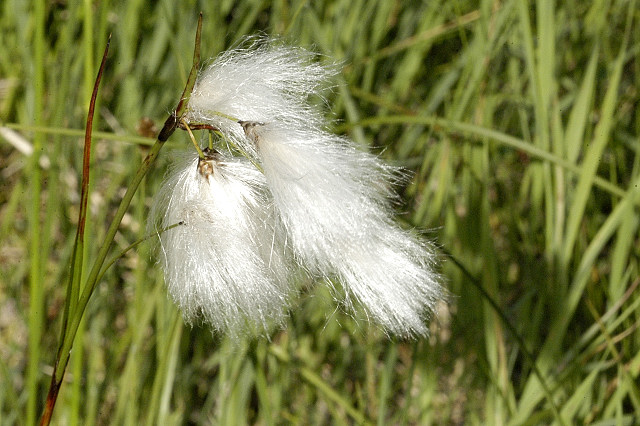
Bog Cotton Photo: James K. Lindsey Wikimedia Commonshttps://widgetworld3.wordpress.com/podcasts/
THE QUEENSLANDER 25th of June, 1912
Excerpt from The Carrying of the Kelp by Helen Porter (in “Chambers Journal”)
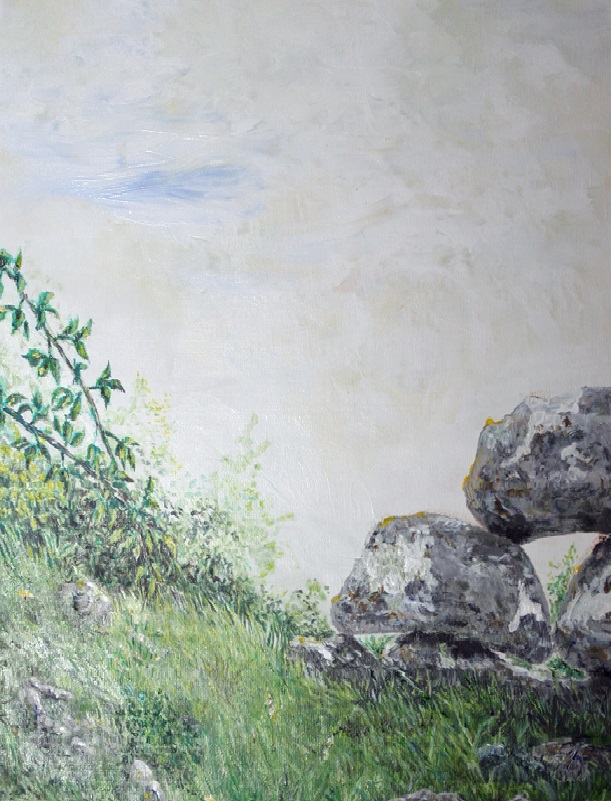
The district known as the Burren is one of the bleakest spots in Ireland. The whole country seems petrified, as if a devastating blast from the Atlantic had turned it into stone. Then, nature appears to have repented her roughness and the cold monotony of her hand-work; for, after laying a groundwork of rocks, she covered it with a carpet of exquisite and delicate loveliness. Feathery fern, autumn-tinted bramble, golden moss, geranium, harebells, and blue scabious run riot over all, and in the damp patches between the grey stones, silvery bog cotton waves in the breeze…
Photo: Steve Hopson, http://www.stevehopson.com. Wikimedia Commonshttps://widgetworld3.wordpress.com/podcasts/ THE CATHOLIC PRESS 17TH JANUARY, 1907
HOW THE WORLD WAGS
Irish Bananas.
In the Dublin Corporation Fruit Market last month, the first consignment of Irish-grown bananas will be offered for sale. They were grown in County Galway, and are said to have surpassed the foreign kind for sweetness and flavour.
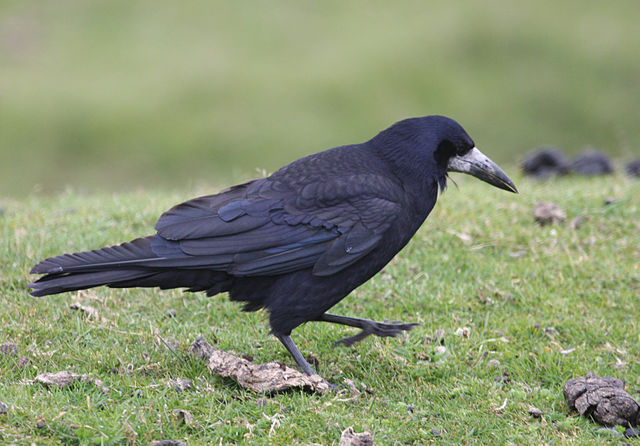
Corvus frugileus – Rook Photo: Brian Snelson Wikimedia Commonshttps://widgetworld3.wordpress.com/podcasts/ THE NEWPORT MINER 24TH NOVEMBER, 1910 P4
ROOKS AND CHOLERA
The present day security of this country against all danger of a cholera epidemic is matter for thankfulness not only in human circles, but in the rookeries too. When the cholera slew nearly 60,000 people in the insanitary United Kingdom of 1831-2 the rooks appear to have suffered with them. This was stated, at any rate, to have occurred on the estate of the Marquis of Sligo, which boasted one of the largest rookeries in the west of Ireland. On the first or second day of the epidemic’s appearance an observer noted that all the rooks had vanished.
During the three weeks through which it raged there was no sign of them about their home, but the revenue police found immense numbers of them dead on the shore, ten miles away. When the epidemic abated the rooks returned, but some were too weak to reach their nests, and five-sixths of them had gone. London Chronicle
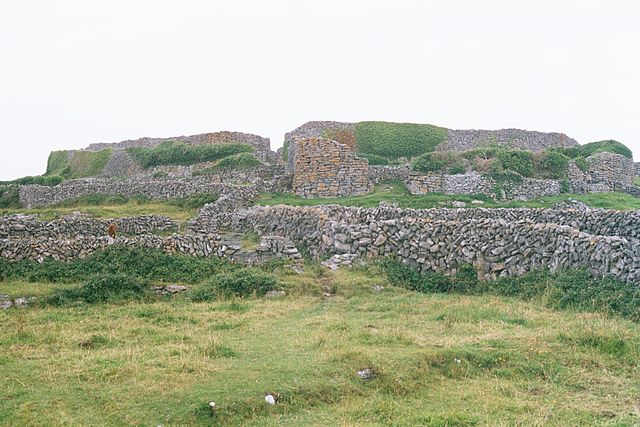
Dún Chonchúir (Conor’s Fort) Inishmaan Photo: Eckhard Pecher Wikimedia Commonshttps://widgetworld3.wordpress.com/podcasts/ HOPKINSVILLE KENTUCKIAN 14TH MAY, 1912 P3
HEARD ONLY CALL OF DUTY
Brave Irish Physician Scorned Danger when welfare of patient was at stake.
The talk of how Dr. O’Brien of Innismore braved the Atlantic storm to help a sick patient has made all the western Ireland ring with his praises.
He received a wire that his services were urgently needed on the island of Innismaan, but the storm was raging so fiercely that he had difficulty in finding a crew willing to put to sea. At last he succeeded and the corragh (sic.) – a small canvas boat – started on its four and a half mile journey through the surging waters that ran with terrific force between Innismore and Innismaan.
It was a life and death battle all the way, half the men striving to keep the boat headed across the straits while the rest bailed out the water that was continually shipped. At length Innismaan was reached, the patient’s life was saved and the return journey began.
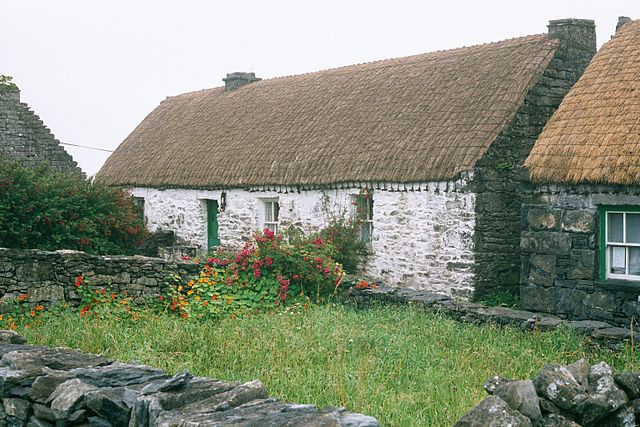
The Mac Donnchadha home, Inishmaan. Bríd and Páidín MacDonnchadha hosted John Millington Synge here each summer from 1898 to 1902. Photo: Eckhard Pecher Wikimedia Commons By that time a regular hurricane was blowing and several times the doctor and his crew seemed on the point of death when they happened upon some trawlers at anchor, with which they sheltered till a lull in the tempest enabled them to make a dash for the shore.
Ballybranigan EO’DTHE BEMIDJI DAILY PIONEER 5TH APRIL, 1913 P2
CHEEK (abridged)
“Cheek” in the sense of impudence is an old term. The earliest quotation in Sir James Murray’s dictionary is from Captain Marryat (1840). But it has lately been found in the sixteenth century records of Galway, in the west of Ireland. The municipal rulers decreed that any person giving “cheek” to the mayor should “forfeit 100 shillings and have his body put in prison”.
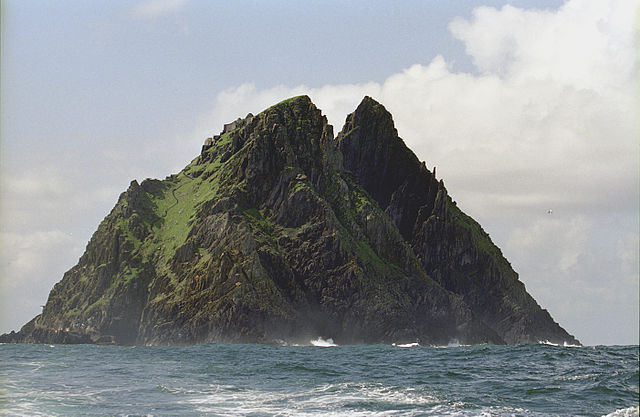
Skellig Michael Photo: Jerzy Strzelecki Wikimedia commonshttps://widgetworld3.wordpress.com/podcasts/ Daily Press, 5th March 1905 P5
IRISH PILGRIMS TO THE SKELLIG ROCKS RISK THEIR LIVES
Ten miles off the coast of Kerry, in the west of Ireland, lie the Skellig rocks, one of which has been for years the scene of a difficult penance. A zig-zag path leads up some 700 feet to a lighthouse, but 700 feet more must be climbed before the summit is reached, where stand the ruins of St. Finian’s monastery and a cross of St. Michael.
Here on the anniversary of St. Michael devotees risk their lives in performing their devotions. First they have to squeeze themselves through the Needle’s Eye, a tunnel in the rock thirteen feet long, the passing up which is like the ascent of a chimney. Then they creep on all fours up the Stone of Pain, on whose smooth surface one false step is fatal: then, getting astride the Spindle, a rock 1,500 feet above the Atlantic and projecting some ten feet, each pilgrim must “ride a cock horse to St. Michael’s cross,” say a Paternoster and shuffle back as best he can.
Pearson’s weekly.
Ballyknow Quay Photo: Greg O’Beirne Wikimedia CommonsSACREMENTO DAILY UNION, VOL 26, N0 3973 15TH DECEMBER, 1863
THE IRISH EXODUS
(From the London Times – October 30th) – ABRIDGED
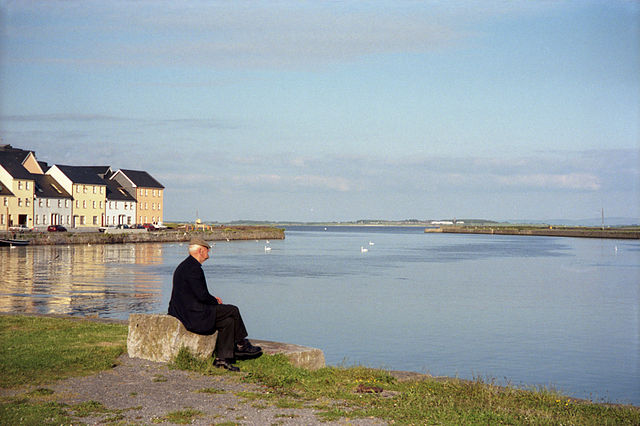
On Monday night there steamed into Galway Bay a very large ship, with some goods on board, about three hundred steerage passengers, and a select party in the cabin. Under the protection of the Isles of Arran, thirty miles off, and favored by wind and tide, the ship steamed up to an anchorage on the safe side of a small island, on which stand a lighthouse and a battery, and thence, by means of a steam tender, communicated with the port of Galway…
Besides the four hundred steerage passengers and the twenty-three sacks of letters, she took in at Galway two puncheons of whisky and the latest telegrams…
But putting out of the question that desolate waste of waters, that strange old medieval city, its still stranger suburbs, the twenty-three sacks of letters, the twenty-eight cabin passengers, the latest telegrams, and the two puncheons of whiskey, out and out, beyond all comparison, the most important article in that departure from Galway Bay were the seven hundred steerage passengers.
They were robust, healthy young people; very few of them married; what people used to call the “sinew and bone” of a country…
This is a fact which overrides every other Irish question. The current, in every town and village, every street, every family, every breast, has set in, and it is beyond the power of Governments, of laws, of priests, of politicians, to do more than just lash and disturb the great tide of emigration… there is scarcely a cottage in the west of Ireland where the promise of the family, the elder sons and daughters – their voices and their features still fresh in memory as young and old gather round the turf fire – are now in some far Western State, sending home their hearts’ best wishes for the reunion of the circle.
While writers at home are angrily debating what is to be done with the Irish, they are fast settling the question for themselves by a universal departure.
HOME SWEET HOME (abridged ) J.J. Fleming, Allegheny P.A
I love to be in Galway when the tide breaks on the shore,
And the silver mists are rising from the lea.
When the summer sun in brightness lights the valleys all around.
And nature’s jewels are sparkling, I can see
The little old thatched cottage and the ivy creeping round,
And the skylark thrilling in the vaulted dome;
Among quiet nooks and dells fairy music softly swells,
I love to be in Galway, “Home Sweet Home.”
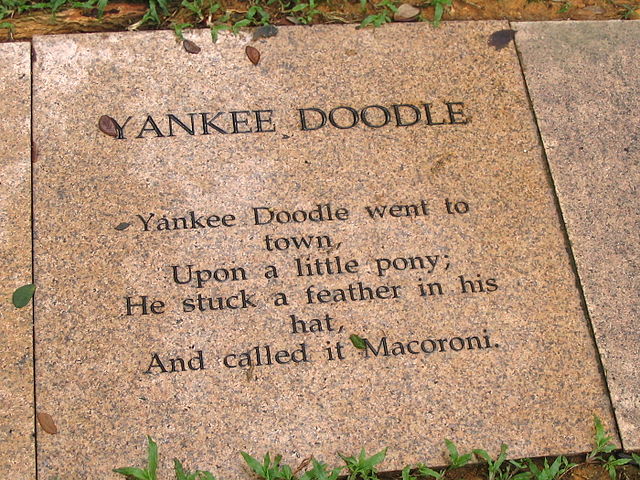
British National Anthem and “Yankee Doodle,” Old Irish Tunes.
“Yankee Doodle” is not American at all – it’s Irish, according to Dr. Grattan Flood, an Irish authority on musical history. He asserts that “Yankee Doodle” was originally an Irish Air known as “All the way to Galway,”
“God Save the King,” the British national anthem, Dr. Flood says, also is an old Irish tune which originated about 1595 and has been going strong ever since.
BLAIRMORE ENTERPRISE 2ND MARCH, 1922 Irish in Russia Heard Peace News Descendants of the Irish Brigade were deeply affected Captain Francis McCullough, a former British Officer, writes to the Manchester Guardian from Ukmerge, Lithuania, date December 9: I sat until late last night before a logwood fire in an Irish castle, surrounded for scores of miles in every direction by Lithuanian forests, deep in snow. The wail of the icy wind through the trees sounded like the keen of the banshee, and sometimes I could catch the distant howling of a wolf. No more suitable setting could have been found for the tales I listened to and told – tales of Napoleon’s retreat from Moscow, of the devastating Williamite wars in Ireland and of that awful period of persecution which followed the Williamite wars. I held in my hands a sword which had been wielded at the Boyne – on the losing side – and I had examined a fragmentary record printed by order of the last Catholic Parliament which sat in Dublin over two and a half centuries ago. I had heard a violin give one of the saddest and most melting of all the old Irish melodies; and in return I had sung as best I could, in Russia, many of the Irish songs which I had learned as a boy in Ireland over twenty years ago, but have not forgotten since. It was a strange night and a strange company. Everybody around me claimed to be Irish, but not one of them spoke Irish or English, for the noble Lithuanian family with which I am passing my Christmas holiday is descended from one of the Irish chiefs who left his native country after the fall of Limerick. One member of the family was absent, young Rory, who had ridden in to town on some business connected with the estate, and who had promised to bring me back any news from Russia that he got hold of, for it is the Russian, not the Irish, situations that accounts for my being in this part of the world. Rory had not returned when I retired to my bedroom, and as I sat down in a chair to await him my mind became filled with thoughts of the “old, forgotten, bygone things and battles ong ago” which had occupied my attention for so many hours that night. I was awakened by a knocking at my door and the voice of Rory. From the furs, which he had not taken off, and from the snow on his fox skin papakha, I concluded that he had just jumped off his horse and come straight to my room. His face was flushed and his eyes shone. “What is it Rory?” said I. “Any news form the Red frontier?” “Great news,” he replied, speaking in Russian. “Peace is signed between England and Ireland. The Irish Republic is recognized. The horrors of the Civil War are now things of the past.” He mistranslated “Free State” as “Respublica,” but he had got the gist of the peace terms all right. To me Rory’s message was more than news. It was the rolling back of the stone from a nation’s sepulchre. And my hosts, whose ancestors had left Ireland over two hundred years ago, were as affected as I.



 The Burren and Beyond