Posted in Posts and podcasts

Burren Bards

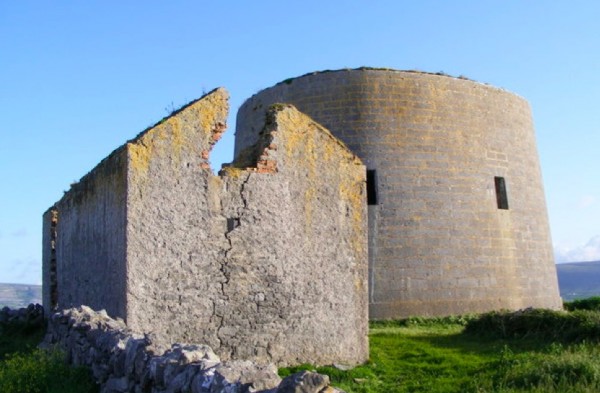
Martello Tower, Finavarra  © Copyright A McCarron and licensed for reuse under Creative Commons Licence
Martello Tower, Finavarra
© Copyright A McCarron and licensed for reuse under Creative Commons Licence

Freeman’s Journal 28th March 1929 p43

The Rise of the Bard

NOTE:

Donnchadh Mór Ó Dálaigh (who died in 1244) lived in Finavarra in County Clare. A  monument in his memory was erected at Pouldoody Bay opposite the site thought to be the poetry school of the Ó Dálaigh’s.  According to O’Donovan the Annals of the Four Masters states that he was the head of the O’Dalys of Finavarra. The Ó Dálaigh’s of Finavara were hereditary poets to the Ó Lochlainn’s of the Burren.

MOST IMPORTANT LITERARY MEN IN IRELAND. (abridged)

From about the 13th century to the close of the 16th the hitherto despised family bard became the most important literary man in Ireland. Bards were not simply makers of verse or singers of elegies. They were much more than this. They were personages of considerable political power who made it their business to inflame the ardour or soothe the passions of their chiefs. By their songs, reciting the deeds of the ancestors of their lords, they stirred them up to wars; by persuasion, they averted displeasure from some personage or clan in whom they felt an interest.  It was they who advised, warned, threatened or encouraged; their praise was as much sought after as their blame was dreaded.  Moreover, they wandered about the country, welcomed and feasted wherever they went, and the acquaintance that they formed with tribal affairs and with the trend of events was of service to their own chiefs and available for the guidance of the tribe at large.  They were trained from birth for their office, and, as Dr. O’Donovan says;

they discharged the functions and wielded the influence of the modern newspaper and periodical press.

They formed a guild apart, and for substantial rewards they gave information and encouragement useful to their patrons, sang their praises and deplored their deaths.

The influence wielded by the bards is best shown by the anxiety of the English Government to suppress an order which they felt to be dangerous to their power in Ireland, or, failing this; to buy their services for their own use. A great number of laws were passed with the object of limiting their power, and occasionally regular raids were made upon them, as, for example, when in 1415 Lord Justice Talbot

harried a large contingent of Ireland’s poets, as O’Daly of Meath, Hugh Oge Magrath, Duffach son of the learned Eochy and Maurice O’Daly.

In the ensuing summer he raided O’Daly of Corcomrua (County Clare).

The bards did not always succeed in pleasing their own patrons. For instance, about 1213, the poet Murdoch O’Daly of Lisadill had a quarrel with a steward of O’Donnells, a vulgar loon who fell to wrangling with him about a cess to be paid to the chief.

The man of verse,’ says the Four Masters, ‘lost his temper with him, and having taken into his hand an extraordinary sharp axe, dealt him a stroke whereby he left him dead – lifeless.’

The bard flew to Clanrickard (County Galway), and the Northern Chief, more to avenge the insult to himself than to punish the breach, followed.  He marched in chase of the offending bard, ravaged Clare and laid siege to Limerick, whence the culprit was passed on from house to house till he reached Dublin. Thither again O’Donnell pursued him, and the bard was finally banished to Scotland, from which circumstance he is known as ‘Scottish Murray’ (Muireadhach Albanach), underwhich name he wrote several good poems, found both in Scottish, and Irish collections.

He seems to have travelled.  One of his works mentions a visit made by him to the Mediterranean, and he frequently expresses the joy it would be to him to find himself off the Scottish coast or to breathe the breath of Ireland. He seems to have slipped back to Ireland and to his old home more than once.  Finally he gained O’Donnell’s pardon and a grant of land by the production of three poems in his honor. ‘Scottish Murray’s’ own comment on his deeds and their punishment is pithy and quaint. In one of his poems he says: Trifling is our difference with the man (O’Donnell) that a bumpkin was abusing me and that I killed a serf— O God, doth this constitute a misdemeanor?
Posted in Posts and podcasts

Curranroo and beyond – 1867

Photo: Bart Braun Wikimedia Commons
Photo: Bart Braun
Wikimedia Commons
A Walking Tour Round Ireland in 1865 by an Englishman
London: Richard Bentley, New Burlington Street. 1867 p181/2
(abridged)
I left Kinvarra at half-past nine o’clock this morning. I pass to the right on leaving the town a round tower, and on the left you have the hills of Clare. Then to the right there is the Kinvarra National School, a neat looking building, erected in 1840. Shortly afterwards I meet an industrious boy who has been making good use of his time by catching a fine lobster. Though he knows a house further on where they generally buy the lobsters, on the principle of the bird in the hand being worth two in the bush, he offers it to me. I excuse myself from the purchase on the ground of travelling. I tell my young friend of the story of the lobster which seized a man’s hand and held it so fast he was drowned by the rising tide. The boy says he is aware of this propensity on the part of the lobster and takes due care.
I then pass through the village of Corranroo, where you have fairly passed out of the county of Galway into Clare. Then on to the foot of some hills from whence a fine view is obtained of the arm of the sea and surrounding country. There are three roads here; one to the left leading to the south, one to the right being a road longer by two miles, leading to Ballyvaghan, and a road in the centre over the hill being the shorter one to the same place.
Further up the hill you have a still better view of the bay, and an immense expanse of table-land with a round tower on an island to the left, and the town of Galway in the distance on the other side of the bay.

Posted in Posts and podcasts

Saints and wonders – 1906

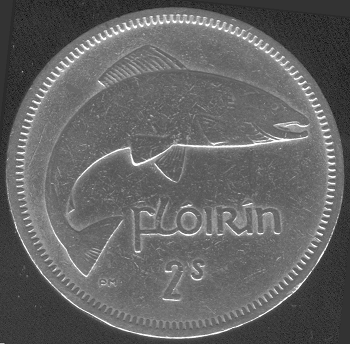
Irish Florin Wikipedia
Irish Florin
Wikipedia
A Book of Saints and Wonders – Lady Gregory, 1906
p8

…But if Brigit belonged to the east, it is not in the west she is forgotten, and the people of Burren and of Corcomruadh and Kinvara go every year to her blessed well that is near the sea, praying and remembering her. And in that well there is a little fish that is seen every seven years, and whoever sees that fish is cured of every disease. And there is a woman living yet that is poor and old and that saw that blessed fish, and this is the way she tells the story:

“I had a pearl in my eye one time, and I went to Saint Brigit’s well on the cliffs. Scores of people there were in it, looking for cures, and some got them and some did not get them. And I went down the four steps to the well and I was looking into it, and I saw a little fish no longer than your finger coming from a stone under the water. Three spots it had on the one side and three on the other side, red spots and a little green with the red, and it was very civil coming hither to me and very pleasant wagging its tail. And it stopped and looked up at me and gave three wags of its back, and walked off again and went in under the rock…

Posted in Posts and podcasts

Carrying the Kelp – excerpt – 1912

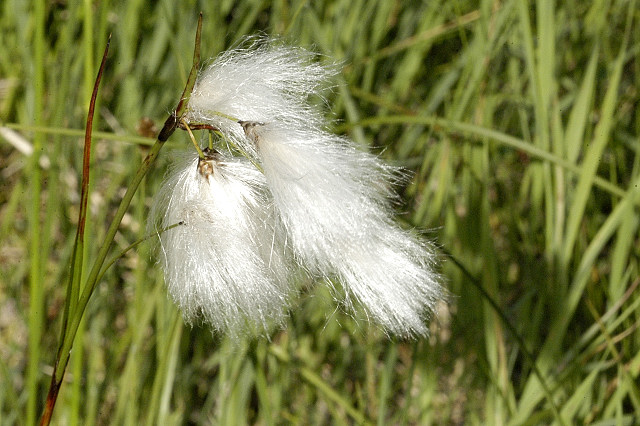
Bog Cotton Photo: James K. Lindsey Wikimedia Commons
Bog Cotton
Photo: James K. Lindsey
Wikimedia Commons
https://widgetworld3.wordpress.com/podcasts/
THE QUEENSLANDER 25th of June, 1912
Excerpt from The Carrying of the Kelp by Helen Porter (in “Chambers Jou
rnal”)

The district known as the Burren is one of the bleakest spots in Ireland. The whole country seems petrified, as if a devastating blast from the Atlantic had turned it into stone. Then, nature appears to have repented her roughness and the cold monotony of her hand-work; for, after laying a groundwork of rocks, she covered it with a carpet of exquisite and delicate loveliness. Feathery fern, autumn-tinted bramble, golden moss, geranium, harebells, and blue scabious run riot over all, and in the damp patches between the grey stones, silvery bog cotton waves in the breeze…

Posted in Posts and podcasts

Travels – Kinvara, Aughinish 1917

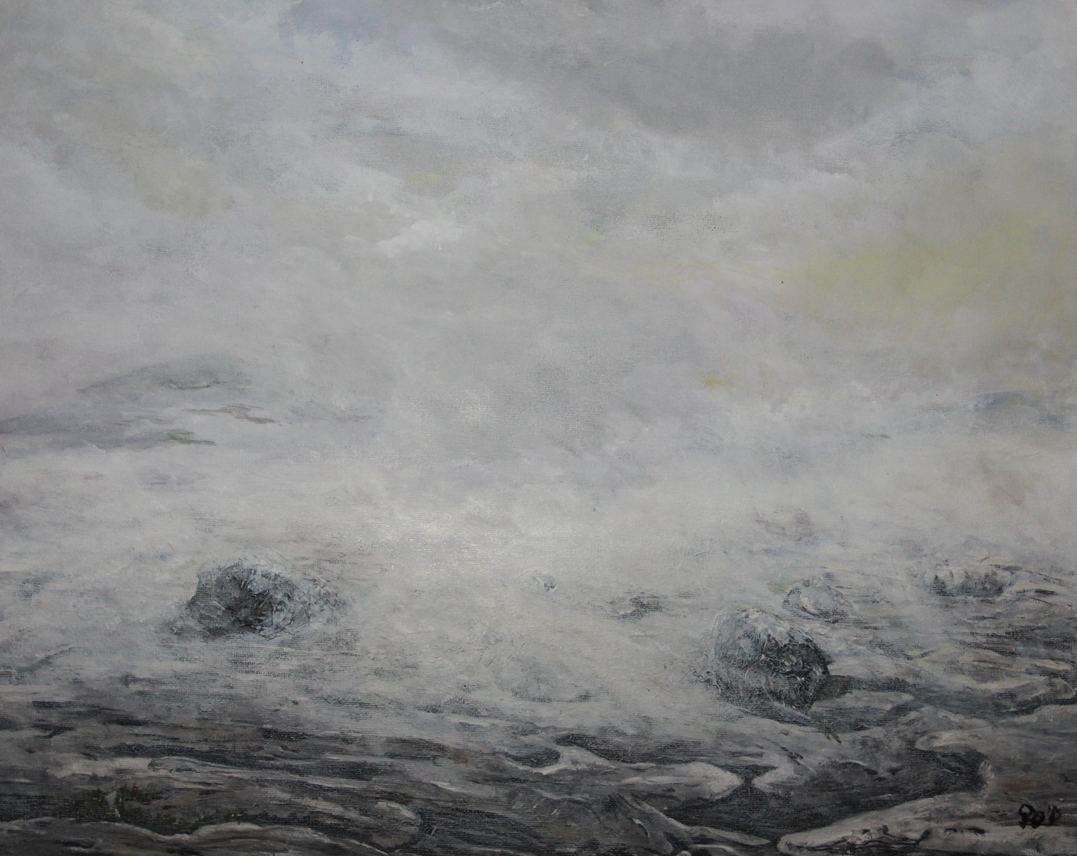
Shore and Stone EO'D
Shore and Stone
EO’D

https://widgetworld3.wordpress.com/podcasts/
SEEING THE WORLD
Travel Notes [XX-by the Hon. P.McM.Glynn, K.C. Minister for Home and Territories]
The Register 18 June 1917 p6
Driving round by the flaggy shore to Ballyvaughan and then across a gap in the Burren Mountains towards Kinvara, from which a fine view of the inner part of Galway Bay, the promontory of Aughinish and the swift current of the sea between it and the mainland, is open; along dusty limestone roads; the crumbling walls of deserted houses are seen in many places by the way. Most people of the past seem to have gone to heaven or the United States.
Politics, as they go, are still matters of conversational interest here. The Sinn Fein movement is mentioned by some with sympathy for motive and contempt for methods and organization. The rising came as a surprise, if not a shock to some persons, but there were, or are, scattered sympathisers or objectors to the more drastic of the methods of repression among the middle as well as the working classes. For among those who paid the inevitable penalty of revolt in time of war were some leaders of ripe scholarship and, in other respects, stainless lives; “Poets of the Insurrection” as they were called, whose mistakes of judgment, policy and method are lightly regarded by those of emotional temperament to whom disinterestedness primarily appeals. Discontent now turns on the recent check to Home Rule as expressed in the Government of Ireland Act 1914. There is a feeling that the political system – Union Government – is still the source of any economic maladjustments and that the country will at once flower under the working of autonomy.