Posted in Posts and podcasts

Government Expenses – 1909

New Zealand Tablet 25th November 1909 p1 867
EO'D
EO’D

Says a writer in the Irish Weekly of October 2;
If the British Treasury is willing to devote only £1,470,000 to Irish Education, as against an Imperial contribution of £1,941,000 to the native developed Scottish system, the precious institution at Whitehall is delightfully generous to this country in other respects.

It maintains at our expense over 100,000 officials who absorb more than £3,000,000 every year in pay, pensions and gratuities. Nearly half the whole cost of Irish Government and administration goes directly into the pockets of the 100,000 odd officials – mostly useless and too often actively mischievous as agents of misgovernment, mismanagement and wrong.

The whole civil government of Scotland was only £5,500,000 per annum a few years ago. In Ireland, with a smaller population the bill was well over £7,500,000. The RIC in Ireland cost three times more than the Scottish Police Force. The Irish Judiciary cost nearly £250,000 more than their ermined brethren in Scotland. So we have in the first place a foreign educational system starved in Ireland; The Scotch fashioned their own system and it is splendidly endowed.
Posted in Posts and podcasts

Athenry Handball Contest – 1909

THE TUAM HERALD,

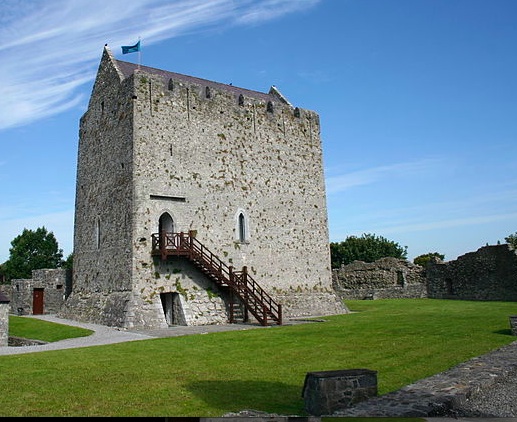
Athenry Castle Photo : Ingo Mehling  Wikimedia Commons
Athenry Castle
Photo : Ingo Mehling
Wikimedia Commons

14th August, 1909

The most interesting handball contest that ever was brought off in the West of Ireland will come off at the great tournament organised by the Athenry Handball Committee on Sunday, August 29th. All the great exponents of this grand old game in the country presently have promised to attend, and some fine games may be expected. The committee have left no stone unturned to make this tournament a success. They are offering three beautiful gold medals to the winners, and three very good silver medals to the runners-up; and the Athenry ball court has undergone a special course of preparation for the event, a large amount of money having been spent upon it.

The rubber is to be the best of five games, and teams to consist of three players each. All entries close with the Hon. Sec, Mr L Lardner, Church Street, Athenry, on Wednesday, August 25th. Entrance fee, 5s, each team. We understand that a team from Tuam will compete at the handball tournament and will be represented by J. Sheehy, M. Flannelly and M. Hession.

Posted in Posts and podcasts

Loughrea – 1905

THE TUAM HERALD, TUAM, CO GALWAY

Loughrea Lake Wikimedia Commons
Loughrea Lake
Wikimedia Commons

7th  August, 1909
A gentleman, a resident of Loughrea living in England, thus writes about the changes time has wrought there: – “There was a Pawn Office – a Mont de Piete – established in my day in a house once occupied by Mr Smyth, in Main Street. Behind was a three storey range of wool stores once used by him. The manager of the Pawn Office was Mr John Cowen, but the enterprise came to grief, and Dr Lynch went to live there, but later on it was converted into a police barrack. In those days I speak of, the population was about 8,000. It is not half now. I knew Monahan’s Hotel, built where the new Cathedral now is. It was called ‘The Head Inn’ and is mentioned in Lever’s Novels where many a pleasant evening was held. Loughrea was then the centre of the county society, and its hunt ball the great social event. One of the Monahans was Anthony, but the other, James, became a chief Justice. By the way, Charles Lever was Consul in Trieste, where he died and was succeeded by a great Irishman, Sir Richard Burton, whose grandfather was the Rev Edward Burton, Rector of Tuam. His grave is in Mortlake Cemetery

Posted in Posts and podcasts

Dr T.J. Connolly, Kinvarra – 1909

The London Gazette, 12th October, 1909 p7494

"Gentiana frigida-flowers" Photo: Dixi   Wikimedia Commons
“Gentiana frigida-flowers” Photo: Dixi
Wikimedia Commons

The Chief Inspector of Factories has appointed Dr. T. J. Connolly to be Certifying Surgeon, under the Factory and Workshop Act, for the Kinvarra District of the County of Galway.

Posted in Posts and podcasts

Scandalous – 1909

THE TUAM HERALD, TUAM, CO GALWAY

Wikipedia.org
Wikipedia.org

14th August, 1909

It is scandalous to find that when returning from the Galway Races, Patrick Conlon, of Kilcolgan, when approaching Clarenbridge was actually fired at. Conlon was wounded in both legs, and the horse was struck in the neck. The animal became restive and proceeded along the road at a rapid pace. A police patrol in the vicinity soon afterwards came across the injured man and had him surgically treated. The local Constabulary authorities are investigating the occurrences with the usual results. The injured man is at present under treatment in Galway County Hospital.
============

Posted in Posts and podcasts

Lady Gregory – 1909

The Tuam Herald, 6th March, 1909

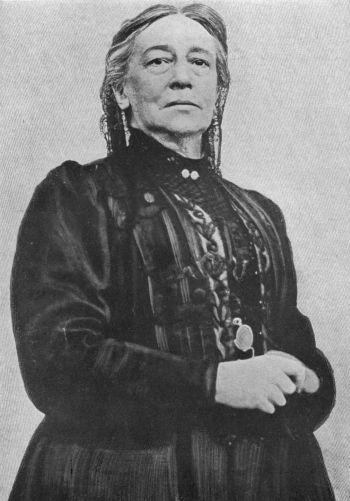
Augusta, Lady Gregory  Wikimedia Commons - Project Gutenberg_
Augusta, Lady Gregory Wikimedia Commons – Project Gutenberg_

Lady Gregory, who has been ill the last fortnight is, we are very pleased to say, now wholly convalescent. She is devoting her spare time to planting trees of which she has put down a very large quantity already in her beautiful and picturesque demesne.

Posted in Posts and podcasts

The mythical Mr Hogan – Kinvara – 1909

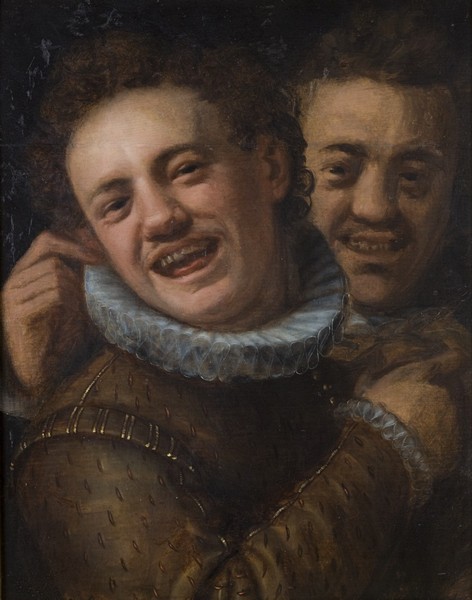
Two laughing men - double Self-Portrait c.1574 Hans von Aachen (1552-1615) Olomouc Museum of Art Wikimedia Commons
Two laughing men – double Self-Portrait c.1574
Hans von Aachen (1552-1615)
Olomouc Museum of Art
Wikimedia Commons
New Zealand Tablet
Vol 27 Issue 21 – 27th May, 1909

GALWAY— A Myth (abridged)
Mr. William Moore, M.P., is a gentleman who takes a genuine delight in endeavouring to make the inhabitants of Great Britain believe that the wickedness of the people of Ireland, the country where he represents a constituency, is past imagining. No matter how pleasant or how peaceable the Irish Catholic may look, he is always, in Mr. Moore’s opinion, brewing mischief. Mr. Moore’s parliamentary life, therefore, consists of a daily array of questions as to what measures the Government have taken or intend to take in order to prevent this or that crime, or to punish this or that criminal. On Thursday, March 11, he enquired in tragic accents what the Government meant to do with Mr. James Hogan,- J.P., of Kinvara.
Mr. Hogan, he stated, was a plague in the community. He was a boycotter and oppressor, and had been inflicting suffering on innocent people. The law-breaker had been brought before the magistrates for his misdeeds, but being of his religious and political belief, they acquitted him. The Resident Magistrate had unavailingly protested against the scandal, and the County Inspector had urged the institution of further proceedings. The Attorney-General for Ireland had, however, refused to act on the suggestion, and the audacious Mr. Hogan, of Kinvara, was still at liberty.
Mr. Redmond Barry, amidst the laughter of the House, informed the-hon. member that Mr. James Hogan, J.P., was a myth that no such person exists at Kinvara, a Galway village, by the way, made famous through- one of Mr. Frank Fahy’s songs. The moral is very plain— that anti-Irish members are perfectly reckless as to the grounds upon which they prefer charges against Irish Catholics and Nationalists.

Posted in Posts and podcasts

Advance notice – 1909

Coole Park, Gort Photo: AMcCarron Wikimedia Commons
Coole Park, Gort
Photo: AMcCarron
Wikimedia Commons
Hansard Commons Deb 28 June 1909 vol 7 c195W

Mr. DUFFY asked the Chief Secretary whether he is aware of the fact that the sergeant of the Royal Irish Constabulary stationed at Kinvara, county Galway, sends a telegram to the police authorities at Gort on each occasion that Mr. Michael O’Donohoe, J.P., county councillor, Kinvara, visits Gort in discharge of his public duties; will he state the cause or justification for such action, having regard to the fact that Mr. O’Donohoe discharges his duties conscientiously to all concerned?

§Mr. BIRRELL
I do not know whether the facts are as alleged, and I see no reason to inquire as to the manner in which the Constabulary authorities exercise their discretion in a case of the kind.

Posted in Posts and podcasts

The Connacht Tribune – 1909

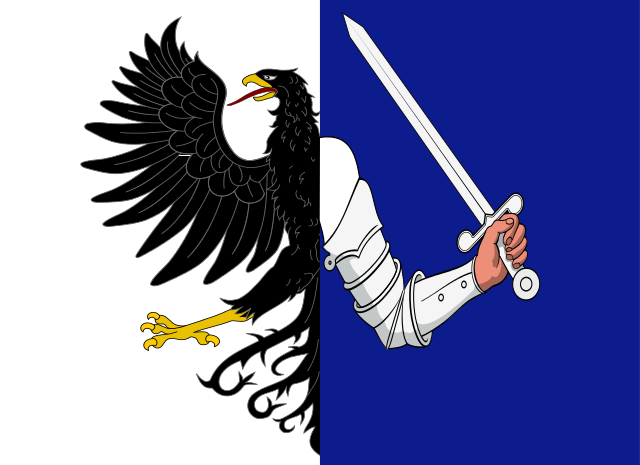
Flag of Connacht Caomhan27 Wikimedia Commons
Flag of Connacht
Caomhan27
Wikimedia Commons
Tuam Herald, June 5th 1909

The first issue of the “Connacht Tribune,” a new Nationalist weekly newspaper, published in Galway, is a promising initial number of eight pages of eight columns each. Its local news supply is extemely full and diversified, the type good, and the printing very legible. Mr. William O’Malley, M.P. begins in the journal a series of articles entitled “Connemara Land League Reminisecnces.”

Posted in Posts and podcasts

The Olympic and…Titanic – 1909

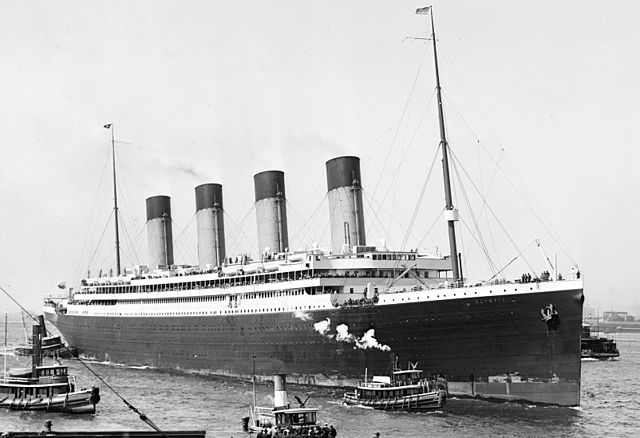
The "Olympic" - 1911 Wikimedia commons
The “Olympic” – 1911
Wikimedia commons

https://widgetworld3.wordpress.com/podcasts/

THE SPOKANE PRESS, 16TH JUNE 1909

BELFAST IRELAND

The limit in big ships is being reached here in the building of two great giants of the sea.

They are to be called the “Olympic” and the “Titanic”.  When they go splashing through the ocean from New York to England and France, old Neptune himself, rules of salt water, will have to duck his head in fright.

These monsters will be 860 feet long, nearly 100 feet wide, and are so large that the harbors will have to be enlarged if they are sailed anywhere but in the biggest ports.

They will be four times as heavy as Uncle Sam’s biggest war vessels.  An average city wouldn’t begin to hold the people that will be on board each ship.  They’ll only have one mast apiece, and if a person wants to get a good view of them he would have to stand a mile away, like one looking at a mountain.

The Irish boat builders had to make a new shipyard for the work.  Millions of dollars will be spend in the building, and the people who go to Europe every year will pay millions more to ride in them.