Posted in Posts and podcasts

Kinvara – 1889

The Irish Standard, April, 13, 1889 p7.

On Friday the 15th ult., a large force of police, accompanied by Redington’s representative, Malone, and a brace of emergencyment, with a battering ram, invaded the town of Kinvara, for the purpose of carrying out evictions on the property of Major John Wilson Lynch, chairman of the Galway board of Guardians. On the arrival of Mr. Kendall, the agent, the evicting party proceeded to Caherireland, a village some miles distant. Having arrived at their destination, the sheriff’s baliff and agent entered the house of Thomas Cavanagh, and demanded possession. This they took by force, casting all that was inside the house out on the street. The evicting party next proceeded to the house of Pat Cavanagh and cleared it of its occupants and effects. The tenants in those cases farm some thirty acres of land, and were well to do until the depression in the time set in. Before the eviction the tenants offered one year’s rent to the agent. This he refused to accept. The tenants evicted are determined not to advance a single penny on their former offer.

Posted in Posts and podcasts

Whitsuntide – 1889

The Holiday Customs of Ireland – James Mooney

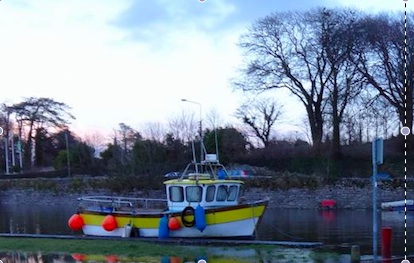
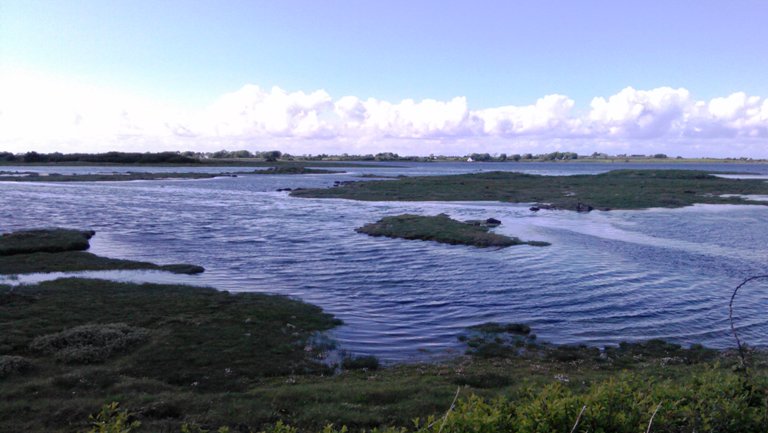
Tawnagh tides Photo: EO'D
Tawnagh tides
Photo: EO’D

Proceedings of the American Philosophical Society Vol. 26 No. 130 (July – December, 1889)

Whitsunday, in Gaelic called Cingcis, is a moveable festival occurring generally about the end of May or the beginning of June, and deserves notice on account of the mysterious fatality connected with it, as well as with the following Monday and Tuesday. It is an unlucky season, and should a man born on any one of these three days ever throw a stone it will inevitably kill or cripple someone. No water must be sold during the same period, and for this reason no clothes are washed from Saturday until Thursday, nor are any sheep washed for shearing. Neither must one start on a journey or begin any important work, but, above all, no one must go near the water, either for bathing or boating, or even to cross a stream, for at this season one may be drowned in a cup of water. There are ancient legends to prove the truth of this belief, and every old woman can tell of instances within her own knowledge where a neglect of these precautions has resulted fatally. Death is not inevitable, however, for only one hour of all this time is fatal, but as no one may know which is the hour, or even on which of the three days it occurs, the only way to avoid the evil consequences is to observe the prohibition until the period has terminated. According to Lady Wilde, the fairies are also to be feared at this season, so that holy water must be sprinkled about the house to keep them away, and at this time also the water spirits come up out of the sea to hold their revels on the shore, and the water horse rises from the lough to graze at midnight in the green pastures upon its banks. A dance was formerly held also on Whitsunday.

Posted in Posts and podcasts

Mr D. Sheehy M.P. – 1889

Marlborough Express vol XXV, Issue 29, 4th February 1889 p2

Across the Bay theburrenandbeyond
Across the Bay
theburrenandbeyond

Mr D Sheehy M.P for Galway South, who was sentenced to six months imprisonment for inciting persons to refuse to pay their rent, and who appealed against the sentence, has had an additional four months added to his term.

Posted in Posts and podcasts

A curious scene – Loughrea 1889

Newark Daily Advocate, Ohio

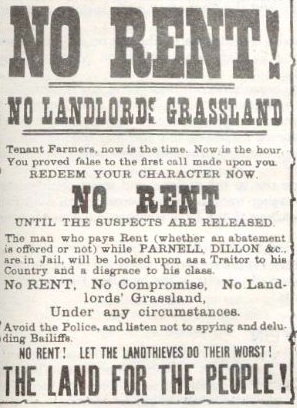
Land League poster 1880s Wikipedia
Land League poster 1880s
Wikipedia

11th January, 1889 (abridged)

A curious and interesting scene was enacted over in Ireland yesterday.  Loughrea was the place where the spectacle occurred.  After the court adjourned a sitting in which a number of Clanricarde rental cases were under consideration, a hundred or more Nationalists headed by a band, paraded the streets.  They were led by a convert from the enemy’s side.  The convert was one of her Majesty’s policemen in full uniform.

During lulls in the music this enthusiastic proselyte would address the crowd, asserting that the police were heartily sick of the degrading work which they called upon to perform in Ireland.  He said that there were many, who, like himself, would be only too glad to abandon the whole business.

After finishing one of these addresses, he called for three cheers for Dillon and O’Brien, but this juncture was an unlucky one in his new career.  At that moment the head constable, with a body of police, swooped down upon the crowd capturing the rebellious constable and marched him off to the barracks under arrest.

Posted in Posts and podcasts

Welcoming the “criminals” – 1889

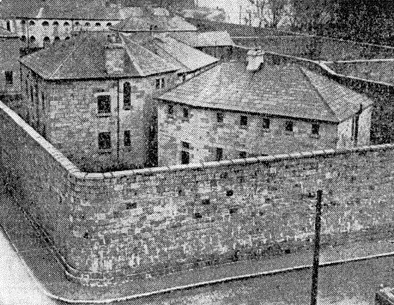
Galway Gaol c.1930
Galway Gaol c.1930
Zealand Tablet Vol XVII I. 18 23rd August, 1889 p 21

Jas. Keane, Thomas Prendergast, Pat Moylon, Robert Thomson and Michael Burke of Ardrahan, were recently released from the gentle care of Balfour’s turnkeys in Galway Gaol, after being two months there. They were met by the Craughwell band, with Father Considine. Contingents from Gort, Kinvara, Kilbecanty and Clarenbridge were on hand to welcome the “criminals”.

Posted in Posts and podcasts

Kinvara Branch of the National League – 1889

Wikimedia Commons
Wikimedia Commons
New Zealand Tablet, 26th July, 1889 P9

Irish News

Kinvara Branch of the National League held a meeting April 28th

Rev. John Moloney presided. Among those present are Dr. W.J. Nally, Messrs Holland, Burke, Spellman, Cavanagh, Tallman, Shaughnessy, Farrell and Corless. £5 was forwarded to the Central Branch. The following resolution was passed:

“That we hereby beg to tender to Thomas and Patrick Cavanagh our sincere sympathy on the harsh and cruel treatment they have received at the hands of their landlord, Major Lynch, and his agent, Kendall of Connemara, in being evicted.”

Posted in Posts and podcasts

The Kinvara League – 1889

Photo: Norma Scheibe
IRISH NEWS FROM THE NEW ZEALAND TABLET VOLUME XVII ISSUE 26 18TH OCTOBER 1889 P 21
At last meeting of the Kinvara League, Rev. J. Moloney presided.
Other members present;
Dr. W.J.Nally Messrs. Burke, Tallman, Halvey, Shaughnessy, Spellman and Corless, Hon Sec.
The Hon. Sec. reported the receipt of a cheque for 3 pounds from Mr Harrington M.P. amount of grant voted by the Central League to Michael Tracy, the evicted tenant of Cahercon.
A communication from John Hall of Kinvara, relating to a dispute he had with the landlord of his house, Richard Burke, and complaining of the treatment he had received at his hands was next read and considered.
John Burke of Killina stated he was being persecuted by his landlord, Mr Langan of Dublin, he having sold Burke’s holding for a nominal sum to one Kendall of Clifden.

Posted in Posts and podcasts

Hit and Run – 1889

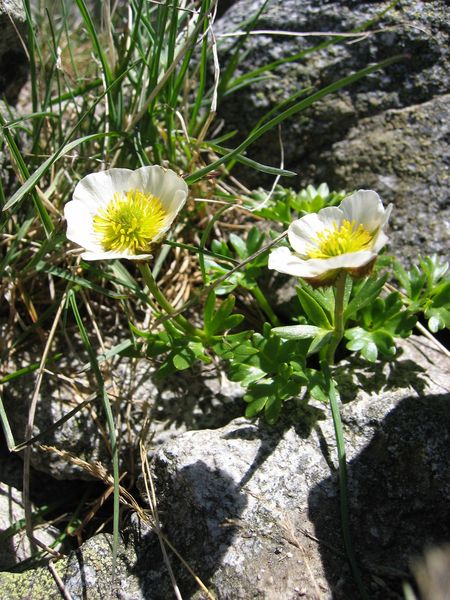
Creative Commons
Creative Commons
https://widgetworld3.wordpress.com/podcasts/
THE BRISBANE COURIER 21ST OCTOBER, 1889
Many of our readers will learn with regret, from the following extract from the Galway Express of 24th August, that an alarming accident has happened to Mrs. De Burgh Persse, though happily no serious results were apprehended :
” On Tuesday evening last, while Mrs. De Burgh Persse and her two sons were driving home from Galway in a light-running pony trap they carne in contact with a goods-van at Salthill, whioh struck against the vehicle with great force causing it to upset, throwing Mrs. Perse and the oldest boy out on the roadway,
“while the youngest boy was caught underneath the car. The driver of the van, it appears, instead of rendering any assistance, whipped on his horse and dashed at full speed into town, and up to the present has not been identified.
Mrs. Persse was very much shaken by the accident, but the younger boy remained unconscious for several hours, and great anxiety prevailed amongst the members of Mrs, Persse’s family. However, on Wednesday morning the poor little sufferer, who is only about 7 years old, showed much improvement, and is now beyond all cause for uneasiness.