Posted in Posts and podcasts

Farewell from Kinvarra, Duras and Killinna – 1867

Freeman’s Journal 16th December, 1867 p3 (abridged)
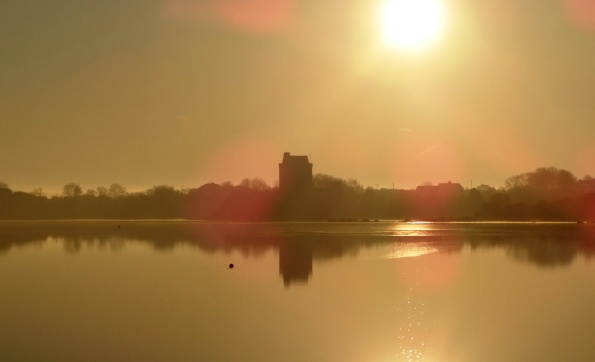
Dun Guaire, Kinvara Photo: Norma Scheibe
Dun Guaire, Kinvara
Photo: Norma Scheibe

Address of the parishioners of Kinvarra, Duras and Killinna to the Rev. Francis  P.P. Croughwell and Ballimana.
Rev. Dear Sir,
We have been deputed by our fellow parishioners of the united parishes of Kinvarra, Duras and Killinna, to offer you in the first instance their sincere and heartfelt congratulations on your recovery from your late severe and dangerous illness, and in the next to convey to you their, and our own, deep regret at your having been so soon after removed from amongst us.
For four and twenty years have you discharged the onerous duties of Pastor to these parishes with a pious zeal truly edifying, and the benefits conferred on religion and morality by your counsel and teaching during that eventful period it is not in our power to convey an adequate idea of, but we fondly cherish the hope that they will be appreciated by Him whose faithful servant you have ever been and who is sure to reward those who faithfully do His work.
It would be difficult, Rev. Sir, to enumerate all the advantages which your late Parishioners have derived, both spiritually and temporally, from the interest you have ever evinced in their welfare.
Need we refer to your exertions in their cause when famine and all its sad consequences, fever, cholera, &c, &c, stalked abroad, and like and avenging angel was devastating the land.  Then, indeed, it was that the good and zealous Priest of Kinvarra proved the interest he felt in his flock, in not only being found day and night in the midst of contagion and approaching dissolution, ministering to their spiritual wants, but also in relieving by his purse, and frequent appeals in their behalf to the charitable throughout the kingdom, their distressed condition.
We would be ungrateful and unworthy of the benefits conferred on the parish by him did we omit the name of your respected and beloved Curate in this address, of him  who, which on the mission amongst us, has won for himself not only our esteem and affection, but the respect and regard of all those who had the happiness of hearing his exposition of the Word of God during his mission in the parish.  We felt much, and were truly sorry to learn, that your respected Bishop had resolved on removing you, Rev. Sir, to another parish, but which removal we, however, sincerely hope will prove to you a well-merited reward for your past invaluable services in this.
We cannot give expression to the feelings of regret entertained by all when it was ascertained that his Lordship felt it necessary to remove the Rev. Mr McDonogh also from amongst us.
In conclusion, we beg to observe that, although the scene of your labours is now elsewhere and amongst other people, we are convinced that your prayers will still be offered to the Throne of Mercy for those who have commissioned us to present you with this Purse and its contents as a trifling token of the love and esteem in which you have ever been and will be held by them, as well as by your sincere and ever faithful friends.
Signed on behalf of the Committee.
Isacc B. Daly, Chairman
D.J. Hynes, M.D.(Vice Treasurer)
Martin Kerin (Vice Treasurer)
Posted in Posts and podcasts

Kinvara – 1867

Ballinrobe Chronicle 13th July, 1867 p.4 (abridged)

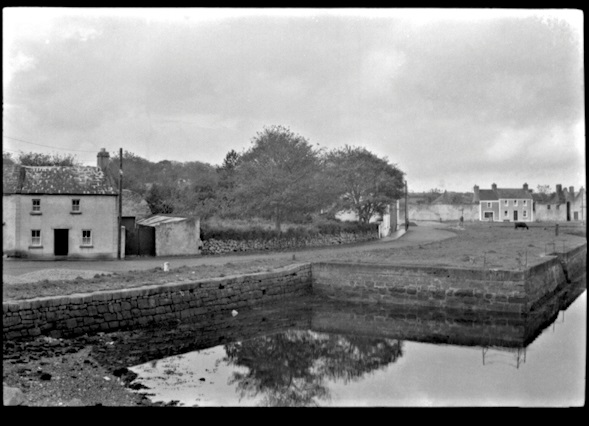
Photo: Cresswell Archives

On Sunday night, the 30th ult., a daring attempt was made to enter an out house of Mr. William Donohoe, shopkeeper, Kinvarra. The parties had succeeded in lifting a large portion of the thatch, and would in all probability have effected an entrance, but fortunately their thievish designs were frustrated by the vigilance of a large bull-dog, whose opportune barking roused the family just in time. The dog gave chase, but owing to a height which he had some difficulty in climbing, he did not succeed in capturing any of them. In the house was stored some wool and a considerable quantity of bacon.
Galway Express.

Posted in Posts and podcasts

Kinvara exports – 1867

Irish Examiner 23rd April, 1867 p1 (abridged)

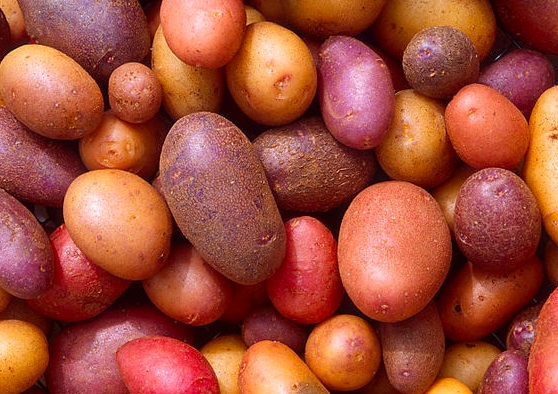
Patates Photo: Scott Bauer, USDA ARS Wikimedia Commons -
Patates
Photo: Scott Bauer, USDA ARS Wikimedia Commons –

Just arrived the Schooner Westward, with 110 Tons from Kinvarra in the Galway Bay, the shipment of Joyce and Curtin, in the English and Limerick markets, where the quality of those potatoes are known.
They array from 10s to 15s per ton more than others, and go by the name of “Galway Protestants.” Those requiring them for seed should put down a lesser quantity, as they are of a prolific nature, otherwise the crop will be bad. Parties wishing for a good summer potatoe will find it their interest to supply themselves out of present cargo.

Posted in Posts and podcasts

Curranroo and beyond – 1867

Photo: Bart Braun Wikimedia Commons
Photo: Bart Braun
Wikimedia Commons
A Walking Tour Round Ireland in 1865 by an Englishman
London: Richard Bentley, New Burlington Street. 1867 p181/2
(abridged)
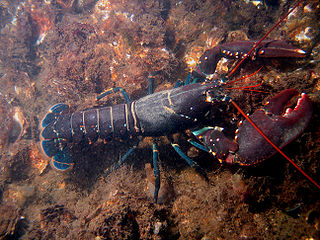
I left Kinvarra at half-past nine o’clock this morning. I pass to the right on leaving the town a round tower, and on the left you have the hills of Clare. Then to the right there is the Kinvarra National School, a neat looking building, erected in 1840. Shortly afterwards I meet an industrious boy who has been making good use of his time by catching a fine lobster. Though he knows a house further on where they generally buy the lobsters, on the principle of the bird in the hand being worth two in the bush, he offers it to me. I excuse myself from the purchase on the ground of travelling. I tell my young friend of the story of the lobster which seized a man’s hand and held it so fast he was drowned by the rising tide. The boy says he is aware of this propensity on the part of the lobster and takes due care.
I then pass through the village of Corranroo, where you have fairly passed out of the county of Galway into Clare. Then on to the foot of some hills from whence a fine view is obtained of the arm of the sea and surrounding country. There are three roads here; one to the left leading to the south, one to the right being a road longer by two miles, leading to Ballyvaghan, and a road in the centre over the hill being the shorter one to the same place.
Further up the hill you have a still better view of the bay, and an immense expanse of table-land with a round tower on an island to the left, and the town of Galway in the distance on the other side of the bay.

Posted in Posts and podcasts

Snail Cures – 1867

Photo: Wikimedia Commons
https://widgetworld3.wordpress.com/podcasts/
THE BRISBANE COURIER 22ND JUNE 1867 P7
A CURE FOR CONSUMPTION (abridged)

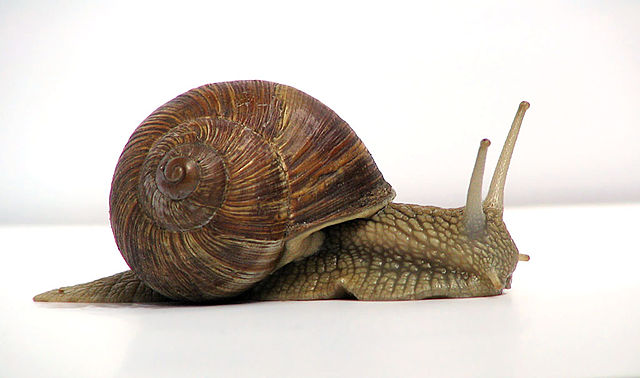
In Ireland some have great faith in the efficacy of snails as a cure for persons in decline, or consumption, but they do not in all places use them in the same way. A lady in Tipperary, who has as large a practice as the regular doctor, tells me that the way to administer snails is to “boil them in veal broth.” She herself knew a lady, who was taking cod liver oil with no result, grew strong with this remedy.

A daughter of a clergyman in Galway writes;
“The snails used for the broth, as you designate my very fine syrup, are the common large things that creep about the garden with their houses on their back. They are collected and placed on a large dish, and plentifully sprinkled with dark sugar, then another dish is turned over to prevent them running away, and the next morning the syrup which has been made in the night is to be drained off, and a tablespoon taken three times a day. A little lemon peel may be added to flavour the broth. The same snails should not be sugared twice. It is a really good thing, but of course will not cure in a day; but I know a lady who attributed her own cure to it.