Posted in Posts and podcasts

Van Diemen’s Land – 1823

The Connaught Journal – Galway
17th November 1823
Extract of a Letter from a Lady, dated Hobart Town, June 2, 1823


“We arrived there a little more than a fortnight since. I believe we were all heartily glad to find our feet once more press the earth. The town is infinitely larger than I expected to find it; the streets are very broad, but the houses are separated from each other by gardens, and courts or yards. Those recently built and building are of brick. We are now in Macquarrie-street, and in a very good house. ____has a grant of 400 acres (which he asked for) and will be allowed two men from the Government stores, with rations for six months. Women servants are scarce here; I dispair (sic.) of finding a good one. Men are employed in houses instead of women; your property is more secure with them, and they are not enticed away as the women are. The country is beautiful. It is now the rainy season, but quite mild. The rigour of an English winter is here unknown. Snow rests on the hills, but does not stay in the valleys. The summer must be delightful. Here are wood, coal, and lime. Coal is used in the interior; wood is more generally burned in the town.
“Settlers, after a time, make their own candles, soap and beer, if they choose. I have paid 1s. 6d. for moulds, four to the pound; some charge still higher. Colonial soap 10d., and very good for whitening. Mutton is 9d. 8d. and 7d. People complain of a scarcity of wood this winter, and even meat at times, is not to be procured from the butchers. I shall be uncommonly happy to be in my own house once more. We must be satisfied with a rough concern at first, but we shall soon be able to build a better dwelling. Here is excellent free-stone; and the ceder wood from New South Wales is very similar to mahogany and does admirably for doors, shelves, windows, &c. without paint. It is much used. The Huon River has on its banks fine pine, which is in softness and beauty equal to deal. It will light as a candle, & makes a good torch for a short time. Building now is considered as the most secure speculation; but tradesmen of every description do well if they are industrious and steady. It will be his own fault if every shop-keeper, or, as he is termed, store-keeper, does not make a rapid fortune. This place is most rapidly improving. People are quite as smartly dressed as in many parts of England. I have been told lace is exceedingly dear, English silks, &c. I think from the little I have heard, this is an uncomfortable residence for a bachelor. Servants are scarce, and lodgings are not so convenient or comfortable as in England; rooms are not carpeted. Many of the luxuries of life are wanting. If a person comes here he must make up his mind to find every thing in its infancy, and he will not be disappointed. In the room I have now I burn wood, but I have no fire-irons found me; I have no fender, nor hearth brush, nor carpet. If I choose these things I must purchase them; they come here under the head of luxuries. I have not been out, except to change lodgings, since I came. Milk, butter, and cheese, are uncommonly dear; very little of either is used- Sugar and tea are cheap. Good green at 4s. 6d. to 5s. Lump sugar is dear; moist sugar very good, at 6d or 7d. Work people are very idle. Wages are high, so they earn sufficient in three or four days to support them the remainder of the week, which they pass in idle enjoyment. Tortoishell combs are not to be got readily, and are enormously dear. Porter sells well; so does good wine. I wish we had brought a pipe or two out with us from Madeira and England. Paper is dear, I am told; for the tradesman is not willing to pack our goods in paper; he wants you to send some convenience for it. Government will only give 4s. for the dollar, which has injured many people greatly; but in trade you mostly pay and receive the dollar at 5s. Paper money abounds here.- Tradesmen issue notes payable in dollars at 5s.; notes are for 2s. 6d. and 1s. 6d. We look forward to comfort and independence here; and I think with reason. The soil is deep and rich; sheep produce lambs three times in two years; cows are not good for the dairy; horses are very dear; cattle equally so; ardent spirits are very high, and not well supplied to this town.”

Posted in Posts and podcasts

St. George’s corn – 1823

Connaught Journal – 24th April, 1823

Photo: EO'D
Photo: EO’D

TOWN OF GALWAY SESSIONS (abridged) – This case came on on Friday last. Mr. M. had been conveying corn from Oughterard, west of this town, to
Tyrone, Ballinderreen, the seat of his master, Arthur French ST. GEORGE, Esq.  On arriving at the toll-gap, toll was demanded of him by the traverser. Mr. M said, that he had no right to pay toll as the corn was not being taken into town for a market. The traverser insisted on what he considered his right, and a scuffle ensued in which Mr. M. was severely beaten.
When the traverser was called for trial, he was not forthcoming, and it was then discovered that no bail had been offered or taken for his appearance! Thus the case rests.  Mr. M., a poor man, has been in town for some days at expense, which he was not well able to bear, and the traverser has escaped, for the present, from the inflictions of the law.

Posted in Posts and podcasts

Modern improvements – 1823

Connaught JournalGalway

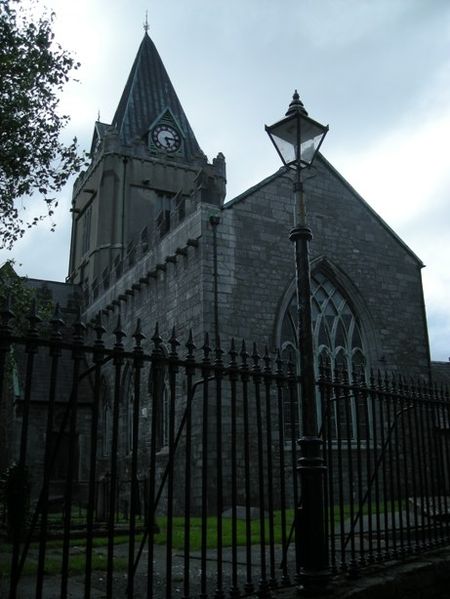
St. Nicholas' Church Galway Wikimedia Commons
St. Nicholas’ Church
Galway
Wikimedia Commons

5th June, 1823

MODERN IMPROVEMENTS (abridged)
It has been thought expedient to place upon the levey book a good round sum
for the erection of two Galleries in the Church of St. Nicholas. One Gallery
is finished, at least the heavy work has been gone through, and has cost the
inhabitants of this miserable place some – (we do not know how many)
hundreds. The other Gallery will, we hear, be as expensive, if not more so-
and will be erected in the identical spot in which the former Gallery stood,
which was taken down a few years back.

Thus it was with us in Galway.  We have, as the proverb says, “a time to gather and a time to scatter- a time to build up and a time to pull down.” If a Gallery was considered at all necessary in this beautiful building why was the old one taken down?

It certainly was not removed through any apprehension of its falling, for the
work and materials were found to be excellent; no – this was not the reason
of its disappearing.  The Parish saw, that instead of its being at all
useful or necessary, it was calculated for very bad purposes, being nothing
less than a perfect nuisance, and a lurking place for abomination of every
description – a mere profanation of the House of God. In this assertion we
are borne out by every person with whom we have communicated; and, while all
see that it is an unnecessary expence to the Parish, none have had the
firmness to come forward and oppose the impost.  Our astonishment at this is
very great; but we must confess that it is wonderfully increased at hearing
that it is intended to remove, or take down, the handsomest ornament in the
Church, for the purpose of making way for this Gallery.

We here allude to Lynch’s Altar. The new Gallery cannot be built so as to avoid disturbing this venerable remnant of antiquity, as the old one was, but Lynchs’ Altar – the finest specimen of mechanism in the entire building.   Lynch’s Altar, which has stood the test of so many centuries, and even commanded the protection of a Gothic infuriated Soldiery in the general destruction of Church property and ornaments, must be now set aside, removed or taken down- and by whom?  By men who ought to be enlightened – who pretend to taste and judgment, but who do not seem possessed of any strong claims on either. The large tomb will be (we hear) also removed. We shall merely ask – will the
descendants of the LYNCH family suffer this to pass without an observation?

Posted in Posts and podcasts

Priorities – 1823

Connaught Journal

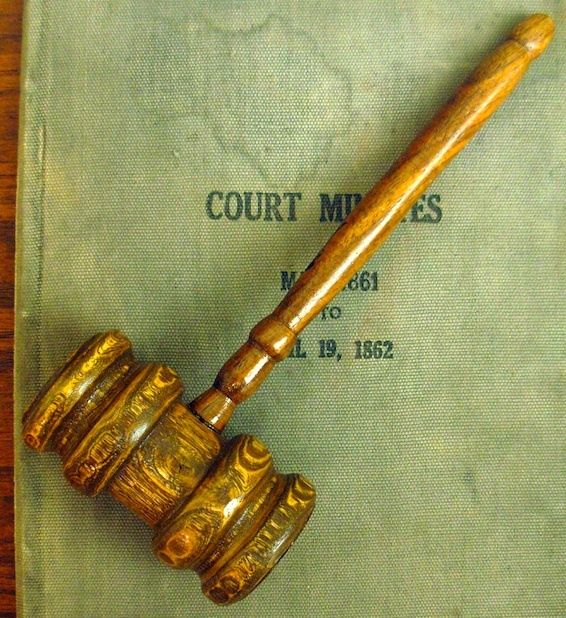
Court Gavel  Photo: Jonathunder  Wikimedia Commons
Court Gavel
Photo: Jonathunder
Wikimedia Commons

April 3rd,1823

CASTLEBAR ASSIZES (abridged)

William S., manslaughter, to be imprisoned 12 months.

Thomas C., for stealing a mare, to be hanged on the 12th May.

Andrew B., for stealing a cow, recommended by the Grand Jury to be
transported for seven years.

William F., for similar offence, same sentence.

Neal M’M, for having in his possession a forged Note, purporting to be
of the Bank of Ireland, for 1l 10s, to be imprisoned for 14 years.

Pat L., for stealing two sheep, to be transported for seven years.

John G. for stealing a sheep, the same sentence.

Mathew K., for stealing a lamb, the same sentence.

Posted in Posts and podcasts

Connaught Roads 1823

Connaught Journal

Wikimedia Commons
Wikimedia Commons

11th August 11, 1823

REPORTS(abridged)
[Extract from Mr. NIMMO’s Report on the Western District.]

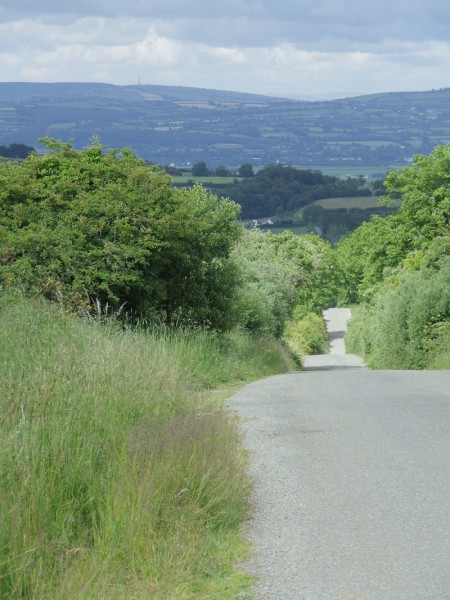
‘The plains of Connaught are in general numerously provided with roads. These seem to have been multiplied in a degree which the country is hardly able to support. A great many of them having got into bad repair. The Counties have confined their expenditure to the leading post roads, and are endeavouring to form those of broken stone.

Materials of the best description are, in general, in abundance – but the original construction of the roads having been exceedingly unskillful, both in direction, level, and the repairs carried on by a class of persons who make a trade of it.

There is no attempt at operating a permanent improvement; the less labour bestowed on the road, the cheaper the work can be done by the perch, and the easier for the persons actually employed, who are not, properly speaking, paid for what they do, but have the amount of the presentment allowed by their landlord, as a set-off against the rent of their holdings. a

“In the county of Galway I found nearly all the money presented at spring assizes had been issued in the way I have above stated. I endeavoured to improve the system, as far as the public was concerned, by giving a few simple directions for making the road of a proper shape, picking out stones, cleaning the drains, breaking the new materials properly, and combining them with the old. I established a system of inspection to see that this was done; and on the other hand, took care that each labourer should be paid his wages in person, leaving him then to settle with the landlord as he might think fit.

“For these reasons, the presentment roads have been mostly executed by the perch, under the original overseers. In a few instances it appeared advisable that an additional sum should be laid out for work not contemplated in the presentment, in order to have the road completed in a proper way. Of this kind, the road from Tuam to Galway may be instanced; being, after the mail coach lines, the most leading road in the province, and which would have been left very imperfect, if the presented portion only had been repaired”.

Posted in Posts and podcasts

Pay the Porter – 1823

Connaught Journal 5th June 1823

Photo:  Jonathunder Creative Commons .
Photo: Jonathunder
Creative Commons .

TO THE EDITOR OF THE CONNAUGHT JOURNAL (abridged)
SIR
I beg through the medium of your valuable print to direct the public
attention to the wretched state of those poor creatures that are sent to the Fever Hospital. You are aware that in consequence of the rapid decrease of Typhus in this Town, or, rather (thank God) its total absence at present, the porters employed to convey patients to the Hospital have been dismissed.

Of course, those unfortunate persons that may be yet attacked will not be taken out without paying those porters themselves. They are charged 1s 8d and we know that many of them would expire from want and sickness before they could make up even this trifling sum.

I speak of what has come under my own view. Yesterday a poor woman was taken ill of the Fever; she was ordered to pay the porters. She would not be moved from the bed of sickness but for the humanity of a few individuals who paid for conveying her thither.

The cases at present are few. The Town has seldom been so free from Fever; but even a few, when they have not the means of immediate or timely conveyance, might spread the disorder again amongst us.

During the prevalence of the typhus last year, the porters were paid, I believe, half-a-guinea a week out of the Funds of the Hospital. Now, as Providence has put an end to their weekly employment, they should still be paid, if possible, a reasonable sum out of the same Funds for each person they may carry in. There is a Chair belonging to the Establishment; and I should think 10d for each person conveyed thither by them would be a very ample allowance.

Your very obedient servant.
CIVIS

Posted in Posts and podcasts

Timetables – 1823

Connaught Journal 14th August, 1823

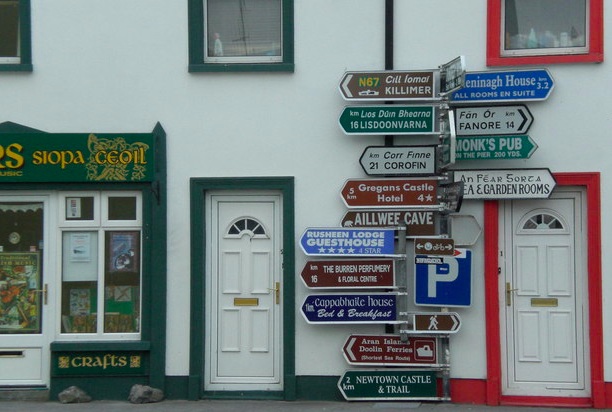
Signpost at Ballyvaughan, Co. Clare. Photo: c. Chris Tomlinson Licensed for reuse under Creative Commons
Signpost at Ballyvaughan, Co. Clare.
Photo: c. Chris Tomlinson
Licensed for reuse under Creative Commons

THE GALWAY AND LIMERICK DAY CARR,

Will start from the Commercial Building’s lane, at 7 o’clock, A.M. on Friday next and every succeeding Monday, Wednesday and Friday having Two Seats each day, from this for Ennis; Two for Gort, and Two for Galway; and also the same day, Two from Ennis to Galway or Gort, and Two from Gort to Galway; and in case of Vacancies, places may be had to Six Mile Bridge, Kilkishen, Tulla, Spancel-Hill, Crusheen and Clarin-Bridge, &c.

The Carr will arrive at the Grey Horse Hotel, Galway, at 7 o’clock each evening; and return at 7 o’Clock next morning, having Two Seats each day for Gort, Two for Ennis, and Two for Limerick; or in case of Vacancies to, or from any of the intermediate Stages, where the Fares and Charge on Parcels may be known.

The Proprietor is preparing Covered Caravans, which will be soon ready to convey Passengers daily to and from the several places mentioned; and he rests his hope of encouragement for the present limited Establishment on the Public Utility of the Undertaking; as the Fare from this to Galway will be little more than half the present expence of travelling from Ennis there, and as the strictest attention will be paid to the safety and comfort of the Passengers.

N.B.- A Carr will leave Stamer’s Hotel, Ennis, at half-past 10 o’Clock every Friday, Monday and Wednesday, with Passengers, for Galway or Gort, and return before 12 from Spancel-Hill with those from Limerick; and also, at one o’clock on Tuesdays, Thursdays, and Saturdays, with Passengers, for Limerick, and return at three o’Clock with those from Galway or Gort.

The Proprietors of the Galway and Ennis Papers will please to publish the above for one post, to be paid for where the Carr stops.
Limerick, August 12, 1823.

Posted in Posts and podcasts

New Garden and Farm seeds – Loughrea – 1823

"Flower poster 2" by Alvesgaspar  Creative Commons
“Flower poster 2” by Alvesgaspar
Creative Commons

Connaught Journal
January 30 , 1823
New Garden & Farm Seeds.

Elizabeth Cloran of Loughrea respectfully informs the Customers of her House and the Public, that she has arrived to her from London, per the New Harmony for Dublin, her annual, extensive and general assortment of Garden, Farming, Flower Seeds, which she having imported from one of the most eminent Seedsmen in London, is enabled to recommend with perfect confidence.

She is also constantly supplied from the most respectable Druggists in Dublin, with every Genuine Medicine in the Apothecary business, to the compounding and dispensing of which the strictest care and attention is paid by a Gentleman, regularly qualified in that Profession. Oils, Colours, Horse, Cow, Sheep and Dog Medicine, and a choice selection of all the Patent Preparations from the Medical-Hall, 34, Lower Sackville-street, Dublin.

She hopes from her anxiety at all times to procure every Article of the best description, Her moderate charges, and the particular attention to the orders she may be favoured with to merit a continuance of that liberal patronage which she has experienced since her commencement in business.

Posted in Posts and podcasts

‘Nor wood to bury a man’ – 1823

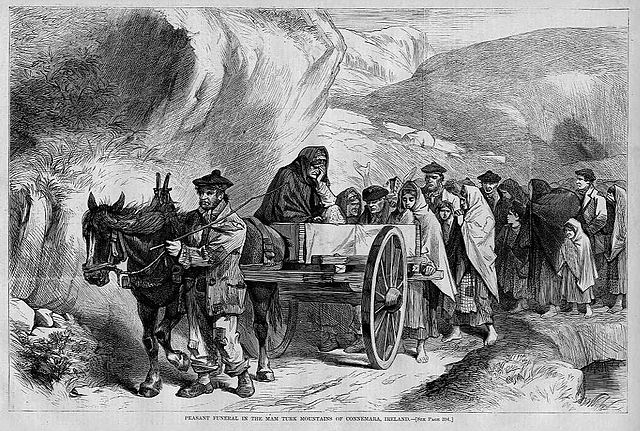
Funeral in the Maamturk Mountains of Connemara, Ireland. Harper's Weekly June 1870
Funeral in the Maamturk Mountains of Connemara, Ireland.
Harper’s Weekly June 1870
Connaught Journal
Galway, Ireland
May 15, 1823 (abridged)

VESTRY CESS- PARISH COFFINS
We are anxious as any for economy in the concerns of the Parish; and we have so frequently alluded to some matters, in the expenditure of which very important savings may be made.

We made it our business to look over the different items in the levy book; but it never struck us that any saving
could be made in the way of Parish Coffins; and, above all things, we never imagined that the strictest economist or well-wisher of the town could think of doing away altogether with those Parish Coffins for the Poor who are not
able to purchase any.

The new plan for burying the dead Poor is certainly outlandish:-
As soon as one expires, or when it is thought necessary to inter him, a shell, or in other words, a Coffin with a sliding bottom, is sent to his residence. In this new constructed machine he is to be taken to the grave-yard, and there dropped from out of it into the grave.

This, no doubt, may appear very economical; but we may safely assert, that the inhabitants of this town, in general, had rather even increase this impost than to see those poor people hurried into the gound like animals of the brute creation. We are not sticklers for old customs, nor foolish enough to think that it is of any importance where or in what manner the human frame shall be deposited after the vital spark shall have been extinguished; but we do confess, that it is a melancholy reflection for the poor man to think that after having spent his life in honest but unprofitable industry, and paid his town-taxes and vestry-cess regularly, or as well as he was able, his poverty should force him to consign to the grave, after the manner of the brute creation, his relative, whom he esteemed, or his wife, or father, or sons whom he loved, and whose memory he would respect.

Posted in Posts and podcasts

A curious construction – 1823

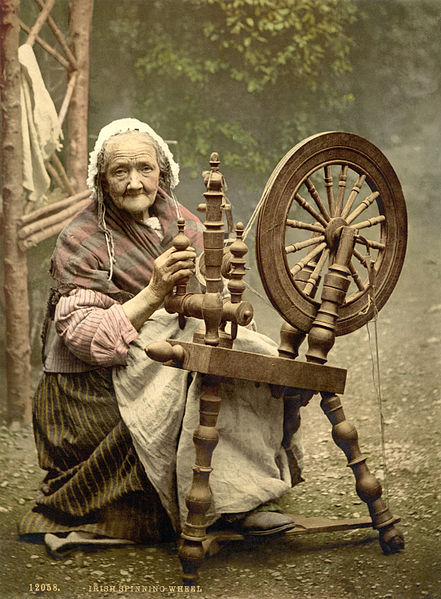
Library of Congress collection Wikimedia Commons
Library of Congress collection
Wikimedia Commons
Connaught Journal
Galway March 13, 1823

A spinning wheel of curious construction and very neat workmanship was
exhibited on Monday last to the Ladies’ Association in the Court-house of
Ennis. It is made to have eight persons work at it, and, we understand, fully
answers the purpose. The maker is James RO*A*E, who resides in the town of
Gort.