Posted in Posts and podcasts

Burren Bards

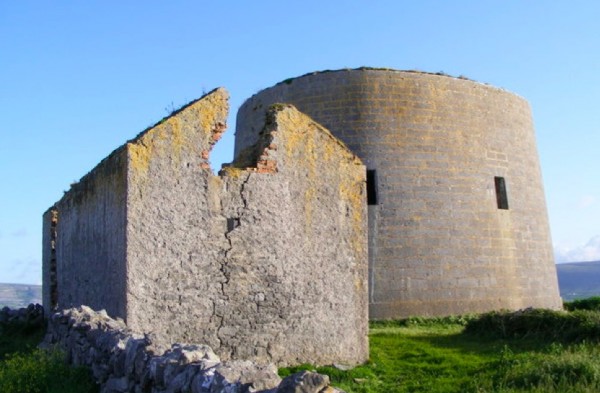
Martello Tower, Finavarra  © Copyright A McCarron and licensed for reuse under Creative Commons Licence
Martello Tower, Finavarra
© Copyright A McCarron and licensed for reuse under Creative Commons Licence

Freeman’s Journal 28th March 1929 p43

The Rise of the Bard

NOTE:

Donnchadh Mór Ó Dálaigh (who died in 1244) lived in Finavarra in County Clare. A  monument in his memory was erected at Pouldoody Bay opposite the site thought to be the poetry school of the Ó Dálaigh’s.  According to O’Donovan the Annals of the Four Masters states that he was the head of the O’Dalys of Finavarra. The Ó Dálaigh’s of Finavara were hereditary poets to the Ó Lochlainn’s of the Burren.

MOST IMPORTANT LITERARY MEN IN IRELAND. (abridged)

From about the 13th century to the close of the 16th the hitherto despised family bard became the most important literary man in Ireland. Bards were not simply makers of verse or singers of elegies. They were much more than this. They were personages of considerable political power who made it their business to inflame the ardour or soothe the passions of their chiefs. By their songs, reciting the deeds of the ancestors of their lords, they stirred them up to wars; by persuasion, they averted displeasure from some personage or clan in whom they felt an interest.  It was they who advised, warned, threatened or encouraged; their praise was as much sought after as their blame was dreaded.  Moreover, they wandered about the country, welcomed and feasted wherever they went, and the acquaintance that they formed with tribal affairs and with the trend of events was of service to their own chiefs and available for the guidance of the tribe at large.  They were trained from birth for their office, and, as Dr. O’Donovan says;

they discharged the functions and wielded the influence of the modern newspaper and periodical press.

They formed a guild apart, and for substantial rewards they gave information and encouragement useful to their patrons, sang their praises and deplored their deaths.

The influence wielded by the bards is best shown by the anxiety of the English Government to suppress an order which they felt to be dangerous to their power in Ireland, or, failing this; to buy their services for their own use. A great number of laws were passed with the object of limiting their power, and occasionally regular raids were made upon them, as, for example, when in 1415 Lord Justice Talbot

harried a large contingent of Ireland’s poets, as O’Daly of Meath, Hugh Oge Magrath, Duffach son of the learned Eochy and Maurice O’Daly.

In the ensuing summer he raided O’Daly of Corcomrua (County Clare).

The bards did not always succeed in pleasing their own patrons. For instance, about 1213, the poet Murdoch O’Daly of Lisadill had a quarrel with a steward of O’Donnells, a vulgar loon who fell to wrangling with him about a cess to be paid to the chief.

The man of verse,’ says the Four Masters, ‘lost his temper with him, and having taken into his hand an extraordinary sharp axe, dealt him a stroke whereby he left him dead – lifeless.’

The bard flew to Clanrickard (County Galway), and the Northern Chief, more to avenge the insult to himself than to punish the breach, followed.  He marched in chase of the offending bard, ravaged Clare and laid siege to Limerick, whence the culprit was passed on from house to house till he reached Dublin. Thither again O’Donnell pursued him, and the bard was finally banished to Scotland, from which circumstance he is known as ‘Scottish Murray’ (Muireadhach Albanach), underwhich name he wrote several good poems, found both in Scottish, and Irish collections.

He seems to have travelled.  One of his works mentions a visit made by him to the Mediterranean, and he frequently expresses the joy it would be to him to find himself off the Scottish coast or to breathe the breath of Ireland. He seems to have slipped back to Ireland and to his old home more than once.  Finally he gained O’Donnell’s pardon and a grant of land by the production of three poems in his honor. ‘Scottish Murray’s’ own comment on his deeds and their punishment is pithy and quaint. In one of his poems he says: Trifling is our difference with the man (O’Donnell) that a bumpkin was abusing me and that I killed a serf— O God, doth this constitute a misdemeanor?
Posted in Posts and podcasts

Tyrone Estate – 1910

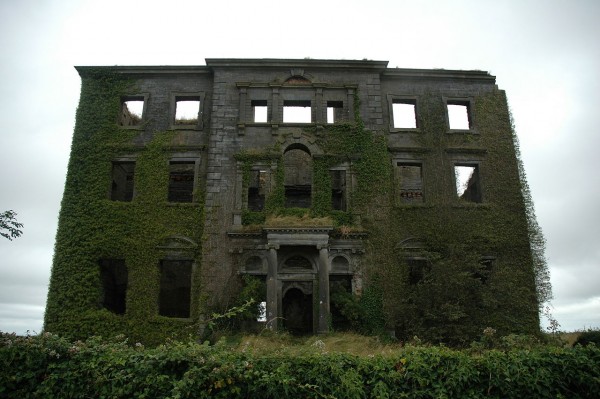
Tyrone House home of St. George family Photo: Tom Cosgrove Creative Commons
Tyrone House
home of St. George family
Photo: Tom Cosgrove
Creative Commons

Freeman’s Journal 17th March, 1910 p14

Through the exertions of the Most Rev. Dr. O’Dea, Bishop of Galway, and the Rev. Miohael Walsh.. P.P., Ballinderreen, Kilcolgan, the trouble on the Tyrone estate is at last practically at an end. There are close upon two hundred holdings in the vicinity of the Tyrone estate, and in about 70 per cent, the rent ranges from £1 to £8. The ‘acreage’ of the farms is in many cases little more than one acre, and in no case larger than twenty.

The land allotted to the tenants is full of rock, an held in rundale. Although the tenants had entered the Land Court, the rents are still exorbitant. Under these circumstances the people were forced into a vigorous agitation. Experience has taught them that nothing but agitation would win for them the right to live as every human being is entitled to live, in peace and – in their own land.

Under the settlement which has just been arrived at, 400 acres of grass land on the Tyrone farm; the property of Mrs. St. George and Mrs. Concannon, together with the Drumcoo and Killeenarin farms are to be handed over to the Estates Commissioners. The tenants have agreed to pay a year’s, rent down on the understanding that a half year’s rent is remitted, and they will get a general reduction of 4s in the £. First term tenants are to get a reduction of 6s in the £, and the game rights are to be reserved to the tenants..

Posted in Posts and podcasts

Cliffs of Moher – 1856

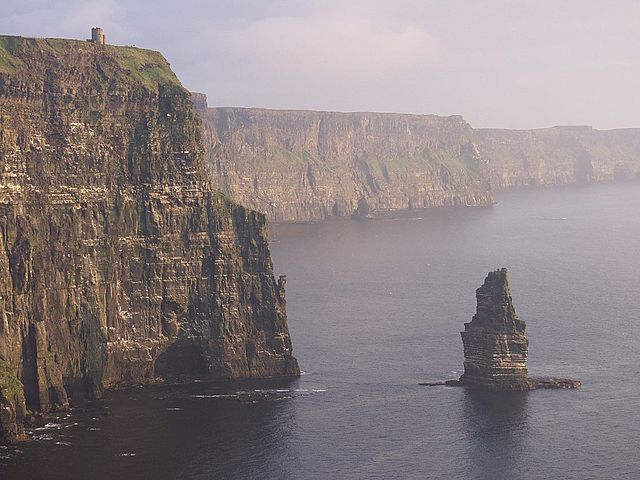
O'Brien's Tower Cliffs of Moher
O’Brien’s Tower
Cliffs of Moher

Bendigo Advertiser 8th April. 1856 p3
A public subscription is being raised by the inhabitants of Clare, for the erection of a monument in honour of Cornelius O’Brien, M.P. on the celebrated Cliffs of Moher, which he has so elegantly improved and arranged for the convenience of tourists.

Posted in Posts and podcasts

Kilbaha – 1852

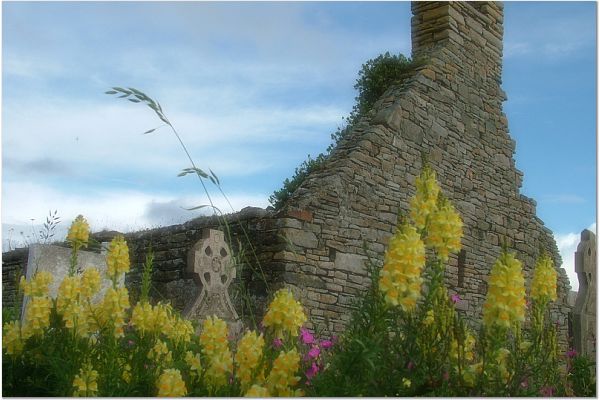
Old Church near Kilbaha Photo: Fred Creative Commons
Old Church near Kilbaha
Photo: Fred
Creative Commons

The Sydney Morning Herald 21st February, 1852 P6 (abridged)

The Clare Journal states, that on Sunday, the 28th of September last, at a chapel in the county of Clare, sentence of excommunication was pronounced by a priest, at the altar, on all the people of Kilbaha, who had sent their children to Kiltrellig school, or who would send their children there for the future. Consecrated candles were extinguished, the bell was rung, the book was closed, the crucifix was prostrated, and the following curse pronounced :-

“I pray God to send down all vengeance on those who sent their children to Kiltrellig school last week, particularly two; may the devil be their guide on the right and on the left, lying and rising, in bed and out of bed, sitting and standing, within and without; may all misfortune attend their families and labourers.  And any person or persons sending their children to this school henceforth, may they be struck blind and deaf, so as never to see any of their children again; and may the children sent to this school go wild; may they never leave this world until they be such examples as that the marrow may come out through their shin bones; may they be pained both sitting and standing, and may they never leave this world until they are in such a state that the dogs could not bear coming near the carcasses when dead. I pray to God that every child who goes to the school, that for every day he spends in it his life may be curtailed a twelvemonth, and that they may never enjoy the years of maturity; and those people who send their children to the school, that their crops and their goods may be taken away by the devil, and may all these misfortunes attend any person taking their posterity in marriage thirty years hence. I pray the Almighty to hear this prayer, as the Minister of God; and I now strictly command this congregation to kneel down and pray to God to grant my prayer.”

Note: The above was attributed to a Fr Meehan, priest at Kilbaha. The sentence of excommunication was passed due to the proselytising nature of Kiltrellig school. Tensions were exacerbated by a local landlord who obstructed the building of a Roman Catholic Church in the vicinity. Father Meehan’s solution was to build “The Ark”, a church on wheels in which mass was celebrated.

Posted in Posts and podcasts

Tulla – 1846

Parable of the Hidden Treasure by Rembrandt (c. 1630). Wikimedia Commons
Parable of the Hidden Treasure by Rembrandt (c. 1630).
Wikimedia Commons

Morning Chronicle 10th January, 1846
Workmen employed by Mrs Dr. Silver at Mount Agentino, near Tulla were throwing down an old house (said to be the oldest in Clare) when they discovered a small leather bag in the wall. It contained thirty nine guineas, of the reign of George II. They also found a curious shaped bottle full of gold and silver coins of various dates, said to be of the value of £250; nine curiously chased silver spoons; an antique fish trowel and a valuable enamelled gold ring. The spoons and ring had the arms and initials of O’Grady on them.

Posted in Posts and podcasts

Galway Summer – 1910

Galway Harbour
Galway Harbour

The Newsletter 26th November, 1910 (abridged) p5
Galway was a very pleasant sociable place in olden times. In the summer ladies flocked into it from every corner of Connaught for the sun-bathing – at least so they gave out (says a writer on “Old Irish Travel” in “Blackwood’s Magazine”). Such a muster of fair ones naturally brought a corresponding number of young men in its stream, who came openly and avowedly for amusement, and often returned home provided with a partner for life. There were gatherings every evening to which admittance was had by a small payment, and they were designated routs, drums or assemblies, according to the price charged. The greatest gaiety and unconstraint reigned at these gatherings. In the evenings, if there chanced to be no rout or assembly, the summer visitors and the residents promenaded the streets, going in and out of the shops, buying, chatting with their friends and acquaintances, and enjoying themselves.
The shopping had, however, a serious side to it, for the milliners were always willing to give the ladies credit for the articles of attire which they needed to enhance their looks, and to let the bill stand over till after the fair one’s wedding. So great indeed were the attractions in Galway that they made some people oblivious even of the passage of time.
“There were in this good city,’ remarks the writer, “ladies who grew old without perceiving it and who went on dancing, shopping and bathing until they were upwards of 50.”
Many and ingenious were the devices adopted in those old days to outwit the Customs officers. Boat loads of native brewed poteen or of foreign claret and brandy were ferried across Lough Corrib and Lough Mask snugly stowed away beneath a harmless looking covering of turf or straw. Funeral processions might be seen wending along the rough mountain tracks, the keeners trooping after the coffin and sending their cry echoing over the desolate wastes. The coffin instead of its ordinary burden was filled with tobacco, and the mourners carried parcels of the same valuable commodity beneath their capacious coats. The whole consignment having then been disposed of inland the party would return merrily homewards.

Posted in Posts and podcasts

Kinvara – 1873

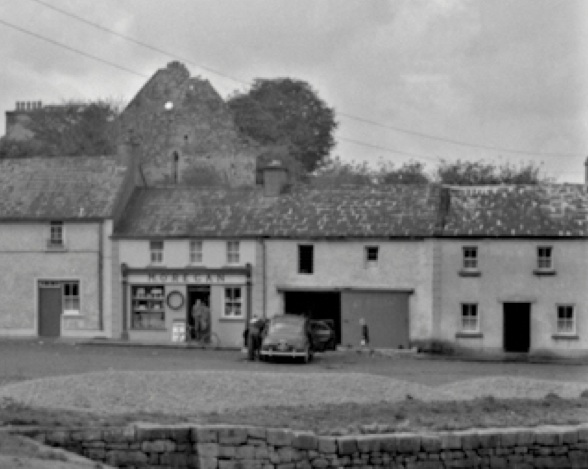
Kinvara c 1960 Creswell Archives
Kinvara c 1960
Creswell Archives

The Irish Canadian

23 July 1873

The local Government Board for Ireland have prohibited burials in the Cemetery at Kinvarra, in the parish of Kinvarradoorus, County Galway.

Posted in Posts and podcasts

Craughwell – 1912

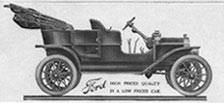
Model T Ford - 1908 Wikimedia Commons
Model T Ford – 1908
Wikimedia Commons

The Arrow 20th July 1912

COUNTY GALWAY  (abridged)

An amazing story of life at County Galway was told at the trial in Dublin last month of five men, Patrick Callanan, Michael Furey, Denis Kearns, Martin Moran, and Thomas Brennan, who were charged with shooting with intent.

The Solicitor-General said thirteen men were coming from Loughrea, in Galway. after attending a meeting of the Executive of the United Irish League, on the evening of January 21. At Craughwell they were fired upon by a party who were concealed. When passing William Furey’s house, which was about one mile from Craughwell, a FUSILLADE WAS OPENED ON THEM, and nothing but a miracle saved them from being killed.

There were fourteen men and one girl on three cars. At six o’clock on this even ing the prisoners were assembled in William Furey’s house. The occupants of the cars were singing, and the prisoners were perfectly aware who they were. When the second car got opposite William Furey’s between fifteen and twenty shots were fired at the occupants. John Kane was driving, and beside him was John Linnane, who was able to identify the prisoners by the light of the two powerful lamps which each car carried. It must have been revolvers that were fired, but the aim was bad,

When the first volley was fired the second car turned round, with the result that the light of the lamps was cast on the faces of the prisoners.  These men wore no masks, but committed this outrage without disguise.  Kane’s foot was struck with a revolver bullet and a bullet also passed through the step of the second car.

Mr. Justice Boyd, in the course of his charge to the jury, said he was amazed at the evidence that had been given.

The jury found the prisoners ‘Not guilty.’  Mr. Justice Boyd said, “I may say I thoroughly agree with the finding of the jury. I think probably they were there; I think probably they did what they ought not to have done; but on the whole facts of the case, as proved in evidence, I think the jury very wisely said ‘Not guilty.’

Posted in Posts and podcasts

Mr Hearst’s Collection – 1939

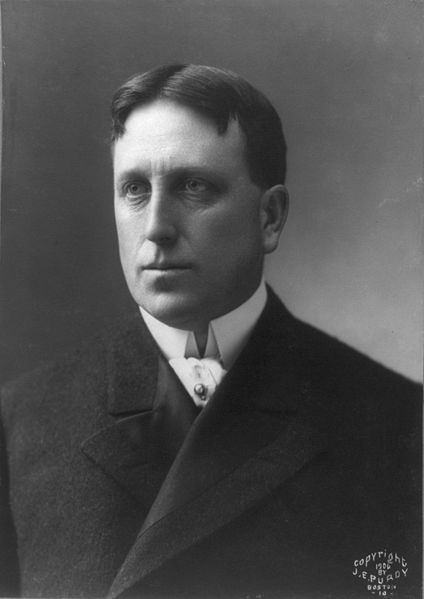
William Randolph Hearst 1906 wikimedia commons
William Randolph Hearst
1906
wikimedia commons

Advocate 5th January, 1939

MR. W. R. HEARST’S COLLECTION (abridged)

LONDON, November 30.

The magnificent collection of silver owned by Mr. William Randolph Hearst, the American newspaper proprietor, and housed at St. Donat’s Castle, will be sold at Christie’s next month. The collection includes the Great Mace and Civic Sword of the City of Galway, which joined Mr. Hearst’s possessions in 1935 at a cost of £5000.

Tho mace, weighing 230 oz., was presented in 1712 to Galway by the Mayor, Edward Eyre. The double-handed sword, with silver pommel, grip, and quillons ornamented with cabochons, had a sheath mounted with silver plates inscribed with the names of Galway Mayors from 1660 to 1841.

NOTE – The sword and mace were later gifted by the Hearst Corporation to the citizens of Galway.

Posted in Posts and podcasts

A Remarkable Trial – Galway – 1850

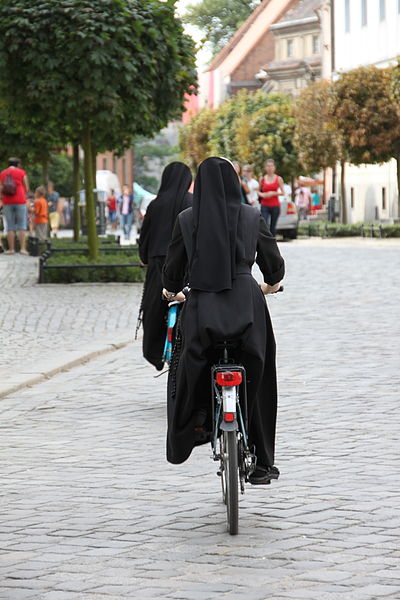
Nuns on bicycle pass in front of the Cathedral of Wroclaw, Poland Photo: Yarl Wikimedia Commons
Nuns on bicycle pass in front of the Cathedral of Wroclaw, Poland
Photo: Yarl
Wikimedia Commons

South Australian Register 21st November 1850

ACTION AGAINST THE SISTERS OF MERCY  (abridged)

The following is a compendium report of a recent remarkable trial in the Galway Record’s Court, Ireland.  Such was the public anxiety to hear this very novel trial, that at an early hour the Court was densely crowded. Mr Fitzgibbon, Q.C., stated the case.  This was an action brought by the administrator of Mrs Eliza McDonnell, to recover the sum of £500 given by her to the Sisters of Mercy, in the town of Galwav.  The circumstances were these :—

In March, 1846, Miss Harriet McDonnell, the daughter of Mrs McDonnell, was desirous of becoming a Nun of the Order of the Sisters of Mercy. Her sister, Mrs Ireland, at the request of Mrs McDonnell, called at the Convent of Mercy, to enquire as to the terms of the convent, and to settle with the nuns.  The Mother Abbess, stated that it was absolutely necessary that Miss McDonnell should spend six months as a postulant in the convent previous to her reception as a novice.  After the ceremony of her reception had taken place, she should pass two years in the convent as a novice before she could be professed.  She added that they could not, on any account, shorten the time of her profession, and that it could not be done without a dispensation from the Pope. They agreed to take the sum of £500 from Mrs McDonnell for the daughter, and that it should be left in the hands of her brother-in-law, Mr Ireland, until after her profession.  In the meantime they should receive the interest for her support.

In the month of May, 1846, the Rev. Peter Daly called on Mr Ireland, and told him that it would be of great service to the nuns if the family would give them the money at once, as they were going to invest some money on very favourable terms.  Mrs McDonnell agreed to give them the money, on their undertaking to return it in case either her daughter should wish to leave the convent before the regular time of her profession, as stated by themselves, or, in case of her death, before then.  They agreed to give the strongest guarantee to that effect, and Mrs White entered into the following agreement : —

Mrs Eliza M’Donnell— Madam, you have handed the Rev. Peter Daly, on behalf of the Sisters of Mercy, £500 sterling, the sum agreed to be received from your daughter, Harriet McDonnell, on her being professed a nun in her community, which sum we engage to return you free of interest, should either the nuns or your daughter change their minds before the period of her said profession arrives, or in the event of her decease before then.

In the month of August, 1847, Miss McDonnell took a malignant fever.  After all hopes of recovery were over, the nuns had her professed a nun.  They now contend that, as she was professed on her dying bed, they have complied with the terms of the agreement – they rely on the ambiguity of the word profession, although it was clearly provided in the agreement, that in case of her death the money should be returned.

Counsel for the case contended that it would be absurd to put any other construction upon the words, ‘period of profession’ – as it was always in the power of the nuns, by that construction, to make the money their own, and to render their guarantee a mere mockery, by professing her dying.  They were permitted by the Bishop to profess her dying, merely as consolation; and, if she survived, she should be professed again.

The Bishop of Galway directed them to return the money but they preferred taking their chance in a court of law, thinking to evade the agreement by some ambiguity on the face of it.  They were unsuccessful.

The Jury returned a verdict for the plaintiff, with £500 damages and 6d. costs.