South Australian Register 22nd September, 1851 p3
Bright days seem to be in store for Ireland. The Midland Great Western Railway Company were making strenuous efforts to complete the works on their line to Galway. The rails had been laid down on the whole line, with the exception of a few miles, and there was no doubt but that they would have the line ready for traffic in a few weeks.
In the West of Ireland the most confident hopes were entertained that an American steamer would shortly appear in the Bay of Galway to test the advantages of that port for mail communication between America and Europe. These sanguine expectations were by no means unfounded. The Freeman stated that letters had been received in Dublin, announcing that the North America, a United States steamer of great power and marvellous speed, had been chartered to start on the 17th June from New York for Galway with passengers, and that she might be expected to appear off the west coast of Ireland about the 25th June. It would, therefore, appear that American enterprise had determined to settle a point which many English and certain Irish interests had pronounced dubious. The Belfast Chamber of Commerce, with a generous candour which will do that Chamber immortal honour, had presented a memorial to the British Government in favour of Galway.
The Armagh Guardian 11th December, 1848 CMSIED 9311447 (abridged)
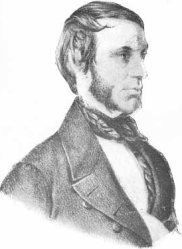
A correspondent sends the following particulars relative to the escape of Mr. J. B. Dillon from the western shores of Clare. –
“It will be in the recollection of your readers, that when six of the most prominent leaders in the late insurrection held a ‘council of war’ in the house of a farmer on the borders of Kilkenny one of the most distinguished of the party differed from the rest as to the means to be had recourse to for the achievement of Ireland’s independence. The Council, I am told, broke up without any settled plan for the guidance of the leaders and each of the party went in a different direction, distracted and almost broken-hearted.
By accident, it is stated, four of them met again at Ballingarry on the late memorable occasion, and among the number was Mr. J. B. Dillon. This young gentleman was much attached to Smith O’Brien, and was resolved to follow his fortunes, come weal or woe. He kept with him as long as he saw the least chance of success, but after the affair at Farrinrory he despaired, and resolved on an escape to some other land. He parted in sadness from his companions. The words uttered were few, but looks told the struggle in each man’s bosom.
Mr. Dillon arrayed himself in the usual costume of the clerical order, and with cloak and breviary set out for the shores of Clare. He travelled through the Country, never evading police stations, but, on the contrary, lodging near the police barracks. He pushed on his way through all obstacles – detectives and police – until he arrived at the mineral waters of Lisdoonvarna, where he remained for some days, mixing with the visitors, joining in their recreations,and drinking the waters occasionally ‘for the good of his health’. He passed the policemen daily – conversed with them, and preached to some in an edifying manner. He lived in this manner for some days, until he was scented out by a keen detective, when he got a hint from some friend, took it, and broke fresh ground.
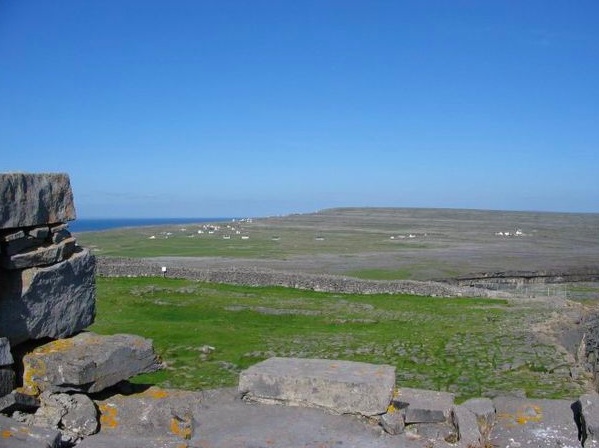
He next put up at Ballyvaughan whence he shifted himself on to Kinvara. Here he spent some days, and thence proceeded to the island of Aran, where a friendly vessel awaited, and bore him safely away from his enemies to the
shores of America.”
The history and antiquities of the diocese of Kilmacduagh
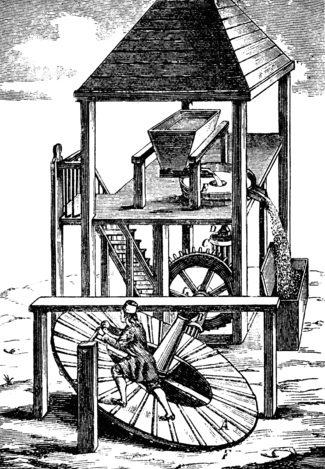
Rineen Mill, Doorus National Inventory of Architectural Heritage, http://www.buildingsofireland.ie via Landed Estates Image NUIG
J. Fahy 1893
McGill and Son Dublin
The Parish and Church of Kinvara-
In the existing parish of Kinvara we have the union of the three ancient parishes of Kiloveragh, Kilena, and Durus. We cannot say when they were united, but we have no doubt that the union exists for some three centuries at least. As regards the existing ruined church in the town of Kinvara, it may be interesting to know that, in the opinion of Mr. O’Donovan, it is not more than five hundred years old, and that it stands on the site of the old church of St. Coman.
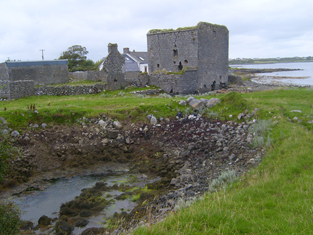
The ancient church of Durus does not appear to have attracted the attention of antiquarians. We would wish to think it may have been the church of St. Colman Hy Fiachrach, but feel obliged to confess that we have no historical data to support the supposition. It is situated on a gentle eminence overlooking the bay. There was an oratory to St. Kyran on the adjoining strand, where the patron’s day was. Hardly a trace of the oratory remains. The ancient church of Kilena is still extant.
excerpt from Enhanced British Parliamentary Papers on Ireland
Correspondence between Treasury and Poor Law Commissioners for Ireland respecting Advance, Distribution or Expenditure of Amounts raised under Act for General Rate in Aid in Ireland
Under General Rate in Aid Act, Ireland. Enclosure 8, in No. 184. Gort Union
EXPENSES ATTENDING CHOLERA PATIENTS, COMMENCING ON THE 1ST OF APRIL AND ENDING 11TH OF JUNE 1849, INCLUSIVE.
Irish Encumbered Estates Commission
The proceedings under this commission are still in full operation, and the list already published contains some of the most picturesque portions of the country. The county of Galway has a large share in these sales, and numbers many a beautiful range of lake and mountain, with a fine sea view. In some instances upwards of 100 islands will form part of the purchase. No less than 100 sales are now in prospect. An office entitled ‘Allnutt’s registrations offices,’ has been established in Grafton Street, Dublin for the purpose of extending the facilities of vendors and purchasers and as a medium to obtain tenants.
This is under the superintendence of an English Engineer, who has been employed for four years past in Government works. Agents are also employed in England and Scotland to forward communications to or from capitalists wishing to become purchasers. From this office, a monthly list issues.
It is to be hoped that a new era is opening for ‘ould Ireland’, that her picturesque features may be known and appreciated either by her own sons or by those who will give her productive soil a chance of redeeming itself from the dark cloud of penury which has so long and so unjustly hung over it.
Northern Star = 11th May 1912 p9 Boycotting and Police (abridged)
There has been no cattle driving in the county since July 1911 but in other reports generally the county in the direction of Athenry, Craughwell, Oranmore, Gort and Kinvara, and bordering on the County Clare, was in a deplorable state. In the great majority of cases no one was to be made amenable notwithstanding all the efforts of the police, and it would seem as if the Executive was completely paralysed in these districts.
In one of the attempted murder cases a labourer working for the Estates Commissioners was fired at and wounded at Woodberry; in another case three shots were fired from behind a wall and a man was hit; in a third a shot was fired through the window of a cottage and the greater part of the charge entered the jaw of an unfortunate man who was sitting inside; in a further a sergeant and a constable were fired at from a wood and the sergeant was wounded; and in a fifth, which occurred near Oranmore, four shots were fired at six men who were passing along the road in a car, and all but one of them were wounded.
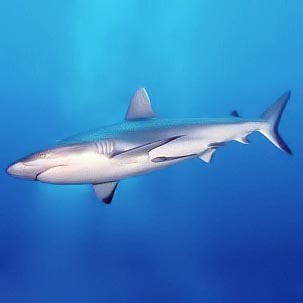
A shark, which the Cunard liner Samaria struck when 150 miles from Galway on her voyage from New York, was removed from the vessel’s bow when she arrived in Galway.
The Belfast Newsletter 11th September, 1849
cmsied 101138
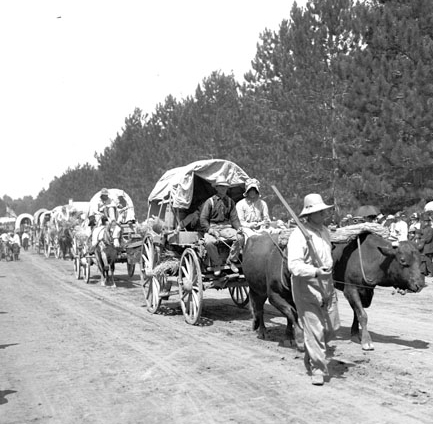
JOURNEY TO CALIFORNIA.
So now the Golden Age is come,
The Golden Country lies before us,
We leave the plough, we quit the loom,
And merrily we chant in chorus,
“The Golden Country lies before us.”
Away! Away! across the sea,
Thro’ forest vast and wild Savannah,
With fearless heart and footstep free,
And fed with joy’s celestial manna,
We cross the lone and wild Savannah.
Away! Away! our hopes burn bright,
The Golden Country lies before us,
Nor rest by day nor sleep by night,
But forward still, and chant in chorus,
“The Golden Country lies before us.”
We travel thro’ a lordly land,
A land of Dream, a realm of Faery,
Here shine white lakes, and near them stand
Tall trees of graceful shape and airy,
All mirrored in those lakes of Faery.
A marble city rises here,
A Golden Country gleams before us,
Soft lawns, delicious shades appear
Yet linger not, but chant in chorus,
“The Golden Country lies before us.”
Yes, we have left the enchanted ground
Of Dream and delicate Illusion,
But see what flowers are blooming round,
And wooing us with bright profusion.
One moment stay, ’tis no illusion.
O never care for idle flowers,
The Golden Country lies before us;
Leave poetry for boys, be ours
The truth of life; and chant in chorus,
“The Golden Country lies before us.”
We leave the Sunflower with the Sun,
The Torch-flower burning by the river,
The Trumpet-flower to wear alone
His blue and scarlet robe for ever;
We cross the plain, we ford the river.
Ah now! ah now! the mountains rise,
The Golden Country gleams before us,
The wealthy man alone is wise,
Is king of men – the chant in chorus,
“The Golden Country lies before us.”
Ah stay! behold those seven small Lakes,
Beneath enamoured woodlands shining,
Mid rustling leaves the breeze awakes,
The bright moss, with an emerald lining,
Clothes pine and cedar, rustling, shining.
The Hills, the Lakes, the Flowers are gone,
The Golden Country gleams before us,
Youth’s visions faded one by one,
The man is wise; and thus, in chorus,
We chant the Golden Land before us.
Is this your Promised Land? Is this
The wealth, the wisdom that you proffer?
Is this your sober, waking bliss?
Is this the sceptre that you offer?
Take hence the throne – the crown ye proffer.
Amid red rock and desert sand,
The Golden Country lies before us,
Famine and Hunger hand in hand,
Behind us Death, the Judgment o’er us,
The Golden Country gleams before us.
We left the still pure land of Dreams,
The fairy world of Art and Beauty,
Of Love and Faith where sunny gleams
Colour and warm the waste of Duty,
And half transfigure it with Beauty.
Ah! this is not the world we sought,
No Golden Country gleams before us;
O give us back our Lofty Thought,
Our Faith, our God, our Heaven restore us,
There gleams no Golden Land before us.