Posted in Posts and podcasts

The Washington Monument – 1850

Sketch of the proposed Washington Monument by architect Robert Mills circa 1836. Wikipedia.org
Sketch of the proposed Washington Monument by architect Robert Mills circa 1836.
Wikipedia.org

Freeman’s Journal 21st November, 1850 p3

The Washington Monument.
This grand memorial originated as follows.
In 1783 Congress resolved to erect an equestrian statue to Washington.  In 1804, after his death, the subject was again broached, but nothing was done.  In 1833 the Washington National Monument Society was organized with Chief Justice Marshall at its head, and measures were taken to collect the necessary funds.
During seven years, however, only 30,000 dollars were obtained, and still nothing was done. In 1847 new measures were taken, new men and leaders arose: the collection reached 80,000 dollars, and the corner-stone was laid on the 4th July, 1848.

The idea is an obelisk 55 feet square at the base, and 600 feet high.  This will exceed in height any steeple or monument in the world.  From a thickness of 15 feet the wall diminishes to 30 inches leaving an open space of 25 feet square.  The top is to be reached by flights of iron steps at the four sides; and the hand rail, being hollow, will serve as a conductor of gas, so that the whole of this prodigious cavern will be rendered as light as day.
The work is rapidly progressing, and the funds are coming in steadily.  Agents are canvassing the country in every direction.  No country has ever presented a similar spectacle when all classes so unceasingly united to do honour to one man.  It will be truly a national work and worthy of the American people. — Illustrated News.
================
Posted in Posts and podcasts

Tierneevan – 1901

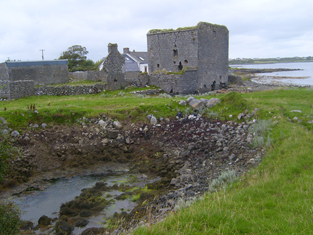
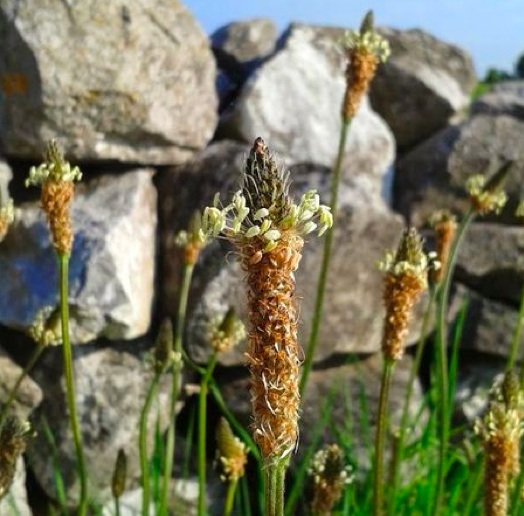
Photo: Norma Scheibe

Kentucky Irish American, 22nd June, 1901 p1
A very successful meeting was held at Tierneevan, near Gort, County Galway on Sunday, for the purpose of establishing a branch of the United Irish League.
In the absence of the Rev. Father Sweeny the chair was taken by John Quinn. The Chairman briefly and clearly explained the objects of the meeting, and said that it was gratifying to see the people of the parish supporting the cause of the United Irish League. W. J. Duffy, M.P. and James Lynham, who were received with loud cheers, addressed the meeting. A branch of the United Irish League was then formed and over eighty members enrolled. D. F. Burke was the first to set the example by giving a generous subscription. John Quinn was appointed President; Martin Nestor Treasurer and Michael Mitchell Secretary.

Posted in Posts and podcasts

Curious facts relative to Saturday – 1849


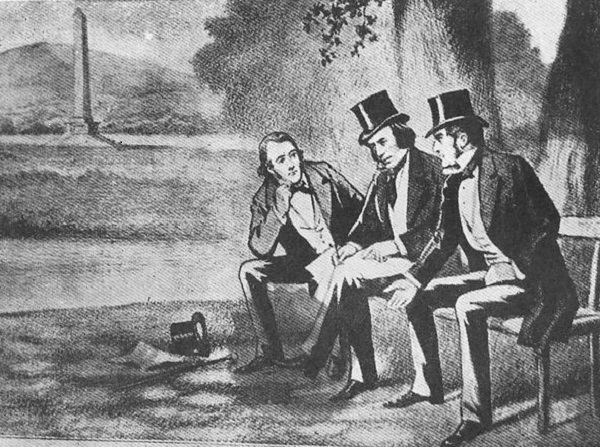
 Birth of 'The Nation' Charles Gavin duffy, Thomas Osborne Davis and John Blake Dillon. Wikipedia.org

Birth of ‘The Nation’
Charles Gavin duffy, Thomas Osborne Davis and John Blake Dillon.
Wikipedia.org

South Australian 23rd October, 1849 p4

CURIOUS FACTS RELATIVE TO SATURDAY (abridged)

State Prisoners

On a review of the past fourteen months, the following extraordinary facts will be observed in reference to the state prisoners and the sixth day of the week:

On a Saturday John Mitchell was arrested, on Saturday he was found guilty, on Saturday he was sentenced to transportation, and on Saturday that sentence was carried into effect.
On a Saturday Charles G. Duffy was arrested. On a Saturday, after several months imprisonment, Mr Duffy was discharged from jail.
Mr John Martin and Kevin Izod O’Dogherty were arrested on a Saturday, both were tried on a Saturday, sentenced on a Saturday, and sent away last Saturday.
The Irish Tribune, The Nation and Felon newspapers started first on Saturday, and on Saturday were seized on.
On Saturday the affair at Ballingary took place, and on Saturday Smith O’Brien was arrested, his trial at Clonmel ending on a Saturday.
Messrs. Thomas F Meagher, Terence B. M Manns, and Patrick O’Donohoe, were arrested on a Saturday, their trials ended on a Saturday, and they were sen tenced on a Saturday.
John B. Dillon,Thomas D. Magee, Michael Doheny, Thos. D. Reilly, and some others made their escape from this country on a Saturday.
The habeas corpus suspension act be came law on a Satnrday.
There are a variety of minor events connected with the above, all of which happened on Saturdays, but as those detailed are the most prominent, we give them as curious facts.

Freeman’s Journal.

Posted in Posts and podcasts

Bright days for Galway – 1851

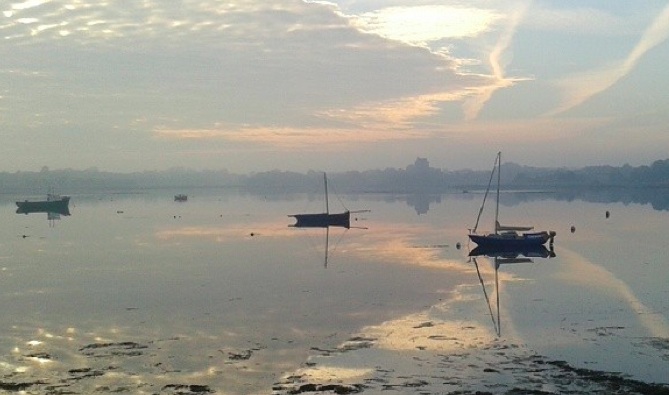
Kinvara Harbour Galway Bay Photo: Norma Scheibe
Kinvara Harbour
Galway Bay
Photo: Norma Scheibe

South Australian Register 22nd September, 1851 p3 
Bright days seem to be in store for Ireland. The Midland Great Western Railway Company were making strenuous efforts to complete the works on their line to Galway. The rails had been laid down on the whole line, with the exception of a few miles, and there was no doubt but that they would have the line ready for traffic in a few weeks.

In the West of Ireland the most confident hopes were entertained that an American steamer would shortly appear in the Bay of Galway to test the advantages of that port for mail communication between America and Europe. These sanguine expectations were by no means unfounded. The Freeman stated that letters had been received in Dublin, announcing that the North America, a United States steamer of great power and marvellous speed, had been chartered to start on the 17th June from New York for Galway with passengers, and that she might be expected to appear off the west coast of Ireland about the 25th June. It would, therefore, appear that American enterprise had determined to settle a point which many English and certain Irish interests had pronounced dubious. The Belfast Chamber of Commerce, with a generous candour which will do that Chamber immortal honour, had presented a memorial to the British Government in favour of Galway.

Posted in Posts and podcasts

The escape of J.B. Dillon – via Kinvara – 1848

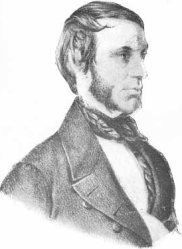
John Blake Dillon
John Blake Dillon

The Armagh Guardian 11th December, 1848  CMSIED 9311447 (abridged)

A correspondent sends the following particulars relative to the escape of Mr. J. B. Dillon from the western shores of Clare. –

“It will be in the recollection of your readers, that when six of the most prominent leaders in the late insurrection held a ‘council of war’ in the house of a farmer on the borders of Kilkenny one of the most distinguished of the party differed from the rest as to the means to be had recourse to for the achievement of Ireland’s independence. The Council, I am told, broke up without any settled plan for the guidance of the leaders and each of the party went in a different direction, distracted and almost broken-hearted.
By accident, it is stated, four of them met again at Ballingarry on the late memorable occasion, and among the number was Mr. J. B. Dillon. This young gentleman was much attached to Smith O’Brien, and was resolved to follow his fortunes, come weal or woe. He kept with him as long as he saw the least chance of success, but after the affair at Farrinrory he despaired, and resolved on an escape to some other land. He parted in sadness from his companions. The words uttered were few, but looks told the struggle in each man’s bosom.

Mr. Dillon arrayed himself in the usual costume of the clerical order, and with cloak and breviary set out for the shores of Clare.  He travelled through the Country, never evading police stations, but, on the contrary, lodging near the police barracks.  He pushed on his way through all obstacles – detectives and police – until he arrived at the mineral waters of Lisdoonvarna, where he remained for some days, mixing with the visitors, joining in their recreations,and drinking the waters occasionally ‘for the good of his health’. He passed the policemen daily – conversed with them, and preached to some in an edifying manner.  He lived in this manner for some days, until he was scented out by a keen detective, when he got a hint from some friend, took it, and broke fresh ground.

He next put up at Ballyvaughan whence he shifted himself on to Kinvara. Here he spent some days, and thence proceeded to the island of Aran, where a friendly vessel awaited, and bore him safely away from his enemies to the
shores of America.”


Posted in Posts and podcasts

Fahy – 1893

The history and antiquities of the diocese of Kilmacduagh

Rineen Mill, Doorus National Inventory of Architectural Heritage, www.buildingsofireland.ie via Landed Estates Image NUIG
Rineen Mill, Doorus
National Inventory of Architectural Heritage, http://www.buildingsofireland.ie
via Landed Estates Image
NUIG

J. Fahy 1893

McGill and Son Dublin

The Parish and Church of Kinvara-

In the existing parish of Kinvara we have the union of the three ancient parishes of Kiloveragh, Kilena, and Durus. We cannot say when they were united, but we have no doubt that the union exists for some three centuries at least. As regards the existing ruined church in the town of Kinvara, it may be interesting to know that, in the opinion of Mr. O’Donovan, it is not more than five hundred years old, and that it stands on the site of the old church of St. Coman.

The ancient church of Durus does not appear to have attracted the attention of antiquarians. We would wish to think it may have been the church of St. Colman Hy Fiachrach, but feel obliged to confess that we have no historical data to support the supposition. It is situated on a gentle eminence overlooking the bay. There was an oratory to St. Kyran on the adjoining strand, where the patron’s day was. Hardly a trace of the oratory remains. The ancient church of Kilena is still extant.

Posted in Posts and podcasts

Kinvarra – expenses – 1849

EPPI

 excerpt from Enhanced British Parliamentary Papers on Ireland

Correspondence between Treasury and Poor Law Commissioners for Ireland respecting Advance, Distribution or Expenditure of Amounts raised under Act for General Rate in Aid in Ireland

Under General Rate in Aid Act, Ireland. Enclosure 8, in No. 184. Gort Union

EXPENSES ATTENDING CHOLERA PATIENTS, COMMENCING ON THE 1ST OF APRIL AND ENDING 11TH OF JUNE 1849, INCLUSIVE.

                                                                                                             £           s.            d. Continue reading “Kinvarra – expenses – 1849”

Posted in Posts and podcasts

For sale – County Galway – 1850

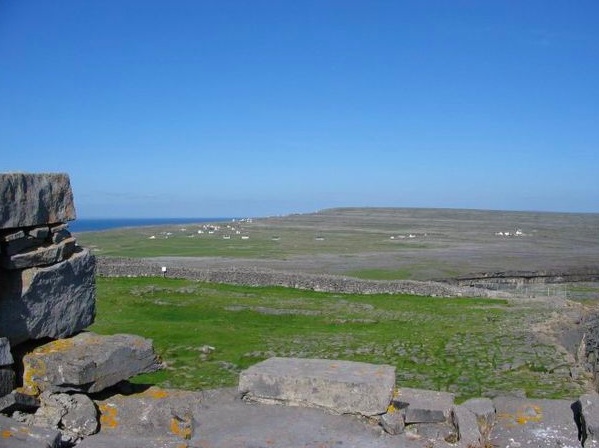
View from Dún Aengus, Inishmore Wikipedia.org
View from Dún Aengus,
Inishmore
Wikipedia.org

Freemans Journal 5th December, 1850 p3 (abridged)

Irish Encumbered Estates Commission
The proceedings under this commission are still in full operation, and the list already published contains some of the most picturesque portions of the country. The county of Galway has a large share in these sales, and numbers many a beautiful range of lake and mountain, with a fine sea view. In some instances upwards of 100 islands will form part of the purchase. No less than 100 sales are now in prospect. An office entitled ‘Allnutt’s registrations offices,’ has been established in Grafton Street, Dublin for the purpose of extending the facilities of vendors and purchasers and as a medium to obtain tenants.

This is under the superintendence of an English Engineer, who has been employed for four years past in Government works. Agents are also employed in England and Scotland to forward communications to or from capitalists wishing to become purchasers. From this office, a monthly list issues.

It is to be hoped that a new era is opening for ‘ould Ireland’, that her picturesque features may be known and appreciated either by her own sons or by those who will give her productive soil a chance of redeeming itself from the dark cloud of penury which has so long and so unjustly hung over it.

Posted in Posts and podcasts

Galway Gaol – 1835

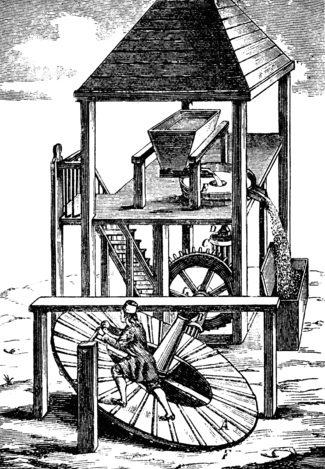
Human powered treadmill for grinding corn Wikipedia.org
Human powered treadmill
for grinding corn
Wikipedia.org

The Sydney Herald 19th October, 1835 p4
A treadmill is being erected in Galway gaol, by the power of which blocks of marble may be sawed and plashed.

This will be what you may call hard labour.
================