Posted in Posts and podcasts

Kinvara, Duras, Kiloveragh – 1932

Connacht Tribune 25th June, 1932 p22 (abridged)
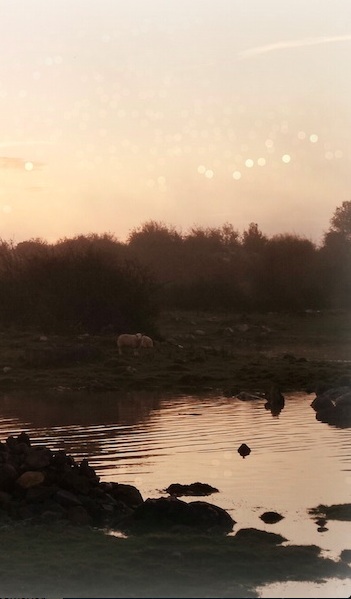
Ballybranigan Photo: Norma Scheibe
Ballybranigan
Photo: Norma Scheibe

Interesting Lecture at Gort by P. J. Murray, N.T.

Patrick French, son of Roebuck, waa a Catholic. He was a very generous donor to the Kinvara church, his gifts including a beautiful chalice.

James, French, brother-in-law of Oliver Martyn, Tullyra, spent much of his iife in France, owing to the delicate health of his children. His daughter Frances, married Bartholomew De Basterot, who thus became heir to the Durus property. The establishment of his claim, however, involved him in a legal suit extending over thiee years. The enormous expense thus entailed so impoverished him that he was forced to sell some of the property.

It was purchased by Robert Gregory, Coole Park, and Mark Lynch, Galway. The latter erected Durus chapel for the convenience of the tenantry. As this occurred in the eighteenth century we may conclude that the penal code was not rigorously enforced in all parts of the country.

Robert Gregory continued the erection of the Kinvara pier and quay which had been begun by James French. To do so it was necessary to demolish the fine old chiefs (sic.) of Kiloveragh which stood opposite Dun Guaire Castle. Though displaying little reverence for the historical monuments of the district, this gentleman showed a commendable enterprise of more material value to inhabitants.

James De Basterot built a new residence at Durus and planted extensively. He was an artist of merit and some of his pictures are still to he seen in Kinvara church. His son, Bartholemew, was a distinguished writer. Though one of the absentee landlords, he manifested a kindly interest in his tenants.

Tiirowen House was purchased about 1650 by Christopher French. The latter was Mayor of Galway during its siege by Ludlow who added considornbly to the Tirowen estates, probably after his betrayal of Galway. Early in the eighteenth century, a daughter of his married the Hon. Mary St. George, hence the Tirown Frenches were afterwards known as the St. Georges.
Posted in Posts and podcasts

A trip to Kinvara – 1912

Tuam Herald August, 31st 1912 p2 (abridged)

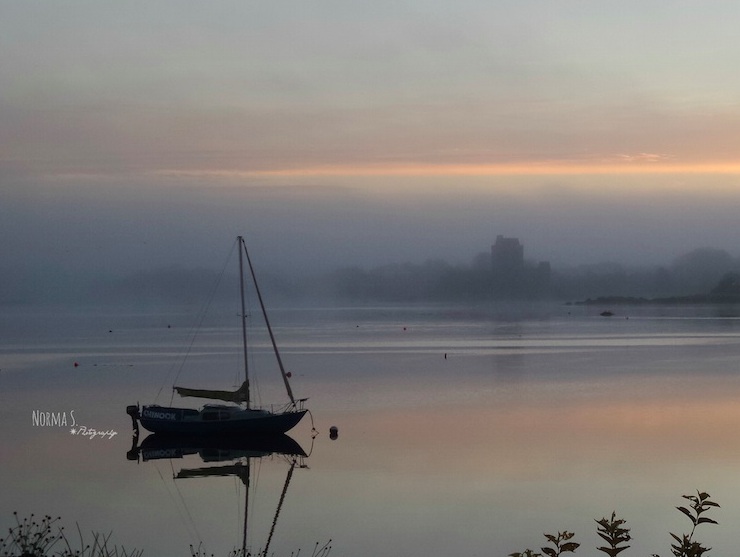
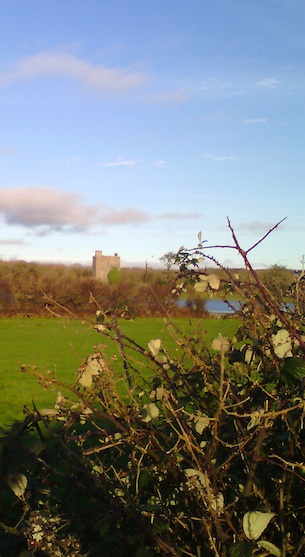
Dunguaire Photo: c.  Norma Scheibe
Dunguaire
Photo: c. Norma Scheibe

Mr Jack Yates and Mrs Yates are staying at Coole Park with Lady Gregory. He is a distinguished artist of the new school of Irish art. On Sunday a party from Coole drove to Dungory Castle – the fine old castle owned by Edward Martyn – and lunched there. It is said Mr Yates will paint a large picture of it.
It is one of the finest ruins in Ireland – kept in excellent preservation by Mr Martyn who pays a caretaker, Mr Hanbury, to look after it. The wall which surrounds it is complete. It overlooks an arm of the little Bay of Kinvara, itself an arm of Galway Bay and around and about are countless springs of fresh water bubbling up from the ground and coming by subterranean ways from the lake of Coole, six miles off as the crow flies.
The water of Coole itself comes from the Devil’s Punch Bowl at Gort, outside Lord Gough’s beautiful demesne, where a seething bottomless pool of water may be seen, one of the wonders of nature. it is never empty, always in motion like a vast cauldron stirred by a giant.

Posted in Posts and podcasts

Galway/Clare – 1851

Pembrokeshire Herald and General Advertiser

Photo: Norma Scheibe

3rd October, 1851
(abridged)

The Boards of Guardians of the different Unions persist in their refusal to make rates for the repayment of the Government advances. Among the repudiators whose proceedings are recorded this week, are the Guardians of the Galway and Clare Unions and a meeting has been called of deputies from all the Unions in the province of Munster, with a view to oppose the demand of the Government.

Posted in Posts and podcasts

Ballinderreen – 1880

Nation 10th July, 1880 p3 (abridged)

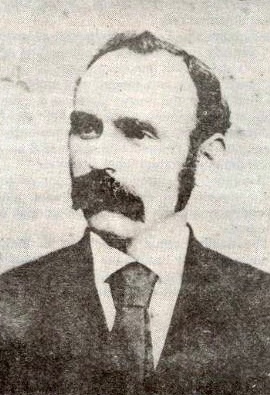
Michael Davitt Founder of the Land League Wikimedia Commons
Michael Davitt
Founder of the Land League
Wikimedia Commons

A monster meeting was held on tho 20th ult. at Ballinderreen, a village on the sea-coast, adjacent to Kinvarra. The meeting was convoyed for the purpose of forming a branch of the Land League, and it was in every respect a great success. A deputation from the Athenry branch, with the temperance band, attended.

The little village was handsomely decorated with green bunting. The eye could scarcely rest on anything not tinged with the national colour. Pretty devices spanned the entrance to the village. Conspicuous amongst them was one bearing the words “Cead mile failte to the men of Athenry.”

The proceedings commenced late in the day, owing to the heavy rain prevailing. A Government note-taker occupied a prominent place on the platform. The Rev. Mr. Forde, P.P., occupied the chair, and addressed the meeting at length, counselling them to be prudent in all their actions, and advising all to join in the movement.

Resolutions condemnatory of the present land system, and advocating a peasant proprietary and other changes, were proposed and adopted, and spoken to at great length by Mr. St. George Joyce, Clare Independent; Mr. Peter P, Broderick, Athenry Land League; Mr. P. C, Kelly, do; Rev. P. J. McPhilpin, CC., &c. At the close of the proceedings the rev. chairman, in very complimentary terms, thanked the deputation from Athenry. Most of those present were enrolled in the Land League.

Posted in Posts and podcasts

Welcome home – Kinvara – 1910

Connacht Tribune 24th Dec 1910 p5 (abridged)

Kinvara Photo: Norma Scheibe
Kinvara
Photo: Norma Scheibe

On Monday morning the Kinvara cattle drivers, M.H. Donohoe, Gortnaclogh; T. Gorman, John Hynes, P. Healy, Bartly Quinn, Moy, and John Smith, Kinvara, were released from Galway Jail after undergoing a term of six months’ imprisonment. They were tried at the Summer Assizes and sentenced by Judge Kenny for driving cattle off the lands of Funshinbeg. The severity of the sentence and the respectability of the prisoners evoked the greatest sympathy at the time, and the Nationalists of the district vied with one another in doing the farm work and harvesting for their families ever since.

They were met at the door of the prison as they emerged, by Mr. Ml. O’Donohoe, J.P., Co.C, and seven cars, laden with members of the Kinvara hurling ciub. They were sumptuously entertained by Mr. O’Donohoe, and started from Eyresquare after “doing” Salthill, about 3 p.m. for Kinvara. They were loudly cheered passing through Oranmore and Clarenbridge, and on reaching Kilcolgan they were greeted with illuminations. They were met outside Kilcolgan by a big contingent with cars and horses, from the Kinvara and Duras branches U.I.L., consisting of Messrs. T. P. Corless, D.C., president; M. Curtin, B, Quinn, M. Melia, Pat Hanlon, Bryan Kilkelly, T. Keane, Joe Forde, Pat Halvey, P. Callanan, P. Whelan, Ml Carty (Secretary), Michael Huban, A. Connors, C. O’Loughlin, P. Noone, J. Moylan, John Glynn, etc., who cheered them loudiy. As Ballinderreen was approached it was seen that every house was illuminated, bonfires were ablaze on every hill, and lighted torches lit up the horizon. A noticeable feature in Ballinderreen was a big force of police, under arms on the outskirts of the crowd.

A hurriedly convened meeting was held under the chairmanship of Mr. Michael O’Donohoe, Co.C, J.P., who thanked the sterling Gaels and fearless Nationalists of Ballinderreen for the great reception they had given the prisoners (cheers). He would never forget it. He reminded them of the early days of the Land League Movement and of the proclaimed meeting in 1879, and said he was glad to see the same spirit animating them today. Mr. T. P. Corless, D.C., also addressed the meeting.

Amidst a scene of great enthusiasm the procession, which had now assumed enormous dimensions, started for Kinvara. The houses along the route were illuminated and bonfires and torches blazed at Pollough and Toreen.

At Ballyclera the whole village turned out and the procession passed with great difficulty through a virtual sea of fire. Dungora Castle presented a grand appearance with its many and various coloured lights. Overlooking the town and harbour, the lights could he seen for miles. The turrets on the top were beautifully lighted and arranged in such a way as to resemble a huge harp. A bonfire was ablaze in front of the Castle as the prisoners were passing.

Kinvara town was brilliantly illuminated and an immense bonfire was lighted in a field opposite the Convent of Mercy.
In Moy and Gortnaclogh, the homes of the prisoners, bonfires and illuminations were kept up until morning.
Mr. Cruise, D.I., and a number of extra police were drafted into Kinvara, but notwithstanding the greatest excitement, everything passed off quietly.

Posted in Posts and podcasts

Galway fracas – 1891

Pontypridd Chronicle and Workman’s News

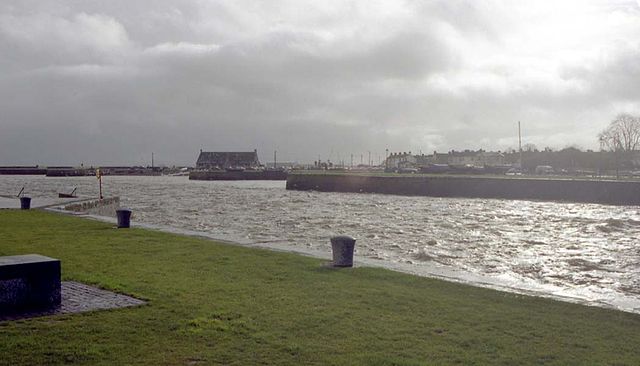
Galway Harbour Photo: Art Wikimedia Commons
Galway Harbour
Photo: Art
Wikimedia Commons

2nd January 1891

The Dublin Express says that on Christmas night a disturbance took place between about 20 navy stokers, who are home in Galway on furlough from Plymouth, and about 20 men of the Connaught Rangers. A police patrol (three in number) interposed, and succeeded in inducing the military to desist; but when they advised the stokers to follow this example the latter turned on the patrol and beat them, whereupon the police drew their batons and dealt about them with a vigour that soon caused the stokers to beat a retreat through Mainguard-street. Here they were met by the soldiers, who attacked them with their belts, soldiers, wounding several of them, and obliging them to visit the doctors’ establishments to get their injuries dressed. One of the police patrol was also very much injured.

The Connaught Rangers acting under the impression that their assailants were men belonging to H.M.S. Banterer, being ignorant of the Christmas visit of the stokers, determined to have satisfaction, and with this object in view, a party of about 50 of them went to the dock on Friday night, and getting alongside H.M.S. Seahorse, which was also lying in the dock, and which they mistook for the Banterer, they asked the blue jackets to come forward and meet them in fair fight. They were informed by a man on board that the vessel was not the Banterer; and in the meantime word was conveyed to the latter vessel of the hostile intentions of the soldiers, whereupon, it is stated, the officer then in charge of the ship desired all hands to get on deck, and, opening the war-chest, had every man armed.
He then gave orders that should the Rangers make an attack they were to defend themselves, but not to kill, and to endeavour if possible to make prisoners of the entire force, and have them placed in irons.

When the would be attackers did arrive, however, and witnessed, the preparations made for their reception they held a council of war on the wharf at a safe distance from the defenders of the warship, and while this was in progress intelligence was conveyed to the military barracks of what was going on at the dock. A strong picket was at once sent out, on the arrival of which the besiegers beat a hasty retreat; but not before some of the leaders were captured. It is but fair to say for the credit of this gallant regiment that any disturbances which have brought the name of the Rangers into disrepute have on all occasions been brought about by recruits.

Posted in Posts and podcasts

1920/1934

Irish Independent 4th December, 1934 p12

Photo: Norma Scheibe

Mr Sean Russell I.R.A. unveiled a memorial cross and delivered an oration near the spot where the mutilated bodies of Patrick and Harry Loughnane (brothers) were found in November, 1920, at Carragaroe,(sic.) Kinvara.
The brothers were members of the Volunteers and were taken from home by the Black and Tans; their bodies being discovered in a pond some weeks later.
Members of the I.R.A. from many districts, including many old comrades in the Volunteers, paraded to the spot, where they formed a guard of honour and recited a decade of the Rosary in Irish.

Posted in Posts and podcasts

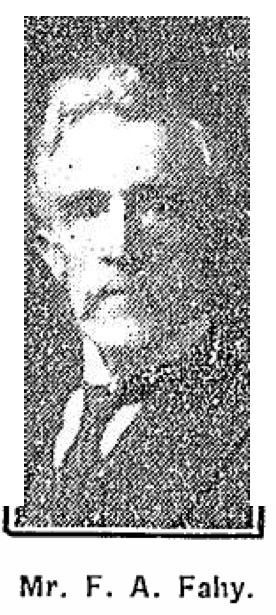
Francis A. Fahy – Kinvara Amateur Theatricals – 1870

Nation 8th January, 1870 p9

Mr Francis A. Fahy, Kinvara. Photo: Connacht Tribune 8th March 1924 p14
Mr Francis A. Fahy, Kinvara.
Photo: Connacht Tribune 8th March 1924 p14

KINVARA AMATEUR THEATRICALS—THE POLITICAL PRISONERS.
(from a correspondent)

On Monday evening the gentleman of the above amateur company gave a dramatic entertainment at the courthouse, Kinvara, for the benefit of the wives and families of the political prisoners, which brought together a large and respectable audience to witness tho production of a new piece, “The Last of the O’Learys,” specially written for the occasion by Master F’rancis A. Fahy, a young gentleman only just attained the age of fifteen, whose extraordinary talent foreshadows a brilliant and successful future.

The temporary theatre was handsomely decorated, and the scenery and other properties, including dresses, were quite in keeping with the taste and judgment with which the pieces were put upon the stage. The young gentlemen who took part in the representation displayed a far more than adequate conception of the role entrusted to them, and acquitted themselves in a manner that elicited continuous and well-merited applause.

As “The O’Leary,” Master Francis Fahy’s acting displayed, a considerable amount of skill and histrionic merit, and repeatedly brought down the house. ” Irelington,” an English adventurer, possessing the confiscated patrimony of the “O’Learys,” was admirably personated by Mr. St. George Joyce; while “Bill Scratch,” his friend and accomplice, was as equally well delineated by Mr. Joseph Fahey. The impersonation of “Larry Duggan,” by Mr. H. Kilkelly, was rendered with much effect. Mr J. P. Linane, as “Captain Harly,” was most happy in his selection of the rollicking, swaggering English officer; as was also Mr. T. F. O’Gorman, in the character of “Terry,” his valet. The other characters were equally well sustained.

The amusements concluded with a laughable farce, entitled ” The Spectre Bridegroom;” so that a pleasant and entertaining evening, in every sense, was enjoyed by those present, and we have only to add that the gentlemen who cater for the public amusement with such a noble object, are deserving of a meed of praise for their patriotism and public spirit. Wo understand the company propose giving a series of Irish entertainments.

Posted in Posts and podcasts

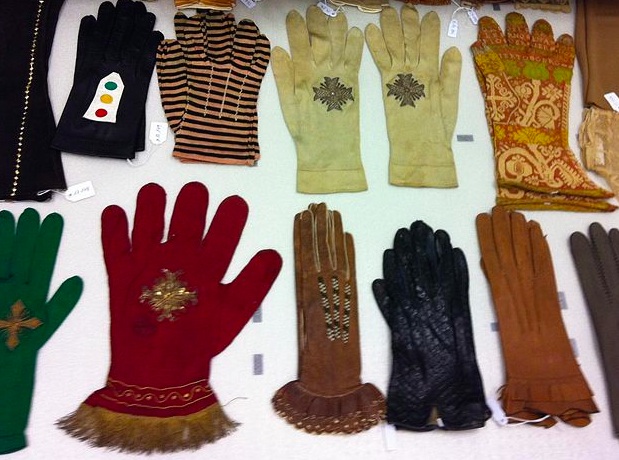
A pair of mittens – 1838

Monmouthshire Merlin 17th March, 1838

Centre de Documentació Museu Tèxtil de Terrassa Photo: Kippelboy  Wikimedia Commons
Centre de Documentació Museu Tèxtil de Terrassa
Photo: Kippelboy
Wikimedia Commons

At the late assizes for Clare a man was indicted for stealing a pair of woollen mittens: he pleaded guilty. The learned judge (Perrin) sent for the magistrate by whom the man had been committed for trial, and demanded why a person charged for so trivial an offence had been detained in prison from November last until this time without being brought to trial.

It was stated in explanation that no Crown business had been brought forward at quarter sessions during the interval between those two periods. Judge Perrin observed that this might be a sufficient excuse but declared his determination not to try any case of a similar nature which might have been tried at a previous quarter sessions. He would object, however, to discharge the jail of prisoners charged with trifling offences, provided no session of the peace should have intervened between their committal and the time of the assizes.

Posted in Posts and podcasts

A singular occurrence – Galway – 1835

Welshman 2nd October 1835.

Photo: EO'D
Photo: EO’D

In 1830 a lady came to reside in Galway bringing with her a very interesting daughter about eight years of age. The husband of the lady had deserted her, and no tidings of him could be had. Whilst in Galway she married again, and died in childbed of her first child by the second marriage.
Upon coming to Galway she was engaged by a most respectable lady in town to give lessons to her children, and the lady was so struck with the child of the visiting governess that she took it into her house and generously afforded her a home. All this time the poor child knew nothing of her father; she supposed him to be dead, and the second husband of the mother had left the town.
Suddenly and quite unexpectedly, a great change came across the views of the doubly orphaned object of the benevolent lady’s care. A few days ago the first husband of the visiting governess – the child’s father – who was considered dead, arrived in Galway from India, with a considerable sum of money, the fruit of his industry. He inquired for his wife and found that she had been the wife of another, and had gone to the grave.
He then inquired for his child. He discovered her abode and claimed her as his own. The lady, beneath whose roof she had been nurtured, was most anxious to retain her, but the returned parent could not be prevailed upon, and after pouring out his grateful acknowledgments to the humane lady who had been a mother to the reputed orphan, he left with his young charge for the county of Cavan.