Posted in Posts and podcasts

Kinvara – 1909

Connacht Tribune 13th November, 1909 p7

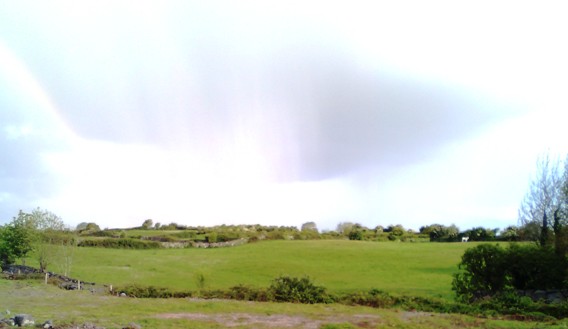
The Green Road, Kinvara Photo: EO'D
The Green Road, Kinvara
Photo: EO’D

A large and enthusiastic meeting of the people of Kinvara was held on Sunday last under the presidency of Rev. Thomas Burke P.P, for the purpose of forming a branch of the Town Tenants League. The following were amongst those present;
Messrs Arthur O’Dea
Thomas O’Halloran
Patrick J Flatley
Bartley Bermingham
William R Flatley
Thomas Green (hotel)
Fred. J. Johnston
Michael Corless
Augustus Johnston
Thomas Leetch
James Davenport
John McMahon
Patrick Winkle
Edward Holland
John Fahy
Patrick Whelan
ThomasMoran
Michael Howard
Thos P. Corless

Correspondence was submitted from J Coghlan Briscoe Esq. T.C. Secretary Town Tenants Exec., Dublin after which a working committee and officers were elected as follows;
President; Rev. Thomas Burke P.P.
Chairman;Thomas P Corless D.C.
Hon Treas; Thomas O’Halloran
Hon Sec; Arthur O’Dea
Committee;
Augustus Johnston
Michael Corless
Michael Connolly
Patrick Flatley
Thomas Green
William R Flatley
Fred J Johnston
Edward Holland
Bartley Bermingham

Representative on Central Executive – Thos P. Corless D.C.
Representative on County Committee Thomas Green and Thomas P. Corless

A sum of £3 was forwarded to the Town Tenants Executive as affiliation fee. The next meeting of the branch will be held on Sunday November 14th and the first Sunday in each month afterwards. Rev Father Burke P.P has written to Messrs Kirwan, Tuam, agents on the Sharpe estate demanding a reduction of 50 per cent on all rents now due. The tenants are determined to pay no rent until their just demand is conceded. The Kinvara town tenants are the most rack-rented in the west and have not been allowed any abatement in their rent since the present owners purchased the property, notwithstanding the way the trade of the town has fallen and the wretched condition of the houses.

Posted in Posts and podcasts

1824

Hobart Town Gazette and Van Diemen’s Land Advertiser 3rd September, 1824 p.2

Fado
Photo: EO’D

The attention of the English capitalists has at length been drawn to Ireland. A company has been for some time forming under the auspices of the leading Irish houses, for working collieries and mines in that country, which has been ascertained to abound in coal and minerals. The undertaking is warmly seconded by the most distinguished of the nobility and gentry connected with Ireland, as also by the principal London companies holding large landed property in the island. From the progress already made, there is every prospect of a favourable result. The bill for incorporating the company is to be read a second time in the house this evening. (March 12).

Posted in Posts and podcasts

A dangerous Dáil – 1919

The Catholic Press 4th December, 1919 p.20. (abridged)

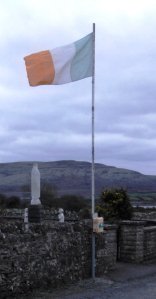
Flag1
Photo: EO’D

In a supplement of the “Dublin Gazette” the Lord Lieutenant and Privy Council of Ireland, declared that the association known as Dáil Éireann, appears to them to be a dangerous association. It was formed and first employed for all the purposes of the associations known as the Sinn Féin organisation, Sinn Féin clubs, the Irish Volunteers and Cumann na mBan.   The order to prohibit and supress it within the 32 counties and six county boroughs of Ireland was signed by the Chief Secretary and General Sir Frederick Shaw, Commander-in-Chief of the forces in Ireland.

Posted in Posts and podcasts

Beannachtaí na Cásca oraibh

PENTAX Image
Kinvara                                                                                          Photo: EO’D
Posted in Posts and podcasts

Oughtmama

Connacht Tribune 20th August, 1966 page 19

oughtmama
Oughtmama churches Photo: Dr Charles Nelson Wikimedia commons

Oughtmama is situated about a mile to the south east of Corcomroe Abbey. The name “Oughtmama” (“Ucht Mama” in Irish) means “the breast of an elevated pass.”
The Litany of Aengus mentions seven bishops of Oughtmama and the Leabhar Breac refers to thee saints of Oughtmama named Colman. St Colman MacDuach, who lived in the seventh century resided, for a time according to tradition at the base of Ceanaille, not far from Oughtmama, before he founded Kilmacduagh. Sometime before his death he resigned the bishopric of Kilmacduagh and retired to Burren, of which Oughtmama forms part. He is probably the founder of the first church erected there, first because there is a well in Oughtmama (now dry) called Iobar Colemain, secondly because a pattern is held in Oughtmama on 5th of November in honour of St Colman; thirdly because of St Colman’s connection with the Burren and; fourthly because no other saint’s name is connected with Oughtmama. It is said that St Colman died in Oughtmama but that he was buried in Kilmacduagh.

In Oughtmama there are remains of three churches standing nearly in a line. The most western church is 46 ft 6 in in length and 22 ft 6 in in breadth, clear of walls which are 2 ft 9 and 1/2 in thick. Its stones are carefully dressed and fitted but not laid in courses; and some of them are of great size. Its doorway is in the west gable and has inclined jambs which are surmounted by a stone lintel. In its south wall there are two windows, the heads of which are semicircular and splay on the inside. In the southwest corner there is a font on which are carved two animals with necks intertwined. To the east of the church there was a chancel 21 feet by 17 feet. The chancel arch is a plain semicircular opening ten feet wide. In the chancel there are several tombs of early date, on of which is supposed to have a fragmentary Irish inscription.

Near and to the east of the church is another church 23 ft 10 in long and 14 ft 6 in broad, clear of walls which are 2 ft 6 in thick. The stones of this church are large, generally splayed and well fitted. The doorway is in the west end its jambs incline towards the top and its head is semicircular. Its only window is in the east gable and splays, being only six inches wide on the outside while it is four feet wide on the inside.

About forty yards to the east of the latter church are the remains of another church. The remains consist of the east gable and slight traces of the foundation. The gable has a window similar to the windows of the other churches.

There are foundations of small quadrangular stone houses immediately to the east of the churches. These houses are or were called in Irish “Seanbhaile Ochtmama” (Oughtmama Old Town). About a quarter of a mile to the northeast of the churches on the slope of the mountain is Tobar Colmain. This well is now dry and in its place there is a heap of stones in the centre of which grows a whitethorn bush.
“The stream flowing from this well was once conducted,” says O’Donovan “through an artificial channel in the direction of the churches and at a short distance to the west of them it turned a mill, the site of which is still pointed out.”
There is another well a short distance lower on the slope of the hill than tobar colmain. From this well a stream flowed which is or was called Sruthan na naomh (the rivulet of the saints)
There seems, therefore, to have been a monastery once at Oughtmama resembling Clonmacnoise and other ancient Irish monasteries.

Posted in Posts and podcasts

April 25th, 1916

The Daily Gate City and constitution – Democrat April 25th, 1916
By J.W.T. Mason, Written for the United Press
New York – April 25, p.1

WELL ORGANISED IRISH MUTINY
There can no longer be any doubt but that a grave situation of rebellion now exists in Ireland.The frustration of Sir Roger Casement’s efforts at gun running, has been only partly successful and it is practically certain that his expedition landed munitions on the Irish coast before the British naval forces intervene. More disquieting than Casement’s exploit, for the British government, is the fact that a well organized movement was ready in Ireland to make instant use of the arms imported from Germany. The “grave riots” announced in the house of commons this afternoon, are undoubtedly the work of pro-German agitators in Ireland whose propaganda the Dublin castle authorities have been unable to put down.
For many months there have been indications that a irreconcilable part of Ireland’s population has been preparing for a seditious uprising. The difficult of getting proper war equipment has been very great, owing to the stringent regulations of the British government. The Casement expedition provided for the first time sufficient munitions to influence the Irish leaders into ordering an uprising.
It is highly probable that the Germans ordered today’s naval raid on the British coast for the purpose of encouraging the Irish and throwing the British government into added confusion. How sweeping may become the Irish rebellion depends largely on the quantity of munitions that Sir Roger Casement was able to get ashore. The British government’s announcement that Casement’s operations covered two days and that only one vessel was employed, suggests only a limited amount of material was landed. When this is expended, it is difficult to determine where other important supplies can be obtained unless the troops quartered in Ireland mutiny. The most advantageous consequence of the Irish uprising for Germany will probably be the permanent detention with Great Britain of large bodies of troops that otherwise would be sent to the France-Belgium front.

SCENE OF FIGHTING IN DUBLIN