REVENUE SEIZURES
From the 5th ult to the 5th inst, those active and enterprising Officers of
Excise, Messrs. THOMAS and GLYNN, accompanied by Lieut GRAVES, and the
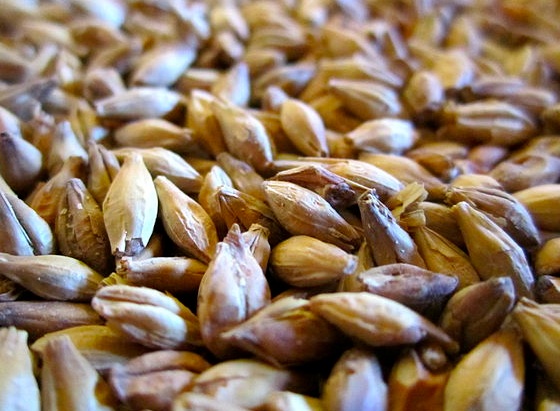
detachment of the 3d Revenue Corps stationed at Gort, seized six copper
stills, still heads and worms; twenty gallons of spirits; 47 barrels of
malt; and destroyed 21 illicit distilleries, with 54 fermenting vessels,
containing 1680 gallons of pot-ale and singlings, and arrested nine persons
found in illicit distilleries and malt houses.
The Brisbane Courier 11th December, 1869 (abridged)
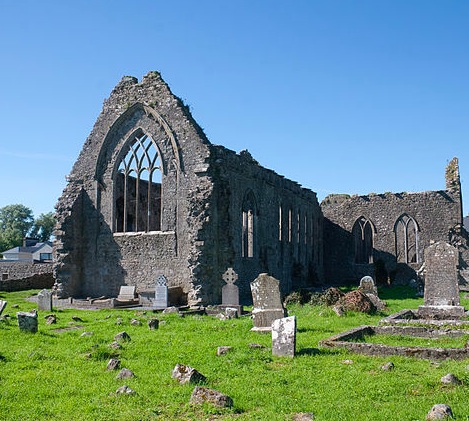
Athenry Priory Photo: Andreas F. Borchert Wikimedia Commons
The trial of the man for shooting at Captain Lambert near Athenry, on the 12th of July, has ended very unsatisfactorily. The jury were not able to agree and he will have to be tried again. A large sum of money has been subscribed for the defence, and one of the jurors, who was understood to have been in favor of a conviction, was pelted by the mob. The window’s of the judges carriage, also, were broken by stones.
On the evening of the day of the attempted murder a young man was found apparently asleep in the train that runs from Galway to Dublin. In reply to the police, he said that he had got into the carriage at Galway, but two fellow passengers corrected him, and insisted it was at Athenry. Suspicion was aroused, and he was taken into custody.
He was then discovered to be the son of a tenant whom Captain Lambert had ejected, and a recently-discharged pistol was found in his possession. He had left London on the 11th of July, ” for a trip into the country,” as he told his landlady, and the pistol was traced to a shop in Tottenham Court Road, where he had bought it. In addition to this Captain Lambert positively swore that, he was the person who had fired at him, Yet the jury were unable to agree upon a verdict!
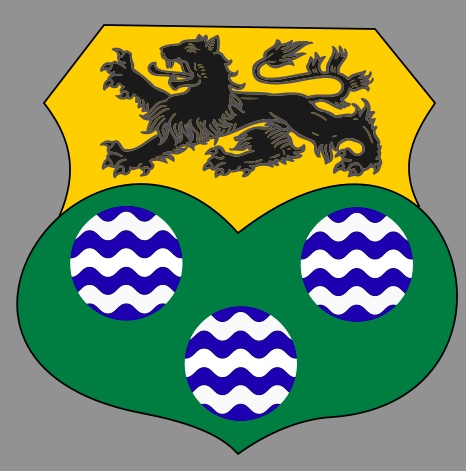
Leitrim Coat of Arms Kanchelskis Wikimedia Commons
On the evening of the landing of the immigrants by the Kapunda at Townsville, a grand scrimmage took place. Some unprincipled vagabonds broke into the single girls’ department about bedtime. The cries of the girls brought the gallant Galway and Leitrim boys to the rescue. They tackled the intruders and a regular fight was started. The police, who are far to few in number on an occasion of this kind, interfered. One got a black eye and another a torn jacket, and the result was that the depot was cleared and four delinquents marched to the lock-up. The most serious charge was against a man who bit off half the ear of one of the new chums. This cannibal is to be sentenced today.
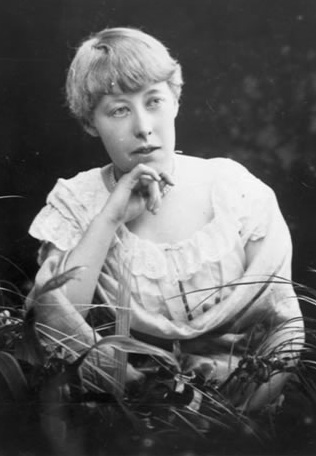
Katharine Tynan (23 January 1859 – 2 April 1931) Wikimedia Commons
from Collected poems of Katharine Tynan
MacMillan and Co., Ltd. London. 1930
As I go home at end of day, the old road,
Through the enchanted country full of my dreams,
By the dim hills, under the pellucid o’er-arching sky,
Home to the West, full of great clouds and the sunset,
Past the cattle that stand in rich grass to the knees,
It is not I who go home: it is not I.
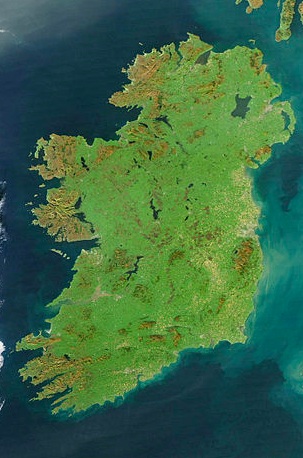
Ireland Jeff Schmaltz – NASA Earth Observatory. Wikimedia Commons
During the swearing in of a batch of Irish witnesses at the General Sessions yesterday to appear at the next Circuit Court it transpired that one of them, from County Clare, was ignorant of all languages but his native Erse.
An interpreter was obtained to make know to him the meaning of the recognisance.
On Thursday last about one in the morning, there was the most violent storm, and floods occasioned by it, that ever was known by any living, or ever heard of here.
It lasted till 9. The water rose so violently of a sudden, and to that height, that most of the cellars in the town were full of water, by which the Merchants, Vintners, Ale-sellers and other People suffered very much. The inhabitants of the suburbs of the town were forced to crawl naked from the inside to the tops of their cabins, whence some fell down being benumm’d and not able to hold longer. God knows what the losses in the country are.
It’s certain all the cattle and corn in the low lands near the Shannon are lost, as well as the corn and rape in stack as that in ground. Many houses in town and country were untiled, and some blown down; two ships that lay at the Key, taking in their lading, and one empty were got on the top of the Key; two are got off, but the third, a Dutch Ship of 80 Tons, lyes now just at Key Gate.
They are taking out her goods and breaking down the Key, in hopes to get her off. I hear the Queen Ann of London of 400 Tuns, from Jamaica, with Sugar, Indigo, etc. is put ashore at a place called Glinn, about 11 Leagues down the River. The Anna of Rotterdam, with Beef, Butter, Hides and Tallow, is driven ashore upon Fines Island, 8 Leagues down, and is 2 or 300 yards higher in the Fields than ever the Tide came before. It’s said the Queen Ann is not bulged but very far up, and buryed in the sand very deep. Our barge was bulged and sunk. The Watch-house and three other houses were blown down on the Key. Two of the garrison gates were blown to pieces. The magazines and guardhouses were almost quite unflated and unglazed, and the sentry boxes broken to pieces.
THE CONNAUGHT JOURNAL
16th December 16, 1824 (abridged)
In the year 1816, the Duke of Devonshire, the present noble proprietor of the ancient Castle of Lismore, in the County of Waterford, gave directions, that that venerable edifice should be repaired and restored to its pristine state and splendour. In pursuance of his Grace’s command, workmen were employed on the building; and, on taking down a wall that had been built in the place of a door; they discovered an ancient Manuscript Book, beautifully written in the Irish Character and Language, on vellum of the largest size.
Some parts of the beginning and latter end of the book were entirely decayed. There are also some leaves wanting in different places in the middle; and , in some other places, the mice have eaten away a part of the upper margin, which leaves a few lines defective on some of the pages. The folios of the book were originally numbered with Arabic figures. The last folio, now legible, is marked 293, which would, if the book were perfect, be equal to 473 pages. The number of the pages now remaining are only 260.
This precious relic of Irish genius contains a variety of Tracts, both curious and interesting. As it stands at present, it begins with the life of St. Patrick, which is followed by those of St. Columbhill, St. Brigid, St. Seanan, St. Finin, of Clonard, and St. Fionaches of Brigoone. These are followed by an account of the establishment of the festival of All Saints; a treatise on King David; the history of Charlemagne; the history of the Lombards; the history of Altrisson of Cashal; son of Fiongaine, King of Munster; Adventures and Wars of Callaghan of Cashel, King of Munster; History of Teigne; Historical Poem on Finin M’Carthy, the M’Carthy reign, the battle of Calonan, Story of Crimthan Cas, King of Connaught; the victory of Drom-dumhghoire; a long tract on Dispersion and Destruction of the Finian Host, or famous Irish Militia; and some other tracts of minor importance.
Saint Brigid’s cross Photo: Culnacreann Wikimedia Commons
The last named Tract is extremely curious, and is most interesting in the Irish Antiquity. It commences at the original folio 201, a sol. 1, now page 185, and continues to folio 239 or present page 260 where it is left imperfect by the loss of the concluding leaves of the book. It is carried on by way of dialogue between various persons; the principal speakers of whom are St. Patrick and Coolte Mac Ronan. The chief subjects treated of are, the unities of the Feal or Irish Militia, in which the great actions of Fionn Mac Cubball (Finn Mac-Coo-all), the Fingal of Mac-Pherian Ossian; Coll Mac-Moran, and his brother, Conan the bold; the Thereafter of the Irish Nisin; Desmond O’Dabhan, and other famous heroes are recited in the course of this Tract are introduced many popular tales of the Irish, and the origin of many ancient customs is accounted for; and, what is most important to the ancient Irish Topographer, the names of innumerable places remarkable in the History of Ireland, but the sites of which are almost totally unknown to the modern Historian, are given; together with the names by which they are called in latter times.
There is nothing in the book, that served to ascertain the period at which it was written, but it contains a poem in the M’Carthy rough, which helps to throw some light on the subject and shows that it could not be written earlier than the 15th century.
Sir Roger Casement National Library of Ireland Wikimedia Commons
Editors – Joseph Dunn, Ph.D; P.J. Lennox. Litt.D., (Professors at the Catholic University of America)
THE ROMANCE OF IRISH HISTORY – by Sir Roger Casement, C.M.G.
The history of Ireland remains to be written, for the purpose of Irishmen remains yet to be achieved.
The struggle for national realization, begun so many centuries ago, is not ended; and if the long story offers a so frequent record of failure, it offers a continuous appeal to the highest motives and a constant exhibition of a most pathetic patriotism linked with the sternest courage.
Irish wars, throughout all time, have been only against one enemy, the invader, and, ending so often in material disaster, they have conferred always a moral gain. Their memory uplifts the Irish heart; for no nation, no people, can reproach Ireland with having wronged them.
When, at the dawn of the Christian era, we first hear of Ireland from external sources, we learn of it as an island harboring free men, whose indomitable love of freedom was hateful to the spirit of imperial exploitation.
Agricola’s advice to the empire-builders of his day was that Rome should “war down and take possession of Ireland, so that freedom might be put out of sight.”
It was to meet this challenge of despotism that the Scotic clans of Alba turned to their motherland for help, and the sea was “white with the hurrying oars” of the men of Erin speeding to the call of their Highland kinsmen, threatened with imperial servitude.
The first external record we possess thus makes it clear that when the early Irish went forth to carry war abroad, it was not to impose their yoke on other peoples, or to found an empire, but to battle against the Empire of the World in the threatened cause they held so dear at home.
In this early Roman reference to Ireland we get the keynote to all later Irish history—a warring down on the one hand, so that freedom might be put out of sight; an eternal resistance, on the other, so that it might be upheld.
It was this struggle that Ireland sought to maintain against every form of attack, down through Danish, Norman, Tudor, Stuart, and Cromwellian assault, to the larger imperialism of the nineteenth century, when, as Thierry, the historian of the Norman Conquest, tells us, it still remained the one “lost cause” of history that refused to admit defeat. “This indomitable persistency, this faculty of preserving through centuries of misery the remembrance of lost liberty and of never despairing of a cause always defeated, always fatal to those who dared to defend it, is perhaps the strangest and noblest example ever given by any nation.”
Tower house near Quin, County Clare Photo: Zoney Wikimedia Commons
The resources Ireland opposed to her invaders have been unequal to the founding of a great state, but have preserved a great tradition. The weakness of Ireland lay in the absence of a central organization, a state machine that could mobilize the national resources to defend the national life. That life had to depend for its existence, under the stress of prolonged invasion, on the spontaneous patriotism and courage of individuals. At times one clan alone, or two clans, maintained the struggle. Arrayed against them were all the resources of a mighty realm—shipping, arms, munitions of war, gold, statecraft, a widespread and calculating diplomacy, the prestige of a great Sovereign and a famous Court—and the Irish clan and its chieftain, by the sheer courage of its members, by their bodily strength and hardihood and feats of daring, for years kept the issue in doubt.
When Hugh O’Neill, leagued with Red Hugh O’Donnell, challenged the might of Elizabeth, he had nothing to rely upon but the stout hearts and arms of the men of Tir-owen and Tir-Conail. Arms and armaments were far from Ulster. They could be procured only in Spain or elsewhere on the continent. English shipping held the sea; the English mint the coinage. The purse of England, compared to that of the Ulster princes, was inexhaustible. Yet for nine years the courage, the chivalry, the daring and skill of these northern clansmen, perhaps 20,000 men in all, held all the might of England at bay. Had the Spanish king at any time during the contest made good his promise to lend effective aid to the Irish princes, O’Neill would have driven Elizabeth from Ireland, and a sovereign State would today be the guardian of the freedom of the western seas for Europe and the world. It took “the best army in Europe” and a vast treasure, as Sir John Davies asserted, to conquer two Ulster clans three hundred years ago. The naked valor of the Irishman excelled the armed might of Tudor England; and the struggle that gave the empire of the seas to Britain was won not in the essay of battle, but in the assay of the mint.
It is this aspect of the Irish fight for freedom that dignifies an otherwise lost cause. Ever defeated, yet undefeated, a long-remembering race believes that these native qualities must in the end prevail. The battle has been from the first one of manhood against might. The State Papers, the official record of English rule in Ireland, leave us rarely in doubt. We read in that record that, where the appeal was to the strength or courage of the opposing men, the Irish had nothing to fear from English arms.
The Ulster aristocrats set sail from Rathmullan, on the shore of Lough Swilly
Thus the Earl of Essex, in a despatch to Elizabeth, explained the failure of his great expedition in 1599 against O’Neill and O’Donnell. “These rebels … have (though I do unwillingly confess it) better bodies and perfecter use of their arms than those men whom your Majesty sends over.” The flight of the Earls in 1607 left Ireland leaderless, with nothing but the bodies and hearts of the people to depend on. In 1613 we read, in the same records, a candid admission that, although the clan system had been destroyed and the great chiefs expropriated, converted, or driven to flight, the people still trusted to their own stout arms and fearless hearts:
“The next rebellion, whenever it shall happen, doth threaten more danger to the State than any heretofore, when the cities and walled towns were always faithful; (1) because they have the same bodies they ever had and therein they had and have advantage of us; (2) from infancy they have been and are exercised in the use of arms; (3) the realm by reason of the long peace was never so full of youths; (4) that they are better soldiers than heretofore their continental employment in wars abroad assures us, and they do conceive that their men are better than ours.”
And when that “next rebellion” came, the great uprising of the outraged race in 1641, what do we find? Back from the continent sails the nephew of the great O’Neill, who had left Ireland a little boy in the flight of the Earls, and the dispossessed clansmen, robbed of all but their strength of body and heart, gathered to the summons of Owen Roe.
Again it was the same issue: the courage and hardihood of the Irishman to set against the superior arms, equipment, and wealth of a united Britain. Irish valor won the battle; a great state organization won the campaign. England and Scotland combined to lay low a resurgent Ireland; and again the victory was not to the brave and skilled, but to the longer purse and the implacable mind. Perhaps the most vivid testimony to these innate qualities of the Irishman is to be found in a typically Irish challenge issued in the course of this ten years’ war from 1641 to 1651. The document has a lasting interest, for it displays not only the “better body” of the Irishman, but something of his better heart and chivalry of soul.
Flight of the Earls – by Willie Duffin Wikimedia Commons
One Parsons, an English settler in Ireland, had written to a friend to say, among other things, that the head of a colonel of an Irish regiment then in the field against the English would not be allowed to stick long on its shoulders. The letter was intercepted by the very regiment itself, and a captain in it, Felim O’Molloy, wrote back to Parsons:
“I will doe this, if you please. I will pick out 60 men and fight against 100 of your choise men, if you do but pitch your campe one mile out of your towne, and then, if you have the victory, you may threaten my colonel; otherwise do not reckon your chickens before they be hatched.”
It was this same spirit of daring, this innate belief in his own manhood, that for three hundred years made every Irishman the custodian of his country’s honor.
An Irish state had not been born; that battle had still to be fought; but the romantic effort to achieve it reveals ever an unstained record of personal courage. Freedom has not come to Ireland; it has been “warred down and kept out of sight”; but it has been kept in the Irish heart, from Brian Boru to Robert Emmet, by a long tale of blood shed always in the same cause. Freedom is kept alive in man’s blood only by the shedding of that blood. It was this they were seeking, those splendid “scorners of death”, the lads and young men of Mayo, who awaited with a fearless joy the advance of the English army fresh from the defeat of Humbert in 1798. Then, if ever, Irishmen might have run from a victorious and pitiless enemy, who having captured the French general and murdered, in cold blood, the hundreds of Killala peasants who were with his colors, were now come to Killala itself to wreak vengeance on the last stronghold of Irish rebellion.
The ill-led and half-armed peasants, the last Irishmen in Ireland to stand in open, pitched fight for their country’s freedom, went to meet the army of General Lake, as the Protestant bishop who saw them says, “running upon death with as little appearance of reflection or concern as if they were hastening to a show.”
The influences that begot this reverence for freedom lie in the island itself no less than in the remote ancestry of the people. Whoever looks upon Ireland cannot conceive it as the parent of any but freemen. Climate and soil here unite to tell man that brotherhood, and not domination, constitutes the only nobility for those who call this fair shore their motherland. The Irish struggle for liberty owes as much, perhaps, to the continuing influence of the same lakes and rivers and the same mountains as to the survival of any political fragments of the past. Irish history is inseparably the history of the land, rather than of a race; and in this it offers us a spectacle of a continuing national unity that long-continuing disaster has not been able wholly to efface or wholly to disrupt.
Celtic cross by Petr Vodicka Wikimedia Commons
To discover the Europe that existed before Rome we must turn to the East, Greece, and to the West, Ireland.
Ireland alone among western lands preserves the recorded tradition, the native history, the continuity of mind, and, until yesterday, of speech and song, that connect the half of Europe with its ancestral past. For early Europe was very largely Celtic Europe, and nowhere can we trace the continuous influence of Celtic culture and idealism, coming down to us from a remote past, save in Ireland only.
To understand the intellect of pre-Roman Gaul, of Spain, of Portugal, and largely of Germany, and even of Italy, we must go to Ireland. Whoever visits Spain or Portugal, to investigate the past of those countries, will find that the record stops where Rome began. Take England in further illustration. The first record the inhabitants of England have of the past of their island comes from Roman invasion. They know of Boadicea, of Cassivelaunus, the earliest figures in their history, from what a foreign destroyer tells them in an alien tongue.
All the early life of Celtiberians and Lusitanians has passed away from the record of human endeavor, save only where we find it recorded by the Italian invaders in their own speech, and in such terms as imperial exploitation ever prescribes for its own advancement and the belittlement of those it assails. Ireland alone among all western nations knows her own past, from the very dawn of history and before the romance of Romulus began, down to the present day, in the tongue of her own island people and in the light of her own native mind. Early Irish history is not the record of the clan-strivings of a petty and remote population, far from the centre of civilization. It is the authentic story of all western civilization before the warm solvent of Mediterranean blood and iron melted and moulded it into another and rigid shape.
The Irishman called O’Neill, O’Brien, O’Donnell, steps out of a past well-nigh co-eval with the heroisms and tragedies that uplifted Greece and laid Troy in ashes, and swept the Mediterranean with an Odyssey of romance that still gives its name to each chief island, cape, and promontory of the mother sea of Europe. Ireland, too, steps out of a story just as old. Well nigh every hill or mountain, every lake or river, bears the name today it bore a thousand, two thousand, years ago, and one recording some dramatic human or semi-divine event.
The songs of the Munster and Connacht poets of the eighteenth and nineteenth centuries gave to every cottage in the land the ownership as well as the tale of an heroic ancestry. They linked the Ireland of yesterday with the Ireland of Finn and Oscar, of Diarmid and Grainne, of Deirdre and the Sons of Usnech, of Cuchulainn the Hound of Ulster. A people bred on such soul-stirring tales as these, linked by a language “the most expressive of any spoken on earth” in thought and verse and song with the very dawn of their history, wherein there moved, as familiar figures, men with the attributes of gods—great in battle, grand in danger, strong in loving, vehement in death—such a people could never be vulgar, could never be mean, but must repeat, in their own time and in their own manhood, actions and efforts thus ascribed as a vital part of their very origin. Hence the inspiration that gave the name of Fenian, in the late nineteenth century, to a band of men who sought to achieve by arms the freedom of Ireland. The law of the Fenian of the days of Marcus Aurelius was the law of the Fenian in the reign of Victoria—to give all—mind, body, and strength of purpose—to the defense of his country, “to speak truth and harbor no greed in his heart.”
Some there are who may deny to Finn and his Fenians of the second and third centuries corporeal existence; yet nothing is surer than that Ireland claims these ancestral embodiments of an heroic tradition by a far surer title of native record than gives to the Germans Arminius, to the Gauls, Ariovistus, to the British, Caractacus. This conception of a national life, one with the land itself, was very clear to the ancient Irish, just as it has been and is the foundation of all later national effort.
Fenian Flag 1867 by ArnoldPlaton Wikimedia Commons
“If ever the idea of nationality becomes the subject of a thorough and honest study, it will be seen that among all the peoples of antiquity, not excluding the Hellenes and the Hebrews, the Irish held the clearest and most conscious and constant grasp of that idea; and that their political divisions, instead of disproving the existence of the idea, in their case intensely strengthen the proof of its existence and emphasize its power.
In the same way the remarkable absence of insular exclusiveness, notwithstanding their geographical position, serves to bring their sense of nationality into higher relief.
Though pride of race is evident in the dominant Gaelic stock, their national sentiment centres not in the race, but altogether in the country, which is constantly personified and made the object of a sort of cult.
It is worth noting that just as the Brehon Laws are the laws of Ireland without distinction of province or district; as the language of Irish literature is the language of Ireland without distinction of dialects; as the Dindshenchus contains the topographical legends of all parts of Ireland, and the Festilogies commemorate the saints of all Ireland; so the Irish chronicles from first to last are histories of the Irish nation. The true view of the Book of Invasions is that it is the epic of Irish Nationality.” (Professor Eoin MacNeill, in a letter to Mrs. A.S. Green, January, 1914.)
The “Book of Invasions”, which Professor MacNeill here speaks of, was compiled a thousand years ago. To write the history of later Ireland is merely to prolong the “Book of Invasions”, and thus bring the epic of Irish resistance down to our own day. All Irish valor and chivalry, whether of soul or of body, have been directed for a thousand years to this same end. It was for this that Sarsfield died at Landen no less than Brian at Clontarf. The monarch of Ireland at the head of a great Irish army driving back the leagued invaders from the shores of Dublin Bay in 1014, and the exiled leader in 1693, heading the charge that routed King William’s cause in the Netherlands, fell on one and the same battlefield. They fought against the invader of Ireland.
We are proudly told that the sun never sets on the British Empire. Wherever an Irishman has fought in the name of Ireland it has not been to acquire fortune, land, or fame, but to give all, even life itself, not to found an empire, but to strike a blow for an ancient land and assert the cause of a swordless people. Wherever Irishmen have gone, in exile or in fight, they have carried this image of Ireland with them. The cause of Ireland has found a hundred fields of foreign fame, where the dying Irishman might murmur with Sarsfield, “Would that this blood were shed for Ireland”, and history records the sacrifice as made in no other cause.
Ireland, too, owns an empire on which the sun never sets.
REFERENCES:
Sigerson: Bards of the Gael and Gall; O’Callaghan: History of the Irish Brigades; Mitchel: Life of Hugh O’Neill; Green: The Making of Ireland and its Undoing, Irish Nationality, The Old Irish World; Taylor: Life of Owen Roe O’Neill; Todhunter: Life of Patrick Sarsfield; Hyde: Love Songs of Connacht, Religious Songs of Connacht; O’Grady: Bog of Stars, Flight of the Eagle; Ferguson: Hibernian Nights’ Entertainment; Mitchel: History of Ireland, in continuation of MacGeoghegan’s History.