Posted in Posts and podcasts

Where angels listen – 1917

Meath Chronicle 14th April, 1917 p.4

Mu
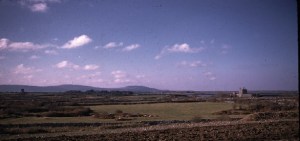
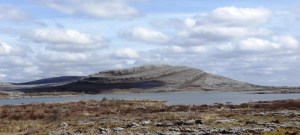
Mullaghmore Photo: EO’D

He will not come, and still I wait.
He whistles at another gate
Where angels listen. Ah I know
He will not come, yet if I go
How shall I know he did not pass
barefooted in the flowery grass?

The moon leans on one silver horn
Above the silhouettes of morn,
And from their nest-sills finches whistle
Or stooping pluck the downy thistle.
How is the morn so gay and fair
Without his whistling in its air?
The world is calling, I must go.
How shall I know he did not pass
Barefooted in the shining grass?
A Little Boy In The Morning – Francis Ledwidge

Posted in Posts and podcasts

Ailwee – 1925

Irish Independent 19th October, 1925 p.2 (abridged)

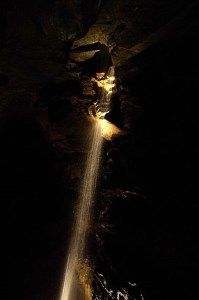
Waterfall
Waterfall, Ailwee Caves Photo: Marvin Vells Wikimedia Commons

 
Latest details of the important mineral discovery in Clare disclose that phosphate was first found in lead by Mr.Comyn about 8 years ago, in the old silver mine at Ailwee, Burren.  After extensive prospecting work the phosphate bed was located between two layers of shale on the same ridge of hills which contained the Ailwee mine.  The bed extended originally as far as the line near the Galway border but half of it has been scraped away by glacial action.

Mr. Comyn has acquired the mining rights and has opened the mines. Pending the arrival of machinery to crush the rock, the powdered phosphate on the margin is worked. At the invitation of Mr. Comyn the Department sent an eminent geologist, Mr. Farrington, to examine the deposit.  The Department points out that the report of the interview with reference to the discovery in Saturday’s “Irish Independent” is inaccurate as far as the allusion to mining rights is concerned, as no reference to this subject was made.

Posted in Posts and podcasts

Kinvara – 1987

Connacht Tribune 25th December, 1987 p6 (abridged)

Kinvara
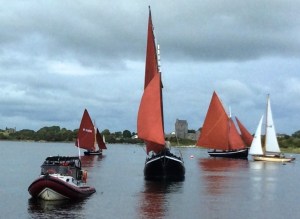
Cruinniu na mBad, Kinvara Photo: EO’D

BBC (Bristol) have been in touch with the committee of Kinvara’s Cruinniú na mBád concerning the making of another film of that colourful traditional boat festival. Last autumn the BBC showed a half-hour long film made during the 1986 Cruinniú and their audience research revealed a very positive reaction.
The tenth Cruinniú to be held in August 1988 will not, as in previous years, be held early in the month. The reason for that is that the times for high-tide at the weekends in early August are particularly inconvenient for the traditional format of the three day event. Therefore, the committee had no option but to put it back to the last weekend of the month.

Posted in Posts and podcasts

Kinvara – 1848

Papers relating to proceedings for relief of distress, and state of unions and workhouses in Ireland, 1848

cresswell archive
Photo: Cresswell Archives

Sessional Papers 1847-1848 HMSO
Dippam.ac.uk
(abridged)
P.928
Along the shores of the bay of Kinvarra and bay of Galway, which form a portion of the boundary of the electoral divisions of Kinvarra and Killeenavarra, reside a considerable number of persons, some with and some without land, who have heretofore supported themselves by fishing, and by the sale of sea weed for the purpose of manure. The failure of the potato crop in 1845 and 1846 by its discouragement to the planting of potatoes, completely paralysed the operations of the latter, who are now in a most abject state.
The only portion of the population remaining to be noticed is that which comprises the miscellaneous class of pedlars, hucksters, small dealers in fruit or vegetables, and mendicants, all of whom are affected by the general poverty of the district and are mostly in a destitute state.
As regards the prospects of the Union for the ensuing harvest, we have learned that a considerable quantity of wheat has been put down by the larger farmers, but it is certain there will not be anything approaching to the breadth of corn of the past year. On the other hand, it would appear from the reports of the relieving officers, and from personal observation, that the general success of the potato crop in 1847 has encouraged the larger holders of land to make arrangements for planting in a greater quantity in the spring. Many, however, of the smaller farmers will, we fear, be unable to set any, in consequence of the scarcity and high price of seed, added to their inability to purchase manure, and it is therefore to be apprehended that a much greater quantity of land will remain uncultivated this year than last. In former years most of the labouring population had potatoes in con-acre, but their impoverished conditions now renders them incapable of making any preparations for having a crop in the present season. Even if they were able to procure seed and manure, they have no means of support while engaged in their cultivation.
The amount of agricultural employment at present is very trifling, and we regret to say that after making the most minute inquiries we have no reason to hope that the demand for labour will be much increased for a considerable period.
p 930
In common with many other parts of Ireland, in the spring and summer of the past year, the Gort Union was affected with fever and dysentery; and as there was no permanent fever hospital in the Union, no effective mode of relieving poor persons suffering from these diseases was in existence. …The Relief Committee for the electoral divisions of Kinvarra and Killeenavarra were authorized and directed to provide hospital accommodation and other means of relief for the sick poor. In pursuance of such instructions the former Committee fitted up a building near Kinvarra for the purpose of an hospital to contain 50 patients; the latter, however, through a mistaken idea of economy, declined to fit up a separate institution, but with the consent of the late Board of Guardians, adopted the workhouse hospital as the fever hospital of their district, in direct violation of the express provisions of the statues, and sent all their patients thither. By this course of proceeding the (Gort) workhouse became the reservoir of contagion for the entire Union, except Kinvarra and Killeenavarra, and their hospital speedily filled.

p.923
At Kinvarra, a most impoverished district, in which fever prevails to an alarming extent, we propose to erect sheds to accomodate 100 patients, retaining the building now used as a temporary hospital for the purpose of convalescent ward after providing therein a room for the medical officer, a kitchen, washhouse and store-room.
By these arrangements, if sanctioned by the Commissioners, we hope we may be able to provide for the more destitute portion of the sick poor in this Union. If, however, the increase of contagious disease should require further accommodation, we shall be prepared to suggest the erection of temporary hospitals in other parts of the Union or the extension of those now proposed, as may seem most expedient.

Posted in Posts and podcasts

Kinvara – 1934

Connacht Tribune 5th May, 1934 p.11

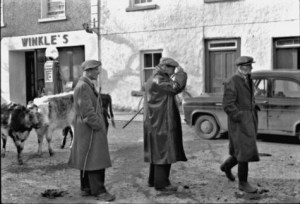
Winkles

At a meeting of the tenants of the Sharpe estate, Kinvara, a letter was read from the solicitor to the estate, offering on behalf of the trustees, a reduction of 15 per cent on the current rents in addition to 15 per cent temporary abatement allowed 25 years ago and now made permanent. This was an advance of 5 per cent on the trustee’s previous offer.
In the matter of the arrears the letter stated these must be left in abeyance as the acting trustee had not the power to cancel them. A motion was brought forward that the trustees’ offer be accepted as the tenants were not in a position to hold out for more favourable terms. After much discussion the motion was agreed.

Posted in Posts and podcasts

Kinvara – 1936

Irish Press 27th August, 1936 p.9 (abridged)

Kinvara Quay
Kinvara Quay Photo: EO’D

When a six years old boy fell into the sea at Kinvara, Mr P. Green, a fisherman, raised the alarm. Mr John Holland, who lives on the quayside,  dashed from his house and dived into the water, which was 10 feet deep at the time.
With the aid of a lifebuoy, thrown by Mr Green, Mr Holland brought the boy ashore.

This is the second life save there by Mr Holland.

Posted in Posts and podcasts

The Claddagh Boatman – 1900

Supplement to the Cork Examiner 2nd April, 1900

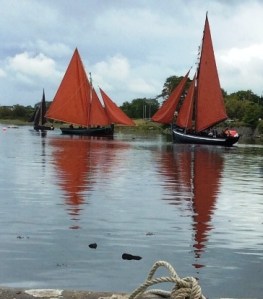
Galway Hookers at Kinvara
Galway Hookers at Kinvara Photo: EO’D

The Claddagh Boatman

I am a Claddagh boatman bold,
And humble is my calling;
From morn to night, from dark to light,
In Galway Bay I’m trawling;
I care not for the great man’s frown,
I ask not for his pity;
My wants are few, my heart is true;
I sing a boatman’s ditty.

I have a fair and gentle wife,
Her name is Eily Holway;
With many a wile, and joke, and smile,
I won the pride of Galway.
For twenty years, ‘mid hope and fears,
With her I’ve faithful tarried;
Her heart to-night is young and light
As when we first were married.

I have a son, a gallant boy,
Unstained by spot or speckle;
He pulls and hawls,and mends the trawls,
And mind the other tackle.
His mother says the boy, like me,
Loves truth, and hates all blarney;
The neighbours swear in Galway Bay
There’s not the like of Barney.

Thank God, I have another child,
Like Eily, lithe and slender.
She clasps my knee and kisses me
With love so true and tender.
Though ‘oft will rage the howling blast
That threatens men with slaughter,
I ne’er complain of wind or rain
While I’ve my little daughter.

When Sunday brings the hour of rest,
That sweet reward of labours,
We cross the fields to early Mass,
And walk home with the neighbours.
Oh! would the rest of Erin’s sons
Were but like us united;
To swear I’m loath, but, by my oath.
Her name should not be slighted.

Jeremiah J. Dowling, M.D.

Posted in Posts and podcasts

The Claddagh – 1848

Irish Examiner 17th July, 1848 p3

claddagh
The Claddagh Photo: Joe Desbonnet Wikimedia Commons

That singular body of men, the Claddagh fishermen, have signified their approval of the Royal Irish Fishery Company, and are ready to work for them, thus increasing the number of men who will be employed by the company from the Killeries to the Kenmare River to upwards of 8,100. The oldest fisherman of Dingle: Flaherty, who has been latterly employed as pilot on board of her majesty’s Steam Frigates on the West Coast, and in that capacity surveyed the new fishing bank on board of the Rhadamanthus, has taken shares in the company.

Posted in Posts and podcasts

If I were a billionaire – 1905

Supplement to the Cork Examiner 19th November, 1905

flower
Photo: EO’D

What should I do if the world were mine?
Mine with its treasures of silver and gold;
Lands untrodden and wealth untold;
What should I do if the world were mine?

Before the fire in my old arm-chair
I sit in silence and build alone
Castles fairer than castles of stone,
Castles built in enchanted air.

Friends so many and poor have I,
Friends so many and wants so few;
George, there would be a wife for you,
Whom all the world of wealth can’t buy.

A house I would build for you and Kate,
A house as never before was seen;
And I would dance at the wedding, I ween,
If I came into my worldy estate.

And you should be married to Mary, Jack!
Aye lad, with the cares of a weary man!
And from the hour when my power began,
Trust me, I’d never let you look back.

Husband hard working, and plucky wife,
Frank and Alice, ’tis little, indeed,
That love in a cottage as yours may need-
As you merrily sip the sweets of life.

But there should be store for a rainy day;
And never a battle dull care should win,
Or settle a guest your home within,
For peace at your hearth should dwell always.

And you, friend Tom, of them all the best,
Roughest of speech and softest of heart,
Whose kindliness poorly pays its part
In garb of wordly wisdom dressed.

For you nor plate, nor power, nor poll
Avails to turn one thought aside;
For you the world is not too wide
For you there is no such thing as self.

Together we two should go forth and seek
What haply our new-born power might do,
To succour the many and the few,
To curb the strong and defend the weak.

Dreams we together have dreamt ere now;
Dreams of a great and glorious name,
Plans to be sealed with the kiss of fame,
The parsley wreath for guerdon now.

So draw close up to the fire your chair,
And again let us dream of truth alone,
Castles that might be castles of stone,
If one of us were a Billionaire!

S.K, in Irish Monthly.

Posted in Posts and podcasts

Dublin – Galway – Oranmore – 1927

Connacht Tribune 21st May, 1927 p.14

bristol
Bristol F.2B D-8096 (The Shuttleworth Trust) Kogo;Wikimedia Commons

Three Bristol fighter aeroplanes left Dublin at 5.20 p.m. yesterday and flew to Galway, landing at Oranmore aerodrome exactly one hour and ten minutes after their start, having, in addition, encircled Galway Bay and the City. They were in charge of Col. Fitzmaurice and carried a staff photographer. A detachment of men from Renmore guarded the ‘planes last night.