
The World’s News 24th August, 1932
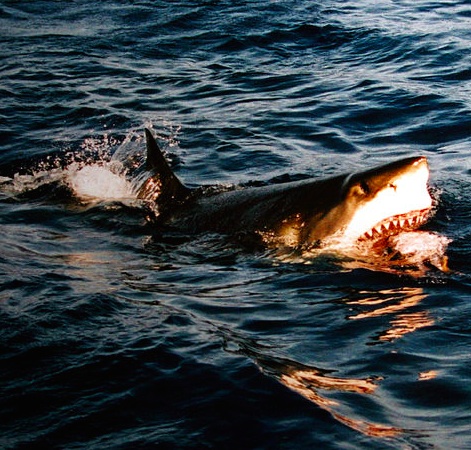
A shark, which the Cunard liner Samaria struck when 150 miles from Galway on her voyage from New York, was removed from the vessel’s bow when she arrived in Galway.
The World’s News 24th August, 1932
A shark, which the Cunard liner Samaria struck when 150 miles from Galway on her voyage from New York, was removed from the vessel’s bow when she arrived in Galway.
South Australian Register 22nd September, 1851 p3
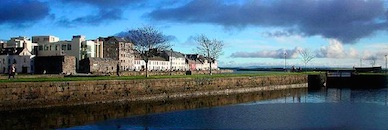
Bright days seem to be in store for Ireland. The Midland Great Western Railway Company were making strenuous efforts to complete the works on their line to Galway. The rails had been laid down on the whole line, with the exception of a few miles, and there was no doubt but that they would have the line ready for traffic in a few weeks.
In the West of Ireland the most confident hopes were entertained that an American steamer would shortly appear in the Bay of Galway to test the advantages of that port for mail communication between America and Europe. These sanguine expectations were by no means unfounded. The Freeman stated that letters had been received in Dublin, announcing that the North America, a United States steamer of great power and marvellous speed, had been chartered to start on the 17th June from New York for Galway with passengers, and that she might be expected to appear off the west coast of Ireland about the 25th June. It would, therefore, appear that American enterprise had determined to settle a point which many English and certain Irish interests had pronounced dubious. The Belfast Chamber of Commerce, with a generous candour which will do that Chamber immortal honour, had presented a memorial to the British Government in favour of Galway.

The Spectator 24th May, 1845 P9
The Roman Catholic Bishops met in Dublin on Wednesday, and took into consideration the Government bill for academical education.
It is understood that they object to the bill, because it does not place the religion and conduct of the pupils under the control of their religions instructors. The final decision, as well as the meeting, was adjourned till Friday.
A public meeting for the town and county of Galway was held last week, to petition the Queen in favour of placing in that town (rather than in Cork) the intended Western College for the province of Connaught. The measure was generally approved by those present, both lay and clerical; but some guarantee for the moral and religious charge of the teachers was desiderated. The petition, however, was adopted by a large majority. Belfast and Derry are also con- tending, for the Northern College.

Kentucky Irish American 23rd July, 1898 p7
Major Wilson Lynch of Galway has been evicting his unfortunate tenants at Aughinish, on the south side of Galway Bay. He has dispossessed Michael Costello, his wife and many little delicate children. The wife had a doctor’s certificate testifying to the danger of removing her, but out she had to go. Costello has paid over and over again the fee simple purchase money of his dwelling.
New Ulm Review 17th August, 1898 p6
THE BROWN WIND OF CONNAUGHT
The brown wind of Connaught
Across the bogland blown
(The brown wind of Connaught)
Turns my heart to stone,
For it cries my name at twilight
And cries it at the noon
“Oh Mairgread Ban! Oh Marigread Ban!”
Just like a fairy tune.
The brown wind of Connaught
When Dermot came to woo
(The brown wind of Connaught),
It heard his whispers, too,
And while my wheel goes whirring
It taps on my window pane
Till I open wide to the dead outside
And the sea salt misty rain.
The brown wind of Connaught
With women wailed one day
(The brown wind of Connaught)
For a wreck in Galway Bay,
And many the dark faced fishers,
That gathered their nets in fear,
But one sank straight to the ghostly gate,
And he was my Dermot dear.
Shan Van Vocht

Freeman’s Journal 21st November, 1850 p3
The Washington Monument.
This grand memorial originated as follows.
In 1783 Congress resolved to erect an equestrian statue to Washington. In 1804, after his death, the subject was again broached, but nothing was done. In 1833 the Washington National Monument Society was organized with Chief Justice Marshall at its head, and measures were taken to collect the necessary funds.
During seven years, however, only 30,000 dollars were obtained, and still nothing was done. In 1847 new measures were taken, new men and leaders arose: the collection reached 80,000 dollars, and the corner-stone was laid on the 4th July, 1848.
The idea is an obelisk 55 feet square at the base, and 600 feet high. This will exceed in height any steeple or monument in the world. From a thickness of 15 feet the wall diminishes to 30 inches leaving an open space of 25 feet square. The top is to be reached by flights of iron steps at the four sides; and the hand rail, being hollow, will serve as a conductor of gas, so that the whole of this prodigious cavern will be rendered as light as day.
The work is rapidly progressing, and the funds are coming in steadily. Agents are canvassing the country in every direction. No country has ever presented a similar spectacle when all classes so unceasingly united to do honour to one man. It will be truly a national work and worthy of the American people. — Illustrated News.
================
Kentucky Irish American, 22nd June, 1901 p1
A very successful meeting was held at Tierneevan, near Gort, County Galway on Sunday, for the purpose of establishing a branch of the United Irish League.
In the absence of the Rev. Father Sweeny the chair was taken by John Quinn. The Chairman briefly and clearly explained the objects of the meeting, and said that it was gratifying to see the people of the parish supporting the cause of the United Irish League. W. J. Duffy, M.P. and James Lynham, who were received with loud cheers, addressed the meeting. A branch of the United Irish League was then formed and over eighty members enrolled. D. F. Burke was the first to set the example by giving a generous subscription. John Quinn was appointed President; Martin Nestor Treasurer and Michael Mitchell Secretary.
South Australian 23rd October, 1849 p4
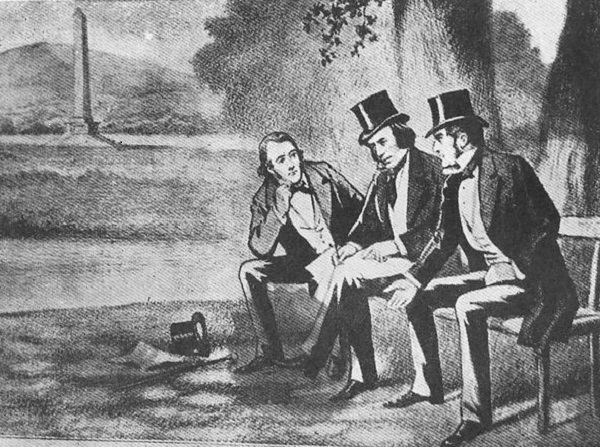
CURIOUS FACTS RELATIVE TO SATURDAY (abridged)
State Prisoners
On a review of the past fourteen months, the following extraordinary facts will be observed in reference to the state prisoners and the sixth day of the week:
On a Saturday John Mitchell was arrested, on Saturday he was found guilty, on Saturday he was sentenced to transportation, and on Saturday that sentence was carried into effect.
On a Saturday Charles G. Duffy was arrested. On a Saturday, after several months imprisonment, Mr Duffy was discharged from jail.
Mr John Martin and Kevin Izod O’Dogherty were arrested on a Saturday, both were tried on a Saturday, sentenced on a Saturday, and sent away last Saturday.
The Irish Tribune, The Nation and Felon newspapers started first on Saturday, and on Saturday were seized on.
On Saturday the affair at Ballingary took place, and on Saturday Smith O’Brien was arrested, his trial at Clonmel ending on a Saturday.
Messrs. Thomas F Meagher, Terence B. M Manns, and Patrick O’Donohoe, were arrested on a Saturday, their trials ended on a Saturday, and they were sen tenced on a Saturday.
John B. Dillon,Thomas D. Magee, Michael Doheny, Thos. D. Reilly, and some others made their escape from this country on a Saturday.
The habeas corpus suspension act be came law on a Satnrday.
There are a variety of minor events connected with the above, all of which happened on Saturdays, but as those detailed are the most prominent, we give them as curious facts.
Freeman’s Journal.
South Australian Register 22nd September, 1851 p3
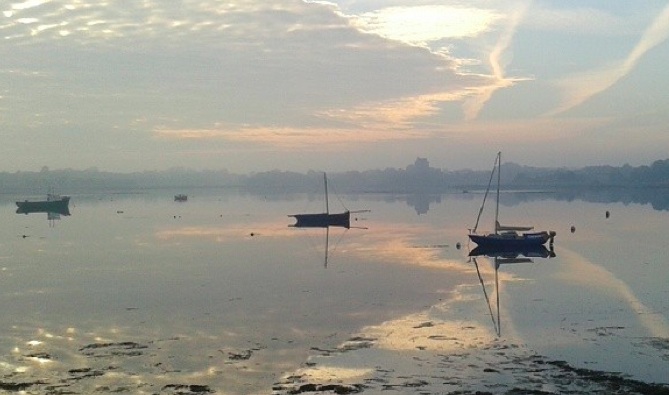
Bright days seem to be in store for Ireland. The Midland Great Western Railway Company were making strenuous efforts to complete the works on their line to Galway. The rails had been laid down on the whole line, with the exception of a few miles, and there was no doubt but that they would have the line ready for traffic in a few weeks.
In the West of Ireland the most confident hopes were entertained that an American steamer would shortly appear in the Bay of Galway to test the advantages of that port for mail communication between America and Europe. These sanguine expectations were by no means unfounded. The Freeman stated that letters had been received in Dublin, announcing that the North America, a United States steamer of great power and marvellous speed, had been chartered to start on the 17th June from New York for Galway with passengers, and that she might be expected to appear off the west coast of Ireland about the 25th June. It would, therefore, appear that American enterprise had determined to settle a point which many English and certain Irish interests had pronounced dubious. The Belfast Chamber of Commerce, with a generous candour which will do that Chamber immortal honour, had presented a memorial to the British Government in favour of Galway.
 The Burren and Beyond