Posted in Posts and podcasts

Bright days for Galway – 1851

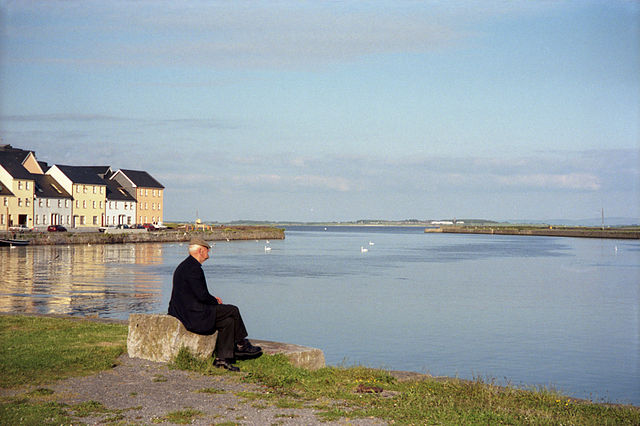
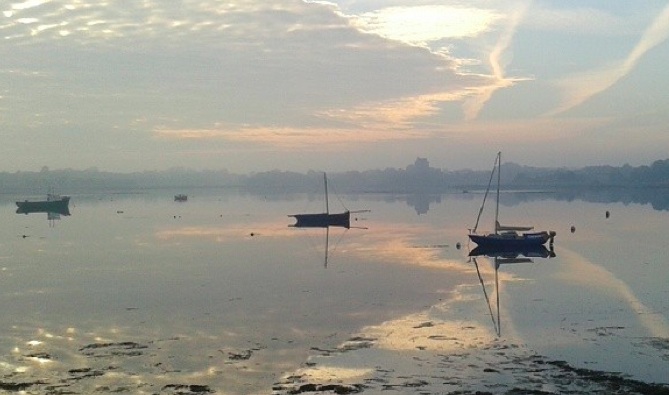
Kinvara Harbour Galway Bay Photo: Norma Scheibe
Kinvara Harbour
Galway Bay
Photo: Norma Scheibe

South Australian Register 22nd September, 1851 p3 
Bright days seem to be in store for Ireland. The Midland Great Western Railway Company were making strenuous efforts to complete the works on their line to Galway. The rails had been laid down on the whole line, with the exception of a few miles, and there was no doubt but that they would have the line ready for traffic in a few weeks.

In the West of Ireland the most confident hopes were entertained that an American steamer would shortly appear in the Bay of Galway to test the advantages of that port for mail communication between America and Europe. These sanguine expectations were by no means unfounded. The Freeman stated that letters had been received in Dublin, announcing that the North America, a United States steamer of great power and marvellous speed, had been chartered to start on the 17th June from New York for Galway with passengers, and that she might be expected to appear off the west coast of Ireland about the 25th June. It would, therefore, appear that American enterprise had determined to settle a point which many English and certain Irish interests had pronounced dubious. The Belfast Chamber of Commerce, with a generous candour which will do that Chamber immortal honour, had presented a memorial to the British Government in favour of Galway.

Posted in Posts and podcasts

Kinvara – 1893

Wikimedia Commons
Wikimedia Commons
NEW ZEALAND TABLET VOL XXI, ISSUE 20 3rd March 1893 p21
A writer in the Freeman’s Journal has the following suggestive remarks with regard to the sorrow and poverty which he found amongst the children of a typical school in the West of Ireland.
“I once asked the Sisters in charge what might be the children’s idea of Home Rule. The reply was eminently practical – ‘Remunerative employment, shoes and stockings, bread and milk for breakfast, and no more rags.’
I confess I feel not a little ashamed to find myself obliged to pen this letter. Must the cycle of Irish beggary forever go round and round, like Ixion’s wheel? Must those unhappy Kinvara children – so modest and shy that they only reply to your questioning in monosyllables and whispers – must they continue to suffer perennial nakedness and hunger?

Posted in Posts and podcasts

Egg shell superstition – 1917

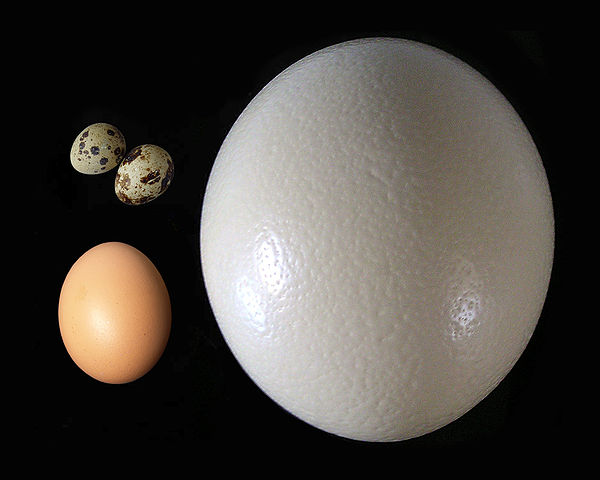
Ostrich egg, chicken egg and quail egg Photo: Rainer Zenz Wikimedia Commons
Ostrich egg, chicken egg and quail egg
Photo: Rainer Zenz
Wikimedia Commons
The Central Record, 30th August, 1917 p10
(abridged)
Some in the west of Ireland, it is said, will never leave an egg shell open at one end only. They will always thrust a spoon through the lower end. Otherwise some wicked spirit will seize upon the shell and make a boat of it, in which to sail the soul of the careless person to destruction.

Posted in Posts and podcasts

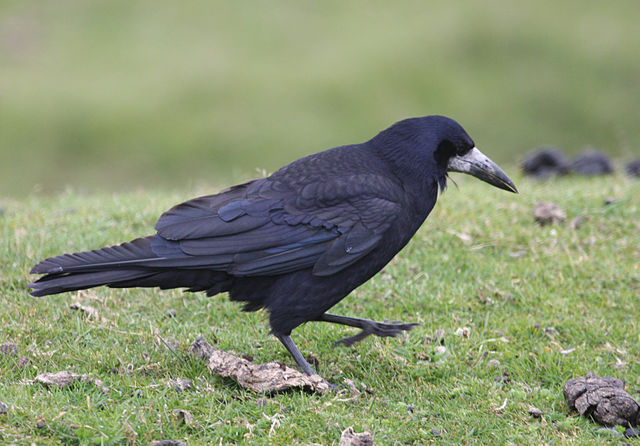
Rooks – Cholera – 1831/2

Corvus frugileus - Rook Photo: Brian Snelson Wikimedia Commons
Corvus frugileus – Rook
Photo: Brian Snelson
Wikimedia Commons
https://widgetworld3.wordpress.com/podcasts/
THE NEWPORT MINER 24TH NOVEMBER, 1910 P4
ROOKS AND CHOLERA

The present day security of this country against all danger of a cholera epidemic is matter for thankfulness not only in human circles, but in the rookeries too. When the cholera slew nearly 60,000 people in the insanitary United Kingdom of 1831-2 the rooks appear to have suffered with them. This was stated, at any rate, to have occurred on the estate of the Marquis of Sligo, which boasted one of the largest rookeries in the west of Ireland. On the first or second day of the epidemic’s appearance an observer noted that all the rooks had vanished.
During the three weeks through which it raged there was no sign of them about their home, but the revenue police found immense numbers of them dead on the shore, ten miles away. When the epidemic abated the rooks returned, but some were too weak to reach their nests, and five-sixths of them had gone. London Chronicle

Posted in Posts and podcasts

Extreme pilgrimage – 1905

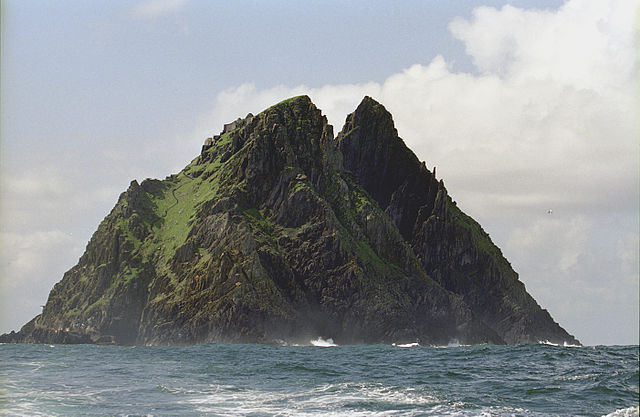
Skellig Michael Photo: Jerzy Strzelecki Wikimedia commons
Skellig Michael
Photo: Jerzy Strzelecki
Wikimedia commons
https://widgetworld3.wordpress.com/podcasts/
Daily Press, 5th March 1905 P5
IRISH PILGRIMS TO THE SKELLIG ROCKS RISK THEIR LIVES

Ten miles off the coast of Kerry, in the west of Ireland, lie the Skellig rocks, one of which has been for years the scene of a difficult penance. A zig-zag path leads up some 700 feet to a lighthouse, but 700 feet more must be climbed before the summit is reached, where stand the ruins of St. Finian’s monastery and a cross of St. Michael.
Here on the anniversary of St. Michael devotees risk their lives in performing their devotions. First they have to squeeze themselves through the Needle’s Eye, a tunnel in the rock thirteen feet long, the passing up which is like the ascent of a chimney. Then they creep on all fours up the Stone of Pain, on whose smooth surface one false step is fatal: then, getting astride the Spindle, a rock 1,500 feet above the Atlantic and projecting some ten feet, each pilgrim must “ride a cock horse to St. Michael’s cross,” say a Paternoster and shuffle back as best he can.
Pearson’s weekly.

Posted in Posts and podcasts

Slán agus beannacht Dé Libh – 1863

Ballyknow Quay Photo: Greg O'Beirne Wikimedia Commons
Ballyknow Quay
Photo: Greg O’Beirne
Wikimedia Commons
SACREMENTO DAILY UNION, VOL 26, N0 3973 15TH DECEMBER, 1863
THE IRISH EXODUS
(From the London Times – October 30th) – ABRIDGED

On Monday night there steamed into Galway Bay a very large ship, with some goods on board, about three hundred steerage passengers, and a select party in the cabin. Under the protection of the Isles of Arran, thirty miles off, and favored by wind and tide, the ship steamed up to an anchorage on the safe side of a small island, on which stand a lighthouse and a battery, and thence, by means of a steam tender, communicated with the port of Galway…
Besides the four hundred steerage passengers and the twenty-three sacks of letters, she took in at Galway two puncheons of whisky and the latest telegrams…

But putting out of the question that desolate waste of waters, that strange old medieval city, its still stranger suburbs, the twenty-three sacks of letters, the twenty-eight cabin passengers, the latest telegrams, and the two puncheons of whiskey, out and out, beyond all comparison, the most important article in that departure from Galway Bay were the seven hundred steerage passengers.

They were robust, healthy young people; very few of them married; what people used to call the “sinew and bone” of a country…

This is a fact which overrides every other Irish question. The current, in every town and village, every street, every family, every breast, has set in, and it is beyond the power of Governments, of laws, of priests, of politicians, to do more than just lash and disturb the great tide of emigration… there is scarcely a cottage in the west of Ireland where the promise of the family, the elder sons and daughters – their voices and their features still fresh in memory as young and old gather round the turf fire – are now in some far Western State, sending home their hearts’ best wishes for the reunion of the circle.

While writers at home are angrily debating what is to be done with the Irish, they are fast settling the question for themselves by a universal departure.

Posted in Posts and podcasts

Moving Bog – Village overwhelmed – 1909

Photo: Miika Silfverberg Wikipedia.org
Photo: Miika Silfverberg
Wikipedia.org
https://widgetworld3.wordpress.com/podcasts/
The Intermountain Catholic, February 27, 1909 p 6
VILLAGE OVERWHELMED BY VAST MOVING BOG
Details have just begun to reach Boston of a disaster in the west of Ireland, which in many respects has had no parallel in recent years.
Because of heavy rains and a severe frost, which was again followed by a thaw and more rain, a great section of a bog detached itself from the side of Mount Mary in County Galway and moved along silently in the night, overwhelming an entire village.
The people were all asleep and the first intimation they had of the disaster was the houses began to rock and move from their foundations. Some of the people, on trying to escape, found themselves waist deep in mud. The disaster came so suddenty and the bog moved with such rapidity that it was with the utmost difficulty that the people could get to safe ground, and in spite of all efforts one woman lost her life.
Cattle and livestock of all kinds were lost, and, or course, the people lost all their personal property. Ten houses were totally destroyed and fully 100 were damaged, some of them very seriously.
The latest accounts received in Boston state that 200 acres in the villages of Ballygar and Kilmore were covered with mud to a depth of twelve feet and that the bog is still moving, but much more slowly that at the outset.
The disaster attracted general attention in the west of Ireland.