Posted in Posts and podcasts

Galway – 1947

Irish Examiner 3rd September, 1847 p.1
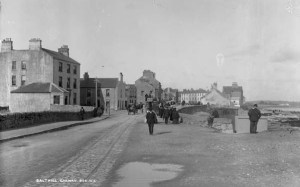
Salthill Galway
Salthill, Galway The National Archives of Ireland

Tuam, August, 27, 1847
Dear Sir,
When your kind invitation to the Galway dinner,in honour of the triumphant candidates for Repeal, reached me, I could not either attend or send my apology. This I regretted much, sympathising most cordially with the object of the festivity.
You will not, then, I am sure, put my silence to the account of indifference to the respected invitation with which I have been honoured by the patriotic men of Galway. Had I been at home, I should have made an effort to be present on the interesting occasion, both to show my respect for the individuals returned, and my zeal for the cause which they personified.
The town has made some atonement for the shameful apathy with which the enemies of Ireland’s only chance of prosperity, were permitted to walk over the course in the county of Galway. They may thank the more sacred duties that entirely absorb the attention of those who would not have been indifferent to the calls of their country for the protection of a native legislature. However, before the recurrence of a similar period, it is well that candidates should be impressed with the conviction that they can entertain no hope of representing Galway, unless they associate themselves with the noble national phalanx, who have proved that Repeal, far from being a chimera, is one of those lofty, enduring, and growing aspirations, which cannot be appeased except by the enjoyment of that legitimate freedom for which it is panting.
Believe me, my dear Sir, your very faithful servant,
John Archbishop of Tuam.
Martin Geoghegan, Esq., & c., High Street, Galway.
Posted in Posts and podcasts

Welcome home – Kinvara – 1910

Connacht Tribune 24th Dec 1910 p5 (abridged)

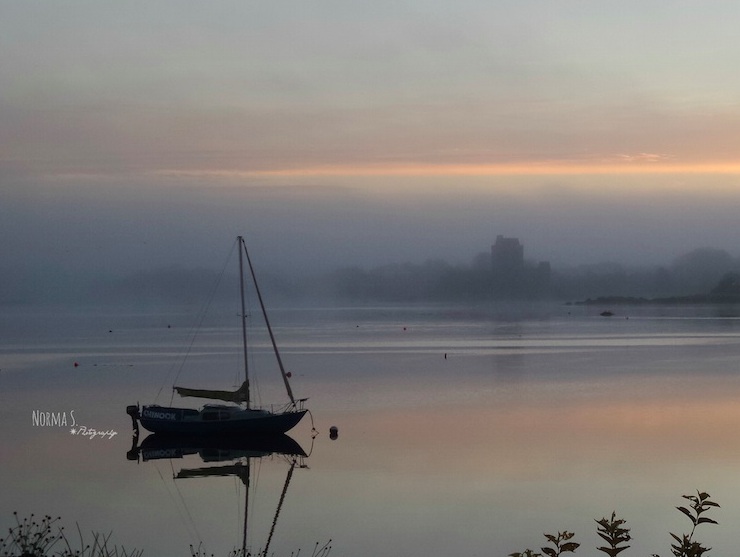
Kinvara Photo: Norma Scheibe
Kinvara
Photo: Norma Scheibe

On Monday morning the Kinvara cattle drivers, M.H. Donohoe, Gortnaclogh; T. Gorman, John Hynes, P. Healy, Bartly Quinn, Moy, and John Smith, Kinvara, were released from Galway Jail after undergoing a term of six months’ imprisonment. They were tried at the Summer Assizes and sentenced by Judge Kenny for driving cattle off the lands of Funshinbeg. The severity of the sentence and the respectability of the prisoners evoked the greatest sympathy at the time, and the Nationalists of the district vied with one another in doing the farm work and harvesting for their families ever since.

They were met at the door of the prison as they emerged, by Mr. Ml. O’Donohoe, J.P., Co.C, and seven cars, laden with members of the Kinvara hurling ciub. They were sumptuously entertained by Mr. O’Donohoe, and started from Eyresquare after “doing” Salthill, about 3 p.m. for Kinvara. They were loudly cheered passing through Oranmore and Clarenbridge, and on reaching Kilcolgan they were greeted with illuminations. They were met outside Kilcolgan by a big contingent with cars and horses, from the Kinvara and Duras branches U.I.L., consisting of Messrs. T. P. Corless, D.C., president; M. Curtin, B, Quinn, M. Melia, Pat Hanlon, Bryan Kilkelly, T. Keane, Joe Forde, Pat Halvey, P. Callanan, P. Whelan, Ml Carty (Secretary), Michael Huban, A. Connors, C. O’Loughlin, P. Noone, J. Moylan, John Glynn, etc., who cheered them loudiy. As Ballinderreen was approached it was seen that every house was illuminated, bonfires were ablaze on every hill, and lighted torches lit up the horizon. A noticeable feature in Ballinderreen was a big force of police, under arms on the outskirts of the crowd.

A hurriedly convened meeting was held under the chairmanship of Mr. Michael O’Donohoe, Co.C, J.P., who thanked the sterling Gaels and fearless Nationalists of Ballinderreen for the great reception they had given the prisoners (cheers). He would never forget it. He reminded them of the early days of the Land League Movement and of the proclaimed meeting in 1879, and said he was glad to see the same spirit animating them today. Mr. T. P. Corless, D.C., also addressed the meeting.

Amidst a scene of great enthusiasm the procession, which had now assumed enormous dimensions, started for Kinvara. The houses along the route were illuminated and bonfires and torches blazed at Pollough and Toreen.

At Ballyclera the whole village turned out and the procession passed with great difficulty through a virtual sea of fire. Dungora Castle presented a grand appearance with its many and various coloured lights. Overlooking the town and harbour, the lights could he seen for miles. The turrets on the top were beautifully lighted and arranged in such a way as to resemble a huge harp. A bonfire was ablaze in front of the Castle as the prisoners were passing.

Kinvara town was brilliantly illuminated and an immense bonfire was lighted in a field opposite the Convent of Mercy.
In Moy and Gortnaclogh, the homes of the prisoners, bonfires and illuminations were kept up until morning.
Mr. Cruise, D.I., and a number of extra police were drafted into Kinvara, but notwithstanding the greatest excitement, everything passed off quietly.

Posted in Posts and podcasts

Kinvara and more – 1920

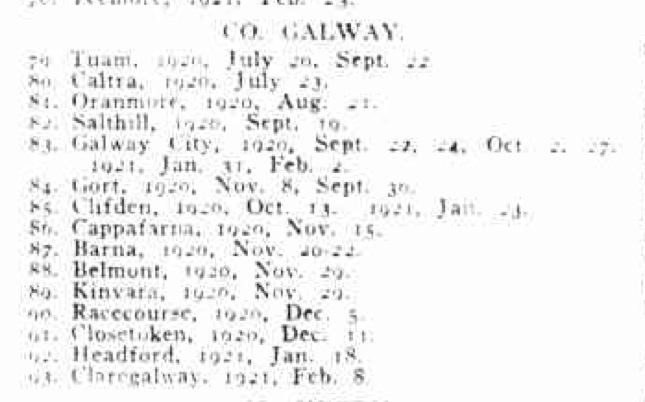
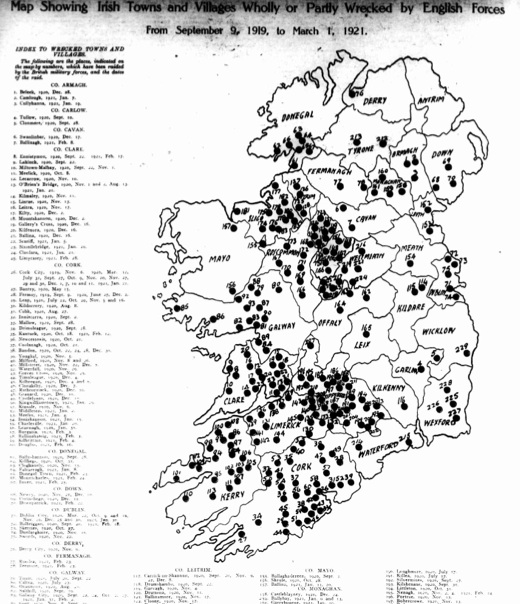
Map Showing Irish Towns and Villages Wholly or Partly Wrecked by English Forces From September 9, 1919, to March 1, 1921. INDEX TO WRECKED TOWNS AND VILLAGES.

The Catholic Press (Sydney, NSW : 1895 - 1942)   8 September 1921
The Catholic Press (Sydney, NSW : 1895 – 1942)
8 September 1921

cod