excerpt from Enhanced British Parliamentary Papers on Ireland
Correspondence between Treasury and Poor Law Commissioners for Ireland respecting Advance, Distribution or Expenditure of Amounts raised under Act for General Rate in Aid in Ireland
Under General Rate in Aid Act, Ireland. Enclosure 8, in No. 184. Gort Union
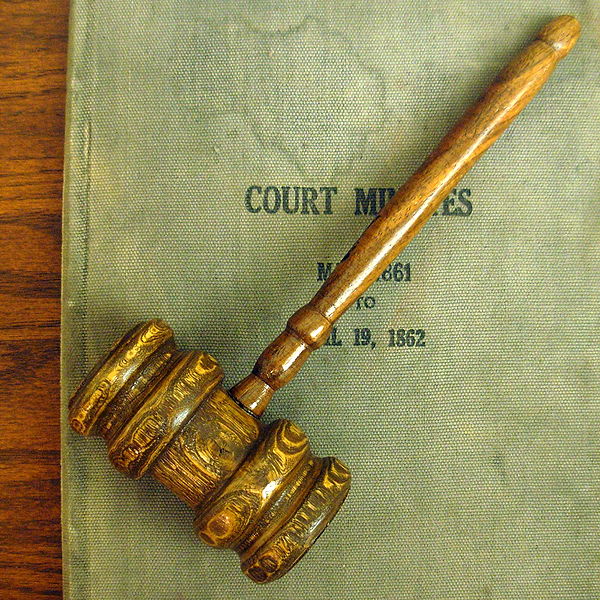
EXPENSES ATTENDING CHOLERA PATIENTS, COMMENCING ON THE 1ST OF APRIL AND ENDING 11TH OF JUNE 1849, INCLUSIVE.
First registered postage stamp of Victoria, Australia 1 shilling, 1855 Wikipedia.org1861
The Argus (Melbourne) 17th October, 1861 p1
ELLEN GALVIN, late of Kinvarra, County Galway, Ireland – your sister Bridget is anxious to hear from you. Inquire Sergeant Johnston, William Street Police Barracks, Melbourne. Also Mary Scanlon, late of Kinvarra, to inquire for her niece at same place.
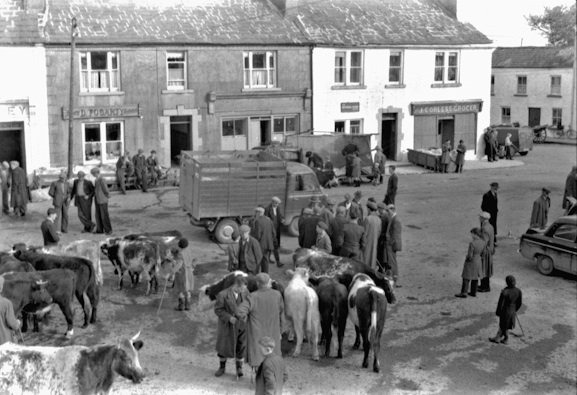
The Square, Kinvara c. 1950 Cresswell ArchivesThe Moreton Bay Courier 3rd March 1849 p4 (abridged)
An encounter took place on Monday between a detachent of the 4th Light Dragoons, forty in number, and a body of people from Kinvarra.
The soldiers, assisted by fifty-six policemen, were out collecting poor-rates, or rather seizing corn in default of payment. They went on until they came to the district they were to distrain on, when a barricade, partly formed, met their view, protected by about 300 men and women. They refused to let the armed force pass and said they would rather sacrifice their lives. The Riot Act was read three times, and still they would not give way.
The police and soldiers were ordered to charge with bayonets. Stones were thrown and some of the men severely hurt. The police drove the people a quarter of a mile into the fields, but they were quickly back again to the scene of the action. Mr Davys, the magistrate, did not wish to shed blood by ordering the military to fire, and, it being late in the day, he directed them to turn round and proceed home.
Much praise is due to this forbearance of the authorities, as there is no doubt but much blood would have been shed. Of course there will be a greater force brought down there in some few days.
Photo; Cresswell ArchivesAmong the papers of the Chief Secretary’s Office Registered Papers National Archives Francis J. Crowley Bequest
NAI REFERENCE:
CSO/RP/1822/484
TITLE:
Tradesmen of Kinvarra, County Galway: for measure of relief
SCOPE & CONTENT:
Petition of tradesmen of Kinvarra, County Galway, to Richard Wellesley, 1st Marquis Wellesley, Lord Lieutenant, Dublin Castle, requesting relief as they have ‘no means left to support their families but pawning their Clothes and selling every little article they possessed for less than half Value’: proposes that aid be advanced to enable travel to colonies.
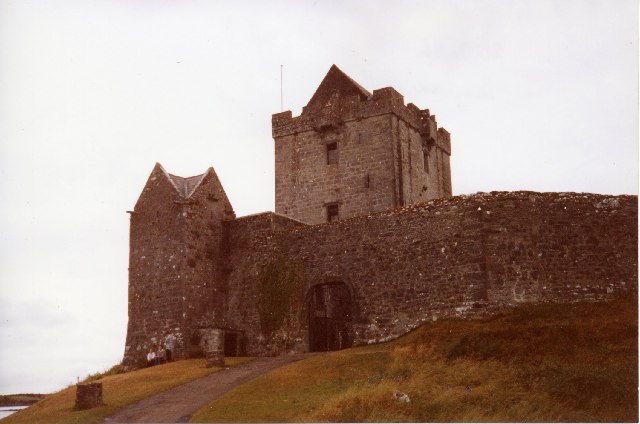
Dunguaire Castle, Kinvara Photo: Angella Streluk Creative CommonsA Walking Tour Round Ireland in 1865 by an Englishman
London: Richard Bentley, New Burlington Street. 1867 p181/2 excerpt – abridged
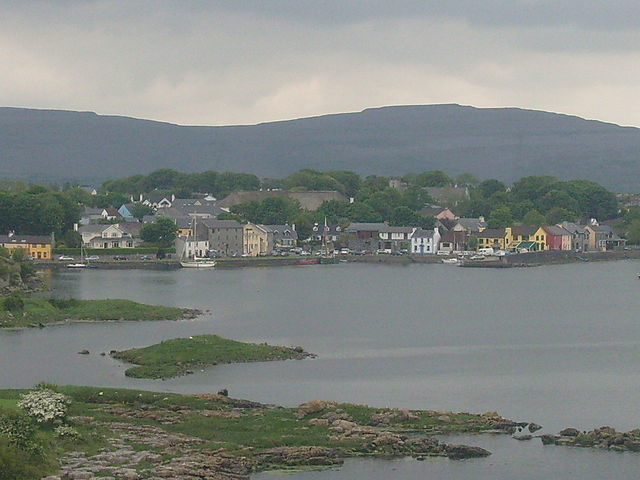
I (then) leave the main road, leading to Gort, Ennis and Limerick and take a road to the right, and pass through the village of Ballinderreen, and then for miles through a bleak and desolate country until I reach Kinvarra. This place is distance from Galway about seventeen miles. There is a castle here called Dungoury, (sic) which is in a very good state of preservation. I ascended to the top from which a fine view is obtained. Below is the village town of Kinvarra, prettily situated on a small bay and with some appearance of trade. Around is a stone covered country, wild and uncultivated.
On walking into the town a storm of rain fell and I offered a share of my umbrella to a gentleman in the road. He kindly showed me the inn and on learning that my mind was a blank as to my course of travel from this place, he wrote on a slip of paper a prescribed route as far as Kilkee. He kindly asked me to join his circle to tea in the evening at eight o’clock and then left me meanwhile to my own resources.
It was still early in the afternoon, so I walked to the end of the bay and bathed as well as the weeds (which were gathered thickly) would permit. On my way back an old woman told me a story of a girl of the village, some time since, who was accustomed to swim across the bay, put some wheat-ears between her teeth from the field on the other side, and then swim back again. The distance to and fro would be about a mile.
On my return to the inn I found a turf fire lighted without any direction of mine, a mode of welcome not at all acceptable this warm weather. The hostess is a stout well-meaning woman, though rather too fussy. She places before me some oysters and eggs, scanty fare enough. She tells me she is the mother of eighteen children. Oh fancy!
My hostess tells me a pretty story of one of her eighteen, a boy. He went to London en route for Australia, and wrote from the metropolis to say, that though he had seen all the sights there, he still thought no place equal to Kinvarra.
NEW ZEALAND TABLET VOLUME XXI, Issue 23, 24th March 1893 p9
J Brady Murray, 11 Pembroke Road, Dublin and Northampton House Kinvarra, has given a reduction of fifty per cent to his kinvarra tenants. Mr Murray is son of the late P Brady, Soliitor, Danby, Ballyshannon, and nephew of Mrs John Stephensen, Castle Street, Ballyshannon
Wikimedia CommonsNEW ZEALAND TABLET VOLUME XIV ISSUE 34 17TH DECEMBER, 1886 P 19
At the Kinvarra Petty Sessions on September 22 before Colonel Mallon, R.M. and major Blake, 37 men were charged with unlawful assembling and breaking the fences on the lands of Cahergilssane, the property of Arthur Persse. The first Crown witness, a man named Clayton, refused to give evidence, and was committed for eight days. Three other witnesses were examined, who gave evidence as to the assembly of a crowd, but could only identify one of the defendants as forming a part of it.
On cross-examination by Mr McDonagh, it was elicited that there was a hurling match on a neighbouring field, not the property of Mr Persse, and that the cattle were frightened by the noise and runaway, breaking through the fence. Mr McDonagh asked for a dismiss on the merits, to which the bench agreed, and also to the liberation of Clayton, who refused to give evidence, seeing the failure of the Crown cae.
New Zealand Tablet Vol XXVII Issue 42 19th October, 1899 P 9
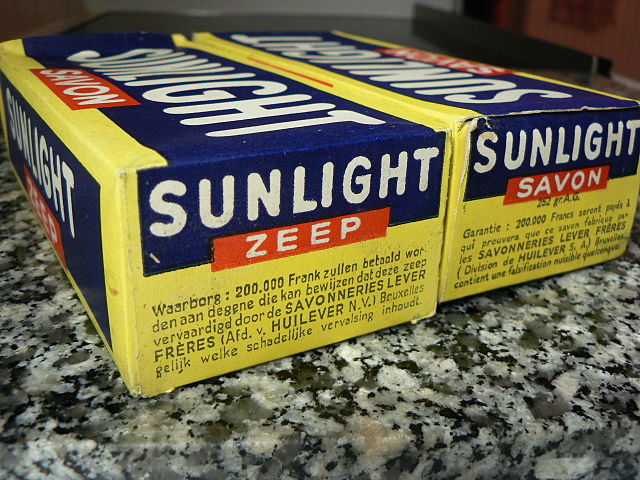
Irish NewsSunlight Soap Wikimedia Commons (abridged)
A most successful bazaar in aid of the Convent of Kinvarra was held about the end of August. The affair concluded with athletic sports in the convent grounds. A somewhat novel and certainly most interesting incident in the ‘athletic’ contest was ‘the Sunlight Soap Washing Competition; for handsome prizes, presented by Messrs Lever Brothers. No other item on the programme produced so much excitement and amusement. There were eight young lady competitors. Miss Doolin won the first prize and Miss Hehir the second. Charity and entertainment were never more happily associated with what should prove a very fetching advertisement.
Kinvarra, Kinvara – Co Galway Wikimedia CommonsAustralian Town and country Journal 31st August 1878 p30
Lough Cooter Castle, one of the “slow places” of the western counties, stands on the edge of the lake from which it takes its name, two miles from the town of Gort, in Galway county. The castle is quite modern, having been erected at a cost of about £80,000 by the second viscount, from plans by Nash, the renovator and architect of the newly added portion of Windsor Castle. It is described as built in “the severe Gothic” style. The walls are of massive solidity, and constructed of beautifully chiselled limestone. The lake covers an area of nearly eight square miles, and is studded with wooded islands. One of these has been for years the home of innumerable herons and cormorants; perhaps the only instance on record of an island in a fresh-water lake being inhabited by the latter birds.
The Gort river flows out of the lake and, at a romantic glen known as “The Punchbowl,” falls into a deep rocky abyss, totally disappearing underground until it reaches Cannohoun. Here it rushes out of a rocky cavern and then flows through Gort where it turns several mills and, falling again, makes it way – appearing and sinking several times – through the sands into Kinvarra Bay, six miles from Gort.
Photo: Oscar Wikimedia CommonsThe Tablet, 22nd October, 1842
MALICIOUS BURNING.—The dwelling-house of a poor industrious man, named Higgins, living at Ballyclary, within a mile of Kinvarra, was maliciously set on fire on the night of the 2nd instant ; the family were all in bed when the wicked act was perpetrated. The cracking noise occasioned by the devouring element very fortunately awoke them in sufficient time to prevent any lives being lost.



 The Burren and Beyond