Posted in Posts and podcasts

Padraic Uas O’Fathaigh – 1916 – Gort and South Galway

Connacht Tribune 27th December, 1968 p3. (abridged)

Liam Mellows Wikimedia Commons
Liam Mellows
Wikimedia Commons

Mr Fahy begins his story of Easter Week by recalling the arrest and imprisonment of Liam Mellows in the Autumn of 1915 and his deportation to Reading in April 1916. At that period the Galway County Board of the Irish or Sinn Fein Volunteers, which governed the force, had Mr George Nichols, Galway as chairman; Joseph Howley, Oranmore, treasurer; and Padraic O’Fathaigh, Lurgan, Gort, secretary, with Larry Lardner, Athenry as Brigade Commander. Meetings were held at Athenry and Mellows had his training camp at Ballycahalan. Mr. O’Fathaigh continues his story;

A convention was held in Limerick, at which plans were made for the Easter Sunday Rising. The delegates from Galway were Commandant Larry Gardner, Rev. Fr. Feeney, C.C.; Tresa Bhreathnach, Eamonn O’Corbain and Padraig O’Fathaigh. Mr. Ledden presided at the meeting, and it was arranged that the expected arms from Germany would be taken to Abbeyfeale and there sorted, some to be kept, and the remainder taken by rail to Gort to arm the Volunteers who would muster there on Easter Monday. Handbills about the Gort Monster Meeting were displayed at the Limerick Hall.
“Con” Fogarty would take the arms to Gort. Commandant Colivet would take charge of the Limerick Brigade of the Irish Volunteers at Limerick city. The Clare Battalion, led by Commandant Michael Brennan, would take any Clare barrack they might surprise, but would make no delay in moving to augment the Limerick Volunteers. The Companies of the Galway Brigade would attack the R.I.C. barracks in their area on Easter Sunday.

EASTER SUNDAY 1916
Commandant Larry Lardner was in command, Commandant Liam Mellows having been deported to England. The wily Commandant Mellows, however, succeeded in evading arrest and turned up at Mrs. Walshe’s house in Killeeneen some days before the intended Rising. Liam Mellows ordered that his escape should be kept a secret known only to the Walshe family, Eamonn Corbett and myself.
Liam’s uniform, enclosed in a parcel addressed to Mrs. Walshe, was expected to come via Athenry and its safe delivery was important. Since 1909 I taught Gaelic every Wednesday and Thursday night in Athenry.  My visit to Athenry on Wednesday elicited no surprise. Eamon Corbett was mixed up in rate collecting and travelled extensively. We got the parcel safely; George Fahy at the Railway Hotel and Berty Powell at the Railway Station would have scented out any danger. We took the parcel with all speed to Killeeneen; I thus missed the Irish class for the first time in seven years.

to be continued on theburrenandbeyond.com

Posted in Posts and podcasts

Dances at New York – 1931

Connacht Tribune 11th April, 1931 p.22

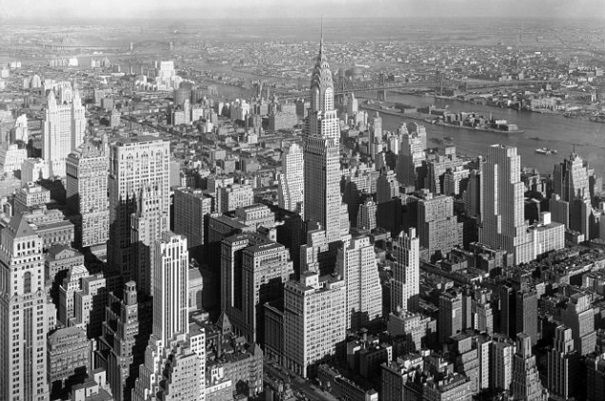
New York City 1932  Photo: Samuel Gottscho Library of Congress Wikimedia Commons
New York City 1932
Photo: Samuel Gottscho
Library of Congress
Wikimedia CommonsDances at New York

The New West of Ireland Ballroom at 884 Columbus Avenue, New York, recently taken over by the two Galway partners, Mike Tierney and Bob Connolly, is enjoying a wonderful patronage. A successful Galway dance was held there on Sunday night which brought patrons hailing from Kinvara, Gort, Loughrea, Tuam and Ballinasloe.

Posted in Posts and podcasts

Kinvara Quay – and Tram – 1838

Tuam Herald 28th September, 1839 p.2

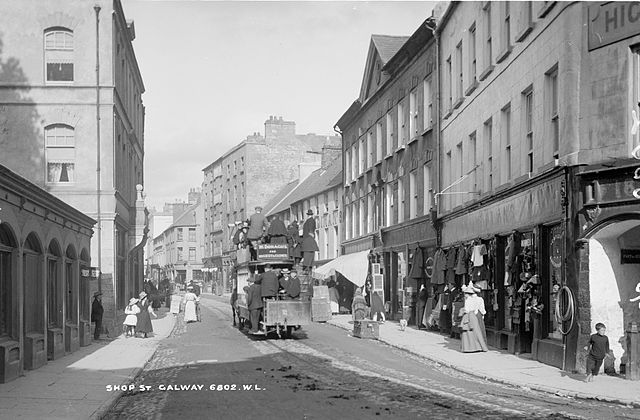
Horse drawn Tram, Shop Street, Galway. National Library of Ireland on The Commons Wikimedia Commons
Horse drawn Tram, Shop Street, Galway.
National Library of Ireland on The Commons
Wikimedia Commons

(excerpt of letter from Mr T. Bermingham to “To the Guardians of the unions of Loughres, Gort, Ballinasloe and Tuam, especially – and to the inhabitants of the County Galway in General.”)

I have lately examined the southern coast of the Bay of Galway, and from the trade at present existing at Kinvarra and the New Quay, I have no hesitation in recommending the building there of two good piers, to protect the boats engaged in the fishery and seaweed trade, and as asylums for vessels of moderate burden, to encourage still further their spirited trade in corn, with a view of being a proper point of communication with the town of Galway by means of a steam tug – a plan which has been long agitated by the inhabitants of Galway.  Tram roads for horse power are perhaps more adapted to the present trade of this county than more expensive railways for locomotive power.

With the experience that I have had in constructing a short line of railroad on cut bog, the property of Lord Clonbrock in this county, I can almost confidently state that a double line of rails of dimensions adapted to the present trade, can be constructed for three thousand pounds per statute mile – upon which one horse can draw a load weighing ten tons upon the level. Of course it would be necessary to have relays of horses to assist at some of the elevations – which upon the route that I propose to take, would be but few.

More on Kinvara in the news archives at theburrenandbeyond.com

Posted in Posts and podcasts

Gort – 1849

Geelong Advertiser 13th September, 1849 p4 (abridged)

Photo: Norma Scheibe

On Wednesday last the property of the union in Gort Workhouse was exposed to auction under an execution for debt and the whole knocked down for £28 by one of the creditors. When about to be removed, however, the paupers rose in general insurrection to retain the property – their last means of existence in their last refuge from starvation. Finally the property was let out to the vice-guardians for a certain weekly percentage upon the price for which it had be sold. It is, consequently, safe from several other executions for large sums that, we understand are in the hands of Messrs M, C and L.

Posted in Posts and podcasts

Poitín – 1823

Connaught Journal

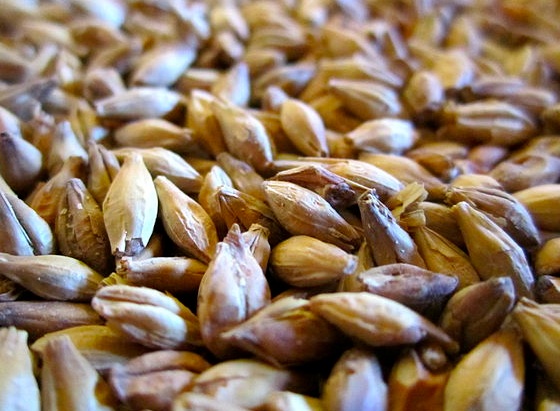
Malted Grain  Photo: Pierre-alain dorange  Wikimedia Commons
Malted Grain
Photo: Pierre-alain dorange
Wikimedia Commons

10th February, 1823

REVENUE SEIZURES
From the 5th ult to the 5th inst, those active and enterprising Officers of
Excise, Messrs. THOMAS and GLYNN, accompanied by Lieut GRAVES, and the
detachment of the 3d Revenue Corps stationed at Gort, seized six copper
stills, still heads and worms; twenty gallons of spirits; 47 barrels of
malt; and destroyed 21 illicit distilleries, with 54 fermenting vessels,
containing 1680 gallons of pot-ale and singlings, and arrested nine persons
found in illicit distilleries and malt houses.

Posted in Posts and podcasts

Irish homes and Irish hearts p3 – 1868

Freeman’s Journal 28th March, 1868 p11 (abridged)

News from America 1875 James Brenan (1837-1907) Crawford Art Gallery, Cork
News from America
1875
James Brenan (1837-1907)
Crawford Art Gallery, Cork

Lough Cooter is the largest lake in the south of county Galway, with many wooded islands lying in its bosom, and lovely views between them. The ‘Castle,’ belonging to the Gough family is a modern erection, in the castellated style, standing on the west bank of the lake, and commanding a most exquisite view, while the lawn slopes down to the water’s edge. Beautiful grounds, richly supplied with trees, surround the house, part of them planted and laid out, part left for the deer to wander about. A gateway and lodge stand at each end of the grounds ; and after passing through the whole length, we returned by another route to Gort in time for the quiet benediction in the little convent chapel.

Travellers from Galway and its neighbourhood proceed by coach via Gort to Ennis, and as there are many emigrants, the coach is often full. This was the case on the morning on which I left Gort, and accordingly two ‘long cars’ were furnished from the coach office, which were rapidly filled with emigrants from Gort. The whole cortege, started from the office in the main street and it was a strange and sorrowful sight to see the partings. A crowd of people collected round the passengers: mothers and brothers and sisters were saying good-bye, weeping, wailing and sometimes howling; kisses were given, last greetings exchanged; promises to write soon, to send money over, and ‘bring the others out’ were uttered and, at last, away they went.

I noticed that the best were going — the young, strong, and vigorous — the old, the feeble, and children were left behind.

By my side sat two young girls, strong, healthy, and active. They were going into the world, and had discarded the blue cloak and stuck on their heads showy bonnets much too small for them, profusely decorated with tulle and artificial flowers and with broad strings of white ribbon. When we were fairly out of town, passing through the solitary monotonous country and admiring friends were left behind, out came the large shawls, in which head, bonnet, and all were fully enveloped.

They became confidential and told me they were going to America to get places. On my suggesting that they could find such at home, they shook their heads and said not with such wages as in America. When they were tired of talking they took out their books and began to read, and, peeping over the shoulder of the one next me, perceived the volume carried with her was a prayer-book.

Posted in Posts and podcasts

Irish Homes and Irish Hearts p1 – 1868

Freeman’s Journal 28th March, 1868 p11peat

IRISH. HOMES AND IRISH HEARTS.

As the sun disappeared it became extremely cold, and I was very thankful when the car drew up at a large house in the main street at Gort, which, proved to be the Convent of the Sisters of Mercy, There I had such a welcome as one only meets with in Irelaiad, and cold and fatigue were soon forgotten under the genial influence of affectionate hospitality.

Gort is a neat, clean, but wonderfully quiet little town, and the visitor is involuntarily reminded of the author of the ‘Irish Sketch Book,’ who describes Gort as a town which ‘seemed to bore itself considerably, and had nothing to do.’ There is a little stir of life, however, twice a day, on tlie arrival of the mail coach from Galway and Ennis, for at present this old-fashioned mode of conveyance is the only available one between the two towns. A railroad is in course of construction, which is to join the Midland Great Western line at Athenry and which will be a graat boon to the traveller.

Through the town of Gort runs a broad clear river, oh the banks of which stands the convent. It is a large country house, which haa been transformed into a convent, while schools have been built adjoining it. Behind the house are good sized grounds, planted with some of the finest oak trees I ever saw through which the river wends its way. On a rising ground at the end of the grounds is the little quiet cemetery of the nuns.

The schools here struck me as particularly good, the buildings well adapted for the purpose, and the children thouroughly trained and well taught.There are infant schoools for boys and girls, another for elder girls, and a small model school. This latter is an absolute necessity in Gort, and the children of this class could not otherwise obtain any education, there being no other convent of any kind within miles. The chapel is only a large room, fitted up for the purpose, but it is very pretty, and has an air of devotion about it. It was pleasing to see the Sisters, when the labors of the day, were over, assembling in their stalls to say their latin office forestalling thus by prayer and praise the cares and troubles of the coming day.

There is an old fashioned, but clean and comfortable hotel at Gort, almost facing a large plain building which forms the Catholic chapel. A large stone cross stands in the churchyard, and several people were kneeling round it in prayer, when, on the Sunday after my arrival in Gort, I went to the Chapel for nine o’clock Mass. It was like a little bit out of a foreign county suddenly set down before my eyes but on entering within the chapel the scene as contemplated from the gallery was stranger still. The whole floor of the church was given up to the poor, and there are no benches or chairs of any kind. There they stood or knelt, grouped in various attitudes, and in a variety of costumes.

The women in their red petticoats and blue cloaks, when standing together in groups, formed a subject for an artist; here and there were those not rich enough to possess the valued cloak, some of whom had tied bright coloured handkerchiefs over their heads, and others had arranged their poor clothing as best they could. The occasional intrusion of a straw bonnet, or worse, still, a hat, was a painful eyesore to the spectator. There were quite as many men as women, and of all ages, some grey headed fathers with their little ones clinging to them, smart looking youths, and numerous boys.

When the consecration bell sounded the whole mass bent low, many almost prostrate on the ground; it was like an Italian picture, save and except that instead of sculptured marbles or Gothic arches surrounding the multitudes, there rose the plain whitewashed walls of a poor Irish chapel. These whitewashed chapels of Ireland, they jar upon the sight of those accustomed to see all that is noble and beautiful adorning the sanctuary! Yet what shrines they have been of faith and devotion – what witnesses they are to the persevering, unconquerable faith of the Irish!

There were a great many communicants at this Mass, and when it was ended the priest took off his chasuble and advanced to the front of the altar. There was a sudden rush. Up got every body from the floor, and the multitude packed themselves in a compact mass round the altar. The sermon was in Irish; every eye was bent on the preacher, every ear strained to listen, and it was evident, from the gestures of the people, that their whole attention was given to the discourse, and that every point went home.

The eloquent preachers in crowded city churches would often rejoice to have an audience so hanging on their words. I declared afterwards that I understood the sermon very well ; for it was the festival of the Seven Dolours which formed the subject of the discourse; and the gestures of the priest, and the answering emotion of the people plainly told that they were bidden to endure patiently, and to suffer bravely after the example of her whose sorrows no mortal can ever equal.

That Sunday was a cloudless summer’s day, and after the last Mass was over, the kind old parish priest took me to see the great lion of the neighbourhood, Kilmacduagh, some three miles distant. The diocese in which Gort stands rejoices in the poetical names of Kilmacduagh and Kilfenora.

Posted in Posts and podcasts

Gort – 1790

Berrow’s Worcester Journal 28th January, 1790 (abridged)

EO'D
EO’D

Friday night a desperate gang of eight or ten fellows, well armed, and with their faces covered, entered the dwelling house of Colonel Blaquiere, near Gort, and after tying the family, plundered the house of what valuable articles they could get at.

They entered at the window of the Colonel’s bed-chamber, who, notwithstanding his being overpowered by numbers, made a most brave resistance, nor did he submit until totally surrounded and covered with wounds, when the inhuman villains tied him, with his head downward, in which pitiable situation he remained bleeding at every pore, until some of the family were enabled to extricate themselves, and go to his assistance; after which the neighbourhood was alarmed, and a spirited pursuit immediately commenced by the gentlemen. The villains to expedite their retreat, took two horses from the Colonel’s stable, but left behind them a blunderbuss, a pistol, an old riding-coat, and two bludgeons.

Posted in Posts and podcasts

Travel Notes – 1917

The Register, Adelaide, South Australia

Photo: EO'D
Photo: EO’D

18th June, 1917 p 6

XX By the Hon P McM. Glynn K.C. Minister for Home and Territories (abridged)

Gort, August 12, 1916. I arrived here on August 10. Names, not much else, have changed. Some old people, some middle-aged, knew me; their faces are not those of the past. Newquay, twelve Irish miles from here, is changed. The four or five white cottages facing the beach of shingle and sand, looking across the opening of ihe Straits towards Aughinish, are in ruine. It was difficult to identify the location of the seaside cottage in which, during some summer months, we lived.

Driving round by the flaggy shore to Ballyvaughan and then across a gap in the Burren Mountains towards Kinvara, from which is a fine view of the inner-part of Galway Bay.  The promontory of Aughinish and the swift current of the sea between it and the mainland is open; along dusty, limestone roads; the crumbling walls of deserted houses are seen in many places by the way. Most people of. the past seem to have gone to heaven or the United States.

Politics, as they go, are still matters of conversational interest here. The Sinn Fein movement is mentioned by some with sympathy for motive and contempt for methods and organization. The rising came as a surprise, if not a shock, to some persons, but there were, or are, scattered sympathisers or objectors to the more, drastic of the methods of repression among the middle as well as the working classes. For among those who paid the inevitable penalty of revolt in time of war were some leaders of ripe scholarship and. in other respects, stainless lives; ‘Poets of the Insurrection’ as they were called, whose mistakes of judgment, policy, and method are lightly regarded by those of emotional temperament to whom disinterestedness primarily appeals.

Discontent now turns on the recent check to Home Rule as expressed an the Government of Ireland Act, 1914. There is a feeling that the political system – Union Government – is still the source of any economic maladjustments, and that the country will at once flower under the working of autonomy.

At Loughrea, behind the house of my brother James, are the ruins of an old abbey, one of the finest of the monastic days, and the Abbey walk. Across the road is the Carmelite church and monastery, and beyond sloping country, with a good growth of meadow grass and trees. Loughrea is situated on a lake, on the far bank of which the historic or traditional Fian ma Cumhill had some of his escapades. It has an excellent cathedral church, built by the lake; finished in every point of architectural design.

Posted in Posts and podcasts

Gort Lace – 1903

The Intermountain Catholic 28th February, 1903 p6 (abridged)

Irish crochet Creative Commons  .
Irish crochet
Creative Commons
.

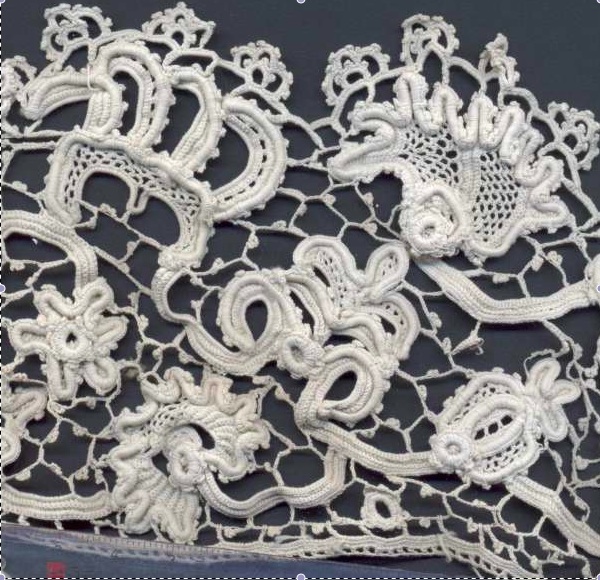
The industrial school of the Convent of Mercy, Gort, County Galway, Ireland will supply anything in lace.

It is gratifying to me to read from time to time extracts from subscriptions and business letters that come to this office, thanking for suggestions offered in this department. One just to hand is profuse in thanks for receiving laces ordered from Ireland, taken from the advertisement in our columns.

One reader asks: “Why do we not see this beautiful lace in our big stores?”

The answer is easy; Because you do not inquire for it, or, when you do, you exercise no judgment and permit yourself to be persuaded into purchasing an inferior article. Make it a point in shopping to ask for what you want, and do your own thinking as to whether or not you will purchase.

If you are a judge of lace then you know that some of the most exquisite laces in the world are made in Ireland, and you can even have a design worked out for you if you desire. The Irish laces were awarded prizes for designs and prizes for workmanship at the World’s fair at Chicago, which exposition was the greatest ever held in this country.
Edith Rayner in New York Freeman’s Journal