THE BELMONT CHRONICLE, AND FARMERS, MECHANICS AND MANUFACTURERS ADVOCATE. 2ND SEPTEMBER, 1853 P1
IRELAND
There is a religious movement in progress in Ireland that promises important results. Through the influence of emigration and proselytism the relative numerical strength of the Protestants and Roman Catholics is undergoing a rapid change, and the former are gradually gaining the ascendency. It has been predicted by the London Times that “in fifty years Ireland well be Protestant to a man.” A concealment of the fact is no longer attempted by the Roman Catholic press. The Dublin (R.C.) Nation says;
“There can be no longer any question that the systematized proselytism has met with immense success in Connaught and Kerry. It is true that the altars of the Catholic Church have been deserted by thousands, born and baptized in the ancient faith of Ireland. The West of Ireland is deserting the ancient fold.”
The Dublin Tablet says;
“We repeat, it is not Tuam, nor Cashel, nor Armagh, that are the chief seats of successful proselytism, but this very city in which we live.”
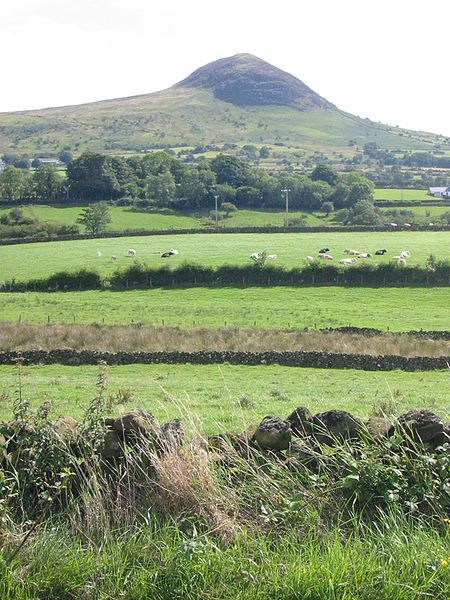
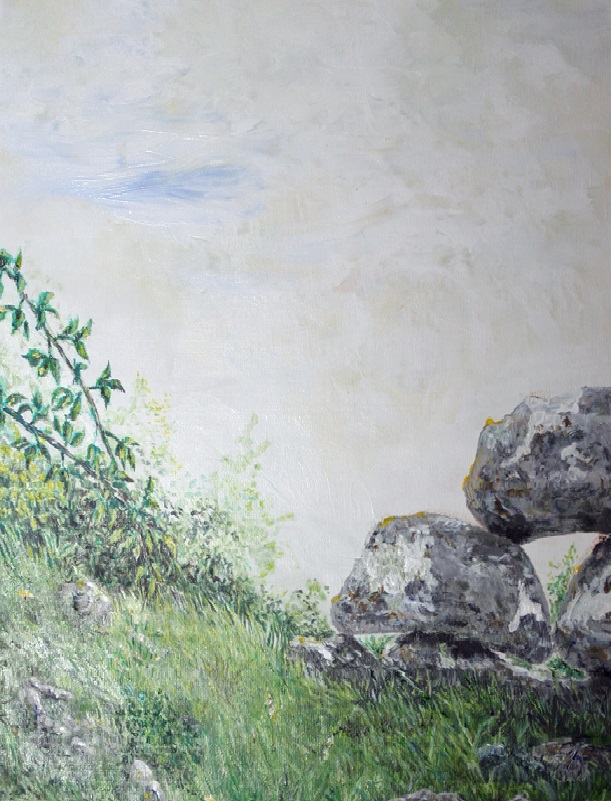
Slemish, mountain in County Antrim where St Patrick is reputed to have shepherded as a slave Photo: Man vyi Wikimedia commons
The Dubin Evening Post says:
“We learn from unquestionable authority that the success of the proselytisers in almost every part of the country, and, as we are told, in the metropolis, is beyond all the worst misgivings we could have dreamt of.”
This testimony is further corroborated by the report of the Irish Missionary Societies, which characterize the movement above spoken of as the “New Reformation.” Ireland can scarcely be regarded as a Roman Catholic country inasmuch as, out of a population of six millions and a half, nearly one-third is Protestant. To effect this result divers influences have contributed, prominent among which are the labors of “The Society for Irish Church Missions to the Roman Catholics,” organised in 1840, under the presidency of the Duke of Manchester. This society has now 142 agents. In the district of West Galway where in 1810 no 300 Protestants were to be found, there were, in May 1852 nearly 6,000 converts attending church services, while 3,500 children were taught in the bible schools. In Dublin and various other places mentioned the missions and schools are prosperous.
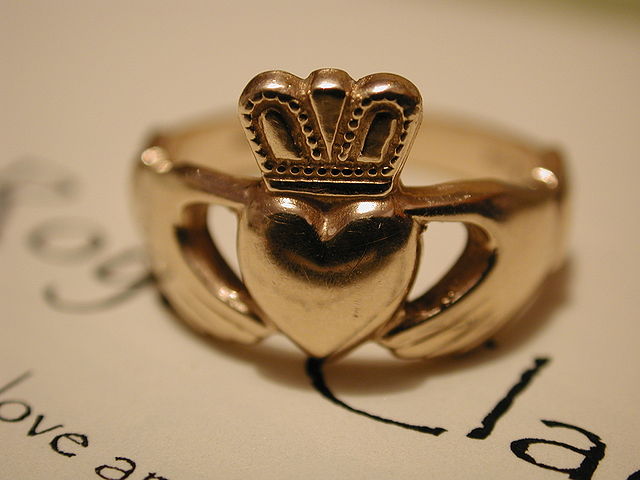
Among quaint old marriage rings, prized and sought after by collectors, the Claddagh ring is probably the rarest. Claddagh is a little district in the north-west of Galway, and its people are popularly supposed to date back to the Armada. Colour has been lent to this belief because the people are tall and dark, and quite unlike other Galway folk, but it is certain that they date far behind and beyond the Armada and their origin is a mystery.
The Claddagh people rarely marry outside their own race. They have always used as marriage rings heavy gold bands, with hands clasped round a heart, and for many centuries these rings have passed from father to son, and each has been given to many a dark-browed bride. On the inner surface of the band the initials of the man and the woman are engraved.
In one ring, which is hundreds of years old, the initials, some roughly carved, almost cover the time- smoothed gold. Irish jewellers make many replicas of these mysterious old rings, but the expert collector can easily detect the modern imitation, and owners of the genuine antiques prize them greatly. The one mentioned had been sought for seven years before a lucky chance brought its present posessor into contact with an old Galway woman who was willing to sell her treasure.
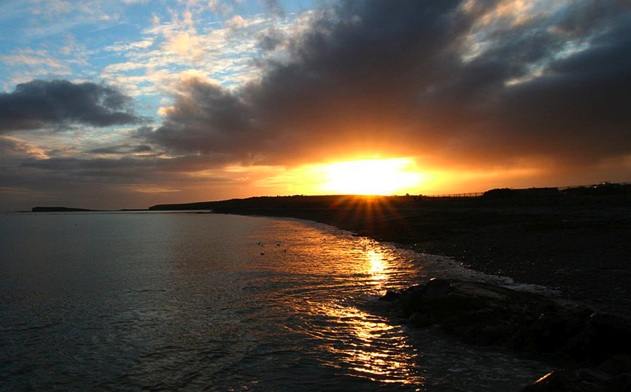
Sunset, Galway Bay wallpapers.varjati.com https://widgetworld3.wordpress.com/podcasts/
PETTICOAT PAPERS. OTAGO WITNESS, 23RD APRIL, 1891 P35
THE IRISH GIRL.
(abridged)
Irish women are the most passionate partisans in the world. Get an Irish girl into the corner of any drawing room, and tickle her with a remark about Balfour. or Parnell, or rents or evictions, or any of the burning questions which rend the “distressful country asunder”, and she will go for you with all the headstrong volubility of her race, and if she doesn’t convince you with her logic, she will do it with her eyes.
Have you never heard an Irish girl sing “The wearing o’ the green” with that passionate abandon which no English girl can approach, until you were ready to curse – Tory though you be – the scoundrels who were “hanging men and women for the wearing o’ the green”? For she has that keen sensibility, that quick sympathy which is so distinctive of the French woman. In fact, she is by nature and temperament a French girl, with a somewhat deeper reserve of passion and a freer system of education and social life than her Gallic Sisters.
That is why the Irish woman succeeds so well in Paris. When she finds herself in a congenial soil she takes root and flourishes with the luxuriance of an indigenous plant. She has all a French woman’s aptitude for intrigue, with more than a French woman’s fire and vigour. Politics, personal politics form her native element, and nowhere are politics so personal as in Paris. And so, when, in obedience to the French maxim, you have looked for the woman, you need not be surprised if she speaks with an Irish accent.
The Irish girl in England often creates an impression of fastness. It is quite a false impression, but springs naturally from her character. She is, as I have said, keenerwitted than home-grown girls “alive all o’er to smart and agonise at every pore.” This is mirrored in her talk, which is fervid and fluent hot from the heart which she bares to you in her speech. She presents herself to you au naturel. She is natural, unconventional, straightforward.
But the Irish girl must be studied at home on her native soil before she can be fully appreciated, and not in Dublin, or Cork, much less in Belfast or Ulster. Generally all big cities approximate to London, as all roads once led to Rome.
I should select Galway as the district where the purest and most unadulterated Irish maidenhood is to be discovered. Often and often, as one drives across the rainswept hills, one comes suddenly upon a cabin and as the clatter of wheels draws near, a figure steps out of the cabin which makes you feel instinctively for your sketch-book, ‘so wonderful are its suggestions of grace and beauty. Only suggestions, alas! For the dress is ragged, and the whole aspect unkempt. But there is a dignity in the carriage, a shimmer in the raven hair, and a purity of complexion.
The features of the girl are reproduced in a score of Galway country houses, only in a prettier frame. The eyes deep grey for choice with all sorts of half lights lurking in the corners, ready to blaze up in passion or melt in pity; eyes that rivet your own till you catch yourself blushing at your own temerity – were there ever such eyes?
All other features are blurred and indistinct if the real Irish eyes are there and as the Cheshire cat lives by its smile alone, so the Irish girl, in spite of a snub nose and a wide mouth, has only to look and conquer. And the voice! I You have no idea of the magic of the human voice if you have never heard an Irish girl tell Irish stories in an Irish house.
Oliver Wendell Holmes says somewhere that he has only heard two perfect speaking voices. One belonged to a German chambermaid, the other I forget to whom. But neither to an Irish girl.
He had never been in Ireland.
At home we often hear soft melodious voices—” voices low with fashion, not -with feeling” – but never in the world have I heard anything like the linked sweetness of an Irish girl’s voice. If it were but a page of Bradshaw that she were reading, the effect would be the same; as the long-drawn notes of a Stradivarias in the simplest melody bring tears from the heart. I cannot explain it, but everyone feels it. There is a note in the human voice which finds its complement in our inmost being. And the Irishwoman has put her finger on that note.
Every Irishman has a touch of Bohemianism in his nature. Thackeray said that we lose our way to Bohemia when we turn the corner of 40. The genuine Irishman never forgets his way there. The Irish girl has it, too, Only a soupcon— like garlic in French cookery; but it gives a flavour to her character. It comes out sometimes in a reckless disregard of expense and consequent financial disaster, sometimes in a wild rush to go nursing in Egypt or missioning in China. I have seen a Galway girl sit up all night while her brothers played billiards, and ride 30 miles after the hounds the next day without turning a hair. And I have seen the same girl sit by a sick bed for a week without taking off her clothes. It is this touch of Bohemianism which sometimes throws the Englishman off his balance. This reckless audacity, this outspoken frankness, which springs from warmth of heart he mistakes for something warmer. And then he notices that the tender grey of the Irish eye can harden into a steely blue, and finds the Irish girl bulwarked by the impregnable rock of maidenhood. She is without fear. Because she is without reproach.
Creative Commonshttps://widgetworld3.wordpress.com/podcasts/ THE BRISBANE COURIER 21ST OCTOBER, 1889
Many of our readers will learn with regret, from the following extract from the Galway Express of 24th August, that an alarming accident has happened to Mrs. De Burgh Persse, though happily no serious results were apprehended :
” On Tuesday evening last, while Mrs. De Burgh Persse and her two sons were driving home from Galway in a light-running pony trap they carne in contact with a goods-van at Salthill, whioh struck against the vehicle with great force causing it to upset, throwing Mrs. Perse and the oldest boy out on the roadway,
“while the youngest boy was caught underneath the car. The driver of the van, it appears, instead of rendering any assistance, whipped on his horse and dashed at full speed into town, and up to the present has not been identified.
Mrs. Persse was very much shaken by the accident, but the younger boy remained unconscious for several hours, and great anxiety prevailed amongst the members of Mrs, Persse’s family. However, on Wednesday morning the poor little sufferer, who is only about 7 years old, showed much improvement, and is now beyond all cause for uneasiness.
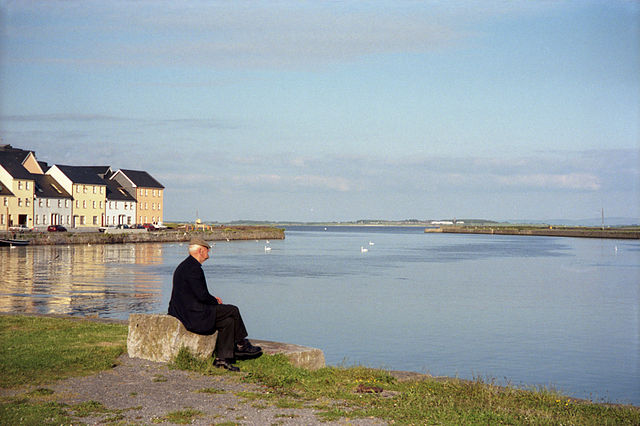
Photo: Steve Hopson, http://www.stevehopson.com. Wikimedia Commonshttps://widgetworld3.wordpress.com/podcasts/ THE CATHOLIC PRESS 17TH JANUARY, 1907
HOW THE WORLD WAGS
Irish Bananas.
In the Dublin Corporation Fruit Market last month, the first consignment of Irish-grown bananas will be offered for sale. They were grown in County Galway, and are said to have surpassed the foreign kind for sweetness and flavour.
Ballybranigan EO’DTHE BEMIDJI DAILY PIONEER 5TH APRIL, 1913 P2
CHEEK (abridged)
“Cheek” in the sense of impudence is an old term. The earliest quotation in Sir James Murray’s dictionary is from Captain Marryat (1840). But it has lately been found in the sixteenth century records of Galway, in the west of Ireland. The municipal rulers decreed that any person giving “cheek” to the mayor should “forfeit 100 shillings and have his body put in prison”.
Ballyknow Quay Photo: Greg O’Beirne Wikimedia CommonsSACREMENTO DAILY UNION, VOL 26, N0 3973 15TH DECEMBER, 1863
THE IRISH EXODUS
(From the London Times – October 30th) – ABRIDGED
On Monday night there steamed into Galway Bay a very large ship, with some goods on board, about three hundred steerage passengers, and a select party in the cabin. Under the protection of the Isles of Arran, thirty miles off, and favored by wind and tide, the ship steamed up to an anchorage on the safe side of a small island, on which stand a lighthouse and a battery, and thence, by means of a steam tender, communicated with the port of Galway…
Besides the four hundred steerage passengers and the twenty-three sacks of letters, she took in at Galway two puncheons of whisky and the latest telegrams…
But putting out of the question that desolate waste of waters, that strange old medieval city, its still stranger suburbs, the twenty-three sacks of letters, the twenty-eight cabin passengers, the latest telegrams, and the two puncheons of whiskey, out and out, beyond all comparison, the most important article in that departure from Galway Bay were the seven hundred steerage passengers.
They were robust, healthy young people; very few of them married; what people used to call the “sinew and bone” of a country…
This is a fact which overrides every other Irish question. The current, in every town and village, every street, every family, every breast, has set in, and it is beyond the power of Governments, of laws, of priests, of politicians, to do more than just lash and disturb the great tide of emigration… there is scarcely a cottage in the west of Ireland where the promise of the family, the elder sons and daughters – their voices and their features still fresh in memory as young and old gather round the turf fire – are now in some far Western State, sending home their hearts’ best wishes for the reunion of the circle.
While writers at home are angrily debating what is to be done with the Irish, they are fast settling the question for themselves by a universal departure.
HOME SWEET HOME (abridged ) J.J. Fleming, Allegheny P.A
I love to be in Galway when the tide breaks on the shore,
And the silver mists are rising from the lea.
When the summer sun in brightness lights the valleys all around.
And nature’s jewels are sparkling, I can see
The little old thatched cottage and the ivy creeping round,
And the skylark thrilling in the vaulted dome;
Among quiet nooks and dells fairy music softly swells,
I love to be in Galway, “Home Sweet Home.”
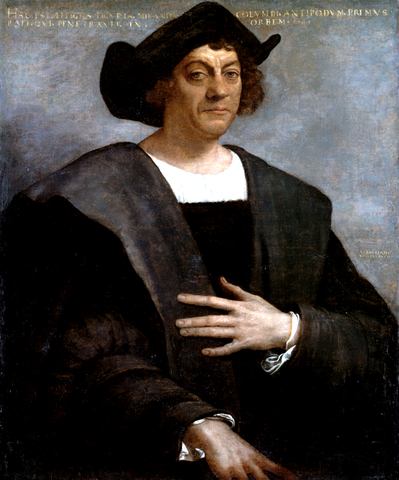
Christopher Columbus – 1519 Sebastiano del Piombo (1485-1547) Metropolitan Museum of Art wikipedia.orghttps://widgetworld3.wordpress.com/podcasts/ BLAIRMORE ENTERPRISE 9TH MAY, 1912
THE CREW OF COLUMBUS – (abridged)
The list of the officers and sailors in the first voyage of Columbus was almost cosmopolitan in its character Among them there was a man of Jewish heritage, Luis de Torres; an Irishman from Galway Ireland, William Harris; an Englishman, Arthur Laws; Italians, Portuguese, Spaniards and several other nationalities, though, of course, the Spaniards were largely in the majority.
It is maintained by some authorities, with considerable plausibility too, that there was a Scotchman in the list and that after Columbus himself he was the first man to tread the soil of the new world – Exchange
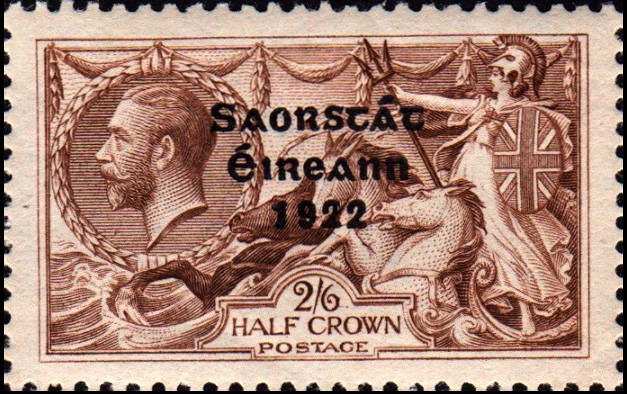
1922 2/6 value King George V stamp overprinted Saorstát Éireann 1922 for use in the newly independent Irish Free State Irish Minister for Posts and Telegraphshttps://widgetworld3.wordpress.com/podcasts/ BLAIRMORE ENTERPRISE 2ND FEBRUARY, 1933 P 7
ANXIOUS TO VOTE
Man in Ireland cycles 100 miles to cast his ballot.
Dublin, Ireland – Two centenarians were among the first to case their vote in Donegal as the Irish Free State went to the polls. In Kenmare a husband, a wife, aged 101 and 99 years respectively, voted their preferences.
A Galway man cycled 100 miles to cast his ballot, while an enthusiast in Killarney walked 40 miles to do his bit for his party.



 The Burren and Beyond