Posted in Posts and podcasts

Galway – 1892

Irish Examiner 1st October, 1892 p.12
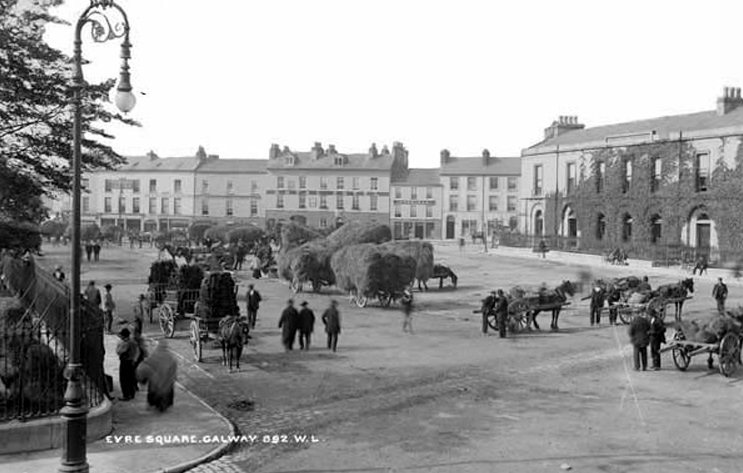
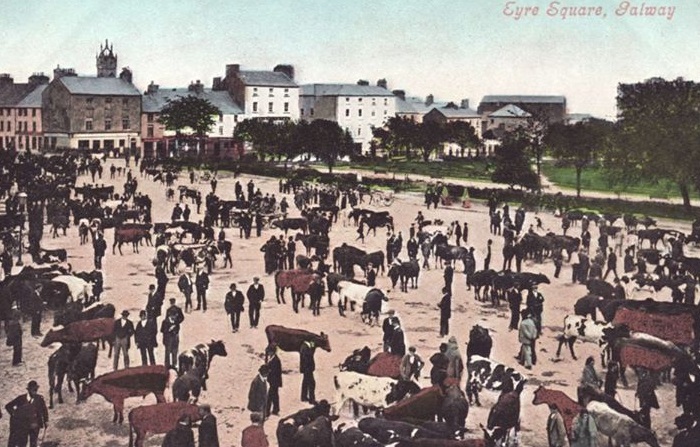
Eyre Square, Galway c.1897 National Library of Ireland Wikimedia Commons
Eyre Square, Galway c.1897
National Library of Ireland
Wikimedia Commons

The old city of Galway will celebrate with more than ordinary enthusiasm the 400th anniversary of the discovery of the New World, for in that fine old city was born William Eyre, the Irishman who sailed with Columbus on his first voyage. The daring and love of adventure characteristic of his race prompted him, no doubt, to embark in the perilous expedition. He was in Palos at the time and had no difficulty in getting engaged as a sailor.
He was one of the thirty-eight whom Columbus left in garrison in the fort of La Natividad, the first European settlement in America, which Columbus built at Christmas, 1492, before returning to Spain. The following year the fort was stormed by an Indian chief and the whole garrison slain. The Galway sailor was among the first white men whose blood was shed.
The names and fate of the slaughtered men who remained in the fort after the return of Columbus to Europe were found in a published proclamation at Seville, calling on the relatives of the deceased to come forward and draw their pay. There is no record of any of the relatives of William Eyre applying for the money due to him from the Spanish Government.
Posted in Posts and podcasts

Galway Banquet – 1843

The Cork Examiner, June 30th, 1843 (abridged)

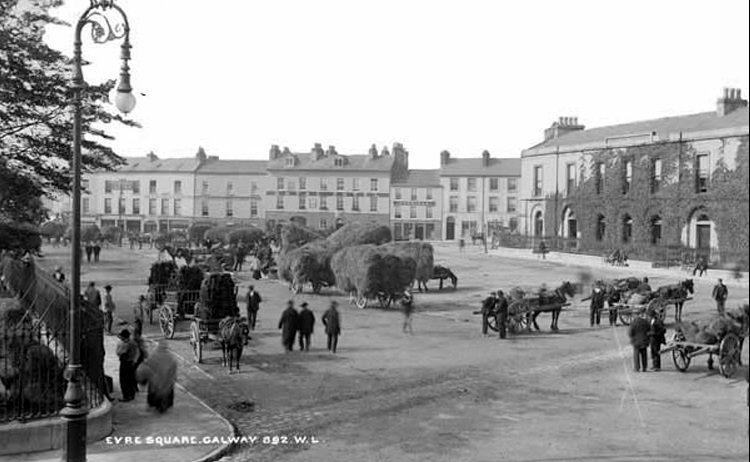
Eyre Square, Galway c.1897 National Library of Ireland Wikimedia Commons.
Eyre Square, Galway c.1897
National Library of Ireland
Wikimedia Commons.

The great public banquet to Mr. O’Connell took place this evening at the magnificent and extensive pavilion, erected for the purpose in Eyre Square, and served as a fitting conclusion to the grand and imposing scene of yesterday. The preparations were all on the most extensive scale, and no trouble or cost was spared to render the banquet worthy of the great importance of the occasion. The pavilion was large enough to contain upwards of 1,000 persons, and was fitted up with great taste and effect. Over the two principal entrances the word “Repeal” appeared in gas lights, and behind the head table several beautiful devices were also formed in the same brilliant material. The tickets collected by the stewards at the dinner amounted to 560 in number, and when the occupants of the principal table and the stewards were enumerated, the entire of the gentlemen present somewhat exceeded 600 in number.

Posted in Posts and podcasts

Galway to Kinvara – 1923

Connacht Tribune 29th December, 1923 p.5 (abridged)

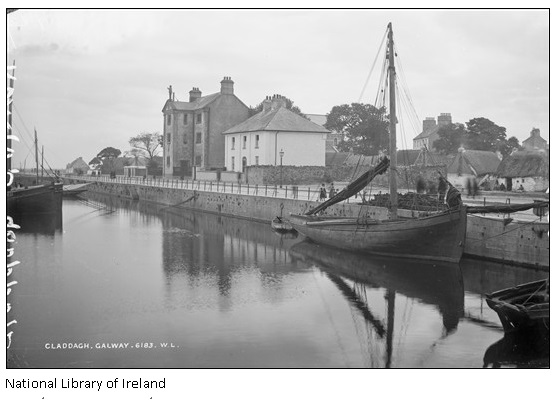
Across the Bay Photo: EO'D
Across the Bay
Photo: EO’D

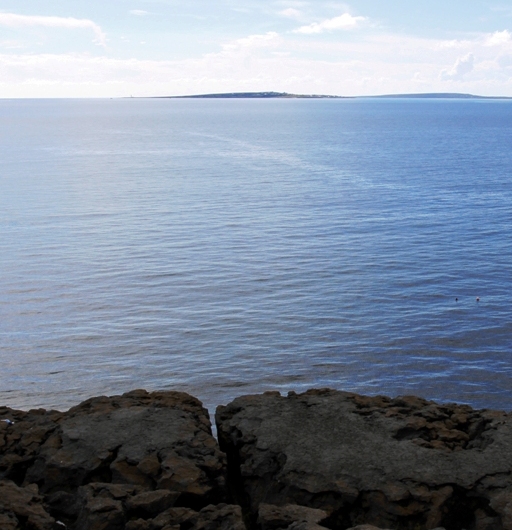
The Council of the Galway Chamber of Commerce had an interesting discussion at its meeting on Friday evening last on the question of linking up the towns around Galway Bay more closely with the city, and developing traffic on the Corrib. Prof. A. Eraut, M.A. occupied the chair; and the discussion was mitigated by Mr J.O’Kelly-Lynch, who said that Mr Winkle, Mr Feeney and other merchants in Kinvara had pointed out to him that much of the trade of that town was done with Ennis and Limerick, and that it could be diverted to Galway provided regular communication were established across the Bay. The pier at Kinvara was available even for a boat like the Dun Aengus. The gentlemen mentioned had sent him a telegram that day saying that they would offer their utmost support to any proposal to establish closer communication by sea.
Mr. M.J.Crowley, H.C., thought it would be well to discuss the whole matter with Captain Meskill of the Dun Aengus, who was an expert on these matters. The Galway Bay Co.’s boat had only nine feet of a draft, but he believed that at times she had to be in the mud at Kinvara.
Mr. Sp. P. Corbett said that Commander Hanan had a small boat at the docks, and he had made an effort to establish a commercial trade with Kinvara, but it had not been a success.
Mr C.C. Copeland, of the City of Galway Shipping Co., said he thought that Commander Hanan had some trouble with his engines at Kinvara, and the wages he was compelled to pay for repairs over there took away anything he could earn on the venture.
It was resolved that the secretary should communicate with the traders of Kinvara as to what traffic they could guarantee and consult Captain Meskill and the owner of the boat on the Corrib.

Posted in Posts and podcasts

The ‘lament’ of Padraic O’Conaire – 1943

eyre sq
Cattle Fair, Eyre, Square, Galway

Connacht Sentinel 13th April, 1943 p.2
In 1935 Eamon de Valera veiled a statue of Padraic O’Conaire in Eyre Square, Galway. The Square was used for a variety of purposes including a turf dump during the Emergency. The storage of turf at Eyre Square ended in the late 1940s. Mr Kevin McDonagh marked its departure, from Padraic’s perspective, with the following poem.

O dreadful change! O piercing sight!
O prospect ugly, bleak and bare!
I’ve half a mind to stand upright
And part forever from the Square.

The crafty folk who jeer and scoff
At things that poets find most sweet.
Have tumbled down and carried off
Those noble piles of rich brown peat.

I’d fondly hope they had been stacked
To lend a rustic atmosphere
To my surroundings and distract
My brooding mind from every care.

‘Tis many a time they raised in me
A thrill as when (with eyes agog)
I’d notice floating lazily.
The Mist That Does Be On the Bog!

I’d e’en had hopes – a foolish batch
That soon a cottage might arise
Amid the peat with golden thatch
And blue smoke curling to the skies.

Exit now, my dreams are shattered quite,
And, like the peat, dissolved in air,
I’ve half a mind to stand upright,
And part forever from the Square.

Kevin McDonagh

Posted in Posts and podcasts

The Connaught Smuggler – 1881 (concluded)

Cork Examiner, Supplement 23rd July, 1881 (abridged)

Galway Cathedral Photo; Norma Scheibe
Galway Cathedral
Photo; Norma Scheibe

“Madam,” said he.
“You must excuse me for stopping you.  While I have every desire to be civil to a lady, I have received information I can depend on, that you have just landed from the East India fleet with a quantity of goods about you.  You must submit to be searched; which I must now proceed to do, in the most accurate manner consistent with my respect for your sex and quality.”
Biddy was at this account, no doubt, surprised and distressed, but in no way thrown off her centre.  Without any hesitation, she replied;
“Sir, many thanks to you for your civility. I am quite aware you are but acting according to information, and doing what you consider your duty; and sir, in order to show how much you are mistaken, I shall at once alight.  I am sure, sir, a gentleman like you will help a poor, infirm woman, labouring under my sad complaint, to alight with ease. The mare – bad manners to her – is skittish, and it requires all my servant’s hands to hold her.”

To the servant she said;
“Luke, avick! This gentleman insists on taking me down.  Hold hard the beast while I am alighting – I’ll do my endeavours to get off – there sir – so Button” (speaking to her horse).
“Now, hold up your arms, sir, and I will gently drop. Yes, that will do.”
And with that she plopped herself into the little dapper excise man’s arms.
A summer tent, pitched on a Syrian meadow might as well bear up against the down tumbling avalanche as this spare man could the mountain of flesh that came over him in the form of Biddy.  Down he went sprawling, as Biddy had intended he should do, and she uppermost, moaning and heaving over him. And there they lay, when with stentorian voice, Biddy cried to her boy Luke;
“Luke, bouey, ride off; never mind me! The gentleman, I’m sure will help me up when he can! Skelp away mo bouchall.”
In the meanwhile, the excise man lay groaning and Biddy moaning.

I shall not attempt to describe the remainder of this scene. I leave it to the imagination of the reader to suppose that the smuggler kept her position just so long as she thought it gave time enough for her property being carried far away from the hands of the overwhelmed gauger.

Posted in Posts and podcasts

The Connaught Smuggler (Part 1) – 1881

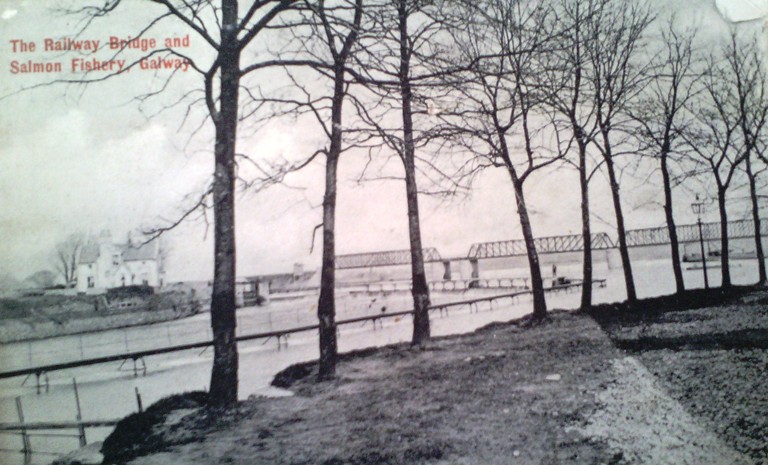
Cork Examiner, Supplement 23rd July, 1881Raillway bridge g
(abridged)
About the commencement of the present century, the Connaught gentry, who seldom thought of going to Dublin, used, besides rigging themselves out at Ballinasloe Fair, to have their common and occasional wants in the way of raiment, jewellery, and spicery, supplied by pedlars.  These pedlars went about the country with large and strong chests stowed on carts, and which contained often valuable assortments of goods of all kinds. They were of such respectability, that some of them dined at the tables of the gentry, and giving, as they generally did, credit, they were very acceptable, and were treated with all possible consideration. In fact, there was a considerable smuggling trade carried on along the whole western coast.  In return for our Irish wool, the French silks and jewellery, and the Flanders goods, came in without the intervention of a custom house. In promoting this traffic, many of the western proprietors were concerned, and it is said that families who wear coronets became right wealthy by the export of wool, and the import of claret and French fabrics.
Be this as it may, the itinerant pedlars I have just alluded to were the convenient purveyors of this contraband, and their good offices were on all hands acknowledged. Of these, Mrs Bridget Bodkin was not the last active, or ingenious. She sprang from one of the tribes of Galway, and though the gentry of the west looked down on regular traders and shopkeepers,  Biddy Bod, as she was called, was considered honourable, for she was very useful.  Many a wedding as well as wedding gear, was the result of her providence.  More...

Posted in Posts and podcasts

Snuff seizure – Galway – 1859

Irish Examiner 2nd December, 1859 p.4    (abridged)

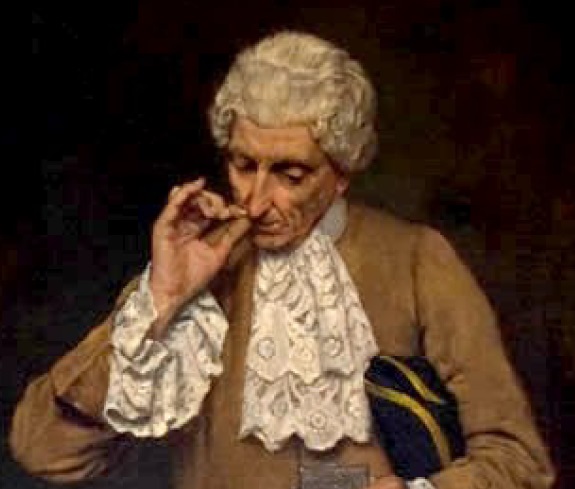
Schnupfer  Creative Commons
Schnupfer
Creative Commons

A large seizure of snuff was made on board the steamer Jason yesterday, which arrived from New York on Friday last. There were ten casks altogether, and a great deal of ingenuity was exercised in the packing, so as to make the casks have the appearance of containing flour. On closer examination it was found that a long pipe was passed through the centre of the barrel at the head, the end of which opened immediately below the bung hole. This pipe was filled with flour, so that on taking out the bung, nothing but flour was visible.

The ten casks which were entered as flour, and consigned to a person in this county, were immediately seized and conveyed to the Custom house. The gross weight of the snuff is one ton. It will be in the recollection of your readers that on the last voyage of the Jason 12cwt. of tobacco was seized and one of the parties implicated in the transaction is at present undergoing six month’s imprisonment, the other having paid the sum of £150. The persons who are connected with the present case will be tried in Galway but the exact time is not yet known.

Posted in Posts and podcasts

Galway – 1894

Irish Examiner 24th September, 1894Clad

A repetition of the disorderly scenes which are the outcome of the street preaching nuisance took place in Galway on Friday. A fair was being held when the preachers commenced, and during the proceedings a crowd kept up whistling and groaning. The thoroughfares leading to the National and Provincial Banks to the railway were blocked by a large force of police drafted into town. Traffic was stopped on the west and east sides of the Square. A number of carts of grain and floats of merchandise to be sent by rail and other vehicles had to stand from the time the preaching commenced till it finished, and would not be allowed to pass. The police were remonstrated with for obstructing the thoroughfare and preventing traffic, but it was no use. It is stated the carriers intend to take proceedings against those in command of the police for preventing them from doing their business. The citizens are greatly annoyed at the likelihood that they will be obliged to pay for the extra police force drafted into town every time the preaching farce goes on.

Posted in Posts and podcasts

Galway – 1928

Galwaygalway
Oliver St. John Gogarty

A gray town in a country bare,
The leaden seas between,
When light falls on the hills of Clare
And shows their valleys green,
Take in my heart your place again
Between your lake and sea,
O city of the watery plain
That means so much to me!

Your cut-stone houses row on row,
Your streams too deep to sing,
Whose waters shine with green as though
They had dissolved the Spring:
Your streets that still bring into view
The harbour and its spars;
The chimneys with the turf-smoke blue
That never hides the stars!

It is not very long since you,
For Memory is long,
Saw her I owe my being to
And heart that takes to song,
Walk with a row of laughing girls
To Salthill from Eyre Square,
Light from the water on their curls
That never lit more fair.

Again may come your glorious days
Your ships come back to port,
And to your city’s shining ways
The Spanish dames resort!
And ere the tidal water falls
Your ships put out to sea.
Like crimson roses on grey walls,
Your memories to me.

Posted in Posts and podcasts

A respectable young man – 1886

Fort Worth Daily Gazette, 2nd February, 1886, p.4

Blue Gentian Photo: EO'D
Blue Gentian
Photo: EO’D

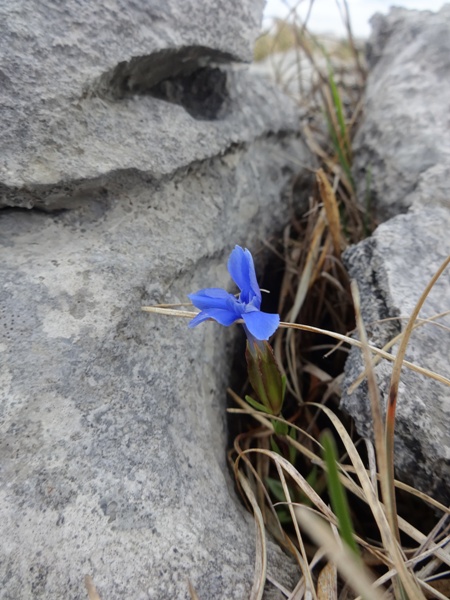
The other day there left Dublin for Galway by the Midland railroad, a respectable young man who could not speak or understand one word of English. He has never spoken any other language than Irish.
He had been a fortnight in Dublin and during that time required, in the capital of his native country, to be accompanied everywhere by an interpreter.