
Catholic Press, 13 January 1938, page 25
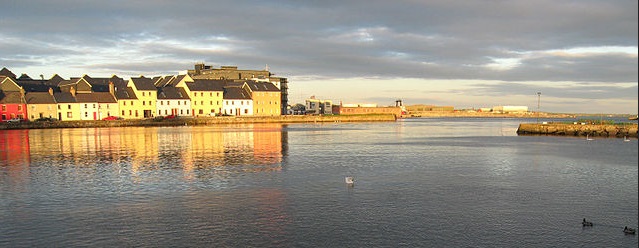
Wikimedia Commons
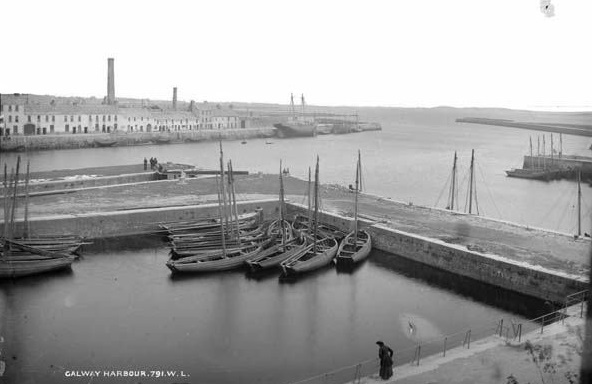
It is well-known that Galway Harbour would be one of the finest in the world but for a reef that prevented large ships from entering. Several catastrophes have been connected with this barrier. The historic rock is now being smashed to smithereens by an 18 ton torpedo-type battering ram, which has a point made of the hardest steel known to scientists. The removal of this obstacle just outside Dun Aengus Harbour forms part of the, gigantic plan to modernise facilities for handling increased traffic at all stages of the tide, and for bringing in much larger ships.
Australians will recall a similar work at Fremantle by the famous Irish engineer, C. Y. O’Connor. The submerged rock barrier rendered navigation not only difficult but at times dangerous, and, more than once, ships have been laid up in the harbour for days, and others have had to stand by in the bay during inclement weather. Out in the harbour men are working to put an end to all that. Day and night, during October and November, the harbour was the scene of intense activity. The improvement scheme is estimated to cost £200,000, and within two years it is hoped to bring Galway into line with the other leading harbours, capable of accommodating seagoing vessels up to 8000 or 9000 tons.
French and Dutch experts, aided by local workmen, are well advanced with the job of removing the reef. A huge dredger first carries away the mud and sand from the reef 3 surface, preparing the ground for the rock breaker.Worked from a specially constructed barge, this battering-ram is dropped through a steel tube on the rock, smashing its way through it like a pneumatic drill breaking concrete. By the middle of this year it is expected that it will have completed its work, and the construction work proper, with an average of 200 men in employment, can begin on the harbour.
It is proposed to deepen and widen the approach channel to the dock to such an extent as to allow vessels to turn before entering or leaving the docks. The Dun Aengus Dock will be replaced by a concrete pier, 450 feet in length, on the south-west side and 320 feet on the north-east side. Passengers alighting from or embarking on the Atlantic tenders, especially during the winter months, must have carried away unfavourable impressions of the pier, bleak and without shelter from the Atlantic gales. It is to facilitate them, the travellers from the Aran Islands, and the Customs officers and other officials, that a concrete shed, 250 feet long, will be built along the pier. It will be equipped with offices and waiting-rooms. On both sides of the new pier it is intended to provide a railway line connected to the main line of the G.S.R. These branch lines will be equipped with travelling cranes capable of dealing with cars, baggage and merchandise. Adequate quays, roads, a car park, and additional space for storage will be made by filling in the disused dock to the east of the Dun Aengus Dock. This portion of the work is also in hand, and two caterpillar excavators are preparing the site. Till now the use of the harbour has been restricted to vessels with a draught of about 12 feet, entering or leaving one hour before or after high water, but when the scheme has been completed it will be possible for vessels up to 350 feet m length, and with a draught of more than 21 feet, to clear the passage with ease. Galway people see in the harbour scheme a new era of prosperity. Its completion, they say, will lead to many more ships making use of the harbour, with a consequent increase in exports and imports, and much-needed employment both at the docks and in the city.
 The Burren and Beyond