Posted in Posts and podcasts

Francis Fahy – 1928

The Catholic Press (Sydney NSW) Thu. 8th November, 1928 p. 14

Excerpt from – The Irish Literary Society of London: A Brilliant Circle – written by P. J. Dillon (abridged)

For the past 30 years two societies have flourished in London, with one or other of which, if not with both, the individual of Irish literary proclivities resident in the English capital was reasonably sure to come in contact. One of these was the Gaelic League, and the other the Irish Literary Society. Frank Fahy was largely responsible for the foundation of each of these organisations. As a matter of fact, he was, as already indicated, the inspiration of what may be taken as the precursor of both of them, the old Southwark Literary Club, on the Surrey side of the Thames.

A Popular Songwriter. Fahy is not an uncommon name in the County Galway, and, like unto the sept of the O’Mahony’s of Cork, and that of the MacGuires of Fermanagh, Francis is a family patronymic in connection with it. One of the members for Galway in Dáil Éireann is named Frank Fahy, and he also has Gaelic literary leanings, being General Official Secretary to the Gaelic League of Ireland. The Frank Fahy with whom we are at present concerned, however, is more widely, known outside Ireland than any of his namesakes, owing to a number of popular lyrics written by him, which include such favourites with Irish audiences as ‘The Donovans,’ ‘An Ould Irish Hill in the Mornin’,’ ‘Little Mary Cassidy,.’ and ‘The Ould Plaid Shawl.’ He has been fortunate in his composers, and a good singer can procure an ‘encore’ with almost any of these songs of his; it is safe to say, however, that more real enjoyment has been obtained by those who have been privileged to listen to the author merely reading his compositions, than would be derivable from the rendition of them by the most capable vocalist of the day. The speaking voice, and the speaking face, the pathos, and the humour, and the unerring modulation, projected a picture visible to the eye of the mind, and vivid and animated as if the scene portrayed was actually being enacted by the originals of the types represented in the metrical compositions.

Official Discouragement.
For many years the author of these songs was an official of the Imperial Local Government Board. Whether or not poetry in the abstract, appealed to his superiors certain it is that the particular type of it that he was engaged in manufacturing was not to their taste. It was quite an easy thing to offend departmental susceptibilities in the days that he actively indulged in versifying, and although the authorities could bring themselves to swallow with a grimace, perhaps — the radicalism of Robert Burns, and the republicanism of Swinburne, anything with an Irish flavour was too nauseating.


It was a time when Parnell’s obstruction policy had produced more bitterness in official circles in London than had existed since the time of Daniel O’Connoll, and the circumstance that nothing more pronounced than jocular comparisons between the English and the Irish scheme of life could be charged against the writer, did not save Fahy from censure. It was definitely intimated to him that he would be well-advised to leave verse-writing alone, and to give undivided attention to the soul-stirring episodes associated with the work of Local Government.

Ah, me, the ‘old Irish hills’ are still there, but those whom Frank Fahy knew in the environs of the hills in the long ago are dead or vanished. And so, now retired from official labours, he has settled down for good in London. For some time past, beyond giving an occasional lecture, his activities have been confined to assisting, in an executive capacity, in keeping the Irish Literary Society alive and flourishing.

The Celtic strain and the literary instinct were too strong to permit of these repressive measures being entirely effective. He continued to strain at the bonds that held him tethered in London, separated from the hills and glens and streamlets of his darling island, and to give expression, in moving measures, to his craving for reunion with the mystic presences that float in the ether of Eirinn:


I’m weary and sick of the sight of the town,
Though haughty its mansions, and high its renown;
Oh, if some good fairy would but set me down
On an old Irish hill in the morning,
My very soul sighs for a sight of the sea,
By dear old Kinvarra, or down by Kilkee,
Or where Mohor cliffs in their majesty free,
Fling back ocean’s billows in scorning.

An old Irish hill, where the crag is so steep,
The air is so sweet, and the heather so deep,
Oh, lightly I’d labour, and soundly I’d sleep
On an old Irish hill in the morning.

These Saxons are hard, and their senses are cold,
And all that they care for or think of is gold,
What will cover their backs, or their coffers will hold?
Or what their shrunk shanks is adorning.
I miss the glad look and the grip of the hand,
The heart on the lips, and the welcome so bland,
The cead mile failthe’ and best in the land,

On an old Irish hill in the morning.
On an old Irish hill, where the torrents that leap,
Are types of the hearts that a vigil there keep;
Oh, sweet be their labour, and sound be their sleep
On an old Irish hill in the morning.

Some day when the summer cloud swims in the sky,
I’ll bid the stiff Saxon a merry good-bye,
And blithe over ocean and land I shall fly
To the green, pleasant land I was born in;
I’ll give the good-bye to all sorrow and strife,
I’ll find in the valley a rosy-cheeked wife,
And whistle ‘Moll Roe’ for the rest of my life,
On an old Irish hill in the morning.
On an old Irish’ hill, where the dreamy mists sweep,

A cabin of love ‘midst the heather to peep,
Oh, lightly I’d labour, and soundly I’d sleep
On an old Irish hill in the morning.

Sprightly Measures.
There is one striking peculiarity that attaches to Fahy’s songs, and that is the lilt in the lines that goes with the merry ones and the cadence of pathos that accompanies the infrequent ones of a sombre character. He appears to possess an instinct for supplying the precise metre, as well as the combination of words, which most aptly serve as a medium of expression of the particular theme that he is dealing with. The quaint conception, ‘Little Mary Cassidy,’ affords a good exemplification of his command of sprightly humour:


Oh, ’tis little Mary Cassidy’s the cause of all my misery,
The reason’ that I am not now the boy I used to be;
Oh, she beats the beauties all that we read about in history,
Sure half the country side is as lost for her as me.
Travel Ireland up and down; hill, valley, vale and town,
Fairer than the colleen dhown you’ll be looking for in vain;
Oh, I’d rather live in poverty with little Mary Cassidy,
Than Emperor without her be o’er Germany or Spain.

‘Twas at the dance at Dramody’s that first I caught a sight of her,
And heard her sing the ‘Dhrynawn dhown, till the tears came in my eyes,
And ever since that blessed hour I’m dreaming day and night of her;
The devil a wink of sleep at all I get from bed to rise.
Cheeks like the rose in June, song like the lark in tune,
Working, resting, night or noon, she never leaves my mind;
Oh, till singing by my cabin fire sits little Mary Cassidy,
‘Tis little ease or happiness I’m sure I’ll ever find.

What is wealth, what is fame, what is all that people fight about,
To a kind word from her lips, or a love-glance from her eye!
Oh, though troubles throng my breast, sure they’d soon go to the right-about
If I thought the curly head of her would be restin’ there by-and-bye.
Take all I own to-day — kith, kin, and care away,
Ship them across the sea, or to the frozen zone;
Leave me an orphan bare — but leave me Mary Cassidy,
I never would feel lonely with the two of us alone.

Frank Fahy comes from Kinvarra, that little spot on the shores of Galway Bay, that he has made known to so many through the medium of his song, ‘The Ould Plaid Shawl’:


Not far from ould Kinvarra, in the merry month of May,
When birds were einging cheerily, there came across my way,
As if from out the clouds above an angel chanced to fall,
A little Irish colleen, in an ould plaid shawl.

I courteously saluted her, ‘God save you, Miss,’ says I;
‘God save you kindly, sir,’ says she, and quickly passed me by.
Off went my heart along with her, a captive in her thrall,
Imprisoned in the corner. of her ould plaid shawl.

Ould Kinvarra.
I have heard him describe, in felicitous and humorous language, both physical peculiarities of the country surrounding Kinvarra, and the personal ones of many of the people who dwelt there. He had a rich store of recollections to draw on, being endowed with both an observing eye and a retentive memory. Indeed, it would have been a difficult task for him to weary his audience on a topic of the kind referred to, his discourse being shot through, as it invariably was, with amusing little episodes which he had a special gift of recounting in the most happy manner. Seats in the lecture hall were always at a premium on a night that he was billed to appear.

He left Kinvarra before the seed sown in Ireland by the Gaelic League came to be harvested, with the result that his ability to speak Irish was circumscribed. It was currently spoken by his elders in his native district, and his father and mother were both Irish speakers, but it had not yet been relieved from the contempt which ignorance of its value had caused to be associated with it. It was at the time looked upon as vulgar, and barbarous, and low, and in every way to be condemned, and strangled, and buried forever and ever, even though the apology for broken English which superseded it was a thing for any educated self respecting Irishman to shudder at. For of a surety there is no more atrocious English spoken than in the west of Connaught. Anyhow, Frank Fahy had read a good deal of Irish history, and cherished the little Gaelic that he brought to London with him, and he could follow an Irish speaker intelligently, as long as the person did not articulate
too quickly.

London Popularity.
In London in those days he was nearer to Dublin, in more senses than one, than he was to Kinvarra, and, lighting a taper from the lamp which had been enkindled by Dr. Douglas Hyde and his confreres in the Irish capital, he busied himself in the establishment of a branch of the Gaelic League in London, of which he was the first president. It was through the medium of the concerts of this organisation that his songs first got a vogue, and even up to the present time the programme of the St. Patrick’s Night concert in London is rare without one or more of them appearing on it. His ballad of ‘Galway Bay’ used to be a great favourite in Irish circles, its sentiments finding an echo in many an exile’s heart yearning for the land of his love. He told me that it was originally written to gratify his father, who followed
his gifted son to London:


Oh, grey and bloak by shore and creek, the rugged rocks abound,
But sweeter green the grass between that grows on Irish ground;
So friendship fond, all wealth beyond, and love that lives alway,
Bless each poor home beside your foam, my dear old Galway Bay.

Had I youth’s blood and hopeful mood, and heart of fire once more,
For all the gold the earth might hold, I’d never quit your shore;
I’d live content, whate’er God sent, with neighbours old and grey,
And lay my bones ‘neath churchyard stones besides you, Galway Bay.

The blessings of a poor old man be with you night and day,
The blessings of a lonely man whose heart will soon be clay;
‘Tis all the Heaven I’d ask of God upon my dying day —

My soul to soar for evermore above you, Galway Bay.

I never knew anyone who had an unkind word to say of Frank Fahy. There is not, the slightest suspicion of pedantry or bumptiousness about him; he is always cheery and pleasant, jovial and humorous. At a complimentary dinner given to him a few years ago by the Irish Literary Society, eloquent tribute was rendered to him by quite a number of distinguished people, for the splendid work that he performed during his long association with Irish literary activities in the English metropolis. He is deservedly regarded by all those Irishmen who have the privilege of his acquaintance as a kindly, talented, essentially Celtic personality.
Posted in Posts and podcasts

A Thrilling Dive – July 1919

The Evening Telegraph, Tuesday 29th July 1919 p.4
THRILLING DIVE
Airmen’s somersault into Galway Bay.(abridged)
The striking spectacle of an airman diving into the sea from a falling aeroplane, a second officer scrambling from beneath the immersed machine, and both swimming to the shore, was witnessed at Galway Bay. The machine, piloted by Captain Bowen, R.A.F., accompanied by Lieutenant Alcock, R.A.F., was seen flying at a great height over the city. Gradually it descended, when it soon became apparent to the spectators that it was in trouble. The aeroplane eventually got well over the water, where the engine stopped. The machine then turned a somersault in mid air and fell into the water. The observer jumped clear, but the pilot was unable to extricate himself in time, and was carried underneath by the falling aeroplane. With difficulty he managed to scramble out and joined his partner in a twenty-five yards’ swim to the shore, which they reached in safety before a boat dispatched from the naval base immediately the mishap was observed could arrive on the scene. In the evening a motor-launch from the base towed the derelict aeroplane into dock.

Posted in Posts and podcasts

A curious thing – 1896

Chronicle 3rd October, 1896

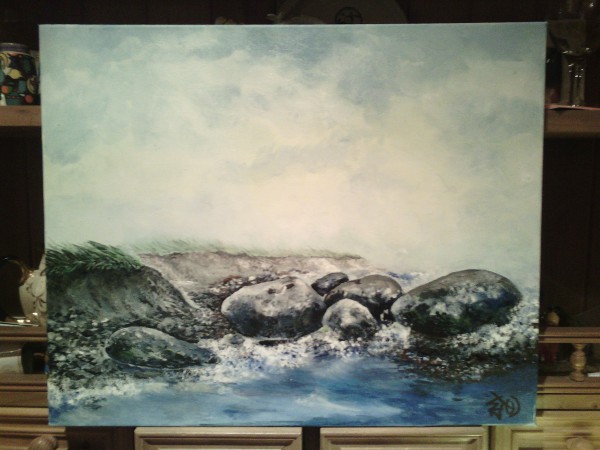
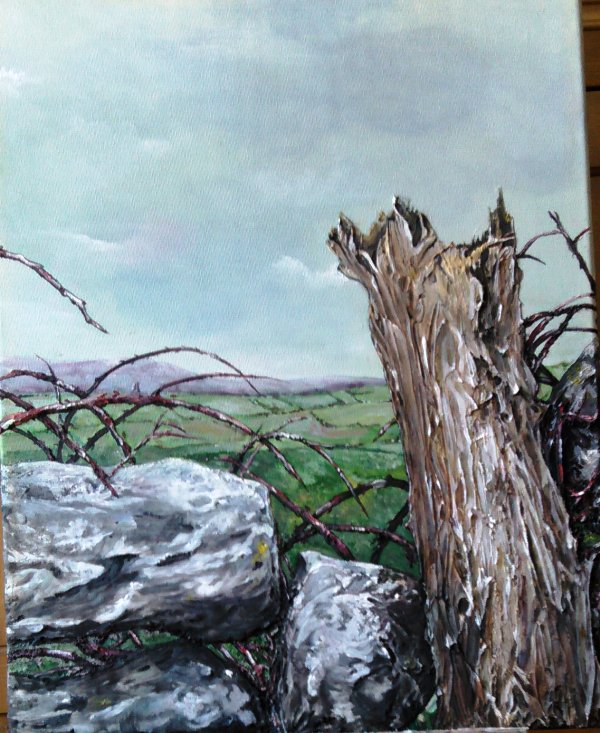
Westward Acrylic on canvas EO'D
Westward
Acrylic on canvas
EO’D

During Lord Mulgrave’s, or a preceding Lord Lieutenant’s rule in Ireland, there was a curious thing never traced to its source and never explained. In the east of Kildare, at Kill, a strange woman gave a piece of kindled peat to a man, with the injunction to pass it along to the next person on the Naas road, that person to repass it westward still alight, and so on westward. If the turf were let go out before a new piece were substituted from a living hearth, misfortune would come. That was on an autumn evening. Within twelve hours the ‘burnt turf’ had been carried to Galway Bay, across Kildare, the Queen’s and King’s counties, and Galway. No one has ever published an explanation of the affair.

Posted in Posts and podcasts

Galway to Kinvara 1924

Freemans Journal 19th January, 1924 p8

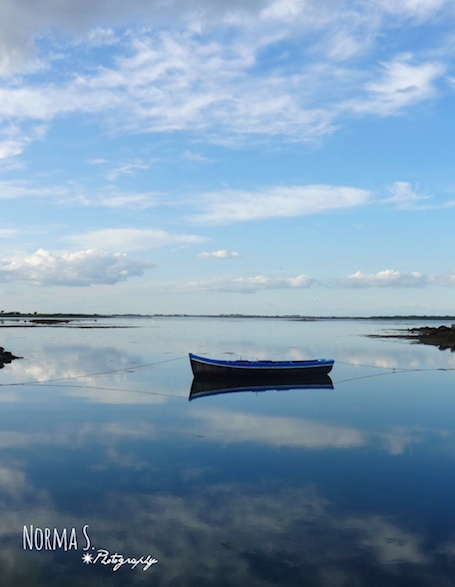
Galway Bay Photo: Norma Scheibe
Galway Bay
Photo: Norma Scheibe

Lieut Commander O’Donnell, of the Free State Coastal Patrol, a native of the Aran Islands, has initiated a scheme of coastal traffic in Galway Bay and proposes to run a direct service from Galway to Kinvara with the motor boat, St. Nicholas, and later to trade along the Northern coast of the county to Clifden.
==========

Posted in Posts and podcasts

Leaving Ireland – 1907

The Catholic Press 13th June, 1907 p6IMG_20150116_191121
Father Fitzgerald OFM (abridged)
At the very period of the year when travellers from other lands are trooping to the beauty spots, of Ireland, her own sons and daughters are bidding farewell for ever to her shores. The column of the morning papers devoted to fashionable intelligence relates daily that various honorables with their ladies and retinue have arrived from abroad at Kingstown, but the emigrant ship may bear away her freight of the young and strong unnoticed and unchronicled save by widows wails and the ruined fireside. The emigration season sets in now in Ireland as regularly and as surely as the fishing or the shooting seasons.

To accommodate the thousands, or rather the scores of thousands, who depart yearly, excursion trains are run to the seaports, and large steamers compete with each other in speed and cheapness of transit to America. Indeed, it is a sad thing to meet one of those American excursion trains, still worse to occupy a place in the train even for a short journey, for scenes of great affliction occur at every station.

A bird of ill-omen appeared in Galway Bay on the 27th of the present month of April. This was an emigrant steamer the first of the season. Another will call in ten days more and take up her own portion and those who were left behind through over-crowding on Friday morning. About a fortnight ago a large poster, printed in red lettering, appeared on the dead-walls and gate-piers of Galway, announcing the fact that the Salmatian of the Allan Line would call at Galway on the above date. Details followed concerning the superior accommodation, and the lowness of the fare across. The news was carried through the hills of Connemara and out to the Isles of Aran and along the coast to Inishbaffin, and in answer to the call, like to the beacon-fires of old, many a youth and maiden was up and doing. Many a one humped the last Irish of seaweed up the barren hillside or spent the last dark night watching the phosphorescent gleam on the dark waters that tells of the herring shoal, or walked six miles, if not more, to the town and back to sell a quart or two of milk.

In almost every townland in the surrounding country there are celebrated several American wakes. Your readers may not know that this is the title given to the domestic celebration that is held in every home, however humble it may be. On the eve of the departure of one of its inmates to America, A quarter-cask of porter is provided, or some good poteen, and the neighbours get word, and music is supplied by a piper or an expert on a melodeon or a flute, or a concertina, or all in turn. The boys, and the girls take the floor, and the rinca fada, the curcaher, or the Curuckther are faithfully performed, until day breaks. Then, weeping takes the place of laughter, and the whole house turns out to accompany the parting one to the station, except the old grandfather or grandmother, who rocks the cradle with their foot and minds the house.

Posted in Posts and podcasts

Seizure of Steam Trawlers – Galway Bay – 1896

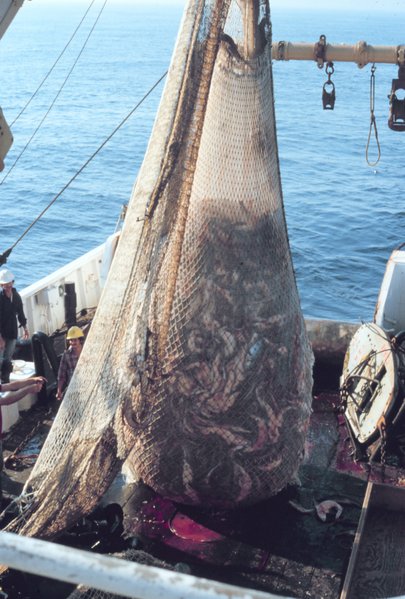
Trawl Net U.S. National Oceanic and Atmospheric Administration,  Wikimedia Commons
Trawl Net
U.S. National Oceanic and Atmospheric Administration,
Wikimedia Commons

New Zealand Tablet, Volume XXIV, Issue 4, 22 May 1896, Page 4

Special court was held in Galway for the purpose of trying the charges of illegal fishing preferred against the masters of two steam trawlers seized by a gunboat in Galway Bayfor illegal fishing etc.
The presiding magistrates were Messrs J O. Gardiner, P. M. and M. A. Lynch JP. The prosecution was carried on by Mr Underdown, head of the Customs, and the Inspectors of Fisheries, on whose behalf Messrs Blake and Kenny, solicitors, appeared. The defendants, J. T. Wales, of the trawler Traiton, and John Pettit, of the trawler General Roberts, were represented by Mr Gerald Clonerty, solicitor.

It appears that in the absence of Mr Pinkerton, Mr John Dillon put a question in Parliament which brought about the sending of a gunboat to watch illegal fishing in Galway Bay. Many complaints had been made by Claddaghmen of their boats being nearly run down by steam trawlers fishing the bay in the night time contrary to the fishery regulations.

The very first night the gunboat arrived in the bay the defendants’ vessels were seized. They were each fined £5 and costs for fishing within the prohibited limits, and £25 and costs for steaming about and trawling without having their lights on as prescribed by the bye-laws. Both vessels were from Milford Haven.

Posted in Posts and podcasts

Martello towers – deconstructed – 1863

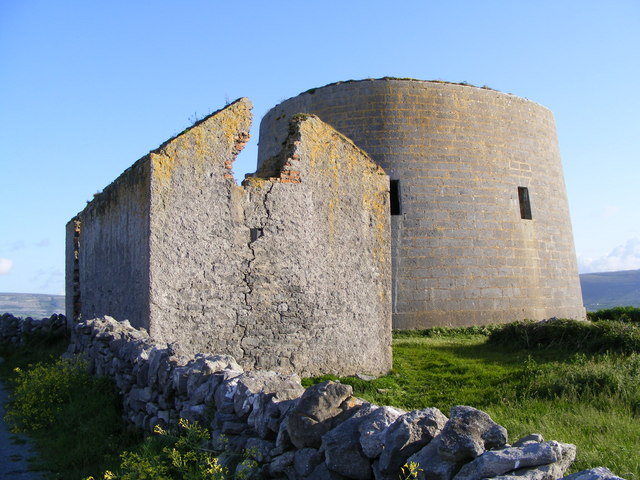
Finavarra Martello Tower at Finavarra Point, County Clare, Ireland A McCarron Wikimedia Commons
Finavarra Martello Tower at Finavarra Point, County Clare, Ireland
A McCarron
Wikimedia Commons
QUEENSLAND TIMES 28TH NOVEMBER, 1863 abridged

Owing to the great revolution which has taken place in war material, both for naval and military purposes, it has been decided to reconstruct (sic.) a great many of the martello towers around the Irish coast, it having been found from experiments with the Armstrong guns against similarly constructed towers in some parts of England, that they are entirely useless as works of defence.

At a late inspection of all the fortifications in Ireland, it was found that in some parts of the coast some of these towers were manned, armed, and kept in a state of repair at great expense to the public. As much from their position as from their useless construction, they were quite incapable of rendering the slightest service, either offensive or defensive. Consequently the whole of the towers in Galway Bay, also the tower and battery at Drogheda, have been dismantled, and the guns, stores, and artillerymen withdrawn. The buildings have been taken posession of by the the Barrack Department. We believe it is in contemplation also to withdraw the guns and stores from the towers in Dublin Bay, north and south.

Daily express

Posted in Posts and podcasts

Sea monster in Galway Bay – 1935

Image from Hetzel copy of Twenty thousand leagues under the sea (Jules Verne) Wikipedia.org
Image from Hetzel copy of Twenty thousand leagues under the sea (Jules Verne)
Wikipedia.org
https://widgetworld3.wordpress.com/podcasts/
SUNDAY TIMES (PERTH) 23RD JUNE, 1935
SEA MONSTER SHOT – MYSTERY CREATURE WITH TWO TAILS

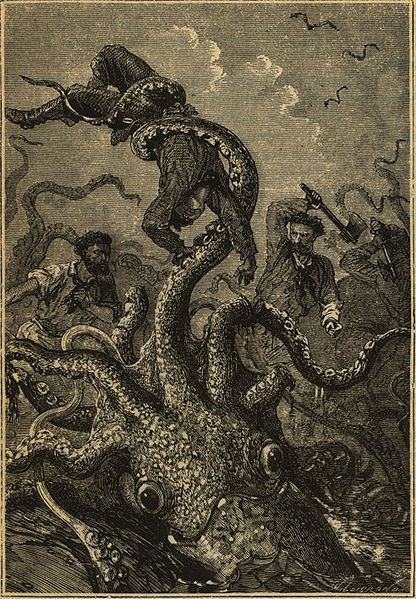
A strange marine creature, twin brother of the Loch Ness monster – 48 feet long, 26 feet in circumference and weighing about four tons, has been shot by a lighthouse keeper in Galway Bay, Ireland.

The sea monster had got caught in the nets of one of the fishing boats off Mutton Island lighthouse. It carried boat and cargo, human and aquatic, for some distance until the nets gave way in shreds. A description of the monster seen once above the surface roused the entire city. Seamen and harbor officials immediatey proceeded to the beach armed with guns and gaffs.

FIVE SHOTS, THEN
I went out in a hooker piloted by John Walsh, an old seaman of vast experience (writes the correspondent of “The People”).
As we approached Mutton Island in miserably cold rain five shots rang out from the direction of the lighthouse. We were just in time to see an aquatic King Kong leap bodily into the air, lashing the water into a miniature tidal wave as it rolled and twisted in its death agony. We anchored to one of the monster’s giant fins and John Crowley the lighthouse keeper, who had fired the shot explained that he spotted it while about to tend the lamps in the lighthouse. Rushing down armed with a rifle he took careful aim and shot the creature in the head several times.

TWO KNIFE-EDGED TAILS
Opinions were divided as to the nature of the strange creature. Crowley and my companion agreed it was neither shark nor whale. Walsh stated that in 50 odd years’ marine experience he had never come across a similar specimen.

It has a head of enormous dimensions, a long scaly body ending in two knife edged tails It is suspected that more than one of these strange creatures are in Galway Bay.

Posted in Posts and podcasts

And far away…1910

https://widgetworld3.wordpress.com/podcasts/

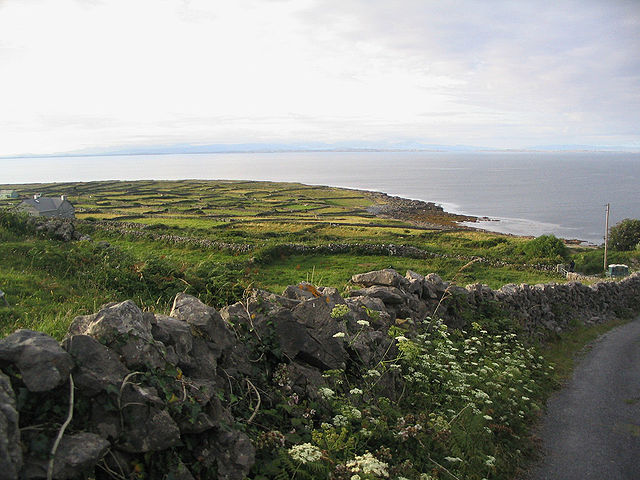
Árainn/Inis Mór Photo: Creative Commons
Árainn/Inis Mór
Photo: Creative Commons

THE WEST AUSTRALIAN 25TH JUNE, 1910
EXCERPT FROM ‘THE LAND OF THE WESTERN GLEAM’ BY E. LONGWORTH DAMES (VI – Galway of the Tribe
s)
…And far away, far out across Galway Bay, there is a faint vision of the mysterious Aran Islands, some of the fairy isles of the west, the last retreat, it is said, of a very ancient people called the Fir Bolgs, a primeval tribe which was in Ireland before even the Gods came there. This is what lies dimly and half seen on a gray horizon against gray skies colouring at evening, and Galway, dreaming away its life in a soft Western langour, with a pale glory of the past about it, like last daylight lingering, looks out upon these for evermore. Ptolemy is said to have spoken of Galway as then existing under the name of Nagnata. And when twilight settles down in a silence that is full of old voices, one may well fell that the place and the country round it, are of far off beginnings and ageless.

Posted in Posts and podcasts

Burren memories – 1890

Photo: Matthew O'Brien Wikipedia.org
Photo: Matthew O’Brien
Wikipedia.org
https://widgetworld3.wordpress.com/podcasts/
THE ADELAIDE ADVERTISER 18TH MARCH, 1890
ST. PATRICK’S DAY – CELTIC DEMONSTRATION

Excerpt from Mr Patrick MacMahon Glynn M.P (President Irish National Federation) address;
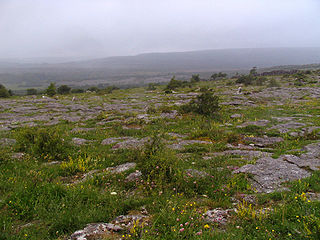
…”Some of you may have, like myself, been born in the West. There by a road which winds along the side of the Burren Mountains is a spring of clear cold water such as the water which fills our day dreams but not our throats, when the mercury is dancing a South Australian hornpipe between 100 degrees and 110 degrees in the shade. It is called Patrick’s Well. Why, I am not sure. I may have been baptised there and don’t remember. Some say that my great namesake once or twice opened his flask by that spring. If he did it is proof that he had a taste for more than spring water, for the sight commands a splendid view of Galway Bay. It was there that I first felt the romance of the sea, as I watched with the wondering eyes of childhood the turf boats glide down between Aughinish and the mainland on the swift ebb of the tide. This is one of the characteristic reaches of a western bay. Outside on the shimmer of the horizon are the wild islands of Arran against whose bold cliffs beat for ever the breaking swell of the Atlantic. It is there that you can feel the glory of Shakespeare’s rebuke of the surges that “Wash both heaven and hell.”