Posted in Posts and podcasts

Bird Lore – 1938

The Schools’ Collection

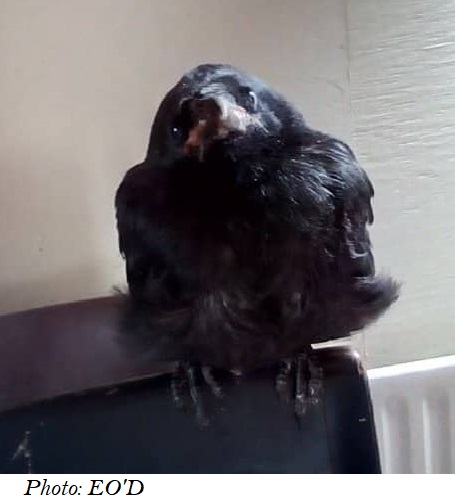
Crows are most common in this district. They never migrate. The crows build their nests on the tops of high trees. The robins build their nests in the holes of walls or in fences. Magpies build their nests on the chimney tops. The wrens build their nests on bushes or in holes of walls. Blackbirds and thrushes build their nests in ivy trees. The crow makes his nest from sticks and hay. The robin makes his nest moss and wool. The magpie makes his nest from earth and sticks. The wren makes his nest from moss and he puts feathers in the inside of it. The only birds that migrate are swallows cuckoos in this district. The swallows come to the district in the month of May and remain in it until August. The cuckoo comes to the district in the month of April and remains until September.
The weather can be judged by the behaviour of birds it is an old belief if the cuckoo sings on trees without leaves that corn will be scarce on that year. If the seagulls fly inland it is the sign of coming storm and rain. If the wild-geese fly inland it is the sign of coming snow. If the swallows fly high fine weather may be expected. For anglers in Spring it is always unlucky to see single magpies but two may be always regarded as a favourable omen and the reason is, that in cold and stormy weather one magpie alone leaves the nest in search of food the other remaining sitting upon the eggs or with the young but if two go out together it is only when the weather is warm and mild and favourable for fishing.

Collected by Eileen Dolan, Carnanthomas, and Ballymanagh N.S. Co. Galway, from Peter Fahy Roo, Craughwell. From duchas.ie
Posted in Posts and podcasts

Home-made Toys


Collected by Patrick Nolan, Kiltartan N.S.
The Schools’ Collection, Volume 0047, Page 0090
National Folklore Collection, UCD.

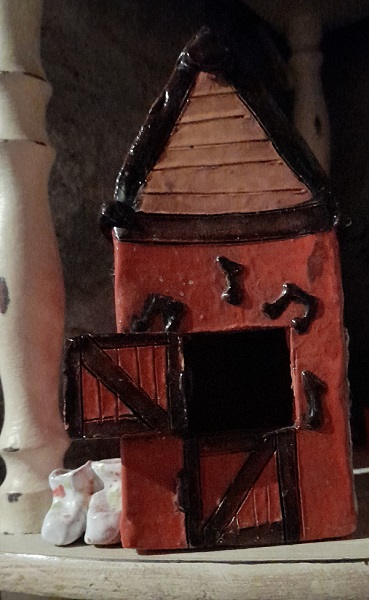
Clare’s Doll House
Photo: EO’D

A Fob Gun

Nowadays toy guns, made in Germany or Japan can be bought for a penny. Long ago boys made their own guns. This is how they did it.
First they got a piece of an elder tree. Then they would redden a piece of an iron and bore a hole through it. Then a piece of wet paper was got to act as a bullet. This was stuffed into one end of the gun. Next a stick was got to fit the hold. Another ‘bullet’ was inserted into the other end of the gun, and everything was ready.
The stick was then pushed through the bore of the gun. The force of the air through the gun would make a shot.


Spinning Tops
These were made by the boys themselves long ago. An empty thread spool was pared and shaped like a top. The hole through the centre of the spool was then filled with a piece of timber, and a nail (from which the head was removed) was then driven into the pointed end of the top. The top could be made spin by twisting several coils of twine around it.

Posted in Posts and podcasts

THE LOUGHNANE BROTHERS


The Schools’ Collection, Volume 0050, Page 0147
Image and data © National Folklore Collection, UCD.
Collector: Eileen Kelly, Keanspound, Gort

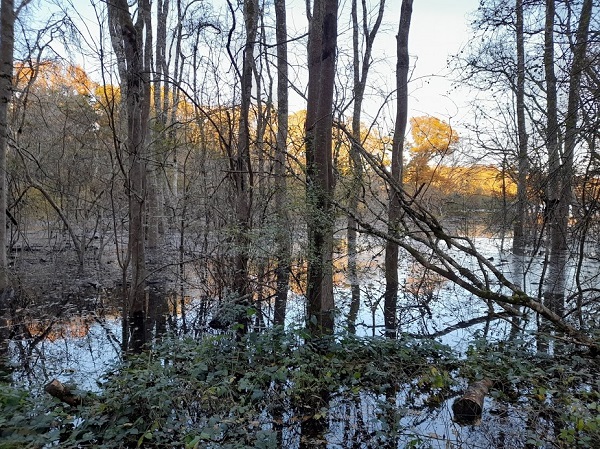
Garryland Photo: EO’D

This was composed by a local poet who’s name is unknown.
It is about the Loughnane brothers, natives of Shanaglish beyond Gort. They were members of the I.R.A. and they were brutally burned by the English. They were dragged behind two carriers for three miles and they died near Kinvara. Their bodies were then thrown into a pond and were not discovered till ten days afterwards. The Tans that committed this outrage in Nov. 1920 (abridged)


As the winter’s wind blew wild on a cold November’s night,
The sad news reached Kinvara of a mournful tragic sight,

It was the finding of two brothers pale corpses lay side by side,
Far from their loving mother these true hearted brothers died,
They were taken by our enemies while threshing their mother’s corn,
And came back cold corpses to the place where they were born,
They were taken in a lorry by a military escort,
From their native home Shanaglish
Three miles south-west of Gort.
II
They were dragged behind two carries for three miles and more,
Till the blood gushed from their faces and their bodes bruised and sore,
They were taken to Drimharsin on a clear November’s day,
While the blood gushed from their faces
and their roars were head for miles away.
“What they suffered God only knows.”
III
Their bodies were brutally burned as they lay upon the ground,
Then left into a pond to prevent them from being found,
For ten long days in this desolate grave unblessed by any priest
Those martyred brothers Loughnanes by God’s aid was released,
To an old house near Kinvara the funeral marched next day,
Under a body guard of I.R.A. who took the remains away.
IV
That day was a sorrowful day for their mother,
To see the fresh blood oozing from a wound in Harry’s side,
Poor Padraigh’s flesh was torn, o’er his eyes were boiled within,
There was nothing left to recognize but a nose and half a chin,
His brothers bones lay visible as cold corpses they did lie,
Their bodies they were coffined and wrapped in brown and white,
And left into the Church of God where they rested that night.
V
The following day was a mournful sight for the mother of the brave,
To see her darling boys going to the bosom of the clay,
Those brother nursed with tender care are now beneath the sod,
Their spirits are despite their foes today before their God,
In the church yard of Shanaglish those two young heroes lie,
They gave their blood for Ireland and died for you I, (sic)
And gave up all they had on earth and suffered all these pains,
To strike for you anther blow and smash the Saxon chains.
VI
Is there any rebel here amongst you still to repeat those words again,
To thread the path of dauntless men who have suffered without fear or disdain,
But if you be true to England by obeying her Saxon laws,
They you’ll soon forget our men shot down by the cold blooded murderers, the servants of the Crown,
Let this ring throughout land and echo over the main,
That our gallant Loughnane brothers were not sacrificed in vain.

Posted in Posts and podcasts

The Long Black Hand

The Schools’ Collection, Volume 0036, Page 0210

The long black hand

National Folklore Collection, UCD.
From Ardrahan, Co. Galway
Teacher: Tomas S. O Meadhra
Collector: Cahal Kelly from Michael Kelly, Ardrahan.
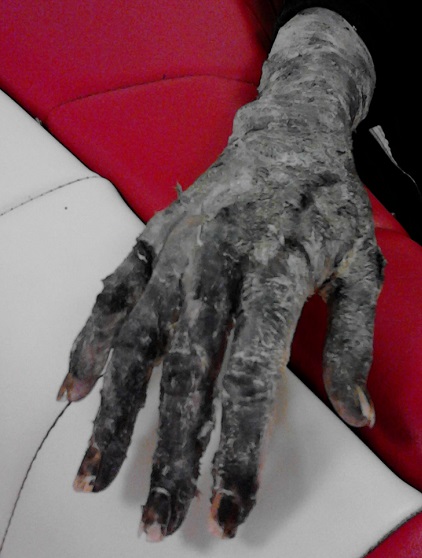
There was a certain old witch in Kinvara and she lived under a big tree with five branches out of it. Every night at ten o’clock she used to come out on the road and every one that would pass she would kill them. There was one brave man in Ballindereen named Blake and this night there was a great banquet in Clough. The people of the place told Mr. Blake that there was a ghost in the place and he would not believe it. He sent a soldier named Hynes to see if this was true. They gave him three sheaves of oats by which he would know if the ghost was there. The man with the sheaves of oats ran on around the grave three times and the third time she hit him with the lid of a churn. The man went from the place about three miles and the long black hand gripped to the horses mane. He drew his sword and cut the hand up near the shoulder. A voice said ‘Hit again. You have enough and keep it.’ He went home and told them but they would not believe him. He told them to go out and see the long black hand on the horse’s mane and they did and found the horse dead.