
Freeman’s Journal 8th August, 1861 p4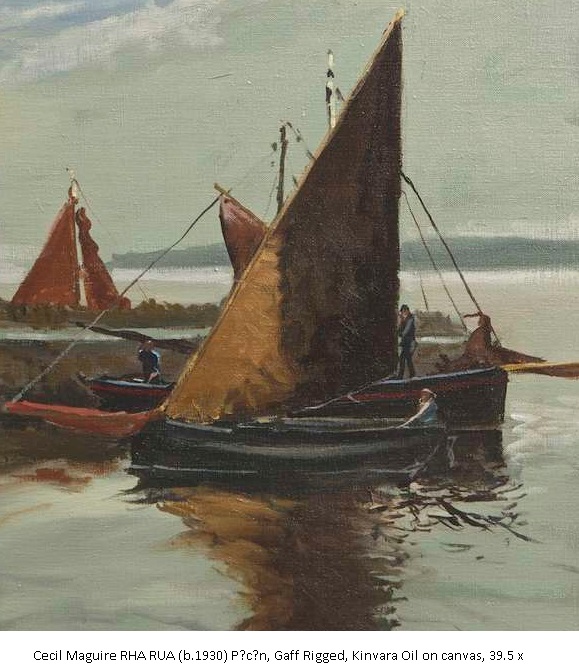
Monday evening the poor Claddagh fishermen went out in great numbers, hoping to profit by the myriads of herrings that swarm our bay. It was blowing moderately at the time from the N.W., but a few hours later it blew a regular gale from the westward, scattering the hookers in all directions, obliging them to run, some for Kinvara, and others for Ballyvaughan and Newquay. With difficulty they reached those places of shelter, and we regret to learn that many of the poor people lost their nets and fishing gear in the storm. They mostly returned today and loud are the lamentations of many a poor family in the Claddagh for the loss of the instruments of their labours.
Tag: Ballyvaughan
A sensational incident – 1911
Connacht Tribune 15th July, 1911 p.4 (abridged)
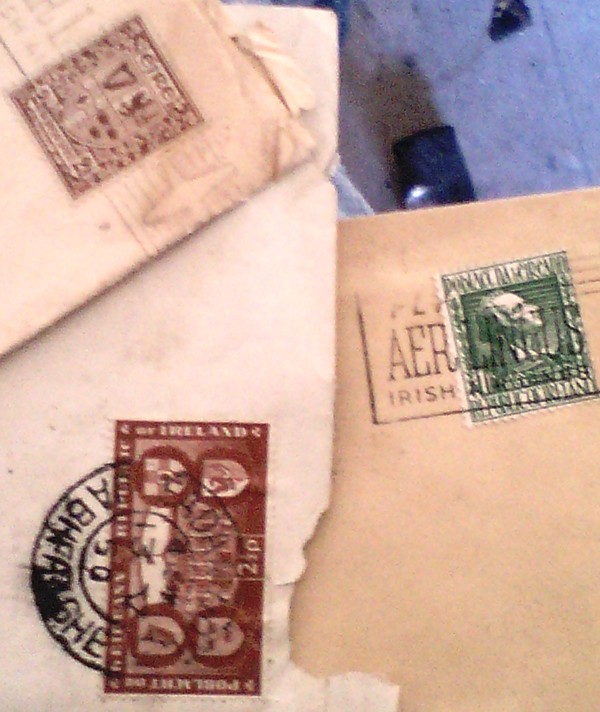
On Friday morning of last week, about 4.30 a.m., the mail car from Kinvara to Ballyvaughan was held up at Curranroo, Co. Clare, by an armed man, who sprang from behind a wall and, pointing a revolver at the driver, shouted, “Hands up,” and took possession of the horse and car.
The first intimation the driver got that anything was wrong was when he espied a wall built across the road a few hundred yards from Curranroo in the Newquay direction on top of a hill near the house of James McNerney. He was in the act of dismounting in order to remove the obstruction when a man, wearing a mask, with a slouch hat on one side of his head and a “speck” cap on the other, who had, evidently concealed himself in a sandpit for some time previously where he had an uninterrupted view of the Kinvara road and of the mail car approaching, sprang out on the road and presented a revolver heavily mounted, and obviously of an American type, and commanded the driver to walk towards Kinvara until the junction at Corker Hill – the boundary of Clare and Galway – was reached. He drove off with the car and horse and made by the new line in the direction of Corofin.
The driver retraced his steps when he saw he was out of danger and reported the matter to the police at Newquay. The police immediately set out on bicycles and some of the letters were found scattered a few miles away at Funshin, and the other three bags were found near Cappamore, Kinvara.
Kinvara Horse and Cattle Fair – 1909
Connacht Tribune 13th November, 1909 p.7
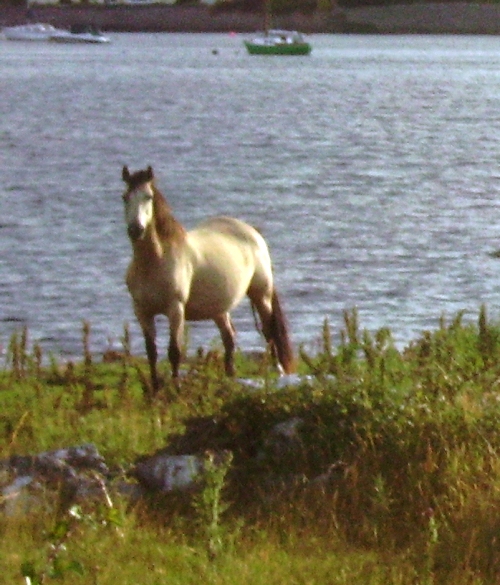
The above well-known horse and cattle fair will be held in accordance with custom on Wednesday, November 17th, 1909 (being the first Wednesday after 11th November). The fair, which has been such a very decided success since it was first started some years ago, has grown from very small dimensions to be one of the most noted held in the locality. It supplies a much-felt want to the farmers in the district, as well as to the multitude of people along by Carron and Ballyvaughan, who have no horse-fair nearer than Athenry or Loughrea.
The prices obtained at last year’s fair for colts and foals, as well as for good-class working horses was far in excess of prices obtained at any of the other local fairs. In the cattle department over 500 calves were disposed of last year at very remunerative prices. As Kinvara is the centre of a horse-breeding district, people from a distance would do well to patronise it. Already promises of support have been received from all quarters, and the supply of horses, foals and cattle at this year’s fair promises to be a record one.
A fair point – 1907
Nenagh News 17th August, 1907 p3 (abridged)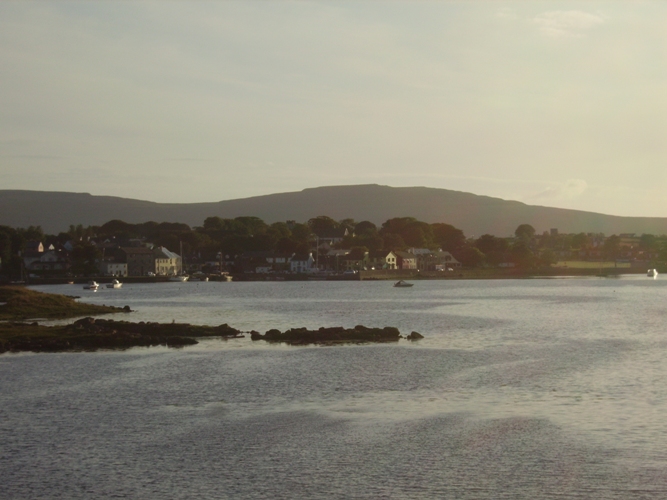
Photo: BO’D
About one hundred thousand pounds of the estimated two and a half millions annual over-taxation of Ireland would build a small link of railway between Ardrahan and Ennistymon by Kinvara, New Quay, Ballyvaughan and Lisdoonvarna and throw open to the public the enjoyment of the open sea and means of transit for the famous Burren oysters, Redbank oysters and Pouldoody oysters, whose banks are along this particular section of the coast of Clare, particularly New Quay.
Ballyvaughan/New Quay – 1849
Parliamentary Papers; 1780- 1849 Volll 11, Part 1. p138(abridged)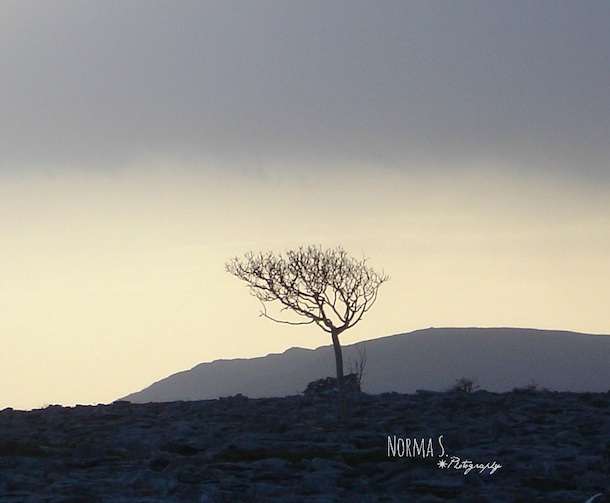
In the Ballyvaughan and New Quay District the Subscribers state that several of the chief Proprietors, who are mainly non residents, contribute nothing to the Dispensary. In proof of this statement eighteen such individuals were mentioned, whose joint annual rental is £12,000 a year. As the District is poor, those whose subscriptions support the charity consider it a hardship that, as occupiers, they should be doubly taxed while many owners do not contribute by subscriptions nor by assessment. The Medical Officer resides at Kinvara; his duties appear to be very diligently performed.
Highway robbery – 1911
The Newsletter (Sydney) 16th September, 1911 p11
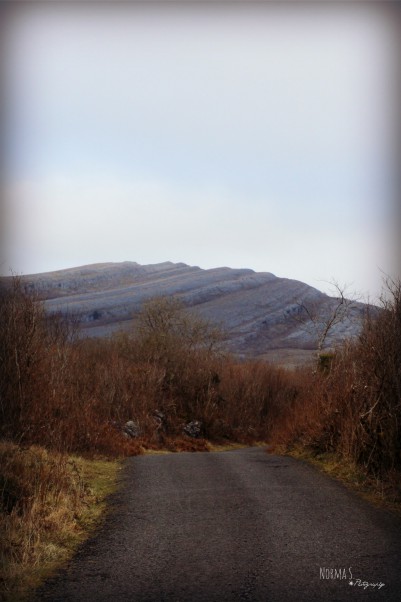
Photo: Norma Scheibe
Masked men recently perpetrated a daring robbery of the car caring the mails from Kilcolgan, Co Galway to Ballyvaughan. The car was held up by a party of masked men, all of whom were armed. A revolver was pointed at the driver who dismounted and fled for safety.
The car was driven for seven miles in another direction and when it was discovered by the roadside it was seen that several mailbags had been torn open and open letters were strewn in every direction.
The police rare scouring the country in search of the highwaymen.
Michael Lynch – Omaha, Chile, Scotland, Ballyvaughan – 1904
The Omaha Daily Bee; 31st May, 1904 p12. (abridged)
Creative Commons
After spending more than a year visiting every country on the globe with the exception of China, Michael Lynch, a young blacksmith and a brother to Omaha City Gas Inspector John C. Lynch, met his mother in the little town of Ballyvaughan, Co. Clare, Ireland.
Michael is but 20 years old and had established himself in the blacksmith business in Omaha after learning the trade. The wandering fever, however, seized him a year ago last March and he set out to see the world. His family heard from him only occasionally, once from Chile and next from Scotland.
His own mother, Mrs Lynch was returning to Ireland to visit her mother, a hale and hearty 91 years old. It was just after Mrs Lynch had started homeward from Omaha when John heard from Michael in Scotland. He replied to him immediately and advised him of his mother’s trip to County Clare. The lad succeeded in beating her to Ballyvaughan. The reunion was filled with happy surprise.
Sold – 1865
The Freeman’s Journal 3rd May, 1865 p 278
Wikimedia.org
The two remaining unsold lots of the Burren estate in the county Clare were purchased by private sale on Friday by Wm Lane Joynt, Esq, agent to Lord Anally for £11,000. Thus the noble lord has become the owner of all the Burren estates.
The noble lord is also the owner of the Duke of Buckingham’s estate at Ballyvaughan, Mr Burton Bindan’s at Currenrue, on which are the famous oyster beds, Mr John B. Scott’s at New Quay, Sir Hugh Dillon Massy’s Broadford estate and Mr John Westropp’s at Kilkeryne. These represent, as a whole, one of the largest territorial possessions in the hands of any peer or commoner in Clare.
The escape of J.B. Dillon – via Kinvara – 1848
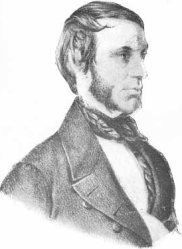
The Armagh Guardian 11th December, 1848 CMSIED 9311447 (abridged)
A correspondent sends the following particulars relative to the escape of Mr. J. B. Dillon from the western shores of Clare. –
“It will be in the recollection of your readers, that when six of the most prominent leaders in the late insurrection held a ‘council of war’ in the house of a farmer on the borders of Kilkenny one of the most distinguished of the party differed from the rest as to the means to be had recourse to for the achievement of Ireland’s independence. The Council, I am told, broke up without any settled plan for the guidance of the leaders and each of the party went in a different direction, distracted and almost broken-hearted.
By accident, it is stated, four of them met again at Ballingarry on the late memorable occasion, and among the number was Mr. J. B. Dillon. This young gentleman was much attached to Smith O’Brien, and was resolved to follow his fortunes, come weal or woe. He kept with him as long as he saw the least chance of success, but after the affair at Farrinrory he despaired, and resolved on an escape to some other land. He parted in sadness from his companions. The words uttered were few, but looks told the struggle in each man’s bosom.
Mr. Dillon arrayed himself in the usual costume of the clerical order, and with cloak and breviary set out for the shores of Clare. He travelled through the Country, never evading police stations, but, on the contrary, lodging near the police barracks. He pushed on his way through all obstacles – detectives and police – until he arrived at the mineral waters of Lisdoonvarna, where he remained for some days, mixing with the visitors, joining in their recreations,and drinking the waters occasionally ‘for the good of his health’. He passed the policemen daily – conversed with them, and preached to some in an edifying manner. He lived in this manner for some days, until he was scented out by a keen detective, when he got a hint from some friend, took it, and broke fresh ground.
He next put up at Ballyvaughan whence he shifted himself on to Kinvara. Here he spent some days, and thence proceeded to the island of Aran, where a friendly vessel awaited, and bore him safely away from his enemies to the
shores of America.”
 The Burren and Beyond