
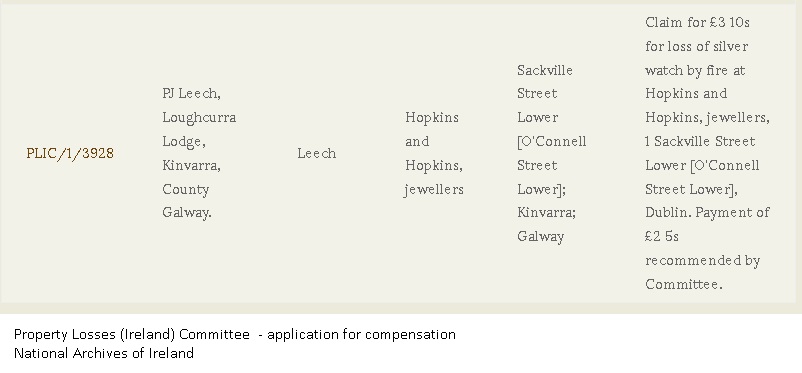
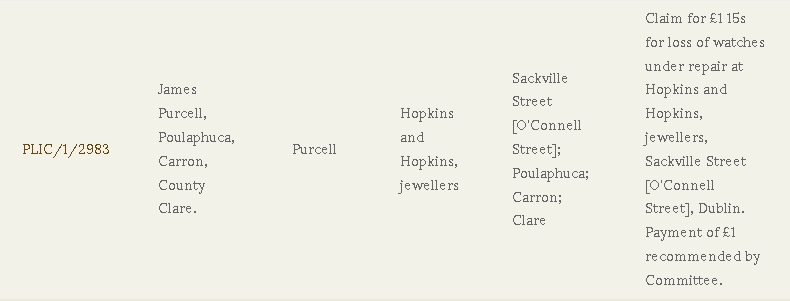
Application for compensation – 1916
The W.A. Record 2nd September, 1916
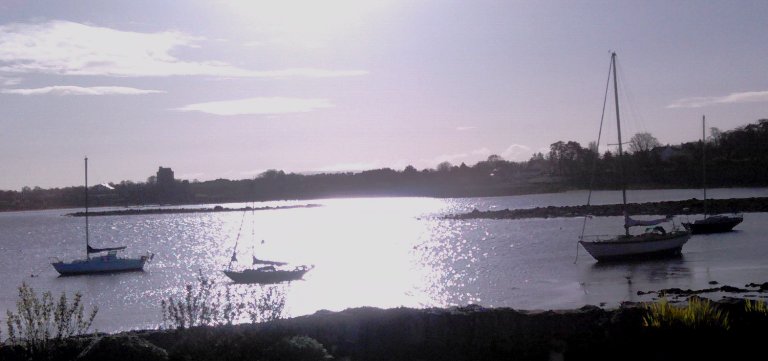
A Priest’s Protest against stupidity
The following is clipped from a west of Ireland newspaper. It is the protest of an Irish priest against what, on the facts related, seems to be a mean, petty prying system practised upon the people of Kinvara for the purpose of extracting evidence for use against the rebels. Such irritating measures exercised for the production of incriminating information are bound to foment strife and discord, and are well described as stupid. Father J. W. O’Meehan writes;
As a priest I feel bound to warn our people against the danger of revealing anything whatsoever, either under blandishment or threat, to armed men concerning the most sacred subject of Confession. Unfortunately it has fallen to my lot to inform the people of the fact that in this catholic parish of Kinvara, questions of a most improper character were recently put to a parishioner – a decent but simple country boy – by one of two armed men concerning the boy’s Confession. Lest in present circumstances I should be regarded as a prejudiced person, I think it better to set down in writing, coolly and deliberately, the bold facts of this sad occurrence.
On Monday evening, May 29th, two armed “gentlemen” (?) approached this young man, and having put him several questions, which, as a Catholic priest, do not concern me now, one of these armed “gentlemen” then proceeded to ask him about the Confession which he made at the Convent Church on Easter Saturday evening. I shall allow yourselves, Catholics of Kinvara, to form your own judgment on the propriety of an Irish Catholic armed “gentleman” asking an Irish Catholic youth the four following questions;
First question: Who told you to go to Confessions on that particular evening?
Second question: Where did you meet Father ________ when he told you to go to Confession?
Third question: What reasons did the priest give you for asking you to make your Confession, or why did he ask you to go on that particular Saturday evening rather than any other evening?
Fourth question: How long was it since your last Confession?
I have ample evidence to show that these four questions have been asked on the evening of May 29th. The boy who was so questioned and two other persons who were present on the occasion and prepared to swear to the truth of the statement. May it be my privilege now to ask four questions?
First: Had this armed “gentleman” authority from his superiors to pry into this most intimate and sacred subject of a man’s Confession?
Second: Does the Defence of the Realm Act empower armed “gentlemen” in Ireland to invade the sealed realm of the Confession?
Third: Can this armed “gentleman” be too ignorant or too stupid not to realise that questions of this nature would outrage the most tender feelings of Irish Catholics?
Fourth: who really are the “gentlemen” who are now exasperating the people and helping in this most peaceful district to manufacture crime?
Catholics of Kinvara, even if there are vile tongues amongst you, which blab when they should not, let those of you at any rate who still remain faithful to birth and fatherland guard even with your lives, the sanctity of Confession against all the agents of stupidity in this land.
(Signed) J.W. O’Meehan
Catholic Press 1st July, 1920 p.7 (abridged)
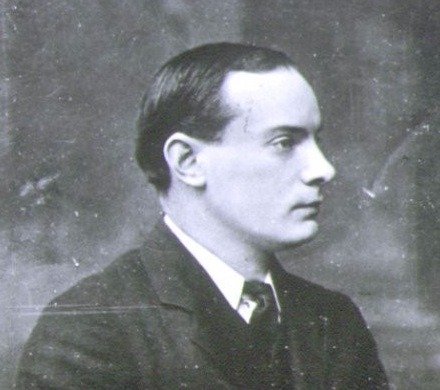
A teacher in St. Ita’s School, which was the female portion of Padraic Pearse’s foundation, wrote of him in the following terms in 1916;
In another country a school like Pearse’s would be endowed both by the State and by private philanthropy. In Ireland we can hardly be said to have a State, and the few people of large fortunes might endow a school for Anglicising the country, but never one with this patriotic programme. About the time Pearse took up his quarters in the Hermitage, his work was become well known everywhere. In England, General Baden-Powell, who had founded the Boy Scout Movement, was much impressed by what Pearse was accomplishing for Irish boys, and became eager to enroll in some way for his movement the help of this inspiring teacher of boys. Of course, no working scheme between Pearse and Baden-Powell was feasible, but it is worth mentioning as showing the attention St. Enda’s School was attracting.
The school lasted in all from September, 1908 until the first week of May, 1916, when its founder was placed before a firing squad of eight soldiers, four of whom aimed at his head and four at his heart; the heart that loved Ireland so much and the fine brain that had planned such great things were riddled with bullets.
He was a great man, though his greatness was rarely apparent at first acquaintance. He had a curious aloofness and reserve. He was rarely seen at social meetings; when he was, his tall, strongly-built figure with its stooping head and slightly squinting eager eyes was the figure of a man of destiny. In conversation he was gentle and shy, only in the presence of large masses of people did he really become himself. Then he became imperious and masterful, and his strength and passion were sometimes overwhelming. He was the finest orator I have ever heard.
Everything Pearse said was charged with meaning and took root in the heads and hearts of the people. He never worked up his audience into tears about the past woes of Ireland; he made them passionately eager to struggle for the future. Thus, he dominated that generation of men and women in Ireland, who have risked so much and accomplished so much. I can easily understand how, when the choice of President of the Republic had to be taken, all minds and eyes turned to him. He is still, in the minds of the people, their President, though the soldiers threw his shot-riddled body, coffinless, into a pit and covered it with corroding lime, so that we can never recover it, to pay it our homage.
The Catholic Press 26th October, 1916, p 19 (abridged)
Here is Moira Regan’s story. It is more than the narrative of an eye-witness – it is the narrative of a friend of and fellow worker with Plunkett and Pearse and MacDonagh – of one who shared with them the hopes, ambitions, perils and pains of their brief but great adventure.
At 6 o’clock on the evening of Easter Monday I went down O’Connell Street to the Post Office. But that was not my real entrance into the affairs of the uprising. You see, I belonged to an organisation called Cumann na Mban – the Council of Women. We had been mobilised at noon on Monday near the Broad Stone Station, being told that we’d be needed for bandaging and other Red Cross work.
But late in the afternoon we got word from the commandant that we might disperse, since there would not be any street fighting that day, and so our services would not be needed. The place where we were mobilised is three or four blocks from the Post Office, and we could hear the shooting clearly. There were various rumours about – we were told that the Castle had been taken, and Stephen’s Green and other points of vantage. And at last, as I said, we were told that there would be no street fighting and that we were to go away from the Broad Stone Station and do what good we could.
When I got to the Post Office that evening I found that the windows were barricaded with bags of sand, and at each of them were two men with rifles. The front office had been made the headquarters of the staff, and there I saw James Connolly, who was in charge of the Dublin division; Padraic Pearse, Willie Pease, O’Rahilly, Plunkett, Shane MacDiarmid, Tom Clarke, and others sitting at tables writing out orders and receiving messages. On my way to the Post Office I met a friend of mine who was carrying a message. He asked me had I been inside, and when I told him I had not, he got James Connolly to let me in.
I didn’t stay at the Post Office then, but made arrangements to return later. From the Post Office I went to Stephen’s Green. The Republican army held the square. The men were busy making barricades and commandeering motor cars. They got a good many cars from British officers coming in from the Fairy House races. The Republican army had taken possession of a great many of the public houses. This fact was made much of by the English, who broadcast the report that the rebels had taken possession of all the drinking places in Dublin and were lying about the streets dead drunk. As a matter of fact, the rebels did no drinking at all. They took possession of the public houses because in Dublin these usually are large buildings in commanding positions at the corners of the streets. Therefore the public houses were places of strategic importance, especially desirable as forts.
That night there was not much sleeping done at our house or at any other house in Dublin, I suppose. All night long we could hear the rifles cracking – scattered shots for the most part, and now and then a regular fusilade.
On Tuesday I went again to the Post Office to find out where certain people, including my brother, should go in order to join up with the Republican forces. I found things quiet at headquarters, little going on except the regular executive work. Tuesday afternoon my brother took up his position in the Post Office, and my sister and I went there too, and were set at work in the kitchen. There we found about ten English soldiers at work – that is, they wore the English uniform, but they were Irishmen. They did not seem at all sorry that they had been captured, and peeled potatoes and washed dishes uncomplainingly. The officers were imprisoned in another room.
The rebels had captured many important buildings. They had possession of several big houses on O’Connell street, near the Post Office. They had taken the Imperial Hotel, which belongs to Murphy, Dublin’s great capitalised, and had turned it into a hospital. We found the kitchen well supplied with food. We made big sandwiches of beef and cheese, and portioned out milk and beef tea. There were enough provisions to last for three weeks. About fifteen girls were at work in the kitchen. Some of them were members of the Cumann na mBan, and others were relatives or friends of the Republican army which James Connolly commanded. Some of the girls were not more than 16 years old.
We worked nearly all Tuesday night, getting perhaps, an hour’s sleep on mattresses on the floor. The men were shooting from the windows of the Post Office and the soldiers were shooting at us, but not one of our men were injured. We expected that the Inniskillings would move on Dublin from the north, but no attack was made that night.
On Wednesday I was sent out on an errand to the north side of the city. O’Rahilly was in charge of the prisoners, and he was very eager that the letters of the prisoners should be taken to their families. He gave me the letter of one of the English officers to take to his wife, who lived out beyond Drumcondra. It was a good long walk and I can tell you that I blessed that English officer and his wife before I delivered that letter! As I went on my way I noticed a great crowd of English soldiers marching down on the Post Office from the north. The first of them were only two blocks away from the Post Office, and the soldiers extended as far north as we went – that is – as far as Drumcondra. But nobody interfered with us – all those days the people walked freely around the streets of Dublin without being interfered with.
As we walked back we saw that the British troops were setting up machine guns near the Post Office. We heard the cracking of rifles and other sounds, which indicated that a real seige was beginning. At Henry Street, near the Post Office, we were warned not to cross over, because a gunboat on the river was shelling Kelly’s house – a big place at the corner of the quay. So we turned back, and stayed the night with friends on the north side of the town. Our home was on the south side.
There was heavy firing all night. The firing was especially severe at the Four Courts and down near Ring’s End and Fairview. The streets were crowded with British soldiers; a whole division landed from Kingstown. That was on Wednesday night. On Thursday we thought we’d have another try at the Post Office. By devious ways we succeeded, after a long time, in reaching it and getting in. We found the men in splendid form and everything seemed to be going well. But the rebels were already hopelessly outnumbered. The Sherwood Foresters had begun to arrive Tuesday night, and on Wednesday and Thursday other regiments came to reinforce them. Now, a division in the British army consists of 25,000 men, so you can see that the British were taking the rising seriously enough.
The British soldiers brought with them all their equipment as if they were prepared for a long war. They had field guns and field kitchens, and everything else. Most of them came in by Boland’s Mills, where de Valera was in command. They suffered several reverses, and many of them were shot down. The chief aim of the British was, first of all, to cut off the Post Office. So on Thursday messengers came to Pearse and Connolly, reporting that the machine guns and other equipment were being trained on the Post Office. But the men were quite ready for this, and were exceedingly cheerful. Indeed, the Post Office was the one place in Dublin that week where no one could help feeling cheerful. I didn’t stay there long on Thursday morning, as I was sent out to take some messages to the south side. I had my own trouble getting through the ranks of soldiers surrounding the Post Office and when I eventually delivered my messages I could not get back. The Post Office was now completely cut off.
Thursday evening, Friday and Saturday I heard many wild rumours, one insistent report being that the Post Office was burned down. As a matter of fact, the Post Office was set on fire on Friday morning by means of an incendiary bomb which landed on top of the door. All the other houses held by the rebels had been burned to the ground, and the people who had been in them had gone to the Post Office, where there were now at least 400 men.
The Post Office burned all day Friday and late in the afternoon it was decided that it must be abandoned. First, Father Flanagan, who had been there all the time, and the girls and a British Officer, a surgeon lieutenant, who had been doing Red Cross work – were sent to Jervis Street Hospital through an underground passage. Then all the able-bodied men and James Connolly (who had broken his shin) tried to force their way out of the Post Office, to get to the Four Courts, where the rebels were still holding out. They made three charges. In the first charge O’Rahilly was killed. In the second, many of the men were wounded. In the third the rebels succeeded in reaching a house in Moor-lane, back of the Post Office. There they stayed all night. They had only a little food and their ammunition was almost exhausted. So on Saturday they saw that further resistance was useless, and that they ought to surrender, in order to prevent further slaughter.
There were three girls with the men. They had chosen to attend Commandant Connolly when the other girls were sent away. One was now sent out with a white flag to parley with the British officers. At first she received nothing but insults, but eventually she was taken to Tom Clarke’s shop, where the Brigadier-General was stationed. Tom Clarke was a great rebel leader, one of the headquarters staff, so it was one of the ironies of fate that the general conducted his negotiations for the surrender of the rebels in his shop.
Well the Brigadier General told this girl to bring Padraic Pearse to him. Pearse came to him in Clarke’s shop and surrendered. Pearse made the remark that he did not suppose it would be necessary for all his men to come and surrender. He called Miss Farrell, the girl who had been sent to the general, and asked her would she take his message to his men. She said she would and so she took the note that he gave her to the rebel soldiers that were left alive, and they laid down their arms. Notice was sent around that a truce had been arranged. Miss Farrell was sent around in a motor car with Pearse’s note.
The Catholic Press 31st August, 1916 p.16
In reply to an inquiry from Dublin, a letter has been received from the joint secretary to the advisory committee dealing with the cases of Irish prisoners in England to hear representations showing why certain prisoners at Frongoch should be released. No counsel or solicitors would be heard as advocates.
The London correspondent of the “Manchester Guardian” regards as serious the announcement that 1,600 Irishmen are being interned for the period of the war, and says that English solicitors are busy with regard to a number of the cases. He adds that the Government would be well advised to announce the steps that interned persons or their friends can take to secure an adequate hearing before the advisory committee.
In reply to Mr. Ginnel yesterday, Mr. Tennant said that, according to the latest information in the possessions of the Home Office, 125 persons were now undergoing penal servitude in connection with the recent rebellion. The Government had not considered the advisability of treating them as prisoners of war.
The Catholic Press 31st August, 1916 p.9
“We, the priests of the Diocese of Kilmacduagh, have heard with amazement of an outrage perpetrated against the Convent of Mercy and community, Kinvara on Sunday, June 4, by the police, who said they came to search the convent for rebels. We enter our solemn protest against their search of the convent, and we say that the search, and the manner in which that search was made, was a gross outrage on religion and an uncalled for indignity and insult to the Sisters.
Catholics well know that religious Sisters never harbour strangers or externs in their convent, and that the sisters’ cells are privileged, no strangers being allowed to enter them. This immunity was violated by the police and the manner in which the cells were searched was equally offensive to manliness and common decency.”
The Catholic Press August, 31st, 1916 p.14
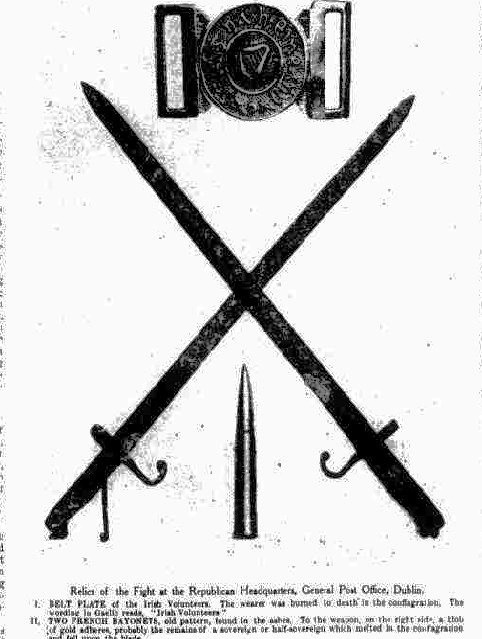
Relics of the Fight at the Republican Headquarters, General Post Office, Dublin
1. Belt Plate of the Irish Volunteers. The wearer was burned to death in the conflagration. The wording in Gaelic reads, “Irish Volunteers.”
2. Two French Bayonets, old pattern found in the ashes. To the weapon on the right side, a blob of gold adheres, probably the remains of a sovereign or half-sovereign which melted in the conflagration and fell upon the blade.
3. Three inch High velocity cartridge, with conical nickeled bullet, used by the riflemen of the Irish Volunteers, found in one of the “Forts” after its evacuation.
The Daily Gate City and constitution – Democrat April 25th, 1916
By J.W.T. Mason, Written for the United Press
New York – April 25, p.1
WELL ORGANISED IRISH MUTINY
There can no longer be any doubt but that a grave situation of rebellion now exists in Ireland.The frustration of Sir Roger Casement’s efforts at gun running, has been only partly successful and it is practically certain that his expedition landed munitions on the Irish coast before the British naval forces intervene. More disquieting than Casement’s exploit, for the British government, is the fact that a well organized movement was ready in Ireland to make instant use of the arms imported from Germany. The “grave riots” announced in the house of commons this afternoon, are undoubtedly the work of pro-German agitators in Ireland whose propaganda the Dublin castle authorities have been unable to put down.
For many months there have been indications that a irreconcilable part of Ireland’s population has been preparing for a seditious uprising. The difficult of getting proper war equipment has been very great, owing to the stringent regulations of the British government. The Casement expedition provided for the first time sufficient munitions to influence the Irish leaders into ordering an uprising.
It is highly probable that the Germans ordered today’s naval raid on the British coast for the purpose of encouraging the Irish and throwing the British government into added confusion. How sweeping may become the Irish rebellion depends largely on the quantity of munitions that Sir Roger Casement was able to get ashore. The British government’s announcement that Casement’s operations covered two days and that only one vessel was employed, suggests only a limited amount of material was landed. When this is expended, it is difficult to determine where other important supplies can be obtained unless the troops quartered in Ireland mutiny. The most advantageous consequence of the Irish uprising for Germany will probably be the permanent detention with Great Britain of large bodies of troops that otherwise would be sent to the France-Belgium front.
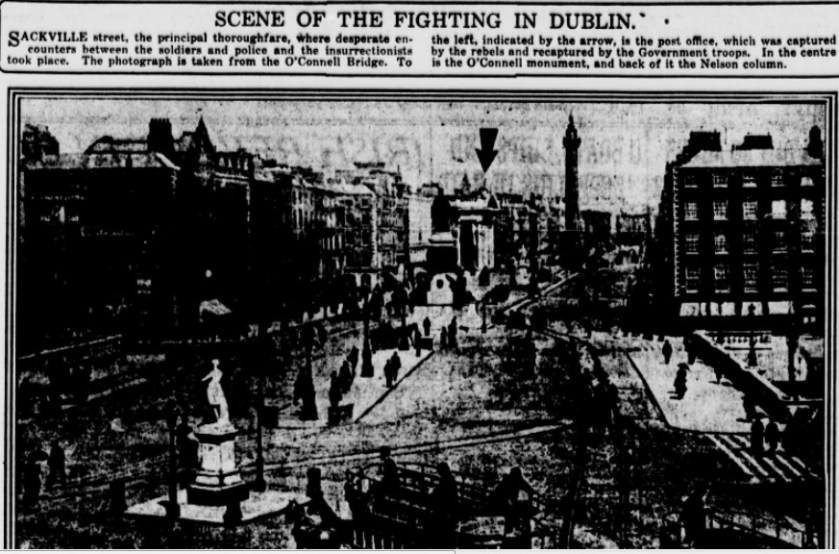
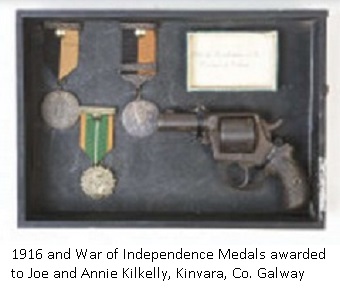
The Catholic Press 31st July, 1919 p.21 (abridged)
A SOLDIER’S SONG
Barricade song of the Irish Volunteers, 1916
Composed in 1907, with words by Peadar Kearney and music by Kearney and Patrick Heeney. Translated into Irish by Liam Ó Rinn in 1923
We’ll sing a song, a soldier’s song,
With cheering, rousing chorus
As round our blazing fires we throng,
The starry heavens o’er us;
Impatient for the coming fight
And as we wait the morning’s light,
Here in the silence of the night,
We’ll chant the soldier’s song.
chorus
Soldiers are we, whose lives are pledged to Ireland,
Some have come, from the land beyond the wave,
Sworn to be free; no more our ancient sireland
Shall shelter the despot or the slave,
To night we man the Bearna Baoghail
In Erin’s cause come woe or weal,
‘Mid cannon’s roar, and rifle’s peal,
We’ll chant the soldier’s song.
In valley green, on towering crag,
Our fathers fought before us,
And conquered ‘neath the same old flag
That’s proudly floating o’er us;
We’re children of a fighting race,
That never yet has known disgrace,
And as we march the foe to face,
We’ll chant the soldier’s song.
Sons of the Gael, men of the Pale,
The long-watched day is breaking,
The serried ranks of Innisfail
Shall set the tyrant quaking.
Our camp-fires now are burning low
See in the East the silvery glow,
Out yonder waits the Saxon foe,
Then chant the Soldier’s song.
————————————-
Seo dhíbh, a chairde, duan Ógláigh
Caithréimeach bríomhar ceolmhar
Ár dtinte cnámh go buacach táid
‘S an spéir go mín réaltógach
Is fonnmhar faobhrach sinn chun gleo
‘S go tiúnmhar glé roimh thíocht don ló
Fé chiúnas chaomh na hoíche ar seol
Seo libh, canaídh Amhrán na bhFiann
Sinne Fianna Fáil
atá faoi gheall ag Éirinn,
Buíon dár slua
thar toinn do ráinig chugainn,
Faoi mhóid bheith saor
Seantír ár sinsear feasta,
Ní fhágfar faoin tíorán ná faoin tráill.
Anocht a théam sa bhearna baoil,
Le gean ar Ghaeil, chun báis nó saoil,
Le gunna scréach faoi lámhach na bpiléar,
Seo libh canaídh amhrán na bhfiann
Cois bánta réidhe, ar ardaibh sléibhe
Ba bhuadhach ár sinsir romhainn
Ag lámhach go tréan fén sárbhrat séin
‘Tá thuas sa ghaoth go seolta
Ba dhúchas riamh dár gcine cháidh
Gan iompáil siar ó imirt áir
‘S ag siúl mar iad i gcoinne námhad
Seo libh, canaídh Amhrán na bhFiann
Sinne Fianna Fail…
A bhuíon nach fann d’fhuil Ghaeil is Gall
Sin breacadh lae na saoirse
Tá sceimhle ‘s scanradh i gcroíthe námhad
Roimh ranna laochra ár dtíre
Ár dtinte is tréith gan spréach anois
Sin luisne ghlé sa spéir anoir
‘S an bíobha i raon na bpiléar agaibh
Seo libh, canaídh Amhrán na bhFiann
Sinne Fianna Fail…
 The Burren and Beyond