“Cracked and splintered hurley” Jeff Meade Philadelphia, US Wikimedia Commons
The Advertiser (Adelaide, South Australia)
13th March, 1912 p9. (abridged)
Yesterday a band of men hiding on both sides of the road at Gort in County Galway, fired at six men on their way home from a hurling match. All the men were injured, two of them seriously. No arrests have been made.
The Roman Catholic Bishops met in Dublin on Wednesday, and took into consideration the Government bill for academical education.
It is understood that they object to the bill, because it does not place the religion and conduct of the pupils under the control of their religions instructors. The final decision, as well as the meeting, was adjourned till Friday.
A public meeting for the town and county of Galway was held last week, to petition the Queen in favour of placing in that town (rather than in Cork) the intended Western College for the province of Connaught. The measure was generally approved by those present, both lay and clerical; but some guarantee for the moral and religious charge of the teachers was desiderated. The petition, however, was adopted by a large majority. Belfast and Derry are also con- tending, for the Northern College.
Northern Star = 11th May 1912 p9 Boycotting and Police (abridged)
There has been no cattle driving in the county since July 1911 but in other reports generally the county in the direction of Athenry, Craughwell, Oranmore, Gort and Kinvara, and bordering on the County Clare, was in a deplorable state. In the great majority of cases no one was to be made amenable notwithstanding all the efforts of the police, and it would seem as if the Executive was completely paralysed in these districts.
In one of the attempted murder cases a labourer working for the Estates Commissioners was fired at and wounded at Woodberry; in another case three shots were fired from behind a wall and a man was hit; in a third a shot was fired through the window of a cottage and the greater part of the charge entered the jaw of an unfortunate man who was sitting inside; in a further a sergeant and a constable were fired at from a wood and the sergeant was wounded; and in a fifth, which occurred near Oranmore, four shots were fired at six men who were passing along the road in a car, and all but one of them were wounded.
An amazing story of life at County Galway was told at the trial in Dublin last month of five men, Patrick Callanan, Michael Furey, Denis Kearns, Martin Moran, and Thomas Brennan, who were charged with shooting with intent.
The Solicitor-General said thirteen men were coming from Loughrea, in Galway. after attending a meeting of the Executive of the United Irish League, on the evening of January 21. At Craughwell they were fired upon by a party who were concealed. When passing William Furey’s house, which was about one mile from Craughwell, a FUSILLADE WAS OPENED ON THEM, and nothing but a miracle saved them from being killed.
There were fourteen men and one girl on three cars. At six o’clock on this even ing the prisoners were assembled in William Furey’s house. The occupants of the cars were singing, and the prisoners were perfectly aware who they were. When the second car got opposite William Furey’s between fifteen and twenty shots were fired at the occupants. John Kane was driving, and beside him was John Linnane, who was able to identify the prisoners by the light of the two powerful lamps which each car carried. It must have been revolvers that were fired, but the aim was bad,
When the first volley was fired the second car turned round, with the result that the light of the lamps was cast on the faces of the prisoners. These men wore no masks, but committed this outrage without disguise. Kane’s foot was struck with a revolver bullet and a bullet also passed through the step of the second car.
Mr. Justice Boyd, in the course of his charge to the jury, said he was amazed at the evidence that had been given.
The jury found the prisoners ‘Not guilty.’ Mr. Justice Boyd said, “I may say I thoroughly agree with the finding of the jury. I think probably they were there; I think probably they did what they ought not to have done; but on the whole facts of the case, as proved in evidence, I think the jury very wisely said ‘Not guilty.’
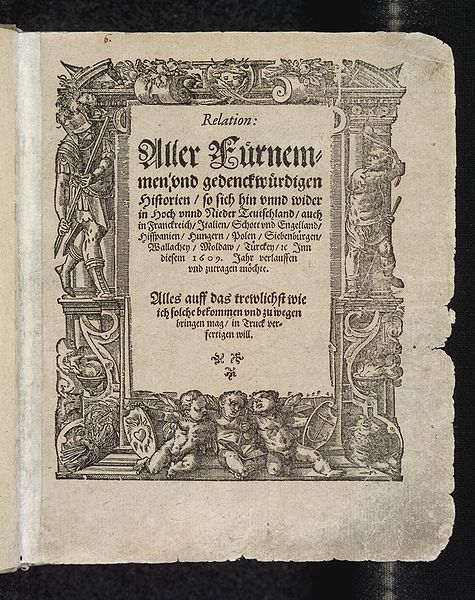
Title page of the Relation aller Fürnemmen und gedenckwürdigan Historiene from 1609. The German-language ‘Relation’ had been published by Johann Carolus at the latest since 1605 in Strassburg, and is recognized by the World Association of Newspapers as the world’s first newspaper. University library of Heidelberg, Germany
That the great scoop of the War should be scored, by a colonial journalist is very pleasing to his brethren. Turkey is full just now of distinguished war correspondents, who have all been striving to do what Mr Martin Henry Donohoe accomplished in the graphic account of the Turkish debacle published a few days ago.
According to a Christchurch paper,’Mr Donohoe was born in CountyGalway, Ireland, just 43 years ago this week/but he began his journalistic career on the French newspaper of Sydney in 1892, and subsequently joined the “Evening News” staff, and further emphasised his Australianisation by marrying a clever Australian teacher, who was identified with various women’s movements.
While on the “News,” he was an undistinguished, but most painstaking,’ hard-working, and deservedly-liked reporter, and in that capacity pricked the Rougemont bubble. His real career, however, was destined to be in a wider field than Australia afforded. He was interested in volunteering. He became a member of the crack New South Wales Lancer Regiment (now the First Australian Horse), and made one of the contingent which went to Aldershot for training. There it was noted for its efficiency, and set out for home via the Cape, having done well what it was sent to do. But when it reached Capetown it found the Boer War in full swing, and in spite of the extraordinary decision of the War Office that it did not want mounted men from the colonies, it volunteered, was at once sent to the front, and, under General French, highly distinguished itself, and formed a text from which tho purblind individuals in the War Office suddenly saw light and reversed their previous decision.
With the forces was Mr Lambie, an Australian journalist acting for the London “Daily Chronicle” and Australian papers, and on his death the journalistic member of the Lancers immediately took up his despatches, and did so well that he was speedily made the “Chronicle’s” regular correspondent and detached from his troop. Mr Donohoe did distinguished work in every big movement in the war; incidentally was captured, and released at the fall of Pretoria; went through the Russo-Japanese war with the first army under Kuroki, travelled extensively for his paper, doing great functions for it, was in Constantinople when it fell to the Young Turks and through the revolution, was the first to interview the new Sultan, and got a similarly exclusive scoop of the Portuguese revolution, escaping from Lisborn with his account of the street fighting.
And now he has made a bigger scoop still by being the only correspondent to get away an account of the last great battle. One factor has been Mr Donohoe’s excellent French, an accomplishment which his wife shares with him. It has helped him immensely in foreign campaigns, and it has made him, when not on the warpath, Paris representative of the “Daily Chronicle,” installed in a delightful suite, where he is tho same competent, unassuming, good-hearted fellow to his old friends that he was when he was a reporter on the Sydney “Evening News.” Martin Donohoe deserves every success that comes to him.
Bog Cotton Photo: James K. Lindsey Wikimedia Commonshttps://widgetworld3.wordpress.com/podcasts/
THE QUEENSLANDER 25th of June, 1912
Excerpt from The Carrying of the Kelp by Helen Porter (in “Chambers Journal”)
The district known as the Burren is one of the bleakest spots in Ireland. The whole country seems petrified, as if a devastating blast from the Atlantic had turned it into stone. Then, nature appears to have repented her roughness and the cold monotony of her hand-work; for, after laying a groundwork of rocks, she covered it with a carpet of exquisite and delicate loveliness. Feathery fern, autumn-tinted bramble, golden moss, geranium, harebells, and blue scabious run riot over all, and in the damp patches between the grey stones, silvery bog cotton waves in the breeze…
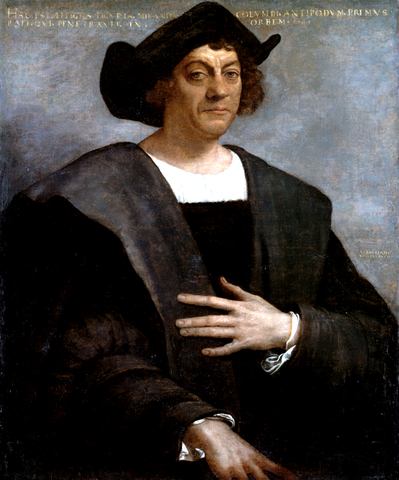
Christopher Columbus – 1519 Sebastiano del Piombo (1485-1547) Metropolitan Museum of Art wikipedia.orghttps://widgetworld3.wordpress.com/podcasts/ BLAIRMORE ENTERPRISE 9TH MAY, 1912
THE CREW OF COLUMBUS – (abridged)
The list of the officers and sailors in the first voyage of Columbus was almost cosmopolitan in its character Among them there was a man of Jewish heritage, Luis de Torres; an Irishman from Galway Ireland, William Harris; an Englishman, Arthur Laws; Italians, Portuguese, Spaniards and several other nationalities, though, of course, the Spaniards were largely in the majority.
It is maintained by some authorities, with considerable plausibility too, that there was a Scotchman in the list and that after Columbus himself he was the first man to tread the soil of the new world – Exchange
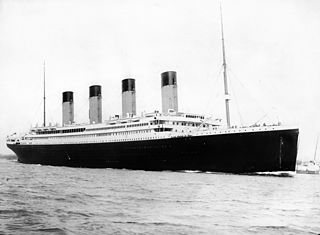
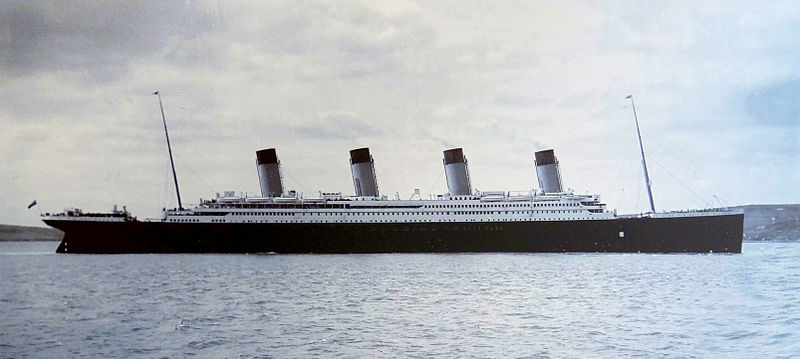
RMS Titanic departing Southampton on April 10, 1912 Wikipedia.orghttps://widgetworld3.wordpress.com/podcasts/
THE WASHINGTON HERALD, 22ND APRIL, 1912 P5
STEERAGE SURVIVOR TELLS STORY OF WRECK
======================================================
Miss Mary Glynn,visiting relatives in Washington, praises heroism of passengers on Titanic – women tried to save men.
(Miss Mary Glynn, nineteen years old, was en route from her home in Feakle, Co Clare, Ireland, to the home of her cousin, Mrs D.D. Courtenay, 715 North Capitol Street.
Miss Glynn arrived in Washington last night, and gave a detailed story of the disaster. She declared that the Titanic was running at top speed when she struck the iceberg, and bases her statement on the fact that she was infomred by a member of the crew, just before retiring on the night of the accident that the Titanic “was being thoroughly tested, all of her boilers being in use for the first time.”
Miss Glynn’s story of the accident, the escape of the few passengers who were saved, and the final plunge of the ill-fated ship, is interesting.
In a rich Irish brogue she commanded attention from the beginning of her recital, and covered thoroughly every detail of the disaster. Miss Glynn siad;
“When the Titanic left Queenstown several of the steerage passengers were given compartments in the bow. They were so near the engine room that they were unable to sleep, and after the first day we other passengers shared our compartments with them. At the time of the disaster, six persons, instead of the regulation four, were asleep in my compartment. The Titanic struck at about 11.45 o’clock, and all of us were thrown from our bunks. We were badly frightened, but the idea that the ship was in danger never entered our minds. We did not think it possible that such a giant boat could have been so badly damaged.
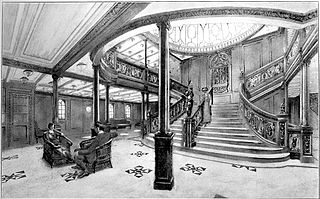
Grand Staircase of the RMS Titanic 1912 From “White Line Triple Screw Steamers” booklet, White Star Line Wikipedia.orgCREW DENIED DANGER
“When we asked members of the crew what the trouble amounted to, they ridiculed our fear, saying the boat was in absolutely no danger and we would proceed at once. Several minutes later, however, we were aroused and told to make for the lifeboats. There never was a more courageous set of men and women than the occupants of the steerage. The men behaved admirably. The acme of heroism was reached when several of the single women, who had been conversing in a secluded corner, came forward and insisted that they remain behind, and that husbands be permitted to accompany their wives. It was splendid.
“When our boat was lowered it contained forty-odd passengers, the only men in the boat being two Celestials, who were so badly scared that they cowered in the bottom and refused to move, and the members of the crew. While we were being lowered, the tackle became caught in some manner, and a lifeboat descending from the upper deck was about to strike us. One of the girls in our boat, who was one of the party which so gravely proposed the escape of the husbands as well as the wives, with rare presence of mind took a small clasp knife from her pocket and severed the rope. The sailors then began to pull with might and main in order to clear the boat from the danger zone.
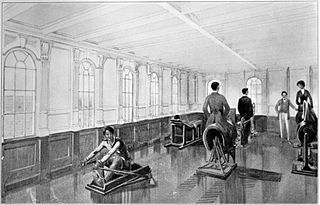
Gymnasium of the RMS Titanic 1912 From “White Line Triple Screw Steamers” booklet White Star Line Wikipedia.org“NEARER MY GOD, TO THEE”
“When we were about half a mile away they rested on their oars and we watched the Titanic, rolling and bobbing like a cork. All her lights were burning, and over the water we caught the strains of “Nearer, My God, to Thee”. Finally the Titanic ceased rolling, seemed to hesitate a moment, and plunged her bow into the ocean, and, a moment later was engulfed by the waves. Several moments after she had disappeared there was a terrific explosion, which threw the water in a turmoil, and fragments of the ship were hurled high into the air. I supposed the boilers had exploded.
“After picking up two men who were swimming we proceeded to row around and the women in the boat made torches of their hats, handkerchiefs, and other articles of clothing, thinking a passing ship might thus be attracted. This availed nothing, however, and after we had been drifting more than seven hours, we hailed the Carpathia and were taken aboard.
MAN DISGUISED AS WOMANThe Titanic pictured in Cobh Harbour, 11 April 1912 Cobh Heritage Centre, museum in Cobh, Ireland. Wikipedia.org
“Most persons think the report that one of the men disguised himself as a woman in order to escape is a manufactured tale. It is not. That man occupied a seat in the boat I was in, and I never looked with greater disdain upon any creature than he. He was an object of scorn to every man, woman, and child in our boat. Just imagine, a strapping man, twenty-two years old, who admitted that he donned feminine attire and wrapped a towel around his head in order to fool the officers who were placing the passengers in the boats.”
Miss Glynn saved nothing from the he wreck, except the clothing she wore. She said that she was well treated on the Carpathia and commended Capt. Rostron, of that ship, for his bravery. Miss Glynn declared that a lifeboat was sighted two days after the wreck, but the Carpathia crew found only two dead bodies in the boat and they were not taken aboard.
It is probable that Miss Glynn will be summoned to testify before the Senate asinvestigating committee, as she is the only steerage passenger who seems to have a clear conception of the conditions existing in the steerage on the morning of the wreck.




 The Burren and Beyond