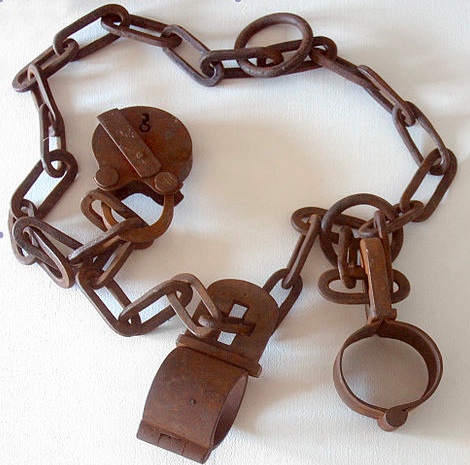
Old bracelets Photo: André Karwath (aka) Wikimedia Commons
Irish Slave Traffic (abridged)
For the next three Sundays at Robert schoolhouse Father Collins will lecture on ‘Irish Slaves and their Descendants.’
Over 6000 children of Catholic Irish were transported to the West Indies, to Carolina and Georgia, and raised as strangers to all they believed or knew. Over 100,000 adults were transported to Virginia and Kentucky where they were sold as slaves.
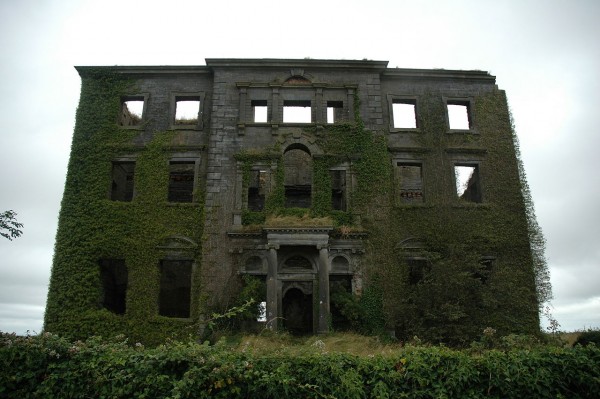
Tyrone House home of St. George family Photo: Tom Cosgrove Creative Commons
Freeman’s Journal 17th March, 1910 p14
Through the exertions of the Most Rev. Dr. O’Dea, Bishop of Galway, and the Rev. Miohael Walsh.. P.P., Ballinderreen, Kilcolgan, the trouble on the Tyrone estate is at last practically at an end. There are close upon two hundred holdings in the vicinity of the Tyrone estate, and in about 70 per cent, the rent ranges from £1 to £8. The ‘acreage’ of the farms is in many cases little more than one acre, and in no case larger than twenty.
The land allotted to the tenants is full of rock, an held in rundale. Although the tenants had entered the Land Court, the rents are still exorbitant. Under these circumstances the people were forced into a vigorous agitation. Experience has taught them that nothing but agitation would win for them the right to live as every human being is entitled to live, in peace and – in their own land.
Under the settlement which has just been arrived at, 400 acres of grass land on the Tyrone farm; the property of Mrs. St. George and Mrs. Concannon, together with the Drumcoo and Killeenarin farms are to be handed over to the Estates Commissioners. The tenants have agreed to pay a year’s, rent down on the understanding that a half year’s rent is remitted, and they will get a general reduction of 4s in the £. First term tenants are to get a reduction of 6s in the £, and the game rights are to be reserved to the tenants..
The Newsletter 26th November, 1910 (abridged) p5
Galway was a very pleasant sociable place in olden times. In the summer ladies flocked into it from every corner of Connaught for the sun-bathing – at least so they gave out (says a writer on “Old Irish Travel” in “Blackwood’s Magazine”). Such a muster of fair ones naturally brought a corresponding number of young men in its stream, who came openly and avowedly for amusement, and often returned home provided with a partner for life. There were gatherings every evening to which admittance was had by a small payment, and they were designated routs, drums or assemblies, according to the price charged. The greatest gaiety and unconstraint reigned at these gatherings. In the evenings, if there chanced to be no rout or assembly, the summer visitors and the residents promenaded the streets, going in and out of the shops, buying, chatting with their friends and acquaintances, and enjoying themselves.
The shopping had, however, a serious side to it, for the milliners were always willing to give the ladies credit for the articles of attire which they needed to enhance their looks, and to let the bill stand over till after the fair one’s wedding. So great indeed were the attractions in Galway that they made some people oblivious even of the passage of time.
“There were in this good city,’ remarks the writer, “ladies who grew old without perceiving it and who went on dancing, shopping and bathing until they were upwards of 50.”
Many and ingenious were the devices adopted in those old days to outwit the Customs officers. Boat loads of native brewed poteen or of foreign claret and brandy were ferried across Lough Corrib and Lough Mask snugly stowed away beneath a harmless looking covering of turf or straw. Funeral processions might be seen wending along the rough mountain tracks, the keeners trooping after the coffin and sending their cry echoing over the desolate wastes. The coffin instead of its ordinary burden was filled with tobacco, and the mourners carried parcels of the same valuable commodity beneath their capacious coats. The whole consignment having then been disposed of inland the party would return merrily homewards.
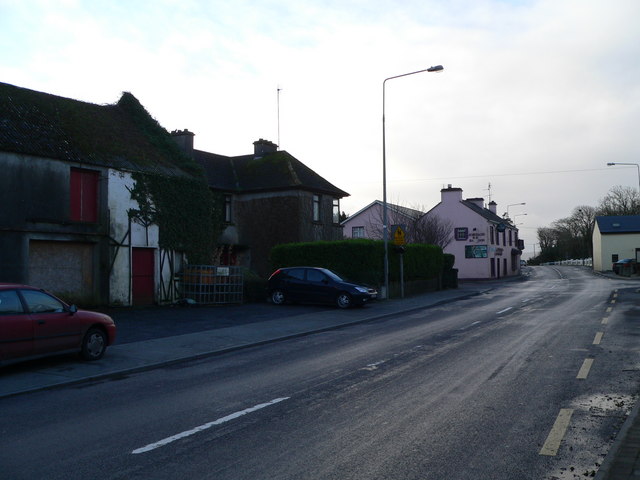
Main Street, Kinvara Photo: Cresswell ArchivesTHE INTERMOUNTAIN CATHOLIC 16TH JULY, 1910 P6
CONNAUGHT(abridged)
The town of Kinvara presented an animated appearance Tuesday June 14 in connection with the arrest of six prisoners, Michael Donohoe, Patrick Healy, John Hynes, Thomas Gorman, Bartley Quinn and John Smith for cattle-driving off the lands of Ballyvauleen, Kinvara. The prisoners were arrested here previous Sunday, driving cattle through the town, and were released on Sunday evening and re-arrested about 6 a.m.
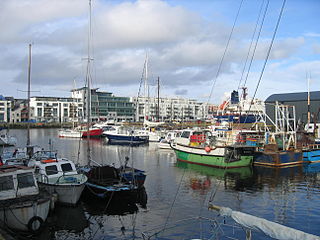
Ballinderreen Wikimedia CommonsGalway County Council Archives ‘…to acquire, preserve and make accessible the documentary memory of county Galway’ U:\Archives – Collection Management\Descriptive Lists\Rural District Councils, G00 & G01\G01-10 Gort RDC.doc
17 December 1910 – 17 June 1922 p9
‘Resolved – That we disapprove of the action of the County Council in endeavouring to change the route proposed by the Road Board from Kinvara to Kilcolgan (through Ballinderreen) and having it changed in another direction from Kinvara to Kilcolgan (through Ardrahan) as we believe the former road is through a congested area, and by the sea, would be more frequented by tourists, and would be the better road to have steam rolled as it is the mail road between Galway and Clare through Ballyvaughan’ (p122).
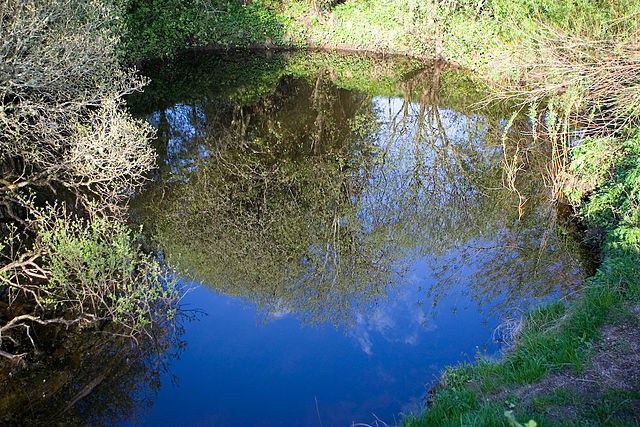
The Shannon Pot – traditional source of the River Shannon Photo: Gerard Lovett Wikimedia CommonsTHE SALT LAKE TRIBUNE 27TH MARCH 1910 P5
Ireland has had her share of floods and can sympathize with France. Along the Shannon in some places the water invaded the country for miles at each side, compelling people living near to hasten from their homes. In one or two places the inhabitants of entire villages sought shelter elsewhere. Some of these people suffered great loss as their entire farm produce was swept off on the swollen river. So great was the flood that the powerful cargo boats could scarcely make headway.
The district near Athlone suffered much and a considerable number of men were thrown out of work. The greatest sufferers are the inhabitants of the islands in Lough Ree, where the water rose to an alarming height. They were completely cut off from the mainland for days and unable to obtain supplies of food or fuel.
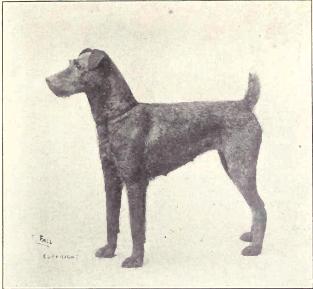
A rather curious story comes to me this week. An Irish terrier was sent all the way from Rome by its owner, a great lady of the Italian capital, to be buried in Ireland. The lady was passionately fond of the dog, and when it died recently she had it embalmed and encased in an elaborate and expensive coffin.
She immediately communicated with a firm of London lawyers, requesting them to find some place in Ireland where her pet could be buried and its remains rest undisturbed. As a result, she was put into communication with J….. L….., B……… L…., the famous race horse owner. He agreed to allow the dog to be buried on his estate, and the coffin from the Italian woman duly arrived from Rome. After the interment the bereaved owner of the Irish terrier paid Mr L…. a check for a substantial sum for the burial ground – probably two square feet – and also left the wherewithal to purchase a tombstone.
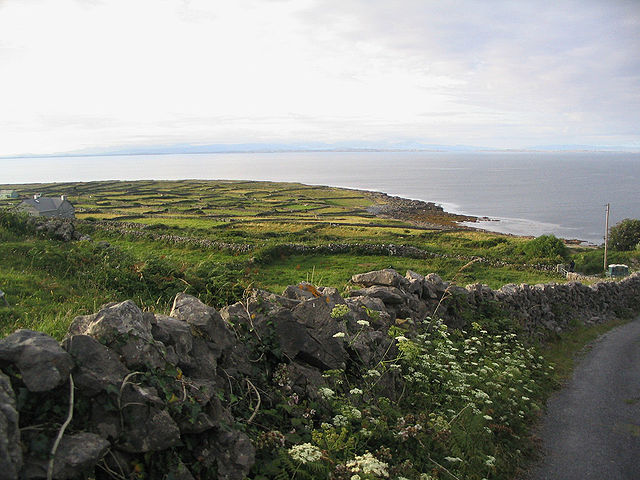
https://widgetworld3.wordpress.com/podcasts/Árainn/Inis Mór Photo: Creative Commons THE WEST AUSTRALIAN 25TH JUNE, 1910
EXCERPT FROM ‘THE LAND OF THE WESTERN GLEAM’ BY E. LONGWORTH DAMES (VI – Galway of the Tribes)
…And far away, far out across Galway Bay, there is a faint vision of the mysterious Aran Islands, some of the fairy isles of the west, the last retreat, it is said, of a very ancient people called the Fir Bolgs, a primeval tribe which was in Ireland before even the Gods came there. This is what lies dimly and half seen on a gray horizon against gray skies colouring at evening, and Galway, dreaming away its life in a soft Western langour, with a pale glory of the past about it, like last daylight lingering, looks out upon these for evermore. Ptolemy is said to have spoken of Galway as then existing under the name of Nagnata. And when twilight settles down in a silence that is full of old voices, one may well fell that the place and the country round it, are of far off beginnings and ageless.


 The Burren and Beyond