Freemans Journal October 31st, 1910 p.2 (abridged)
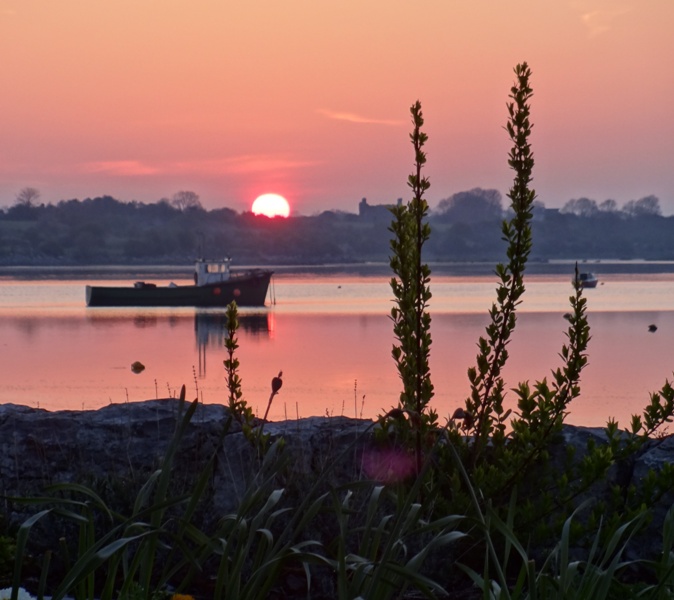
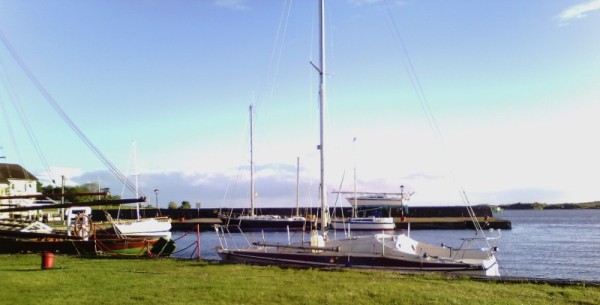
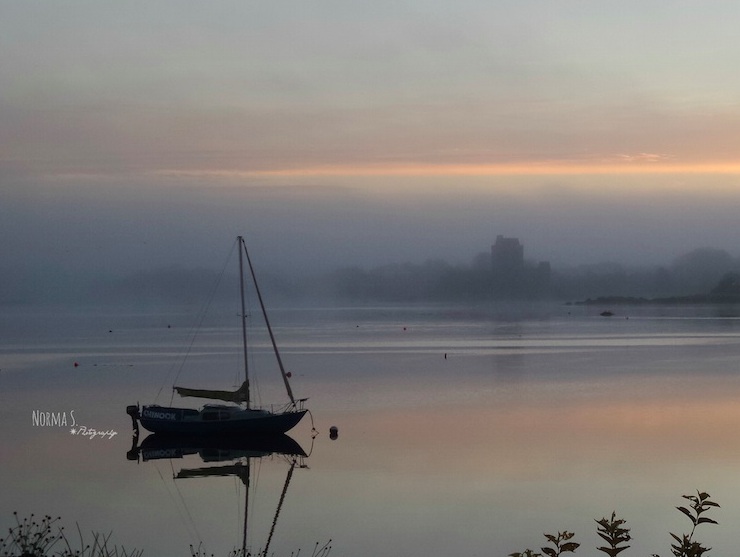
Kinvara Twilight Photo: Norma Scheibe
The outbreak of typhus fever, the first case of which occurred at the village of Cloosh, four miles from Kinvara, about three weeks ago, has made its appearance in other portions of the district within the last week.
Dr. Thomas J. Connolly, B.A., M.B., Medical Officer of the Kinvara Dispensary District, has discovered seven cases of the dread disease during his rounds through the district and he had the patients immediately sent on to the well-equipped Fever Hospital in Gort, where they are progressing as favourably as can be expected. Dr. Connolly is out from early morning, till late at night visiting the houses of the people, and he is leaving no stone unturned to prevent the disease assuming more dangerous proportions.
Connacht Tribune 15th October, 1910 p.4
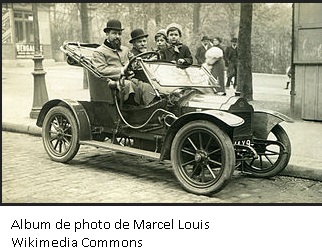
A report spread around Kinvara early on Tuesday that the Sheriff’s men were “marching” on Kinvara with up-to-date motor cars from Galway, to make seizures on the town tenants on the Sharpe estate. The people were beginning to take things easy when at the toot of a motor car on the Castle road all shops were closed and the situation calmly surveyed from the upper windows. The motor belonged to a well known Galway trader, who looked amused when he heard the consternation his arrival had created. Developments are hourly expected, and the situation is growing serious as time advances.
A report spread around Kinvara early on Tuesday that the Sheriff’s men were “marching” on Kinvara with up-to-date motor cars from Galway, to make seizures on the town tenants on the Sharpe estate. The people were beginning to take things easy when, at the toot of a motor car on the Castle road, all shops were closed and the situation calmly surveyed from the upper windows. The motor belonged to a well known Galway trader, who looked amused when he heard the consternation his arrival had created. Developments are hourly expected, and the situation is growing serious as time advances.
A failing fringe of glimmering light was lying gently still,
Along the rise of Errigal, and Aileach’s princely hill
E’en yet the globe of golden fire low on the ocean’s breast,
Had all the waves round Arranmore in ruby vesture drest;
Into the West one lonely cloud went moving slowly by,
Then blushed to find itself alone in all the vaulted sky;
Within the dells the flowers slept, the shadows stretched afar,
And in the dark blue sleeping lake was seen the evening star.
No more the brighter tines of day the falling brook caress,
The thousand dyes that sunset flings upon the waves flew less,
When from the glens among the hills where all day long it slept,
Like ghost of some forgotten age, an errie vapour crept,
It moved adown the whin-clad braes, it lay upon the heath,
It curled around the copeswood lane, and haunted fort beneath.
The fishers down by the olden beach had watched, and then in fright,
They crossed themselves, and whispered low,
“‘Tis the fairies out tonight.”
They gathered round and told strange tales in voices hushed with awe,
Of when that mist came down before what men and women saw
Within the haunted fort and out upon the hawthorn brae,
Or on the bogland lone, if they perchance had gone astray,
Strange eerie rows of little folk unknown to mortal sight,
Around a flame by nought supplied, that beamed a bluish light.
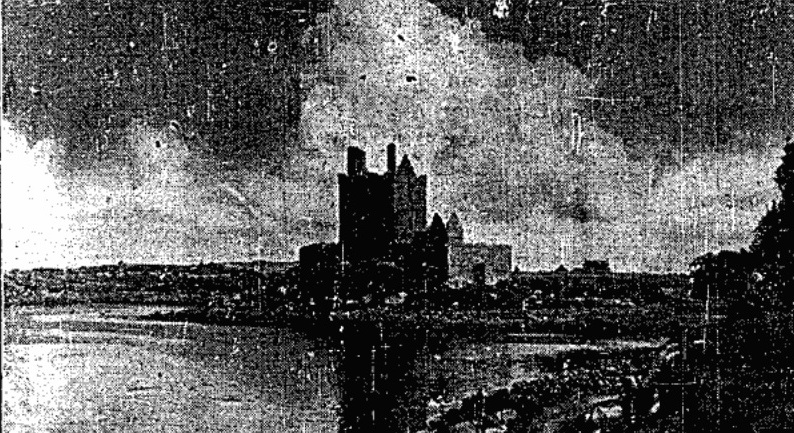
Dunguaire, Kinvara Irish Independent, 1950
But strange to tell among those folk of other worlds than ours
Were some who faded from our earth in youth like summer flowers,
Faded and passed from life away, and sank among the dead;
But when the fishers told their tales Red Michael shook his head.
Red Michael never yet believed in witch or fairy sprite,
Or any shady thing that walks in the watches of the nights;
and he only said when he heard these tales,
“Such things one never sees,
I never yet could have believed in stories such as these.”
Red Michael was a fisherman as bold as fishers be,
He had one child, a rosy boy, as fair as eye could see,
And when the mist came down the hill and crept along the brae,
The child ran from his mother’s side out thro’ the waning day,
And coming from his labour done thro’ the mist acreeping round,
Red Michael found his little boy asleep upon the ground,
And cold and weary were his limbs, his eyes looked strangely grey
He caught a cold and from that hour the baby pined away.
Red Michael’s heart is sad and lone, bereft of hope and love,
His boy has hearkened to the call and left to go above.
“My boy’s in Heaven,” Red Michael cries,
“But, ah, my heart is lone!”
But the country people shake their heads,
“‘Tis the fairies have their own,”
But when he heard them speak he said,
“Such things man never sees,
I never yet could have believed in stories such as these.”
At a special meeting on Monday, Mr T.P.Corless, D.C., presiding, and the following being present;
Messrs. Thomas O’Halloran,
Bartley Bermingham,
Michael Corless,
Augustus J. Johnston
Edward Holland
Michael Connolly
the chairman submitted a letter from Mr Coghlan Briscoe T.C. stating that he forwarded the tenants memorial to the Congested Districts Board, and was bringing all possible pressure to bear on the board to purchase Kinvara from the trustees of the Sharpe estate. Mr Briscoe’s powerful appeal for justice, made before the Town Tenant’s Executive in Dublin, was loudly applauded. The action of the agents in threatening legal proceedings against the tenants was severely commented on.
Within the last few days notices have been served on the tenants to pay up or Mr Concanon, solicitor, will be instructed to proceed for the recovery of the rent. The committee have decided to await developments and appeal to the tenants to withhold the rents. In view of the situation that now exists on the property the committee earnestly exhort all who have not as yet joined the League to do so at once, as the fight has now reached an acute stage. The committee are in communication with Mr Briscoe and Mr Wm Duffy M.B. and several well known leaders, with a view to holding a public meeting and infusing new life into the district. On the motion of Mr Corless, seconded by Mr Thomas O’Halloran, a resolution thanking Mr Briscoe and the “Freeman” was passed.
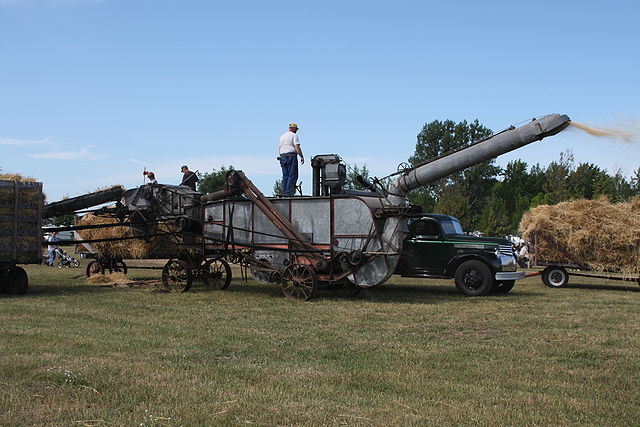
Threshing Machine In Action Photo: Ben Franske Wikimedia Commons
The topic of the hour in Duras is the Loughrea Threshing machine that did such wonderful work for a local farmer and a Caherglissane grazier. Some say it belonged to Tener, was commissioned by Ludlow, and worked by Bartly Naughton. Fahy was written in letters as red as blood on the car, and Mr Skehill was in command.
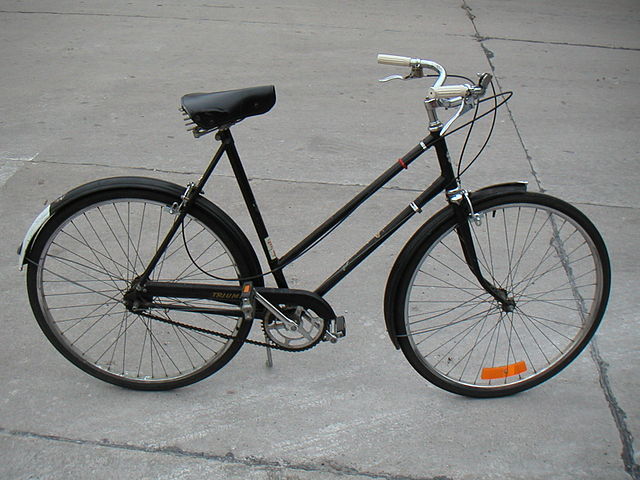
Freemans Journal May 6th 1910 p.10Triumph Bicycle Photo: Andrew Dressel Wikimedia Commons
Following up the cattle drive of two days ago at Duras, Kinvara, it is reported here that another large drive took place early this morning at a place called Caherglissane, six miles from here. The police are very busy all this morning running on bicycles from place to place in the district. Inspector Cruise has left here for Kinvara. Fifteen arrests have been made.
There was a striking element of humour on Monday in Kinvara when some stock belonging to Mr Corless, of the Sharpe estate, which were seized as a result of a decree for non-payment of rent, was offered for sale.
The house of Mr Gaffney, another tenant was also taken possession of by the bailiffs as a result of a decree.
The reason assigned by Mr Corless and Mr Gaffney for allowing decrees to be obtained against them is that they wished to make a protest against the attitude of the landlord and the agent.
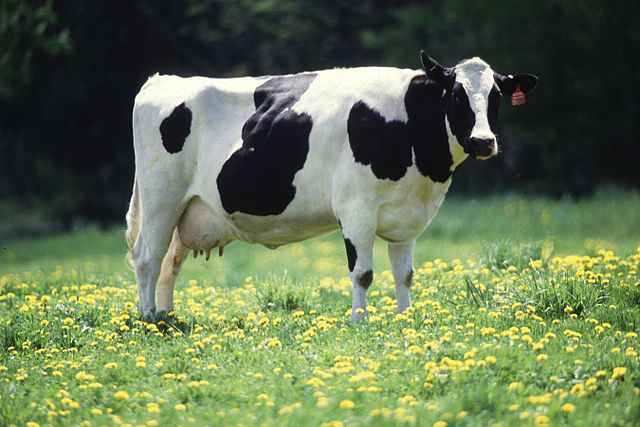
Before the sale the stock were paraded through the streets of Kinvara. A milch cow was decorated with green ribbons and had a card of membership of the Town Tenants’ League attached to her horns and a card underneath bore the militant motto of “No surrender.”
A calf followed bearing another card with the inscription “Mother’s motto is mine.” Then came a little boy dressed in green, seated on a donkey, with the words “No surrender” printed on his coat.
The animals were purchased for £11 14s the amount of the decree, by Mr Colgan, a U.I.L. organiser. The sheriff’s bailiff then proceeded to Mr Gaffney’s premises and auctioned a pianoforte for £12 16s, Mr Colgan again being the purchaser.
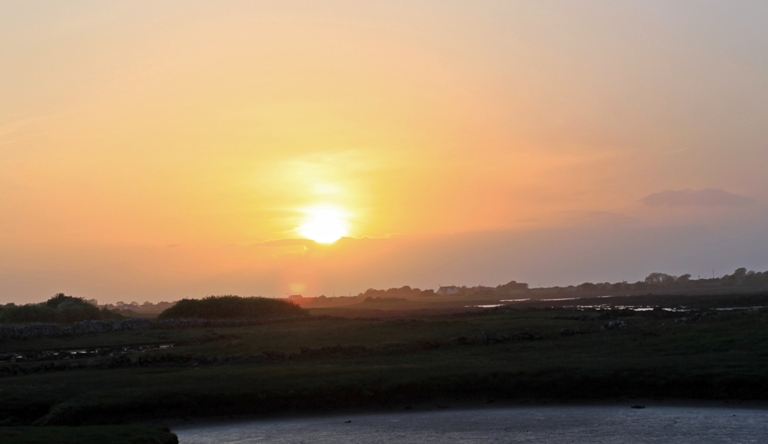
Connacht Tribune 24th Dec 1910 p5 (abridged)Kinvara Photo: Norma Scheibe
On Monday morning the Kinvara cattle drivers, M.H. Donohoe, Gortnaclogh; T. Gorman, John Hynes, P. Healy, Bartly Quinn, Moy, and John Smith, Kinvara, were released from Galway Jail after undergoing a term of six months’ imprisonment. They were tried at the Summer Assizes and sentenced by Judge Kenny for driving cattle off the lands of Funshinbeg. The severity of the sentence and the respectability of the prisoners evoked the greatest sympathy at the time, and the Nationalists of the district vied with one another in doing the farm work and harvesting for their families ever since.
They were met at the door of the prison as they emerged, by Mr. Ml. O’Donohoe, J.P., Co.C, and seven cars, laden with members of the Kinvara hurling ciub. They were sumptuously entertained by Mr. O’Donohoe, and started from Eyresquare after “doing” Salthill, about 3 p.m. for Kinvara. They were loudly cheered passing through Oranmore and Clarenbridge, and on reaching Kilcolgan they were greeted with illuminations. They were met outside Kilcolgan by a big contingent with cars and horses, from the Kinvara and Duras branches U.I.L., consisting of Messrs. T. P. Corless, D.C., president; M. Curtin, B, Quinn, M. Melia, Pat Hanlon, Bryan Kilkelly, T. Keane, Joe Forde, Pat Halvey, P. Callanan, P. Whelan, Ml Carty (Secretary), Michael Huban, A. Connors, C. O’Loughlin, P. Noone, J. Moylan, John Glynn, etc., who cheered them loudiy. As Ballinderreen was approached it was seen that every house was illuminated, bonfires were ablaze on every hill, and lighted torches lit up the horizon. A noticeable feature in Ballinderreen was a big force of police, under arms on the outskirts of the crowd.
A hurriedly convened meeting was held under the chairmanship of Mr. Michael O’Donohoe, Co.C, J.P., who thanked the sterling Gaels and fearless Nationalists of Ballinderreen for the great reception they had given the prisoners (cheers). He would never forget it. He reminded them of the early days of the Land League Movement and of the proclaimed meeting in 1879, and said he was glad to see the same spirit animating them today. Mr. T. P. Corless, D.C., also addressed the meeting.
Amidst a scene of great enthusiasm the procession, which had now assumed enormous dimensions, started for Kinvara. The houses along the route were illuminated and bonfires and torches blazed at Pollough and Toreen.
At Ballyclera the whole village turned out and the procession passed with great difficulty through a virtual sea of fire. Dungora Castle presented a grand appearance with its many and various coloured lights. Overlooking the town and harbour, the lights could he seen for miles. The turrets on the top were beautifully lighted and arranged in such a way as to resemble a huge harp. A bonfire was ablaze in front of the Castle as the prisoners were passing.
Kinvara town was brilliantly illuminated and an immense bonfire was lighted in a field opposite the Convent of Mercy.
In Moy and Gortnaclogh, the homes of the prisoners, bonfires and illuminations were kept up until morning.
Mr. Cruise, D.I., and a number of extra police were drafted into Kinvara, but notwithstanding the greatest excitement, everything passed off quietly.
Lake Wakatip Mail Iss 2775, 13th July 1910 p4
A well-authenticated case of extreme old age has been brought to light in connection with the death of Paddy Blake, in the Corofin Union Hospital, Ennis, County Clare, Ireland. Paddy was a labourer, but did not work regularly, spending most of his time roving about from one house to another. He was born at Ballygireen, Parish of Kilnasoolagh, Co. Clare,
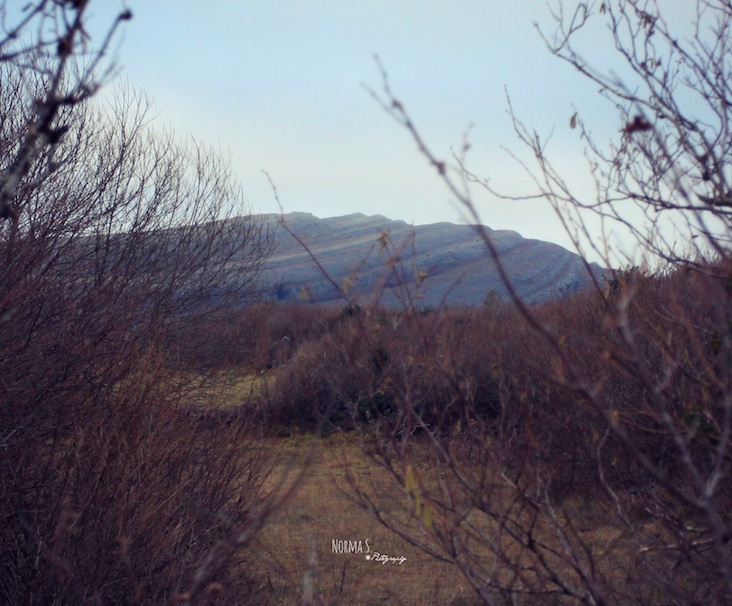
Mullaghmore, County Clare Photo: Norma Scheibe
ago, on St Patrick’s Day.
His grandfather was Peter Blake, who fought at the Siege of Limerick in 1691, and is said to have attained the great age of 120 years. Paddy lived, when a lad, with an uncle, another Peter Blake, at Ing, in the Parish of Kilmaleery. He married twice, and migrated to Corofin about the year 1861. Paddy had a clear recollection of events that happened a hundred years ago, and remembered most of the scholars who attended the old Latin School held by Bishop O’Shaughncssy at Newmarket-on-Fergus. He went to see Daniel O’Connell when passing through Bunratty Pike on his way to Ennis to the great election of ’28, and remembered the red flag hoisted on Bunratty Castle by Mr Tom Studdert, who refused to let the Liberator pass until he had paid the “pike money.” or toll. It was after this incident that the buyers refused to attend the old fair of Bunrattv, which consequently ceased to exist. Paddy used to admit he was thirty years old at that time, but, as he never liked to be considered old,” he was certainly some years older than he admitted. Paddy Blake entered the Corofin Hospital in September, 1908, and died there on March 12, 1910. He was an inveterate smoker.

 The Burren and Beyond