Posted in Posts and podcasts

A curious thing – 1896

Chronicle 3rd October, 1896
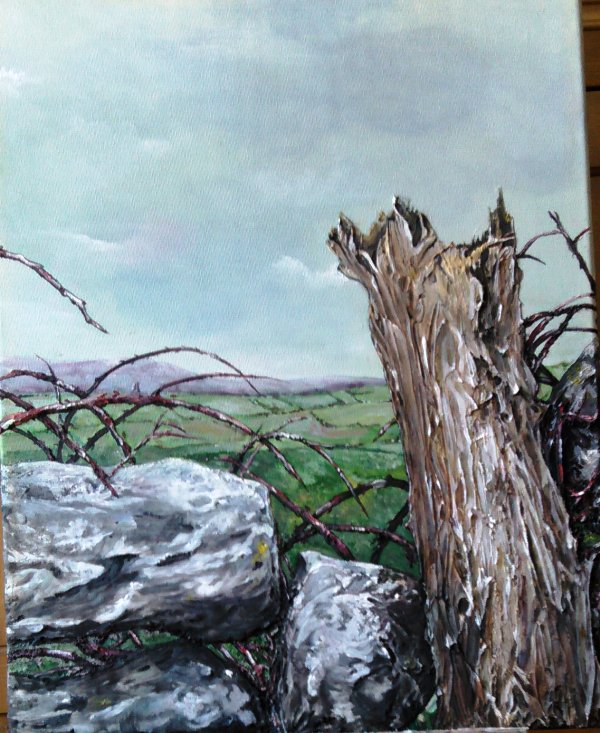
Westward Acrylic on canvas EO'D
Westward
Acrylic on canvas
EO’D

During Lord Mulgrave’s, or a preceding Lord Lieutenant’s rule in Ireland, there was a curious thing never traced to its source and never explained. In the east of Kildare, at Kill, a strange woman gave a piece of kindled peat to a man, with the injunction to pass it along to the next person on the Naas road, that person to repass it westward still alight, and so on westward. If the turf were let go out before a new piece were substituted from a living hearth, misfortune would come. That was on an autumn evening. Within twelve hours the ‘burnt turf’ had been carried to Galway Bay, across Kildare, the Queen’s and King’s counties, and Galway. No one has ever published an explanation of the affair.
Posted in Posts and podcasts

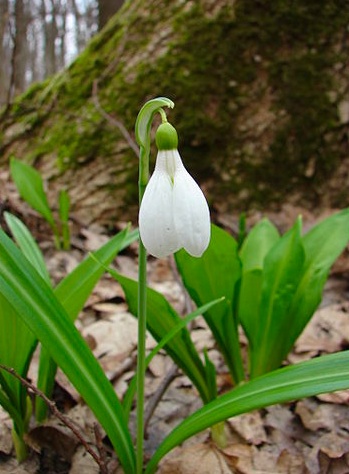
The Snowdrop – 1896

Irish Examiner 30th May, 1896 p12 (abridged)

Photo: V.Kotyak Wikimedia Commons
Photo: V.Kotyak
Wikimedia Commons

A pretty legend is related in connection with the snowdrop;

Eve was weeping because of the dreariness of the earth after she had been driven from Eden. She longed to see a flower once more, but none grew in the place of her banishment. The snow fell steadily.

Eve called to an angel and told him of her woes. The angel came to her, caught a drifting snowflake, breathed upon it, and gave it to her. It transformed, and the Snowdrop was born.

“Summer comes, Eve” said the angel, and he left.  As he did a halo of the little flowers grew from his footprints.

Summer comes.


Posted in Posts and podcasts

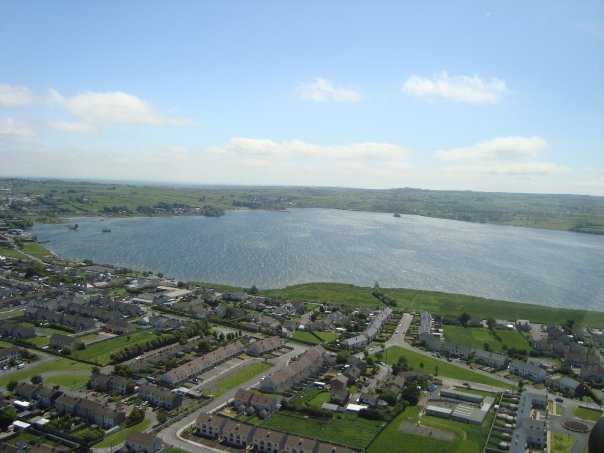
Loughrea – 1896

Loughrea Lake Wikimedia Commons Photo: Anthony
Loughrea Lake
Wikimedia Commons
Photo: Anthony
The Mercury 18th December, 1896 p3

Messrs Dillon, O’Brien, Harris and Sheehy, all Irish members of Parliament, were arrested by the police yesterday at Loughrea near Galway, while presiding over a committee for collection of rents, under the plan of campaign promulgated by the United Ireland newspaper.

Posted in Posts and podcasts

Seizure of Steam Trawlers – Galway Bay – 1896

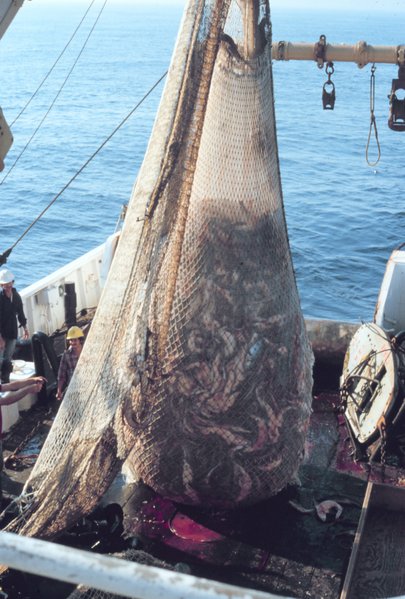
Trawl Net U.S. National Oceanic and Atmospheric Administration,  Wikimedia Commons
Trawl Net
U.S. National Oceanic and Atmospheric Administration,
Wikimedia Commons

New Zealand Tablet, Volume XXIV, Issue 4, 22 May 1896, Page 4

Special court was held in Galway for the purpose of trying the charges of illegal fishing preferred against the masters of two steam trawlers seized by a gunboat in Galway Bayfor illegal fishing etc.
The presiding magistrates were Messrs J O. Gardiner, P. M. and M. A. Lynch JP. The prosecution was carried on by Mr Underdown, head of the Customs, and the Inspectors of Fisheries, on whose behalf Messrs Blake and Kenny, solicitors, appeared. The defendants, J. T. Wales, of the trawler Traiton, and John Pettit, of the trawler General Roberts, were represented by Mr Gerald Clonerty, solicitor.

It appears that in the absence of Mr Pinkerton, Mr John Dillon put a question in Parliament which brought about the sending of a gunboat to watch illegal fishing in Galway Bay. Many complaints had been made by Claddaghmen of their boats being nearly run down by steam trawlers fishing the bay in the night time contrary to the fishery regulations.

The very first night the gunboat arrived in the bay the defendants’ vessels were seized. They were each fined £5 and costs for fishing within the prohibited limits, and £25 and costs for steaming about and trawling without having their lights on as prescribed by the bye-laws. Both vessels were from Milford Haven.

Posted in Posts and podcasts

Here’s to the County Galway – 1896

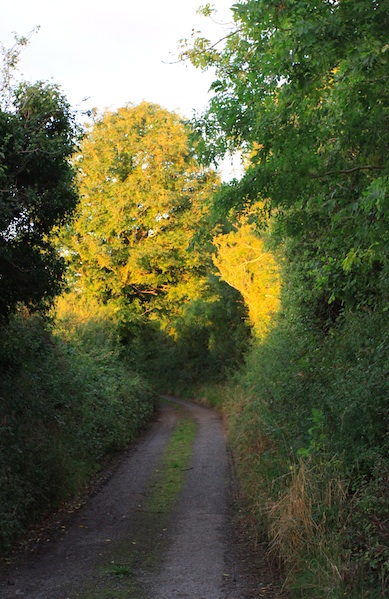
Photo: Norma Scheibe
Southland Times, I 13385, 22nd February 1896 p6
Here’s to the County Galway (abridged/anon)

No matter wheresoe’er I roam
In foreign lands across the foam,
My thoughts will always fly to home,
To home and County Galway.
And though, alas, I had to part
And hear the sting of sorrow’s dart,
There’s still a soft spot in my heart
For home and County Galway.

’Tis there the hills are towering high,
They seem to kiss the azure sky,
And peep at heaven on the sly,
Those towering hills of Galway.
There is no fairer spot I ween,
The sun’s more bright, the grass more green;
There’s poetry in every scene
Around the County Galway,

For rosy lips and laughing eyes
That beam as bright as sumer skies,
In which some subtle charm lies,
Give me the girls of Galway.
They’re mild and gentle as a dove,
Are full of virtue, truth and love-
There’s nothing under heaven above
Just like the girls of Galway.

The men are all from six feet four
To seven feet six and sometimes more
’Tis very few can stand before
A fighting lad from Galway.
They’d jump a hurdle eight foot high,
Catch cannon balls upon the fly.
And for old Ireland dare or die,
Those rattling boys from Galway.

Then here’s to Galway’s maids and bells,
To Galway’s men and Galway’s swells,
To Galway’s lakes and Galway’s fells
Here’s to the County Galway.
May angels weave their mystic spells,
O’er every home where virtue dwells,
O’er Galway’s hills and Galway’s dells
There’s no place else like Galway.

Posted in Posts and podcasts

The night when fairies hold high carnival – 1896

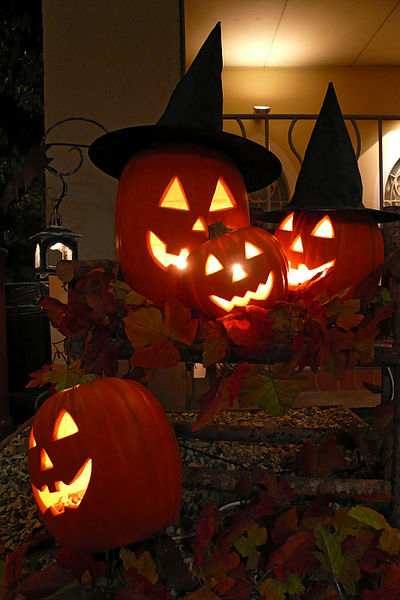
Photo: 663highland Creative Commons
Photo: 663highland
Creative Commons
https://widgetworld3.wordpress.com/podcasts/
THE SAN FRANCISCO CALL 25TH OCTOBER, 1896
The night when fairies hold high Carnival

In Ireland young women place three nuts on the grate bars of the fire. One that cracks or jumps is a faithless lover, while one that burns or blazes is a true one. They burn the shells of nuts eaten on Hallow Eve and cause snails to crawl through the ashes and so trace the initials of the future husband.

These glowing nuts are emblems true
Of what in human life we view.
The ill-matched couple fret and fume,
And thus in strife themselves consume;
Or from each other wildly start,
And with a noise forever part.

But see the happy, happy pair,
Of genuine love and truth sincere;
With natural fondness while they burn,
Still to each other kindly turn’

And as the vital sparks decay,
Together gently sink away;
Till life’s fierce ordeal being past
Their mingled ashes rest at last.

(Charles Graydon, Dublin 1801)