Posted in Posts and podcasts

Life in Galway – 1895

The Australia Star 27th July 1895 p8
Continual Duels- Anecdotes of.

In the recently. published “Autobiography of Sir William Gregory,” edited by Lady Gregory, there are a number of interesting particulars concerning social and political life in Ireland at the close of the last century and the beginning of this. The narrator begins with some details about his great grandfather, Robert Gregory, an excellent type of the nabob, who amassed a huge fortune in India and then returned to England.
Sir William says:—
My great-grandfather, on his return from India, had purchased an estate in Essex, another in Cheshire, a house in Bernerstreet, London, then a fashionable quarter, and a property in Ireland of over £7000 a year. Before his death he had sold the Essex and Cheshire estates, but he reserved that of Galway. From the accounts I have heard of him, he was a most kind and polished old gentleman, living in very great state, and considering, as old Indians used to do, that a huge retinue of servants was necessary for existence. I have heard my grandmother speak of the procession of carriages in which he and his suite travelled from London to Coole, but -what particularly struck her were the number of servants who came to the door, and waited at dinner in black silk stockings, black breaches, and gold garters. He was particularly courteous to young ladies, who had good reason to remember their visits to Coole with pleasure, and it was his habit to take them at their departure to a drawer, in which were precious stones, and let them fish out one of them without looking, taking the chance of what it might turn out to be. One fortunate maiden was mentioned to me— though I have forgotten the name— who had the luck to pick up a very valuable ruby.
He died at the age of 83, September 1, 1810, with all his faculties unimpaired, and his hair scarcely tinged with grey.
The grandfather of Sir William Gregory was Under-Secretary for Ireland, a position, he held for 18 years. It is characteristic of all governments in Ireland that officials are not only paid, but housed after a splendid fashion. Some of the great officials have two official residences, one in Dublin Castle and the other in Phoenix Park, the beautiful stretch of grounds just outside Dublin. It was in the Under-Secretary’s Lodge in Phoenix Park that Sir William was born in 1817.

Much of the interest of this volume is due to the glimpses it gives of Irish life as it used to be among the Irish nobility and the Irish gentry. It is not an agreeable picture. The hiccough sounds through it all. For it is impossible otherwise to account for the recklessness and the ferocity which characterised some of their doings, especially in the matter of duelling. Though the bravery may be admired, there is something extremely odious in the swagger with which these gentlemen got up from their cups to destroy each other’s lives.
The duel was dying out in its pristine ferocity in the days of Sir William Gregory’s youth— though it had not altogether disappeared from the land. There are plenty of illustrations of this in some of the excellent stories which Sir William Gregory tells. Thus his grandfather, one day, while dressing, had suddenly to take a prominent-part in a duel :
A duel had been arranged between Sir Valentine Blake and Robert Burke, of St. Clerens, two Galway men, and the spot selected was close to my grandfather’s gate.
He was, engaged at his important shaving operation, when he heard first one, and then, after an interval, a second double shot, which he knew to be from a pistol. He did not hesitate a moment, but ran downstairs, bare legged as he was. An orderly’s horse was at the door; he sprang on it and galloped to his gate-house. As he neared the gate he heard, close at hand, a third double shot, and just outside he saw a gathering of spectators round the seconds, who were discussing the subject of making a fourth shot effective. Just as he got to the ring a huge fellow rode In and shouted out: —
“Gentlemen, this is all child’s play. Let’s finish the business properly. Let each second advance his man two paces, and I’ll engage they don’t miss.”
“Who are you, sir?” cried my grandfather, dashing his horse forward. “Who are you, sir, to give such bloody counsel?”
“Who am I indeed!” said the other man, looking at the strange figure in a grey dressing-gown and bare legs.
“I’ll have you to know, sir, I’m Mr. Hickman, the clerk of the peace for the County of Clare!”
“Then, Mr. Hickman,” said my grand father, very quietly, ” I arrest you and the principals and seconds of this duel, in the King’s name, and I’ll have you all taken up before 12 o’clock.’
After which he rode home in his bare legs, chatting very pleasantly to Sir Phillip, who had been on the ground acting professionally as surgeon for the belligerents.


An even more remarkable duel was described to Sir William Gregory by the late Marquis of Clanricarde, in his way a type of the old Irish gentleman :—
“One day, at Portumna, he pointed out to me a field on the other side of the Shannon, about half a mile from the bridge which connects Galway with Tipperary. We had been talking of William Macdonagh, the well-known steeplechase rider, who was a kind of squireen and lived in the neighbourhood. He had recently shot himself through the head in a pistol gallery in Leicester square, where Dunkellin and I went an hour afterward to practice, and there he was, lying stark and stiff behind a screen.
‘I remember,’ said Lord Clonricarde, ‘seeing the poor fellow fight his well-known duel in that field. He had a difference with some Tipperary gentleman, and it was decided that the duel should take place with pistols on the Tipperary side of the river. The decision as to the side of the river where the affair should come off was a matter of life and death, for the Tipperary man well knew that if he was victorious on the Galway side, he would be torn to pieces by the Galway mob, while the Galway man knew that if he killed his antagonist on the Tipperary side, his chance of escape from the men of Tipperary would be small indeed. On the morning of the duel there were at least two thousand persons present, all Tipperary men, as the Galway peasants did not dare to cross the bridge.’ Lord Clanricarde went over from Portumna, and Macdonagh rode his horse to the scene of action, and gave it to a man to hold close at hand. A regular lane was made, lined by spectators on each side. When the signal was given both fired, and Macdonagh not only shot his antagonist dead, but also one of the peasantry who, in his eagerness to sea the sport, had pushed forward and received the ball in his head.
Macdonagh got to his horse and made for the bridge of Portumna. After taking one or two fences gallantly on the way, he found his retreat cut off and the Tipperary men in occupation of the bridge. Without a moment’s hesitation he put his horse at the Shannon, amid the execrations of his baffled pursuers, and he reached the other bank in safety.”


Sir William Gregory was the hero of one of the most historic contests in Irish history— the fight for the Dublin seat at a by-election in 1842. He says :”The Dublin people welcomed me very heartily, and an agreement was come to that I was to pay £4000 down, that the balance was to be made up somehow, and that I was to have nothing to do with bribery. The election ultimately cost about £9000; where the balance came from I know not, but among the vouchers in possession of my committee was one which was afterwards placed in my hands: ‘For 1500 freemen, gratification, at £3 per head, £4500.”
O’Connell took part in the election, and was especially vehement against Gregory for having listened in silence at one of his meetings to the cry “To hell with the Pope.” Gregory indignantly denied the charge— so indignantly as to vex the souls of the “fifteen hundred freemen voting solid at three pounds per head”:—
“I am afraid there were some good grounds for O’Connell’s statement that the offensive words were shouted, though my conscience was clear enough. I was much rebuked for the violence of my disclaimer, and the Rev. Tresham Gregg, in a speech next day to the Protestant freeman, when alluding to these allegations, said, ‘No, my friends, we must not cry, ” To hell with the Pope;” we must cry, “To heaven with the Pope.”
It will give some idea of the religious rancour which prevailed in those days among the lower-classes of Protestants, that one of the first petitions I was requested to present was a supplication to the House of Commons to pass a measure to prevent the Roman Catholics from using bells at their chapels, which, as being summonses to idol worship, greatly distressed the ears of the petitioners.”
Posted in Posts and podcasts

Killannin – 1895

Gympie Times and Mary River Mining Gazette (QLD) 29th Oct. 1896 p. 4
A Singular Revolt in Galway
(Times, September 13.)
A singular revolt against ecclesiastical authority in the Roman Catholic parish of of Killannin, in the county Galway— a revolt which has been in existence for the last three years — has now assumed a formidable aspect. Some three or four years ago Dr. MacEvilly Archbishop of Tuam transferred the parish from the diocese of Tuam to that of Galway. The
parishioners indignantly protested against the change, and the parish priest, the Rev. Father Coyne, strenuously opposed it by every possible means, and finally went to Rome to present an appeal to the Pope on the subject, his parishioners undertaking to defray the expenses of his journey. He complains that by the influence of ecclesiastics surrounding his
Holiness, his appeal was intercepted and never brought before the proper tribunal, and that a decree had been obtained against him by misrepresentation and suppression of the facts. After waiting in Rome for over 12 months in the hope of having his case heard, he returned to
Galway and was the object of a great popular demonstration. In the meantime, Dr. MacCormack, Bishop of Galway, took over the parish and appointed another priest, the Rev. Father Conry, to administer it.

The parishioners built up the chapel doors with masonry and secured the windows, and before mass could be celebrated in it the building had to be broken open amidst a scene of great excitement, by a party armed with crowbars and pickaxes, protected by the police with fixed bayonets and loaded rifles.
Some of the parishioners repudiated the right of Bishop MacCormack’s nominee, and an angry controversy, in which violent language was used on both sides, has raged ever since. The novel spectacle of two rival priests in the same parish is now presented. The parishioners are about equally divided, and one portion of them attends the ministrations of the Rev. Father Coyne, who celebrates mass in his house and performs the rites of marriage and baptism, while the other party attends the chapel.

In order to vindicate his authority and put an end to the opposition, Father Conry announced a public meeting on Sunday week, which was a failure. Another was organized for Sunday last, and the country was covered
with placards calling on the people to assemble in their thousands to denounce ‘the Killannin Jumpers, Heretics, and Schismatics.’

A large crowd, headed by the Rev. Father Conry, assembled, and it was proposed to hold the meeting opposite the Rev. Father Coyne’s house, but that Rev. gentleman, surrounded by about 400 people, looked so menacing that it was thought expedient to hold it in front of Father Conry’s house. Father Conry presided, and motions were proposed calling upon the faithful to have no dealings with ‘these pompous heretics and schismatics,’ and recommending that neither the young men nor the women of the faith should marry or speak to them. Father Coyne’s supporters having come up when this resolution was passed are reported to have received it with roars of laughter, and the proceedings ended amid the shouts and yells of the rival parties.

Posted in Posts and podcasts

The Galway Packet – 1859

The Irish Times 29th July, 1859 p1.

The Galway Packet Station

GALWAY, TUESDAY, 3, PM – Immediately after the conclusion of the crown business the doors of the grand jury room were opened, and your correspondent was admitted, who was the only representative of the press in attendance. The subject of the packet station and the subsidy was taken into consideration. The foreman (Sir Thomas Burke) in the chair. It was introduced by Christopher St. George, Esq., of Tyrone House, who after an able speech, which time does not admit of my reporting in full, proposed the following resolution:-

“We, the Grand Jury of the County of Galway, beg leave to express that, whilst we are steadfast in our opinion as to the inviolability of the contract entered into by the late government in respect to the establishment of a transatlantic packet station at Galway, we deem it necessary now to express in terms of the strongest disapprobation our condemnation of having referred to a committee of the House of Commons the consideration of this question which we had viewed as already determined on; and we further reprobate the formation of the committee.  We have to reiterate our previous statements as to the superiority of our claims to those of other applicants in favour of the measure, so vitally important to our local interests, and so replete with imperial advantages. We confidently expect that parliament will not only confirm the comparatively small subsidy of £78,000 in aid of the Galway packet station but will assist our exertions to obtain such loans of money as will improve our port.  We, on behalf of the county of Galway engage that, by all means at our disposal, we will advance the geographical eligibility of our bay for transatlantic communication.  We call upon the representatives of the county and of the town of Galway that they will hold as paramount to all other considerations the establishment of a transatlantic packet station at Galway, and we rely upon the exertions of the other representatives of Ireland so to act at this critical juncture that they will not suffer the interests of our common country to be overlooked.”

John Martin, Esq., of Tullyra Castle, said he had very much pleasure in seconding the resolution.

Mr. St. George said there was no precedent whatever for one government violating a solemn contract entered into by its predecessors in office.

The resolution was then signed by the foreman, on behalf of the grand jury, and it was resolved that a copy of it be transmitted to Lord Palmerston – Freeman Correspondent

Posted in Posts and podcasts

Land Law Bill – Ireland – 1895

LAND LAW (IRELAND) BILL.
https://api.parliament.uk/historic-hansard/commons/1895/apr/02/land-law-ireland-bill
HC Deb 02 April 1895 vol 32 cc735-817 735
THE CHIEF SECRETARY FOR IRELAND (Mr. J. MORLEY, Newcastle-upon-Tyne)(abridged)

The late Sir William Gregory. In his autobiography I find this passage. He is speaking of the sale of some portions of his ancestral estates in the county of Galway:— I may here mention that the result of this sale had a very strong influence afterwards in my political career, and rendered me a very advanced politician on the tenants’ side, on the landlord and tenant question.

Shortly after my father’s death, I visited every holding on the estate, and was struck with the results of the unflagging industry of the tenants who occupied the light stony land about Kinvara. They had by their labour, and with no allowance from the landlord, cleared large portions of their farms, and the great monuments, as they called them, of stones attested their industry. From these clear patches they had excellent barley crops, and were in prosperity. My great-uncle and father were both just men, and allowed them to enjoy the fruits of their toil for many years without raising the rent. On the occasion of my visit, when I was about to drive away, I said to these tenants, who had assembled to greet me, that I was surprised to see so much good land, and that I thought it was capable of bearing a higher rent. Of course, this called forth a general protestation, and very sad were their faces; but they soon cleared up when I said to them, ‘Were I to take one shilling out of your pockets on account of the additional value you had given to my property by your industry, I should be a robber and ashamed to look you in the face. You can go on in good heart with your work, and be assured that while I own this property, your rent shall never be raised on account of your improvement.’

Such were my intentions, and such was the confidence of those tenants that they never asked for a lease, or I should have gladly given it to them. When the sale came on I was so occupied with other matters that I quite forgot their danger. Indeed, it never crossed my mind, for I had then heard of no particular instances of rapacity on the part of new purchasers; but I very soon had a terrible account of my remissness in not securing these poor folk.

Mr.——, to whom I have referred, as soon as he was placed in possession of the lots he had purchased, on which those tenants dwelt, lost no time in dealing with them in the most remorseless fashion. The rents were raised so as to pay £5 per cent. on the borrowed capital, and a large income besides for himself. They were almost invariably doubled, and in some cases £5 was charged where £2 had been the rate of the former rent. But he killed the goose for the golden egg, the town of Kinvara was all but ruined, and the best tenants ran away. I met one in Australia, at Ballarat, and he assured me he was well off when I was his landlord, but a pauper three years after, when he emigrated. It is things of that kind that have sent thousands and tens of thousands of Irish across the sea, not only to Australia, but still more to the United States, with hatred in their hearts for the system which exposed them to these abominable cruelties, and for the Government and this Parliament which allowed such wrongs. I am all the more glad to have read that passage, because Sir William Gregory and his ancestors had none of this harsh spirit, and it shows that there were some exceptions, at all events, to Mr. Justice Keogh’s violent description of the Irish lairds as “the most heartless, thriftless, and indefensible landocracy in the world.”

Posted in Posts and podcasts

Election – 1895

Irish Examiner 12th July, 1895 p6 (abridged)

Irish Women
Members of the Irish Women Worker’s Union on the steps of Liberty Hall c. 1914 National Library of Ireland.

During the next three weeks the nation will be called upon to exercise the most momentous duty which can fall to the lot of citizens, viz., the choice of Parliamentary representatives who shall guide the destinies of the men and women of the country.
Vital interests are involved in the coming struggle, but the question of greatest importance which concerns all sections and all parties (for it deals with special needs of the larger portion of the nation) is the demand for the removal of the political disabilities of women. We trust this is the last General Election at which women will have to stand outside the pale of citizenship.
The Women’s Franchise League most strongly and earnestly appeals to all lovers of justice and freedom to use every effort during this election for the removal of the disabilities which press so heavily on the women of this nation.
Ursula M. Bright, Hon, Sec.

Posted in Posts and podcasts

A Lullaby – Francis A. Fahy – 1895

Irish Examiner 1st June, 1895 p.10

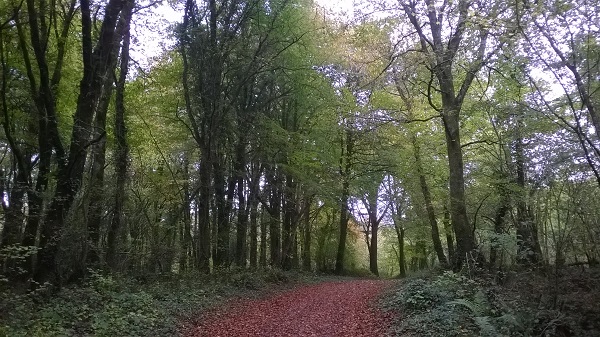
Like a bird on the bough of the brown hazel swinging. Photo: EO'D
Like a bird on the bough of the brown hazel swinging.
Photo: EO’D

Oh, to and fro on my bosom of love,
Like a bird on the bough of the brown hazel swinging;
While a husho falls from the stars up above,
And a lul-la-lo are the night-winds singing.
Sleep sthoreen bawn,
Sleep on till dawn;
Peace to my heart your sweet breath bringing.

Oh, wee-shee handies and mouth of the rose!
My share of the world in his warm nest is lying,
While husho falls as the blue eyes close,
And a lul-la-lo is the night-wind dying,
Sleep, flower of love,
Sleep cooing dove,
Softly above my heart’s glad sighing.

Allana macree, cling closer to me,
The daylight is flown and the pale stars are peeping,
While a husho falls o’er the land and the sea,
And lul-la-lo from the far hills creeping.
Sleep, sthoreen bawn.
Sleep on till dawn,
Angels their watch above you keeping.

Posted in Posts and podcasts

Mr Thomas Fahy

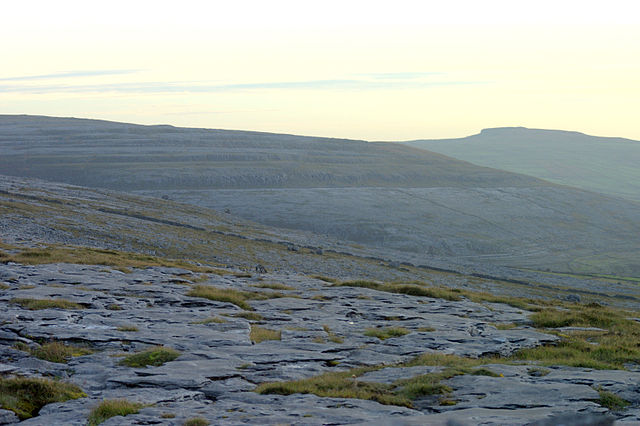
The Burren Wikimedia Commons
The Burren
Wikimedia Commons
NEW ZEALAND TABLET VOL XXII IS 6 – 7th June, 1895 p21

Mr Thomas Fahy, one of the oldest, best known, and most esteemed of the Irish residents at Clapham, London, died at 33 Leppoc road, the residence of his son, Mr F. A. Fahy (the popular Irish poet and humourist), on Ash Wednesday. Mr Fahy’s circle of friends extended far beyond Clapham. Indeed, in every part of London the news of the death of this kindly, genial, and most lovable of Irishmen, was heard with the deepest regret. He was born close on 80 years ago at Burren, Clare, but most of his long life was spent in Kinvara a town on an inlet of Galway Bay, famous as the home of The little Irish Colleen,” of his son’s charming and popular ballad, “The ould plaid shawl.” He was emigration agent for the district during the exodus that followed the famine of ’48, and he booked thousands for the land of the Stars and Stripes. He was the medium through which thousands of pounds reached the hands of the lrish emigrants’ relatives. His remains are interred in the Catholic cemetery at Mortlake, on the Upper Thames, and close to the remarkable tomb, in the form of a tent, of that famous Galway man, Sir Frederick Burton, the Eastern explorer and Orientalist. Kilkenny.

Posted in Posts and podcasts

An Dreoilín – 1895

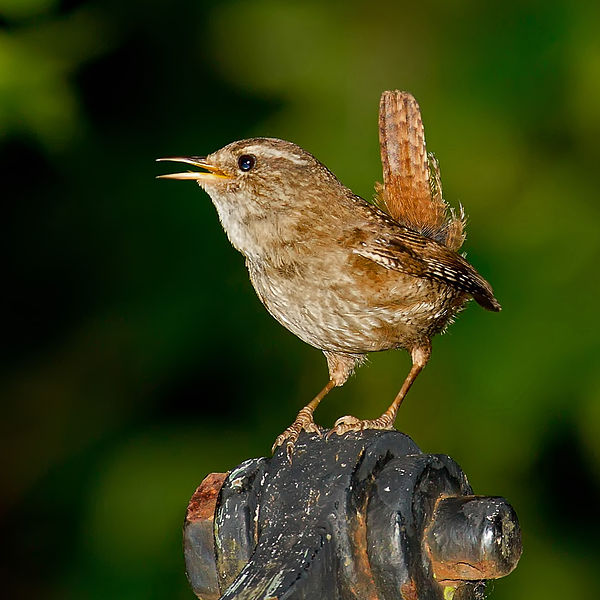
An Dreoilín Wikimedia Commons
An Dreoilín
Wikimedia Commons
New Zealand Tablet 12th July, 1895 P11 (abridged)

Francis A. Fahy is a writer who seems to have struck the popular vein in his productions. Like Mr Graves, he has written a number of songs to familiar airs, and as they are all of the “catching order,” they sink deep in the fancy of the masses. In reading his songs one is struck with the peculiar domination of the national spirit in them, It is interwoven with every other sentiment of the poem and seems inseparable from his verse. Even in his songs of affection, begun in a tender strain, we hear the tread of the soldier and the jingle of his sabre.

He was born at Kinvara, County Galway on September 29, 1854, and entered the Civil Service in 1873. He has resided in London since that time, and has taken part in many Irish movements, notably the Southwark Irish Literary Club and its successor, the Irish Literary Society. At sixteen years of age he wrote a play “The Last of the O’Leary’s,” which was produced in his native town. In the same year his first printed poem appeared in the Nation. Since then he has contributed from time to time to nearly all the leading periodicals of Ireland and to many in England. Most of his writings appeared over the nom de plume of Dreoilín (the wren).