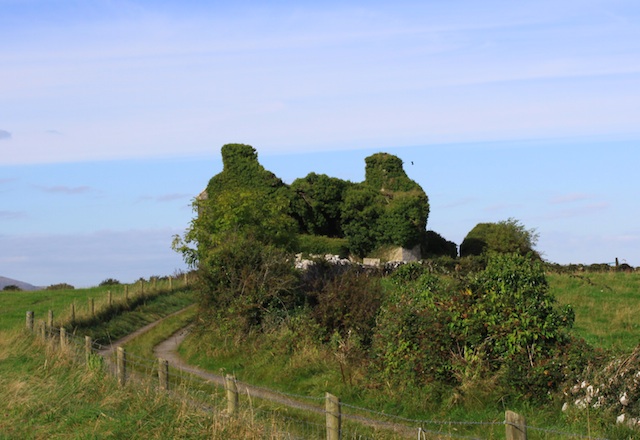
By January 1848 temporary fever hospitals were established in Kinvarra and Killeenavau (G01/12/7, p28). In April 1848 the Board accepted the tender of Martin Linnane ‘for the erection of Fever sheds near Kinvarra for one hundred patients at one pound two shillings per foot lineal measurement…’ (G01/12/7, p122). The Board at this time also accepted the tender of Michael Nilan for the erection of fever sheds adjoining the Workhouse, costs divided as follows, Office sheds at £1.1.6 per foot, fever sheds including bedsteads at £1.3.6 per foot, finding and setting boilers at £1.6 pre gallon, and clothes stores £0.12.6 per foot (G01/12/7, p124).
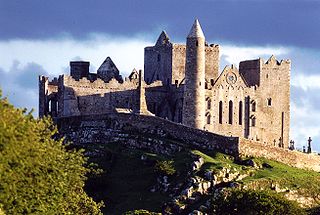
Sydney Chronicle 29th July 1848 p8 The Rock of Cashel
It is with much concern that we have received the intelligence of the fall of a portion of this time honored structure. On Wednesday last, at one o’clock, p. m., the tower, through which was the principal entrance, burst asunder, from top to bottom, and fell with a tremendous crash. Large masses of the building were precipitated down the hill to the very bottom. A crack had been perceived for many years in the tower, but no danger was apprehended. We regret to learn that much more of the noble fabric is in imminent danger and that its fall is certain unless active means be employed for its security. It would surely be a national disgrace if funds be not forthcoming to avert such a catstrophe of which not only antiquarians, but every Irishman, must deprecate the idea. The building fortunately still belongs to the See of Cashel, so that any works undertaken must be sanctioned by ecclesiastical authority.
There is said to be an old prophecy in Ireland. that when the Rock of Cashel falls, there will be a revolution in England.
Galway County Council Archives ‘…to acquire, preserve and make accessible the documentary memory of county Galway’ U:\Archives – Collection Management\Descriptive Lists\Poor Law Unions\G01-12 Gort PLU2, 2009-11.doc ix
By January 1848 temporary fever hospitals were established in Kinvarra and Killeenavau (G01/12/7, p28). In April 1848 the Board accepted the tender of Martin Linnane ‘for the erection of Fever sheds near Kinvarra for one hundred patients at one pound two shillings per foot lineal measurement…’ (G01/12/7, p122). The Board at this time also accepted the tender of Michael Nilan for the erection of fever sheds adjoining the Workhouse, costs divided as follows, Office sheds at £1.1.6 per foot, fever sheds including bedsteads at £1.3.6 per foot, finding and setting boilers at £1.6 pre gallon, and clothes stores £0.12.6 per foot (G01/12/7, p124).
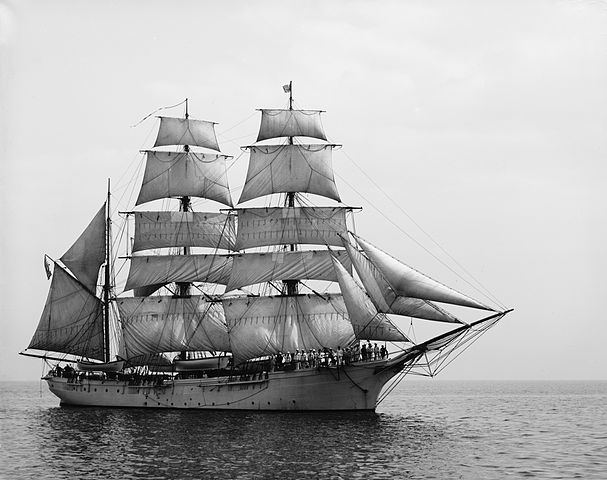
Barque Wikimedia Commonshttps://widgetworld3.wordpress.com/podcasts/ COLONIAL TIMES 15TH DECEMBER, 1848
WRECK OF THE COMMERCE EMIGRANT SHIP
A most shocking loss of an emigrant ship, with upwards of one hundred persons on board, was reported at Lloyd’s. The vessel that met with the sad disaster was the barque Commerce, belonging to Limerick, 267 ton burthen, Halliday master.
She sailed from Galway in the early part of spring for St. John’s, New Brunswick. About seventy families, principally females and children, embarked on board at Galway, taking with them all they possessed in the world. The master was aware that they were near the Nova Scotia coast, but the prevalence of foggy weather and drizzling rain prevented the exact position of the ship being known.
A good look out is stated to have been kept. Be that as it may, however, she run ashore, the first intimation of the fact being her striking heavily on a rock. A strong effort was made to back her, but a current carried her over the rock, and she was swept with violence onto a bold rocky shore. The emigrants mustered on deck in great confusion; the whole of them were in their bed clothes, and their horror on discovering the awful situation of the ship may be easily conceived.
For a few hours the ship remained in an upright position. As the tide rose, however, a gale sprung up, the sea from which swept the decks. The boats had been lowered, and some of the crew succeeded in ascertaining that the shore was accessible to land the passengers. They returned and made two trips, between the ship and the land, with passengers; but on attempting the third, they were driven against the rocks, and many of the poor creatures met with a watery grave.
The vessel, by the continued beating on the rocks, soon filled. The masts were cut away, and other means to save her from destruction , were adopted, but of no avail. In the meantime, the remainder of the crew contrived to effect a communication with the shore by a line. One after another of the emigrants were dragged through the surf to the shore in a most pitiable condition. Many, we regret to say, were drowned, particularly the children. Between seventy and eighty were saved, as also the crew. The following are the names of some of the survivors;
Mrs Mary Burke and child
Mrs Coyee and infant
Patrick Corcoran aged 21
a boy names Fogant and a lad John Leydon.
A large number of the passengers had nothing on but their night clothes when they landed, some even perfectly naked. They were unable to save anything of their little property from the wreck. Captain Halliday acted with great firmness throughout the trying period. The wreck quickly broke up, with all she contained. She was partially insured.


 The Burren and Beyond