

Acrylic on Canvas
12″ x 16″
EO’D
The Catholic Press 27th February, 1919 p.17
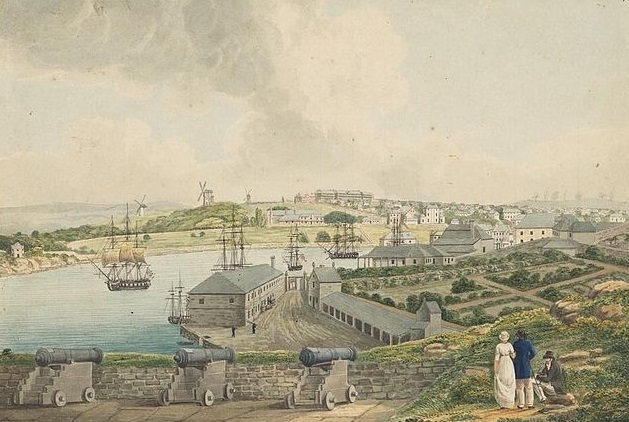
Last month was witnessed in Sydney the inauguration of a branch of the Cumann na mBan. The meeting, held for the purpose in the rooms of the I.N.A., Station House, was a very enthusiastic and successful one. After the aims and objects of the association were explained, it was decided by the ladies to place themselves under the patronage of Ethna Carberry, and that the branch be known as An Craob Ethna Carberry (the Ethna Carberry branch). The following ladies were elected office-bearers;
President – Miss B. O’Grady
Vice-Presidents – Miss M. Ryan and Miss Sheehan
Secretary – Miss Amy Ryan
Treasurer – Miss May Maloney
Committee; Mrs Cheetham, Miss Madeline Sheehy, Miss Mary Organ and Miss Kathleen Weber.
The names of Mrs. J. Murphy and Miss Darcy have since been added to the committee.
When the ban has been lifted from the holding of meetings, the Cumann na mBan will meet in the I.N.A. rooms (sixth floor), Station House, at 8 p.m. sharp on Wednesdays and special attention will be given the Irish language, industry, literature, &c. Information as to membership can be had from the secretary Miss A. Ryan, I.N.A., sixth floor, Station House.

Daily Illinois 24th October, 1933

The air-minded fisher-folk of this district gave enthusiastic welcome to Col. Lindbergh and Mrs Charles A. Lindbergh today.
The flying American couple made a perfect landing in the great harbour of Galway shortly after 5 p.m. after a five and a half hour flight from Southampton, England.
Kerry Weekly Reporter 12th January, 1907 p.2
Last season 400,000 Forest Trees were exported from the celebrated Waterford Nurseries of Messrs Wm.Power and Co., to help in the reafforesting of England, Scotland and Wales. Nevertheless we hear of some people sending outside Ireland for forest trees. What a world we live in.
Tuam Herald, 21st August, 1909 (abridged)
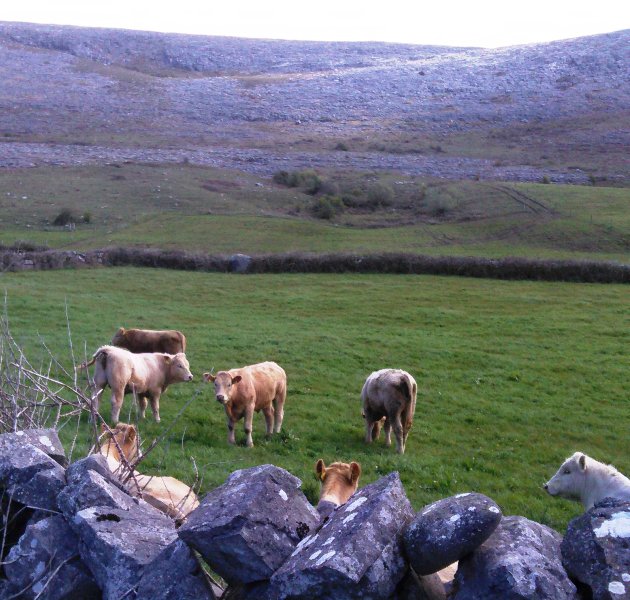
On day of Galway August Fair, a cow sold to a countryman by Mr Martin Ashe was afflicted by the great heat. It dashed towards the docks and jumped into the water below the dock gates. Sergeant O’Neill, availing of a boat in which there were two soldiers, went after the animal, which must soon have been carried away by the tide and the current from the river. Assisted by two or three civilians he got a rope around the cow and brought her successfully to the shore at Tip Head, where she was restored to her grateful owner.

Connaught Journal – 24th April, 1823

TOWN OF GALWAY SESSIONS (abridged) – This case came on on Friday last. Mr. M. had been conveying corn from Oughterard, west of this town, to
Tyrone, Ballinderreen, the seat of his master, Arthur French ST. GEORGE, Esq. On arriving at the toll-gap, toll was demanded of him by the traverser. Mr. M said, that he had no right to pay toll as the corn was not being taken into town for a market. The traverser insisted on what he considered his right, and a scuffle ensued in which Mr. M. was severely beaten.
When the traverser was called for trial, he was not forthcoming, and it was then discovered that no bail had been offered or taken for his appearance! Thus the case rests. Mr. M., a poor man, has been in town for some days at expense, which he was not well able to bear, and the traverser has escaped, for the present, from the inflictions of the law.

The Holiday Customs of Ireland – James Mooney
Proceedings of the American Philosophical Society Vol. 26 No. 130 (July – December, 1889)
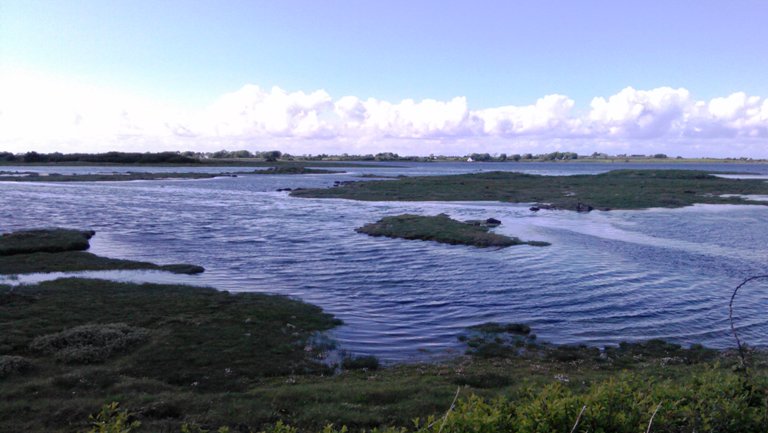
Whitsunday, in Gaelic called Cingcis, is a moveable festival occurring generally about the end of May or the beginning of June, and deserves notice on account of the mysterious fatality connected with it, as well as with the following Monday and Tuesday. It is an unlucky season, and should a man born on any one of these three days ever throw a stone it will inevitably kill or cripple someone. No water must be sold during the same period, and for this reason no clothes are washed from Saturday until Thursday, nor are any sheep washed for shearing. Neither must one start on a journey or begin any important work, but, above all, no one must go near the water, either for bathing or boating, or even to cross a stream, for at this season one may be drowned in a cup of water. There are ancient legends to prove the truth of this belief, and every old woman can tell of instances within her own knowledge where a neglect of these precautions has resulted fatally. Death is not inevitable, however, for only one hour of all this time is fatal, but as no one may know which is the hour, or even on which of the three days it occurs, the only way to avoid the evil consequences is to observe the prohibition until the period has terminated. According to Lady Wilde, the fairies are also to be feared at this season, so that holy water must be sprinkled about the house to keep them away, and at this time also the water spirits come up out of the sea to hold their revels on the shore, and the water horse rises from the lough to graze at midnight in the green pastures upon its banks. A dance was formerly held also on Whitsunday.
 The Burren and Beyond