Posted in Posts and podcasts

Brace yerselves! – The Irish Girl – 1891

Sunset, Galway Bay wallpapers.varjati.com
Sunset, Galway Bay
wallpapers.varjati.com
https://widgetworld3.wordpress.com/podcasts/
PETTICOAT PAPERS. OTAGO WITNESS, 23RD APRIL, 1891 P35
THE IRISH GIRL.
(abridged)
Irish women are the most passionate partisans in the world. Get an Irish girl into the corner of any drawing room, and tickle her with a remark about Balfour. or Parnell, or rents or evictions, or any of the burning questions which rend the “distressful country asunder”, and she will go for you with all the headstrong volubility of her race, and if she doesn’t convince you with her logic, she will do it with her eyes.

Have you never heard an Irish girl sing “The wearing o’ the green” with that passionate abandon which no English girl can approach, until you were ready to curse – Tory though you be – the scoundrels who were “hanging men and women for the wearing o’ the green”? For she has that keen sensibility, that quick sympathy which is so distinctive of the French woman. In fact, she is by nature and temperament a French girl, with a somewhat deeper reserve of passion and a freer system of education and social life than her Gallic Sisters.
That is why the Irish woman succeeds so well in Paris. When she finds herself in a congenial soil she takes root and flourishes with the luxuriance of an indigenous plant. She has all a French woman’s aptitude for intrigue, with more than a French woman’s fire and vigour. Politics, personal politics form her native element, and nowhere are politics so personal as in Paris. And so, when, in obedience to the French maxim, you have looked for the woman, you need not be surprised if she speaks with an Irish accent.
The Irish girl in England often creates an impression of fastness. It is quite a false impression, but springs naturally from her character. She is, as I have said, keenerwitted than home-grown girls “alive all o’er to smart and agonise at every pore.” This is mirrored in her talk, which is fervid and fluent hot from the heart which she bares to you in her speech. She presents herself to you au naturel. She is natural, unconventional, straightforward.
But the Irish girl must be studied at home on her native soil before she can be fully appreciated, and not in Dublin, or Cork, much less in Belfast or Ulster. Generally all big cities approximate to London, as all roads once led to Rome.
I should select Galway as the district where the purest and most unadulterated Irish maidenhood is to be discovered. Often and often, as one drives across the rainswept hills, one comes suddenly upon a cabin and as the clatter of wheels draws near, a figure steps out of the cabin which makes you feel instinctively for your sketch-book, ‘so wonderful are its suggestions of grace and beauty. Only suggestions, alas! For the dress is ragged, and the whole aspect unkempt. But there is a dignity in the carriage, a shimmer in the raven hair, and a purity of complexion.

The features of the girl are reproduced in a score of Galway country houses, only in a prettier frame. The eyes deep grey for choice with all sorts of half lights lurking in the corners, ready to blaze up in passion or melt in pity; eyes that rivet your own till you catch yourself blushing at your own temerity – were there ever such eyes?
All other features are blurred and indistinct if the real Irish eyes are there and as the Cheshire cat lives by its smile alone, so the Irish girl, in spite of a snub nose and a wide mouth, has only to look and conquer. And the voice! I You have no idea of the magic of the human voice if you have never heard an Irish girl tell Irish stories in an Irish house.

Oliver Wendell Holmes says somewhere that he has only heard two perfect speaking voices. One belonged to a German chambermaid, the other I forget to whom. But neither to an Irish girl.

He had never been in Ireland.

At home we often hear soft melodious voices—” voices low with fashion, not -with feeling” – but never in the world have I heard anything like the linked sweetness of an Irish girl’s voice. If it were but a page of Bradshaw that she were reading, the effect would be the same; as the long-drawn notes of a Stradivarias in the simplest melody bring tears from the heart. I cannot explain it, but everyone feels it. There is a note in the human voice which finds its complement in our inmost being. And the Irishwoman has put her finger on that note.

Every Irishman has a touch of Bohemianism in his nature. Thackeray said that we lose our way to Bohemia when we turn the corner of 40. The genuine Irishman never forgets his way there. The Irish girl has it, too, Only a soupcon— like garlic in French cookery; but it gives a flavour to her character. It comes out sometimes in a reckless disregard of expense and consequent financial disaster, sometimes in a wild rush to go nursing in Egypt or missioning in China. I have seen a Galway girl sit up all night while her brothers played billiards, and ride 30 miles after the hounds the next day without turning a hair. And I have seen the same girl sit by a sick bed for a week without taking off her clothes. It is this touch of Bohemianism which sometimes throws the Englishman off his balance. This reckless audacity, this outspoken frankness, which springs from warmth of heart he mistakes for something warmer. And then he notices that the tender grey of the Irish eye can harden into a steely blue, and finds the Irish girl bulwarked by the impregnable rock of maidenhood. She is without fear. Because she is without reproach.

Posted in Posts and podcasts

Irish Folk Songs – 1812

Maedoc Book Cover, Ireland 1000AD Wikimedia commons
Maedoc Book Cover, Ireland 1000AD
Wikimedia commons
https://widgetworld3.wordpress.com/podcasts/
DOMINION 6TH JULY 1812 P 11
IRISH FOLK SONGS
.
Everybody that Ireland has a music of its own, and it is very sweet and beautiful music, too. Many people, however, imagine that the Tom Moore ballads comprise the great musical literature of that country. This is not the case, as the Countess de Cisneros will show in the music she is to sing at her concerts.
As soon as her present tour of Australasia was decided upon, Madame de Cisneros commenced her search for Irish music. She know that Ireland once possessed a race of troubadours—wandering birds who in Gaelic sang the legends of the country to tho music of the harp, Ireland’s national emblem.
“In America,” said the great mezzo-contralto, describing her search, “one can get the most-up-to-date information about everything. I set to work to hunt New York for some of those old harpers’ melodies. I approached several big music publishers. But they all gazed at me sadly, and told me they had never heard of anything of the kind. I was not discouraged. I kept on seeking, and in the end I found a publisher who said that he had somewhere in his library a book of songs just the sort I described. It was Dr. G. Petrie’s, collected early Irish music. I found that Dr. Petrie had taken many of his songs from the work of Mr. Edward Bunting, another enthusiast in Irish folk music. After much disappointment I obtained a copy of Edward Bunting’s work, and I found the two veritable storehouses of the exquisite music of old Ireland. I have been through them all. All are beautiful, but I have selected those which I consider to be the gems of the collections for inclusion in my Australasian programmes.”
In each of her concert programmes Madame do Cisneros will include a series of these delightful old melodies. the first of these is “Farewell, My Gentle Harp.” This song was first put into written form in I650. A well-known harper-Rory’ Dall M’Cahon-sang it in Dublin that year. A note was taken of it by a musician present, who recognised its value, and this note afterwards came into the possession of Mr. Edward Bunting in the course of his researches.
The date of the second number, “The Foggy Dew,” is unknown. Some harper composed it in the dim past. He taught it to others, and it was handed down, a traditional- folk song, from harper to harper, until Harper M’Garvay sang it in Dublin, and it was taken down about tho year 1700. “My Thousand Times Beloved” found its way into written form in similar fashion about the year 1798.
The last of, the four Irish songs of the first programme is called “A Golden Cradle Holds Thee.” Who composed it, and when, nobody knows. Mr. Bunting heard an old Irishwoman sing it away, in the wilds of Galway. He took down the music and tho Gaelic words. It relates a pretty, legend about the fairy fort of Farsoe. A young girl, whose infant brother had died a week before, was said to have wandered into the fort, there to find her brother in a rich cradle; placed; there by fairy hands. The song, with its exquisite music, is the lullaby she sings as she rocks tho golden cradle.

Posted in Posts and podcasts

Hit and Run – 1889

Creative Commons
Creative Commons
https://widgetworld3.wordpress.com/podcasts/
THE BRISBANE COURIER 21ST OCTOBER, 1889
Many of our readers will learn with regret, from the following extract from the Galway Express of 24th August, that an alarming accident has happened to Mrs. De Burgh Persse, though happily no serious results were apprehended :
” On Tuesday evening last, while Mrs. De Burgh Persse and her two sons were driving home from Galway in a light-running pony trap they carne in contact with a goods-van at Salthill, whioh struck against the vehicle with great force causing it to upset, throwing Mrs. Perse and the oldest boy out on the roadway,
“while the youngest boy was caught underneath the car. The driver of the van, it appears, instead of rendering any assistance, whipped on his horse and dashed at full speed into town, and up to the present has not been identified.
Mrs. Persse was very much shaken by the accident, but the younger boy remained unconscious for several hours, and great anxiety prevailed amongst the members of Mrs, Persse’s family. However, on Wednesday morning the poor little sufferer, who is only about 7 years old, showed much improvement, and is now beyond all cause for uneasiness.

Posted in Posts and podcasts

If you were born on Hallowed E’en – 1910

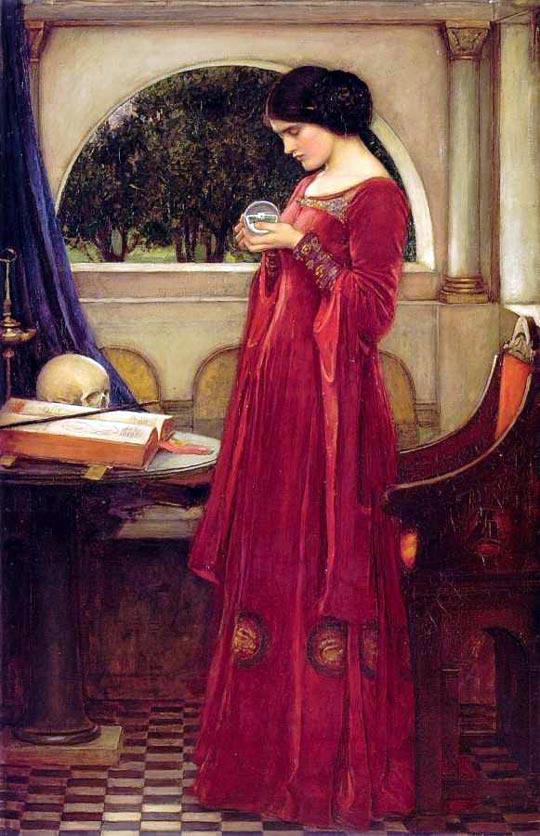
The Crystal Ball John William Waterhouse - 1902 Wikipedia.org
The Crystal Ball
John William Waterhouse – 1902
Wikipedia.org
https://widgetworld3.wordpress.com/podcasts/
THE SALT LAKE TRIBUNE OCTOBER 31ST, 1910 P4

It is an old superstition that children born on Halloween night will be possessed of peculiar faculties of foresight. Such persons are reputed to be gifted with the ability to see the future with a clear vision – they are seers. Among the pagans such a person was set up as a prophet and the wise man of the tribe – to him all homage was due.
History records that it often happened that such a person was not only a seer of the tribe, but the chief and the ruler. It was from the ranks of those of the tribe, if any there happened to be, who were born on Halloween that the rulers were recruited.

Posted in Posts and podcasts

Hallowe’en – not all ghosts are good! – 1864

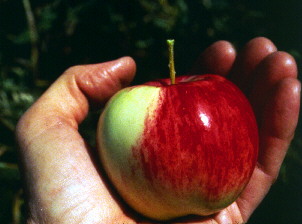
Photo: U.S Department of Agriculture. Creative Commons
https://widgetworld3.wordpress.com/podcasts/
Sacramento Daily Union, 14th December 1864
(abridged)
The customs of Holy Eve are as various as the countries where the feast is kept. A supper of the products of the orchard, connected with the etiquette of a hundred tricks, are attractive features “for the night only”. But it is not the broad board of apples and nuts which excite the midnight revelries of the occasion. A more serious practice swells it to the proportion of a carnival, which has survived the wreck of empires.

A portion of the world of spirits, and it must be said, not the good ghosts for whom we pray, wander through the earth for the sole purpose of making the single married, or place a winding sheet on the wicked frames of those who make too free with the devil at midnight. This is the spell which gives Hallowe’en its ancient power, and invests it with the mystery which secures it perpetual remembrance.

Nine is a number which, for some unexplained cause, provokes the presence of one of the gentlemen from the lower regions.

It happened that a maiden, anxious to be wedded to somebody, proceeded at dusk, with the first apple she received from an unmarried man, to her chamber, and having carefully locked the door, she stuck a pin nine times in the apple. Then she proceeded to the mirror with the apple raised on her hand. She beheld the mirror for only a brief space when her future lover appeared in it. But, alas, what appeared was only the face of the lover, with the club feet and tail of the devil.

There is another instance on record of Satan himself appearing in propria persona before a young lady who tried this spell.

She died in terror at beholding her marital fate…

Posted in Posts and podcasts

The night when fairies hold high carnival – 1896

Photo: 663highland Creative Commons
Photo: 663highland
Creative Commons
https://widgetworld3.wordpress.com/podcasts/
THE SAN FRANCISCO CALL 25TH OCTOBER, 1896
The night when fairies hold high Carnival

In Ireland young women place three nuts on the grate bars of the fire. One that cracks or jumps is a faithless lover, while one that burns or blazes is a true one. They burn the shells of nuts eaten on Hallow Eve and cause snails to crawl through the ashes and so trace the initials of the future husband.

These glowing nuts are emblems true
Of what in human life we view.
The ill-matched couple fret and fume,
And thus in strife themselves consume;
Or from each other wildly start,
And with a noise forever part.

But see the happy, happy pair,
Of genuine love and truth sincere;
With natural fondness while they burn,
Still to each other kindly turn’

And as the vital sparks decay,
Together gently sink away;
Till life’s fierce ordeal being past
Their mingled ashes rest at last.

(Charles Graydon, Dublin 1801)

Posted in Posts and podcasts

Halloween – 1908

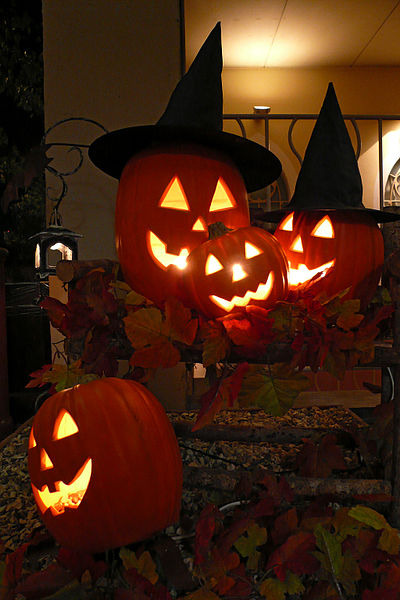
Photo: Wikimedia Commons
https://widgetworld3.wordpress.com/podcasts/
THE SUN 1ST NOVEMBER, 1908 P10
*abridged

Halloween, or Samhain night according to the old Druidical division of the year, comes on the last day of summer. It is the gloomiest night of the whole twelve months to the fairy folk. The Fe-fiada, or spell of enchantment, is removed from all the fairy hills and raths as the last bit of daylight fades and all the fairies come trooping forth to moorlands and mountains to join in a mad revel with the ghosts and witches and banshees and, that most demonic spirit of all, the dreaded Pooka.
If you think you hear the wind wailing over the housetops on that night, you are mistaken. It is not the wind but the great lament or Caoin that the fairies make for the dead summer.
As the fairies are allowed to leave their hills, so mortals are allowed to enter them, and many a venturesome lad has gone into the depths of the raths and brought back wonderful tales of fairy palaces and gardens and the like.

Posted in Posts and podcasts

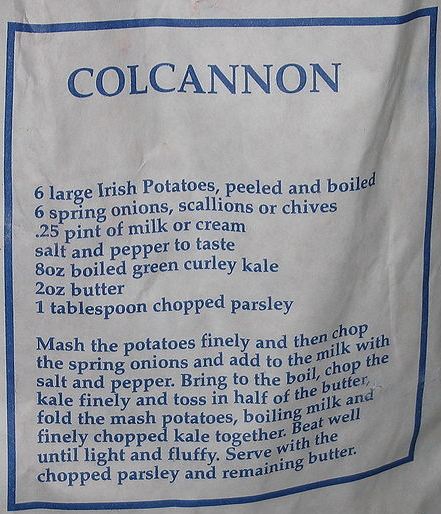
Colcannon – 1914

Colcannon Photo: Sarah 777 Wikipedia
Colcannon
Photo: Sarah 777
Wikipedia
https://widgetworld3.wordpress.com/podcasts/
THE CATHOLIC PRESS 24TH DECEMBER 1914
Colcannon – That my mother used to make (abridged)

Colcannon is a dish… rather difficult to make, and to have such a success entails much patient labour and by a skilled house keeper. On All Hallowe’en Eve — the night the fairies are ruling — it is a custom in Ireland to have a sort of ‘harvest home’ or gathering to celebrate the end of the harvest work, and at the same time various games are played, including the celebrated ‘snap the apple’. On such occasions there is an impromptu supper, and Colcannon is the piece de resistance.

The -women of Galway excel at making Colcannon…

There’s many a thing I’m missing since I sailed from County Cork,
And many a thing I’m wanting ‘mid the plenty of New York;
I miss old friends and customs, and I miss with many an ache
The Hallow Eve Colcannon that my mother used to make

Did you ever eat Colcannon when ’twas made with thickened cream,
And the greens and scallions blended like the pictures in a dream?
Did you ever scoop a hole on top to hold a melting cake
Of the clover-flavoured butter that your mother used to make?

Did you ever eat and eat, afraid you’d let the ring go past,
And some married old sprissaun’d pounce on it at last?
Then did you go blindfolded round the five plates in a row,
And find the rosary beads three times, as I did long ago?

Indeed. I’m not complaining, for I’ve plenty and to spare,
And there’s nowhere like America for one to win his share
I go thro’ life contented, but November brings an ache,
For the- Hallow Eve Colcannon that my mo ther used to make.

Posted in Posts and podcasts

Eloquent indignation – 1909

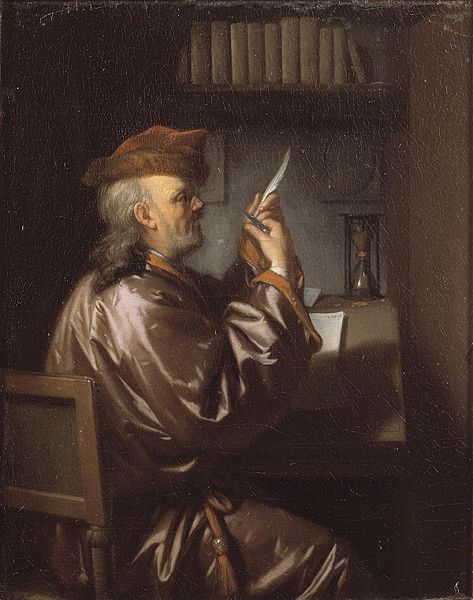
Philip van Dijk (1683-1753) The Bookkeeper Museum voor Communicatie Den Haag
Philip van Dijk (1683-1753)
The Bookkeeper
Museum voor Communicatie Den Haag
https://widgetworld3.wordpress.com/podcasts/
THE TUAM HERALD, SATURDAY, MAY 8, 1909
 TUAM, CO GALWAY
£20 REWARD


Whereas several libellous and scandalous Letters were sent to me and other Person through the Post Office, having forged names to them, I hereby offer the above reward to any person who will give such information as will lead to the conviction of the malicious wretch who dared the outrage. Or a sum of £10 for such private information as will tend to the discovery of the offender.
*name and address on file

Posted in Posts and podcasts

For Collectors of Books – 1823

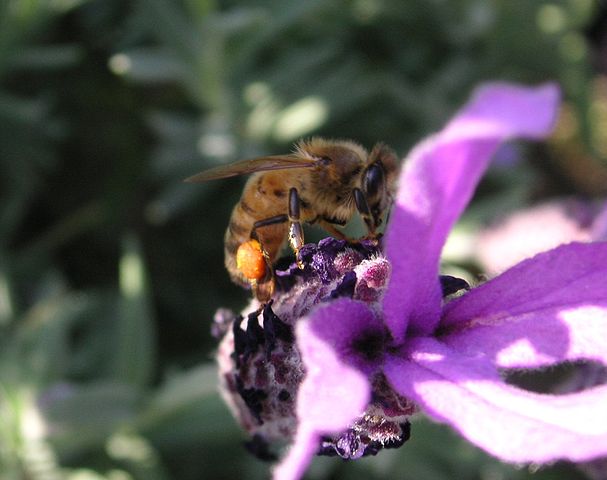
Photo: TTaylor Wikimedia Commons
Photo: TTaylor
Wikimedia Commons
https://widgetworld3.wordpress.com/podcasts/
CONNAUGHT JOURNAL MARCH 3RD, 1823
Collectors of books will not be sorry to learn, that a few drops of oil of
lavender will insure their libraries from mildew. A single drop of the same oil will prevent a pint of ink from mouldiness for any length of time. Past (sic) may be kept free from mould entirely by the same addition; and leather is also effectually secured from injury by the same agency.