
Just a note…
- Photo: EO’D
theburrenandbeyond.com
theburrenandbeyond.com is now the official name for this website. Nothing else has changed. Thanks to everyone for dropping by!
Posts and Podcasts
theburrenandbeyond.com is now the official name for this website. Nothing else has changed. Thanks to everyone for dropping by!
Cardiff Evening Express, 30 July 1892
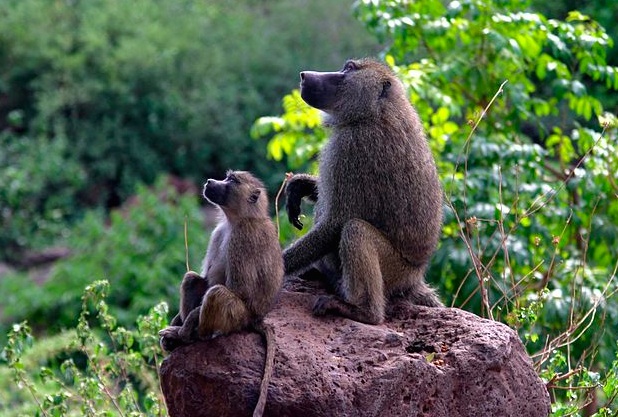
A BABOON AT LARGE AT MALLOW.
During the stay of Sanger’s circus at Mallow on Thursday a large baboon escaped from its cage and caused consternation among the spectators, who ran off in all directions. The animal rushed down a street, and, seizing a dog, killed it. It then bolted into a china shop, where it caught a child by the neck and gave it a severe scratch, causing blood to flow. Again rushing into the street, it injured another child, cutting its cheek severely with its claws.
An excited crowd pursued the baboon armed with pitchforks and staves, but it ran from street to street, spreading consternation everywhere. Some policemen at length managed to shoot the animal. Mr. Sanger has, it is stated, threatened to bring an action against the police for £200, the alleged value of the animal and the persons whose children were injured have threatened proceedings against Mr. Sanger.
Irish-American NY

31st December, 1892
KILFENORA, Dec. 7, 1892
We have been witnesses, here, of a very extraordinary scene, indeed. Visitors to Lisdoonvarna who have made the usual excursion to the Lake of Inchiquin will remember the pretty park which skirts this village, and within which a finely built residence looks out from the shelter of the trees. The inquiring excursionist will have been told that this is the residence of Mr. O’Donnell Blake Foster. It is no longer. Yesterday Mr. Blake Foster was evicted with all due formality of law. The sub-sheriff, Mr. Cullinan, officiated, and the inevitable Mr. Emerson represented the claimants for rent. When the eviction was completed an Emergencyman was duly installed in the spacious house- the most imposing mansion in which an emergencyman has as yet established himself.
The circumstances which led to Mr .Blake Foster’s eviction were as follow:- When he came of age he found his property heavily encumbered, so heavily, indeed, that after a time he surrendered it to the courts, and himself became simply a tenant of Ballykeal, paying a smart rent for his “holding.” Like other farmers here about, Mr. Blake Foster found and insuperable difficulty in making land pay; and though he fought gallantly against the hard times, the battle was a losing one, and he fell into arrears. The creditors of the estate gave him short shrift, and the result has been the appearance at Ballykeal House of Mr. Cullinan, the sub-sheriff, and of Mr. Emerson, and the Emergencymen.
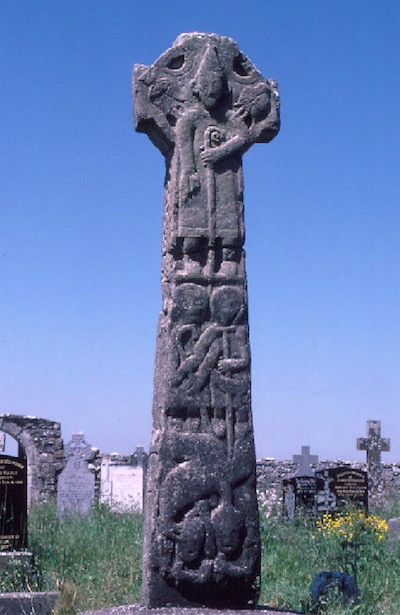
The scene was a striking one in its way. About ten o’clock the sub-sheriff, unaccompanied by any protective force, walked up the avenue, between the rows of tall trees, leading to he house. On his arrival he found a large number of sympathising friends gathered round the tenant, who was waiting for eviction. The parish priest, Father Crowe, and the larger farmers of the neighborhood were gathered round Mr. Blake Foster, while a large crowd of people from the surrounding country were engaged removing the furniture and other property. I may mention that on the previous day 500 men with 300 carts, had gathered to remove the potatoes, hay, and other movable farm produce and that on Friday of last week 75 carts had been engaged removing the tenant’s turf ricks beyond Mr. Emerson’s reach.
The eviction was duly carried out, as far as the “big house” was concerned. But a difficulty still exercised the legal representative of the creditors’ claims. Near the gate of the demesne and within the boundary wall, a Land League hut had been erected, and here for many years Andy Lynch, who had been evicted off a neighboring property, had lived, in view of Mr. Blake Foster’s hall door. The evictors demanded that the hut should be pulled down and the demesne surrendered without this incumbrance. The sub-sheriff did not think this any part of his duty, and said so. Andy Lynch was summoned to make terms with the new occupants of Ballykeal. He appealed to Mr. Blake Foster, who told he that he would never advise any man to break up his home, and bade him do as he thought best for himself. Andy, left to his own choice, refused to enter into terms with the evictors, and his poor chattels were accordingly transferred to the roadside.
Perhaps the Property Defence Association will be satisfied with the day’s work. They have an old grudge against Mr. Blake Foster. Six or seven years ago he was removed from the Commission of the Peace because of his sympathy with his distressed neighbors. He built on his own land two huts for tenants who had been evicted and maintained them there in spite of denunciations of the class to which he belonged. Immediately after this the Tory Lord Chancellor discovered that Mr. Blake Foster was unworthy to hold “her Majesty’s Commission of the Peace;” and he was accordingly despoiled of that “dignity.” He had also, given grievous offence to the landlord class, as an ex-officio guardian of the Ballyvaughn Union by opposing Mr. William Lane Joynt at the Board. However, all this has been explained now; Mr. Blake Foster has shared the fate which he tried to mitigate for other tenants in distress It is needless to say that public sympathy is wholly on his side, and that it will support him in any struggle he may make to regain the home from which he has been expelled.
Newark Daily Advocate 29th January, 1888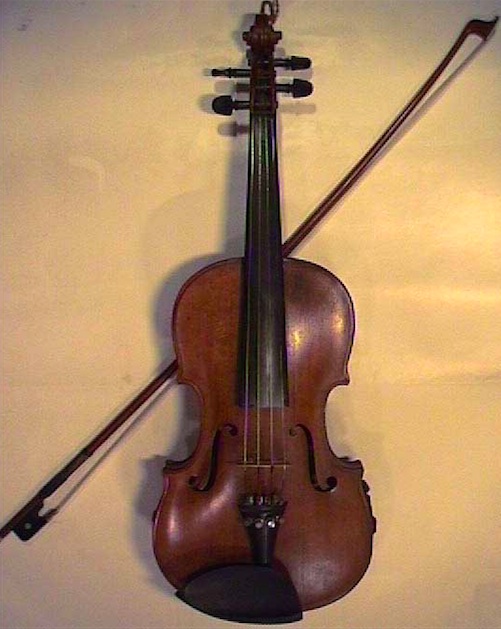
Arent
Wikimedia Commons –
Yesterday at Galway, as some musicians were returning from serenading the bishop at his house, the police seized their instruments and arrested the musicians. There is intense excitement over this matter.
The Sydney Gazette and New South Wales Advertiser 24th March 1821 p2 (abridged)
image by:StoneColdCrazy
Wikimedia Commons
That there exist men of a stature considerably above the ordinary standard, our own time has afforded ocular demonstration. In the year 1780 a gigantic youth named Byrne, was within two inches of eight feet at his death, and it is thought that the continuance of his growth proved fatal to him, as he had not then attained his twentieth year.
The most remarkable instance of extraordinary stature in the present age was O’Brien. He was born in the year 1761 in the county of Kinsale, Ireland, of parents of middling stature. He was brought up to the trade of a bricklayer but his growth was so rapid that when he had attained the age of eighteen years his uncommon size attracted the notice of a showman, who obtained permission of the youth to exhibit him three years in England, for which he was to pay him fifty pounds per annum. Not contented with his bargain, the showman agreed to underlet the liberty of showing him to another speculator. O’Brien resisted this intended transfer of his person and was saddled with a fictitious debt for which he was arrested at Bristol but was soon released.
He now commenced and continued a regular exhibition of his person. His stature increased till he arrived at the age of twenty-five, when his growth somewhat abated, but he continued growing after that period till he attained the height of eight feet seven inches.
At times he used to walk about the streets for air and exercise at two or three o’clock in the morning. Proceeding along the more level pavement his body appeared more erect and had he not paid attention to avoid the lamps his head would have struck against many of them.
The following anecdote is related on the authority of those with whom he was most familiar. Being on a journey in his own carriage he was one day stopped by a highwayman. He put his head forward to discover the cause that interrupted his progress. The highwayman, at the sigh of so prodigious a figure was struck with such a panic that he clapped spurs to his horse and made a precipitate retreat.
in 1801, having realised an independence sufficient to keep a carriage and to secure the conveniences of life, he declined the public exhibition of his person – which was always extremely irksome to his feelings. He died at Bristol in September, 1806 in the 46th year of his age.
The Sydney Gazette and New South Wales Advertiser 2nd January, 1827 p3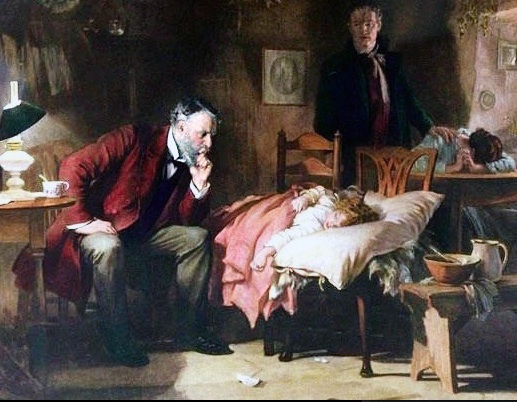
Luke Fildes 1891
Wikimedia Commons
SATURDAY, DEC. 23. (abridged)
James H was charged that he was disobedient, lazy, and insubordinate; he pretended to be sick and went to the hospital, a distance of 4 miles, where they gave him “a dose of stuff”. They would not exempt him. He did not return until 11 o’clock at night.
The district constable proved on oath, that he saw him in a public house, and that he heard him say whilst therein, that his master and all the people in the house talked nothing but Irish, and he could not bear it.
The prisoner was admonished very patiently, but he stood in a sullen uncouth posture, entirely forgetting the respect due to his superiors. Sentence, 25 lashes.
The Australian 28th April, 1825 p2
It appears (says an Irish paper) that 110,000 souls are added to the population of Ireland every year. In seventy years the inhabitants have nearly tripled.
Freemans Journal 28th March, 1868 p11 (abridged)
Photo: EO’D
It is a long dreary drive of nineteen miles to Ennis, through an open limestone country, with low craggy hills. In all this part of Ireland the eye wearies for the pretty villages and comfortable farm-houses which give life and variety to the flat counties of England. The station at Ennis is a wretched one, the platform being of earth, and it was not improved by recent rain and trampling of a crowd of emigrants. Although this is the terminus of the Ennis and Limerick line, the train was in no hurry to start. Everybody took their time, and just half an hour after the one named in the time bills the train set out.
It progressed very slowly on its way, and I was not sorry, for it gave us the opportunity of an excellent view of Clare Abbey — close by which the line passes — one of the loveliest ruins I had ever seen, a graceful church in the form of a cross, with east window almost perfect, and a lofty tower, and the ivy twining round about the broken arches, and covering the walls with a rich green mantle.
On reaching Limerick, I implored a porter to get my luggage quickly, as I wanted to catch the next train for Charleville. “But sure she’s been gone this ten minutes. She was an hour after her time. Your train was so late she could wait no longer.” As I expressed my vexation he said in a tone of deep sympathy, “There’ll be a train tomorrow.” On making further inquiries at the station it turned out that the trains do not profess to fit in with each other. As one of the officials expressed it, “The great lines try to eat up the little ones.”
Freeman’s Journal 28th March, 1868 p11 (abridged)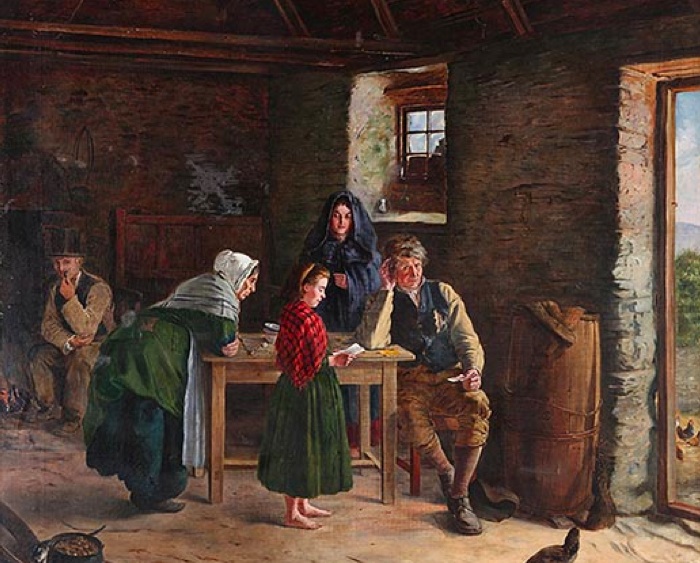
1875
James Brenan (1837-1907)
Crawford Art Gallery, Cork
Lough Cooter is the largest lake in the south of county Galway, with many wooded islands lying in its bosom, and lovely views between them. The ‘Castle,’ belonging to the Gough family is a modern erection, in the castellated style, standing on the west bank of the lake, and commanding a most exquisite view, while the lawn slopes down to the water’s edge. Beautiful grounds, richly supplied with trees, surround the house, part of them planted and laid out, part left for the deer to wander about. A gateway and lodge stand at each end of the grounds ; and after passing through the whole length, we returned by another route to Gort in time for the quiet benediction in the little convent chapel.
Travellers from Galway and its neighbourhood proceed by coach via Gort to Ennis, and as there are many emigrants, the coach is often full. This was the case on the morning on which I left Gort, and accordingly two ‘long cars’ were furnished from the coach office, which were rapidly filled with emigrants from Gort. The whole cortege, started from the office in the main street and it was a strange and sorrowful sight to see the partings. A crowd of people collected round the passengers: mothers and brothers and sisters were saying good-bye, weeping, wailing and sometimes howling; kisses were given, last greetings exchanged; promises to write soon, to send money over, and ‘bring the others out’ were uttered and, at last, away they went.
I noticed that the best were going — the young, strong, and vigorous — the old, the feeble, and children were left behind.
By my side sat two young girls, strong, healthy, and active. They were going into the world, and had discarded the blue cloak and stuck on their heads showy bonnets much too small for them, profusely decorated with tulle and artificial flowers and with broad strings of white ribbon. When we were fairly out of town, passing through the solitary monotonous country and admiring friends were left behind, out came the large shawls, in which head, bonnet, and all were fully enveloped.
They became confidential and told me they were going to America to get places. On my suggesting that they could find such at home, they shook their heads and said not with such wages as in America. When they were tired of talking they took out their books and began to read, and, peeping over the shoulder of the one next me, perceived the volume carried with her was a prayer-book.
Freeman’s Journal 28th March, 1868 p11 
Photo: Borvan53
Wikimedia Commons
(abridged)
The See of Kilmacduagh was founded by St Colman in the seventh century. Here the cathedral was built, close behind a round tower and surrounded by six other churches. We explored the ruins well and I was fortunate in having a cicerone who had often visited them before, and took a vivid interest in them. It was irritating to see cattle and sheep grazing in the area, more especially as the place is held sacred by the people who bring their dead for burial in its precincts. The former owner of the place was proud of the ruins and took pains to preserve them. It has now unfortunately, passed into younger and more careless hands. It is supposed that one of these seven churches was a college chapel, another a monastery and a third a convent – the other three being probably smaller churches or oratories dedicated to some favourite saints. The convent chapel is the most perfect and the east window and several arches with their corbels show it to have been one of great beauty.
The round tower is especially remarkable from its leaning seventeen feet out of the perpendicular and it is certainly a most singular object. Tradition says it was built by Gobhan Saor, the architect of Glendalough and Antrim.
On leaving this interesting spot I drove through some pretty country, with distant views of “the lonely hills of Clare,” all radiant with the sunshine, to Lough Couter. It was pleasant to see all along the way how the people greeted the priest; they came out from their cabin doors and children ran from their play to get a word from him.
 The Burren and Beyond