Posted in Posts and podcasts

A most extraordinary monster – 1876

Colonist Vol XVII issue 2039 22nd February 1876 p4
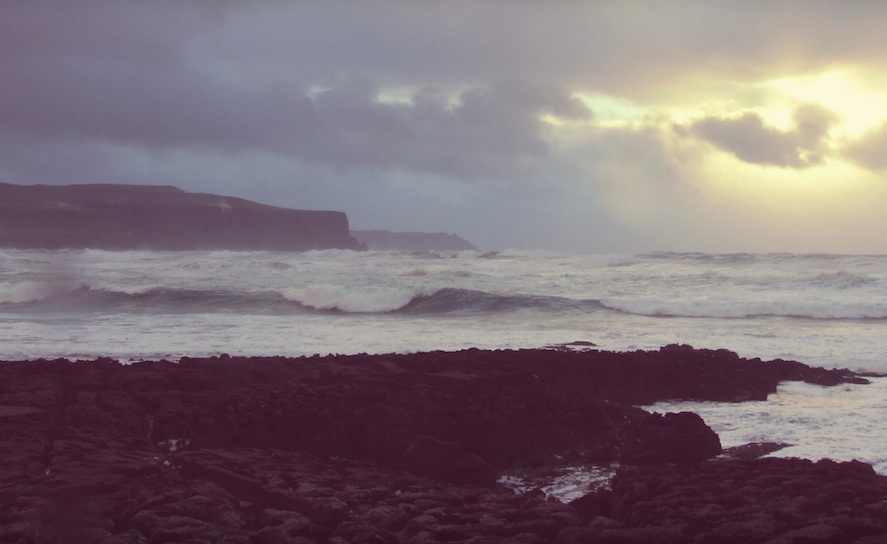
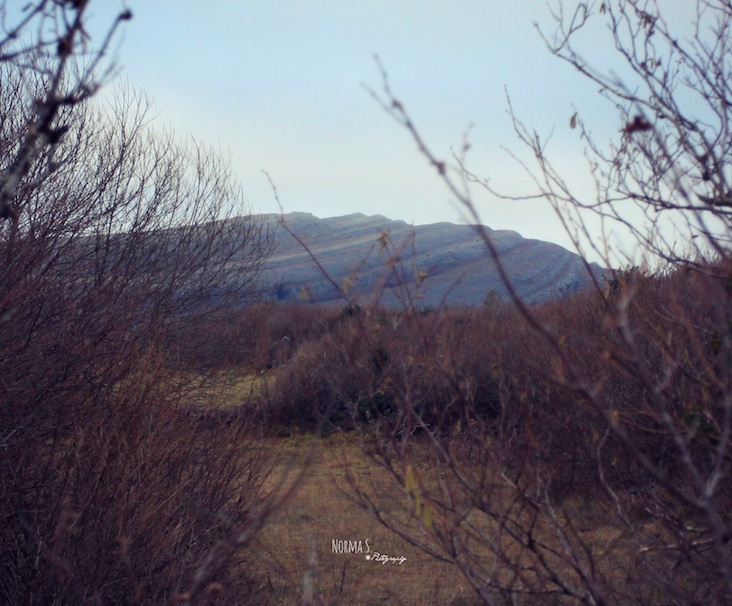
County Clare Photo: Norma Scheibe
County Clare
Photo: Norma Scheibe

The Northern Whig states that a most extraordinary monster was seen a few days ago at Fodera, near Loophead Lighthouse, which is situated on the most western point of the County Clare.  It is thus described:—

lts head and neck resemble a horse, and are of a reddish hue; it has short round ears and flowing mane, and from a poll extend two branching horns like that of a stag, underneath which were eyes glaring and protruding.  It made directly for the narrator, who was on the side of the steep rock.  He at once ran out of reach of the monster, whose approach looked anything but friendly.

It then rose high out of the water and plunged with such force as to cause the water to fly so far and in such quantities as to drench the observer to the skin, he standing 40 feet back from the water at the time.  It remained near thirty or forty minutes before disappearing a moment from view, but rearing its huge body partly out of the water, and giving a chance for further observation.  It was observed to have the tail of a porpoise and two large fins from the shoulders, and on the breast were two large fatty lumps, which shook with every motion of the extraordinary creature.  It then shaped its course westward, still keeping its head and neck well elevated. Its bulk far exceeded that of the largest porpoise ever seen on the coast.

NOTE:  Among the archives of theburrenandbeyond.com is a post titled –  Sea monster in Galway Bay – from the Perth Sunday Times, 1935.  It refers to the shooting of a ‘mysterious sea creature’ at Mutton Island, also in County Clare.
Posted in Posts and podcasts

Mr Blake, Ballygireen – 1910

Lake Wakatip Mail Iss 2775, 13th July 1910 p4
A well-authenticated case of extreme old age has been brought to light in connection with the death of Paddy Blake, in the Corofin Union Hospital, Ennis, County Clare, Ireland. Paddy was a labourer, but did not work regularly, spending most of his time roving about from one house to another. He was born at Ballygireen, Parish of Kilnasoolagh, Co. Clare,

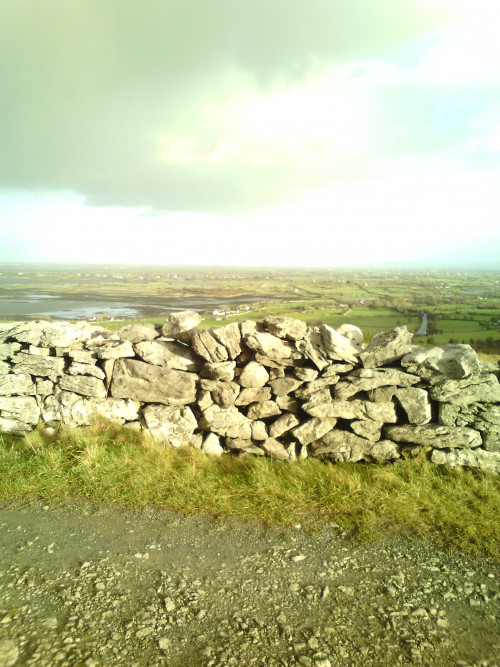
Mullaghmore, County Clare Photo: Norma Scheibe
Mullaghmore, County Clare
Photo: Norma Scheibe

ago, on St Patrick’s Day.

His grandfather was Peter Blake, who fought at the Siege of Limerick in 1691, and is said to have attained the great age of 120 years. Paddy lived, when a lad, with an uncle, another Peter Blake, at Ing, in the Parish of Kilmaleery. He married twice, and migrated to Corofin about the year 1861. Paddy had a clear recollection of events that happened a hundred years ago, and remembered most of the scholars who attended the old Latin School held by Bishop O’Shaughncssy at Newmarket-on-Fergus. He went to see Daniel O’Connell when passing through Bunratty Pike on his way to Ennis to the great election of ’28, and remembered the red flag hoisted on Bunratty Castle by Mr Tom Studdert, who refused to let the Liberator pass until he had paid the “pike money.” or toll. It was after this incident that the buyers refused to attend the old fair of Bunrattv, which consequently ceased to exist. Paddy used to admit he was thirty years old at that time, but, as he never liked to be considered old,” he was certainly some years older than he admitted. Paddy Blake entered the Corofin Hospital in September, 1908, and died there on March 12, 1910. He was an inveterate smoker.

Posted in Posts and podcasts

The tide of emigration – 1897

New Zealand Tablet 6th August, 1897 (abridged)

Between the showers Photo: EO'D
Between the showers
Photo: EO’D

The correspondent of an Irish-American exchange writing from New York says: From Ireland the tide of emigration has again set toward our shores. At Ellis Island the other day there passed through the Gate of Freedom, as the exit of the little picketed lane is called, 723 Irish lassies— the best clothed, neatest and most cheerful immigrants this country has seen for years. They ranged in age from 18 to 25 and without exception, passed every requirement as to morality and cleanliness, and satisfied the commissioners that there was no danger of their becoming charges on the public for future support.

Sixty-five per cent of the entire number were what is known as “pre-paid”‘ passengers. Their tickets had been sent them from this side. Two hundred and fifty of them will go into domestic service in the metropolitan district. Nearly three hundred went to Boston, The others are scheduled for destinations in the Middle and Western States.

Last month there were to come more than 1,000 other girls from Irish villages. The cause for this invasion is the demand for Irish girls for housemaids. The Labour Employment Bureau can place more than 2,000 of proper character and fitness. The scene on Ellis Island before they were put on board the ferries was strongly suggestive of a country fair. About a thousand of their friends, brothers and sisters of some and sweethearts and friends of others had all got permission to greet them. They just swarmed over the island. Other immigrants looked on in wonder, and listened to the rare, rich brogue which filled the air. The girls had presents of blackthorns for their, brothers and lovers and bits of lace or knittings of woollen for their sisters and long before the first hundred had passed inspection each one was wearing some taken from the other.

The immigrants all had pocket money, and they who had least had friends in waiting. They had substantial wardrobes, too, some in woollen chests, and some in large tin boxes that were written all over with the names and addresses of their owners.

When they got on the mainland and saw the elevated trains, the lovely park, the tall buildings and the crowds rushing for the ferries and heard the din of traffic, these girls from the little inland villages stood in amazement and gossiped among themselves as to what kind of a place New York must be and how soon they would be swallowed up and lost in the hundreds of thousands. They were given their first lesson in the immensity of metropolitan life, and shrank off with their friends, glad not to be alone. Those whose friends had not called for them up to sundown were cared for in the Mission of the Holy Rosary. Deputy Commissioner M’Sweeney, of the Immigration Bureau, said that this season would see ten thousand Irish girls landed in this city.

All told there were fourteen hundred immigrants landed at the island the other day.

Posted in Posts and podcasts

Loughrea – 1899

New Zealand Tablet Vol XXVII Issue 9, 2nd March 1899 p9

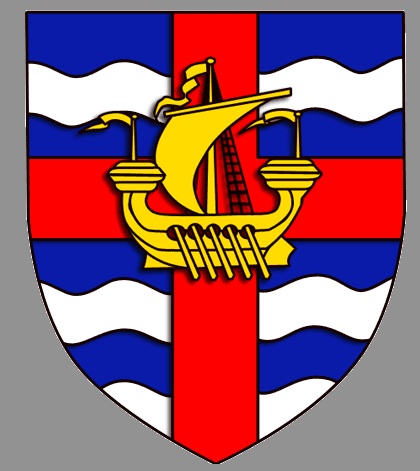
Loughrea Crest Wikimedia Commons
Loughrea Crest
Wikimedia Commons

In Loughrea shields have been erected bearing the names of each street in Irish. Father Nolan ODC, who is an Irish scholar, is responsible for the idea, and the painting and lettering of the shields was done by Father Thomas ODC, assisted by the nuns of the Carmelite Convent.

Posted in Posts and podcasts

Up Ballinderreen! – 1888

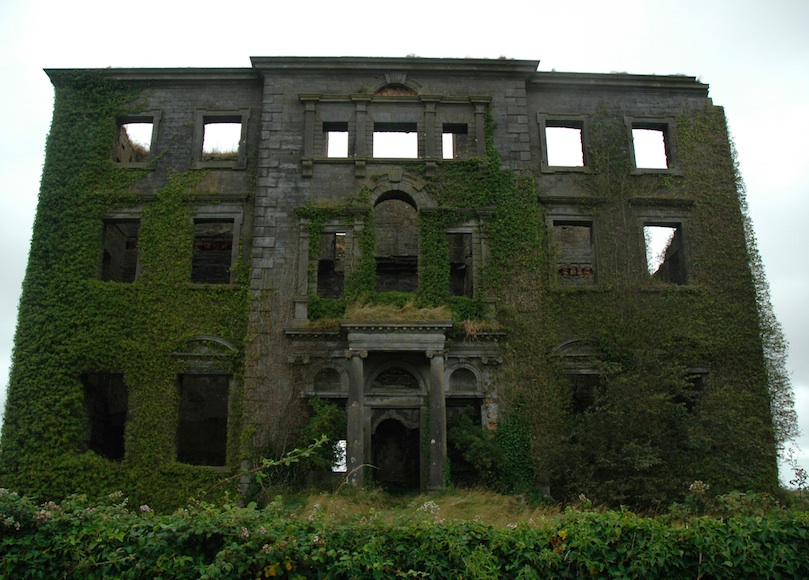
New Zealand Tablet 10th February, 1888 p9tyrone house

Over 200 men from the parish of Ballinderreen assembled at Kilcolgan to build a house for Redmond Grealy, an evicted tenant, Grealy was evicted in 1883 by William St. George, Tyrone House, his landlord. Since his eviction Grealy has made a long and stubborn fight to keep a grip of his homestead. For retaking possession he has been summoned frequently, heavily fined, sent twice to gaol and his wife three times to gaol.

On their return home from Galway Gaol, Grealy and his wife were met by over 200 men, who escorted them and installed them in the house they had built.

Posted in Posts and podcasts

County Clare Feis – 1905

New Zealand Tablet 24th August, 1905 p9

Road to Doolin Photo: Christine Matthews Wikimedia Commons
Road to Doolin
Photo: Christine Matthews
Wikimedia Commons

In declaring the County Clare Feis open at Ennis recently, his Lordship Most Rev Dr. Fogarty, Bishop of Killaloe, having referred at length to the language and industrial movement, said money was not everything. We should try not only to bring money to the Irish home, and neatness and comfort and industry, but the brightness also and the enlightenment that come from the revival of our Irish customs and music and language.

He drove the previous night, coming to the feis, through sixteen miles of the most charming country, studded with those numerous white painted cottages which were such a feature of the County Clare.

It was evening, and the hour for the day’s labor being over the people would naturally turn to relaxation and enjoyment, but that lovely country was as silent as the grave— not a note of music or a volce was heard— and he felt for our people and said, “God bless every man or woman, young or old, Catholic or Protestant, who is doing his best, however little, to bring back to this lovely country and to its dear people the sound of music and contentment and prosperity.”

Posted in Posts and podcasts

Corcomrue Abbey – 1267

Feilding Star 24th March 1902 p4 (abridged)

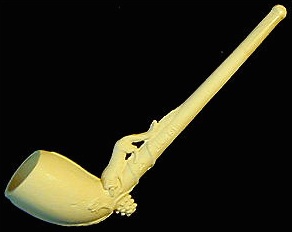
Clay pipe Photo: Frankwm1 Wikimedia Commons
Clay pipe
Photo: Frankwm1
Wikimedia Commons

It is pleasant for people of the present day, who do not like tobacco, to know that Sir Walter Raleigh was not the person who introduced the habit of smoking into Ireland anyway, whatever he may have done for England.

The learned Dr. Petrie, the acknowledged chief of Irish antiquarians, says “Smoking-pipes of bronze are frequently found in our Irish tumuli or sepulchral mounds of the most remote antiquity. On the monument of Donogh O’Brien, King of Thomond, who was killed in 1267, and interred in the Abbey of Corcumrue, in the County of Clare, he is represented in the usual recumbent posture, with the short pipe or dhudeen in his mouth.”

Tobacco, after all, was only a substitute. Long before it was introduced into England smoking was commonly practised. The favorite smoke was dried leaves of coltesfoot. In the Historic of Plantes by Dodoens, published in 1578, is the following passage ‘The parfume of the dryed leaves (of coltesfoot) layde upon quick coles, taken into the mouth of a funnell or tunnell helpeth such as are troubled with the shortness of winde and fetch their breathe thick and often.”

In ‘The Travels of Evliya Effendi’ it is stated that an old Greek building in Constantinople was converted into a mausoleum in the early part of the sixteenth century. At the time of the alteration it was computed that the building was a thousand years old. In cutting through the walls to form windows, a tobacco pipe which even then smelt of smoke, was found among the stones.

Posted in Posts and podcasts

St Brigid – 1934

The Catholic Press 1st February, 1934 p8

ST. BRIGID.

Burren light Photo:EO'D
Burren light
Photo:EO’D

St. Brlgid is the mother, all men know,
Of Erin’s nuns that have been, or shall be,
From great St. Patrick’s time to that last day
When Christ returns to judge the world by flre.
‘Twas summer eve; upon a grassy plain
She sat, and by her side a fair blind nun,
Of them that followed her, and loved her rule,
And sung her nocturn psalms. They spake of God.
The wonder of His dread inscrutable Being
Round all, o’er all, in all; the wonder next
That man, so slight a thing, can move His love,
Can love Him, can obey; the marvel last
Of God made Man; the infinite in greatness
By infinite descent a creature made,
Perchance within the least of peopled worlds,
For saving of all worlds.
The Sun went down;
Full faced the moon uprose; the night wind sighed,
It broke not their discourse. The dawn returned;
It flushed the clouds; it fired the forest’s roof;
It laughed on distant streams.
St. Brigid gazed upon that dawn; a thought
Keen as a lance transfixed her heart; she mused,
‘Alas, this poor blind sister sees it not!’
She clasped that sister’s hand, she raised, she kissed it;
That blessed one spake: ‘Why weepest thou, mother mine?
Thy tears are on my hand.’ The Saint replied:
‘I weep because thou canst not see the dawn
Nor in it God’s great glory.’ Then the nun:
‘If that thought grieves thee, pray and I shall see.’
St. Brigid knelt; and lo! the blind one saw!

AUBREY DE VERE.

Posted in Posts and podcasts

A shrinking land – 1903

Southland Times, Issue 19179 17th October, 1903 p8

The Burren Photo: EO'D
The Burren
Photo: EO’D

Ireland is smaller than it was, only to an inappreciable extent, it is true, and apart from any action of the waves or weather which may have a tendency to affect its size by natural means. The truth is that some Ireland has been shipped to America in barrels.

Turf from Connaught and Clare, soil from Limerick and Mayo, heather from Croagh Patrick, shamrocks from Donegal, peats from the bogs of Ulster, turf from every county in Ireland, have been sent to Chicago to be used in building a miniature Ireland in the Coliseum. The soil will carpet the floor of the big building during an Irish fair which is to be held in that city. There were thirty-two casks of the soil, and it will be arranged in the shape of the counties from which it waa dug. There were eight great crates of peat, which will supply fuel for the miniature shops, stores, and houses that will be erected in each county.